

AI-generated image
Klepon
Pandan rice balls with palm sugar
Chewy green pandan rice balls that burst with molten palm sugar, rolled in salted coconut



Klepon are the jajan pasar, or market cakes, of Java: sold in the morning from baskets lined with banana leaves, bright green from pandan and dusted with grated coconut. Bite one and a pocket of molten palm sugar floods your mouth, so Javanese eat them whole. Malaysians and Singaporeans know the same sweet as onde-onde, made for festive tea tables, so this page covers both. Chef's tip: seal the balls with no cracks and drop them into gently boiling water — the moment they float, give them one more minute, and the sugar inside will be fully molten.
- Total time
- 40 min
- Difficulty
- medium
- Serves
- 4
Ingredients
For the dough
- 7 oz glutinous rice flour
- 1 tbsp tapioca starch
- 8 pandan leavesor 1 tsp pandan extract with 150 ml water
- ¾ cup waterabout
- 1 pinch salt
For the filling and coating
- 3 ½ oz palm sugar (gula jawa or gula Melaka)finely chopped; dark muscovado works
- 4 oz freshly grated coconutor 80 g desiccated, steamed 5 minutes with 3 tbsp water
- ¼ tsp salt
Shop this recipe on Amazon
What you'll need
Links open Amazon in a new tab. As an Amazon Associate, WhatToEat.Today earns from qualifying purchases.
Method
0/6 doneStep 1: Cut 8 pandan leaves into short lengths and blitz with ¾ cup water, then squeeze through a sieve or cloth to get about 150 ml of deep green juice.
5 minStep 2: Mix 7 oz glutinous rice flour, 1 tbsp tapioca starch and 1 pinch salt in a bowl. Add the pandan juice gradually, kneading, until the dough is smooth, soft and like playdough: it shouldn't crack when pressed or stick to your hands. Add a few drops of water or a little flour to adjust.
5 minStep 3: Mix 4 oz freshly grated coconut with ¼ tsp salt and, if fresh, steam it over boiling water for 5 minutes to keep it longer; spread on a plate to cool.
5 minStep 4: Pinch off a cherry-sized piece of dough (about 15 g), flatten it in your palm, put ½ tsp 3 ½ oz palm sugar (gula jawa or gula Melaka) in the middle and close it up, rolling it into a smooth ball. Pinch any cracks closed; a crack lets the sugar leak out, which is the most common mistake. Repeat to make about 24.
15 minStep 5: Bring a large pan of water to a gentle boil over a medium heat. Drop in 8–10 balls at a time. When they float to the top, after about 2–3 minutes, cook for 1 minute more, then lift out with a slotted spoon.
9 minStep 6: Roll the hot balls straight away in the coconut until coated. Let them cool for 5 minutes — the sugar inside is very hot — and eat the same day, at room temperature.
5 min
Nutrition per serving
- Calories
- 330 kcal
- Protein
- 3 g
- Carbs
- 58 g
- Fat
- 10 g
- Fibre
- 4 g
Nutrition values are estimates.
KrazyBadal
Good to know
- How long does klepon take?
- About 40 minutes in total: 25 minutes to prepare and 15 minutes to cook.
- How many people does it serve?
- 4 as written. Change the servings above the ingredients and every amount scales to match.
- Is it vegan?
- Yes. It has no meat, fish, dairy or eggs.
- Is it gluten free?
- Yes, as written. Check the labels on stock, sauces and spice mixes, which sometimes contain gluten.
- What can I use instead of palm sugar (gula jawa or gula melaka)?
- Caster sugar, same amount.
Reviews
No reviews yet. Be the first to cook it.
Rate this recipe
Sign in to rate and review this recipe.
You might also like

Sayur lodehVegetables in coconut milk
Sayur lodeh is everyday cooking in Central Java, made in big pots in Solo and Semarang kitchens and ladled over rice, with lontong rice cakes at Lebaran, or alongside opor and sambal goreng on festive tables. It's soupy rather than thick: a fragrant broth of coconut milk, galangal, lemongrass and lime leaf that carries chunks of aubergine, long beans, chayote and sweetcorn, plus tempeh and tofu to make it a meal. The flavour is mellow and slightly sweet, so the heat comes from sambal on the side. Chef's tip: keep the pot at a gentle simmer once the coconut milk goes in and stir now and then — a rolling boil splits the coconut milk into oily curds.



Kartoshka cakeCocoa and cake crumb truffles
Soviet cafés and school canteens sold these knobbly brown 'potatoes' for a few kopecks, and they began as a thrifty way to use up sponge and biscuit trimmings at the bakery. Crumbs are bound with butter and sweetened condensed milk, flavoured with cocoa and vanilla, shaped into little potatoes, rolled in cocoa and finished with two dabs of pale butter cream for the sprouts. They are fudgy and dense like a brownie truffle, need no oven, and children love making them. Traditional bakers added a spoonful of rum, an optional extra for adult batches only; this version is alcohol-free with vanilla. The usual slip is coarse crumbs, which make the potatoes crack, so blitz them as fine as sand. Chef's tip: chill the shaped potatoes for at least 20 minutes so they hold their shape and slice cleanly.
 Russian
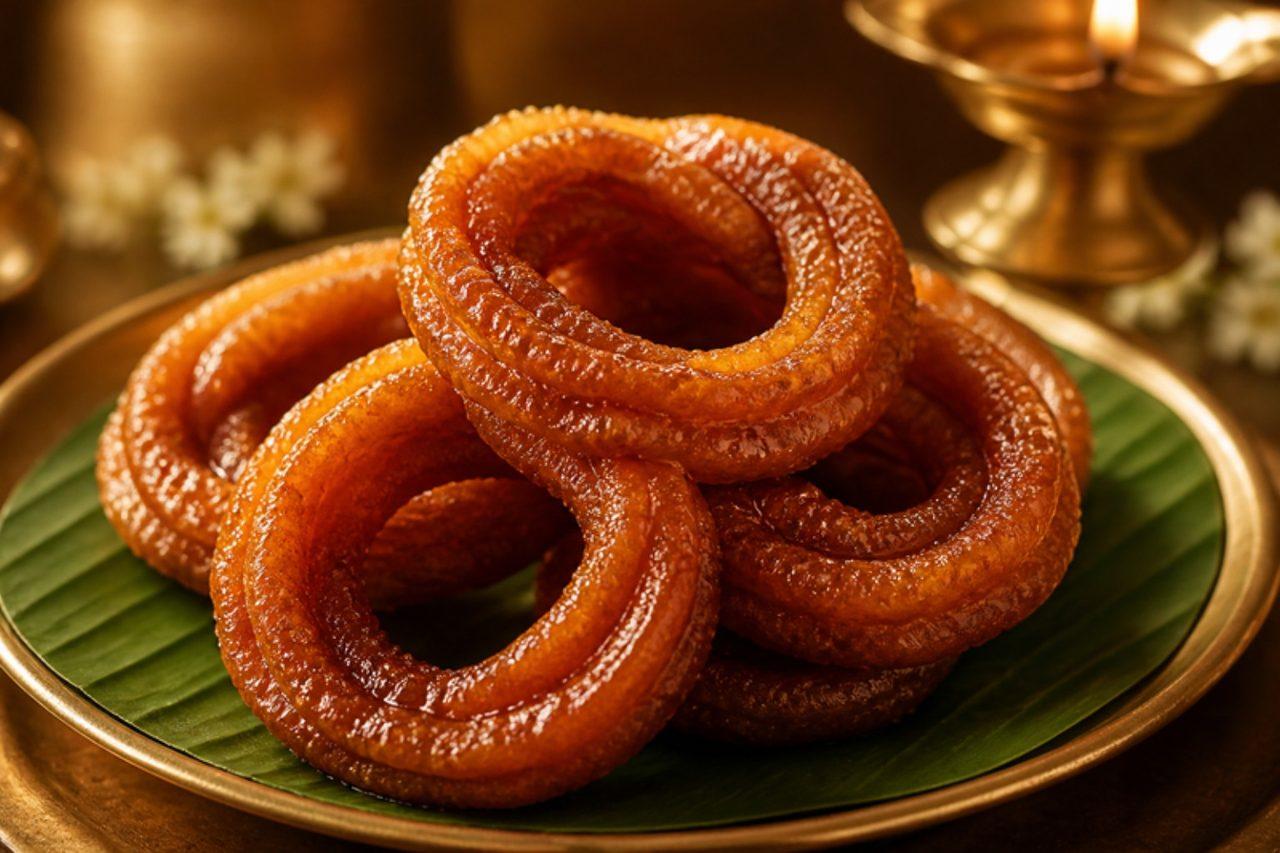
Undu walaluFried urad dal rings in treacle
Walalu means bangles, and these dark, sticky rings of fried urad dal soaked in kithul treacle are a sweet that Sinhala families bring out for Avurudu and for special almsgivings, often made in large batches by an aunt known for her steady hand. A thick, fluffy paste of ground black gram is piped into loops and fried until crisp, then plunged straight into warm treacle, so the rings stay crunchy on the outside while drinking up the syrup. They taste a little like a darker, smokier jalebi, with a toffee finish from the palm treacle. Watery batter is what ruins them; it spreads into flat blobs, so grind the soaked dal with as little water as possible and beat it until light. This recipe uses no asafoetida, so it is naturally gluten free. Chef's tip: pipe the rings onto small squares of baking paper and lower them into the oil paper and all; the paper peels away in seconds.
 Sri Lankan