
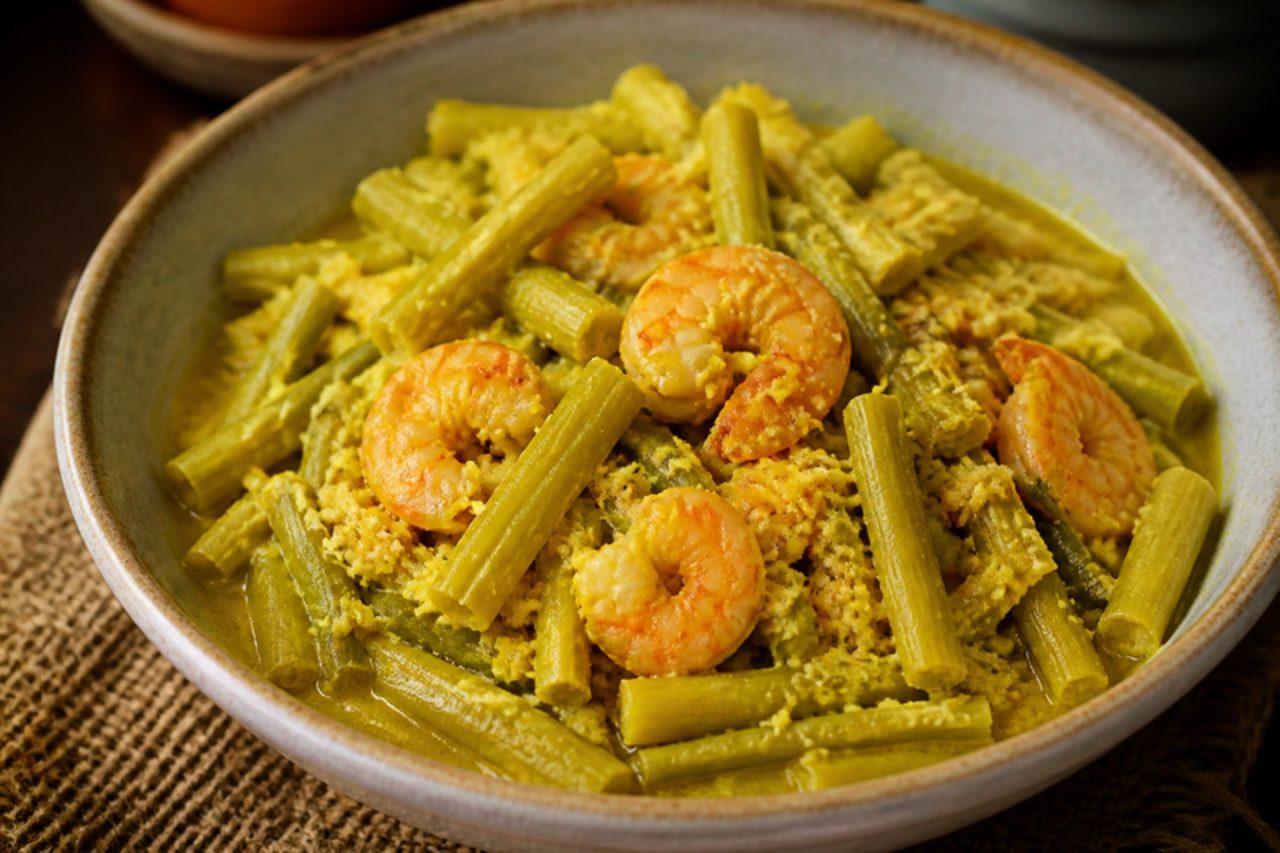
AI-generated image
Kochur loti chingri
Taro stolons with prawns
কচুর লতি চিংড়ি (kochur loti chingri): Khulna's taro stolons cooked with prawns and coconut


Kochur loti are the long, thin runners that taro plants send out across the pond banks in the rainy season, and in Khulna, where freshwater prawns are farmed in every second field, the two end up in the same karai. The stolons are peeled, cut into short lengths and cooked with small prawns, onion and freshly grated coconut until soft and almost melting, giving a mild, slightly sweet, gently earthy dish for lunch with rice and dal. Taro of all kinds contains crystals that make the mouth and throat itch if it is not cooked enough or balanced with something sour, so the stolons need peeling, a full cook and a squeeze of lime. Many people undercook the loti because they look tender early; give them the whole time. Chef's tip: oil your hands before peeling the stolons, or wear gloves, as the sap can irritate the skin.
- Total time
- 50 min
- Difficulty
- medium
- Serves
- 4
Ingredients
For the dish
- 14 oz kochur loti (taro stolons)peeled and cut into 4 cm lengths
- 9 oz small raw prawnspeeled and deveined
- 1 tsp ground turmericdivided
- 1 ½ tsp saltdivided
- 4 tbsp mustard oil
- 1 /2 tsp nigella seeds (kalonji)
- 1 onionfinely sliced
- 2 tsp garlic paste
- 1 tsp ginger paste
- 1 tsp red chilli powder
- 1 tsp ground cumin
- ¾ cup water
- 4 green chilliesslit
- 1 tbsp lime juice
- 1 /2 tsp sugar (optional)
Shop this recipe on Amazon
Spices & pantry
Fresh ingredients (4)
Links open Amazon in a new tab. As an Amazon Associate, WhatToEat.Today earns from qualifying purchases.
Method
0/8 doneStep 1: Boil 14 oz kochur loti (taro stolons) in salted water for 6–8 minutes, then drain and squeeze out gently; this reduces the itchiness.
8 minStep 2: Toss 9 oz small raw prawns with ½ tsp ground turmeric and ½ tsp salt.
Step 3: Heat 4 tbsp mustard oil in a karai over a medium-high heat until it just smokes, then fry the prawns for about 2 minutes until they just turn pink; lift out.
2 minStep 4: Add 1 /2 tsp nigella seeds (kalonji) to the oil; when it crackles, add 1 onion and fry for 5–6 minutes until golden.
6 minStep 5: Stir in 2 tsp garlic paste, 1 tsp ginger paste, 1 tsp red chilli powder, 1 tsp ground cumin and the remaining ½ tsp ground turmeric with a splash of water and fry until the oil separates.
2 minStep 6: Add the loti and the remaining 1 tsp salt and ¾ cup water, cover and cook over a medium-low heat for 10–12 minutes, stirring now and then, until the loti are very soft and easily crushed against the side of the pan.
12 minStep 7: Add 2 ⅞ oz fresh or frozen grated coconut, the prawns, 4 green chillies and 1 /2 tsp sugar and cook uncovered for 3–4 minutes until the prawns are pink and opaque all the way through and the mixture is nearly dry.
4 minStep 8: Stir in 1 tbsp lime juice and serve with plain rice and dal.
Nutrition per serving
- Calories
- 260 kcal
- Protein
- 18 g
- Carbs
- 14 g
- Fat
- 15 g
- Fibre
- 5 g
Nutrition values are estimates.
KrazyBadal
Good to know
- How long does kochur loti chingri take?
- About 50 minutes in total: 25 minutes to prepare and 25 minutes to cook.
- How many people does it serve?
- 4 as written. Change the servings above the ingredients and every amount scales to match.
- Is it gluten free?
- Yes, as written. Check the labels on stock, sauces and spice mixes, which sometimes contain gluten.
- What can I use instead of ground turmeric?
- Leave it out (it mostly adds colour).
- What can I use instead of onion?
- 2 shallots per onion.
Reviews
No reviews yet. Be the first to cook it.
Rate this recipe
Sign in to rate and review this recipe.
You might also like

Moreton Bay bugsSlipper lobster with garlic butter
Moreton Bay bugs are the flat, shovel-nosed slipper lobsters caught off the Queensland coast around Brisbane and the Sunshine Coast, and for Queenslanders they are a summer treat, split and grilled at the beach house. The tail meat is sweet and rich, somewhere between lobster and prawn. Buy them raw, frozen or fresh, from a fishmonger and ask them to halve them if you like. A common mistake is overcooking, which makes the meat rubbery; it is ready the moment it turns white. Chef's tip: grill flesh side down first to mark it, then turn and baste in the shell.
 Australian

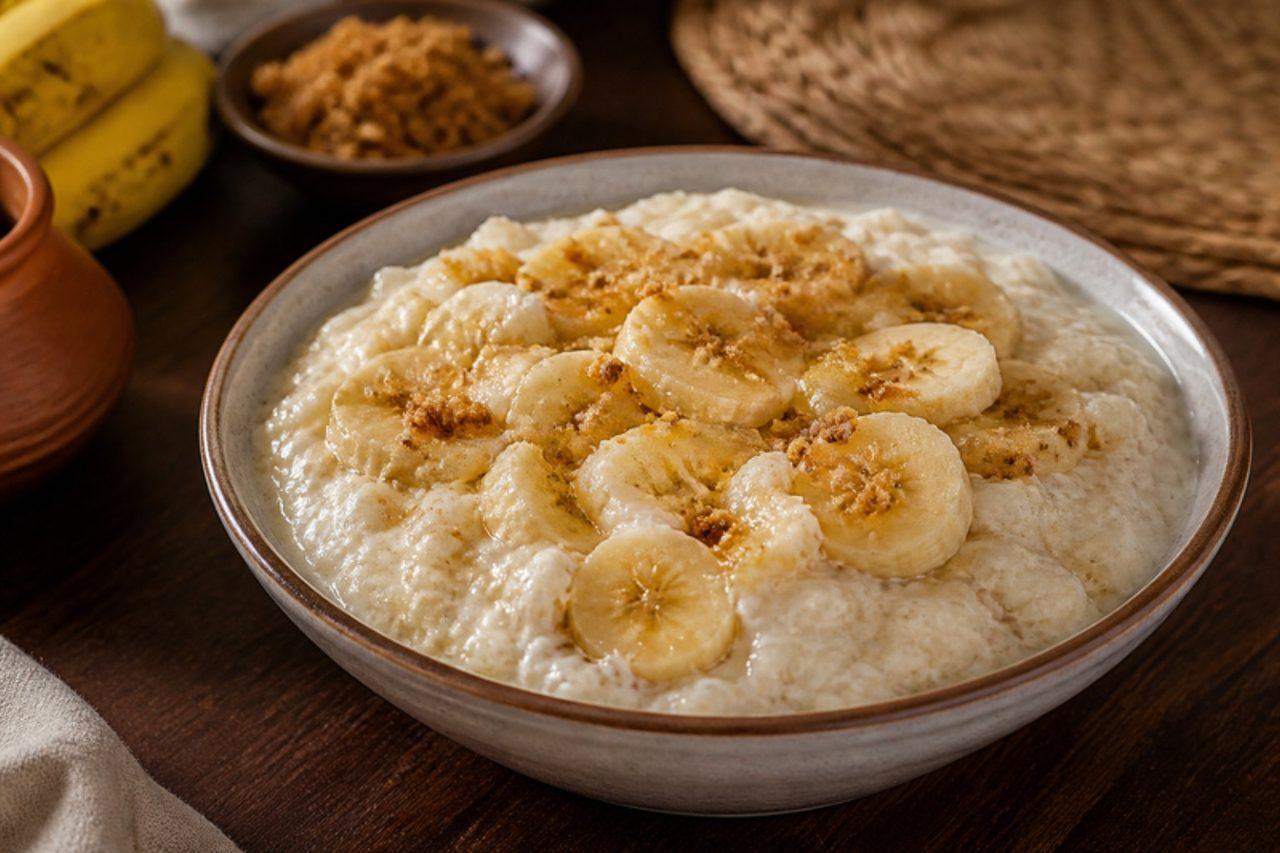
Doi chiraFlattened rice with curd
Nothing is cooked for doi chira, which is why it has been the breakfast of farmers and fishermen in Barisal for generations: flattened rice is rinsed, softened in thick, slightly sour curd and sweetened with jaggery or sugar, then mashed together with a ripe banana. The texture is soft and creamy with a little chew from the rice flakes, and the taste is cool, sweet and tangy. It is eaten on hot summer mornings, at village fairs and as part of the Pohela Boishakh spread, and it is a favourite of children and of anyone fasting who wants something gentle. The usual misstep is soaking the chira for too long, which turns it to paste; a quick rinse is all it needs before the curd does the rest. Chef's tip: use thick-cut chira, not the thin kind for frying, so the flakes hold their shape.
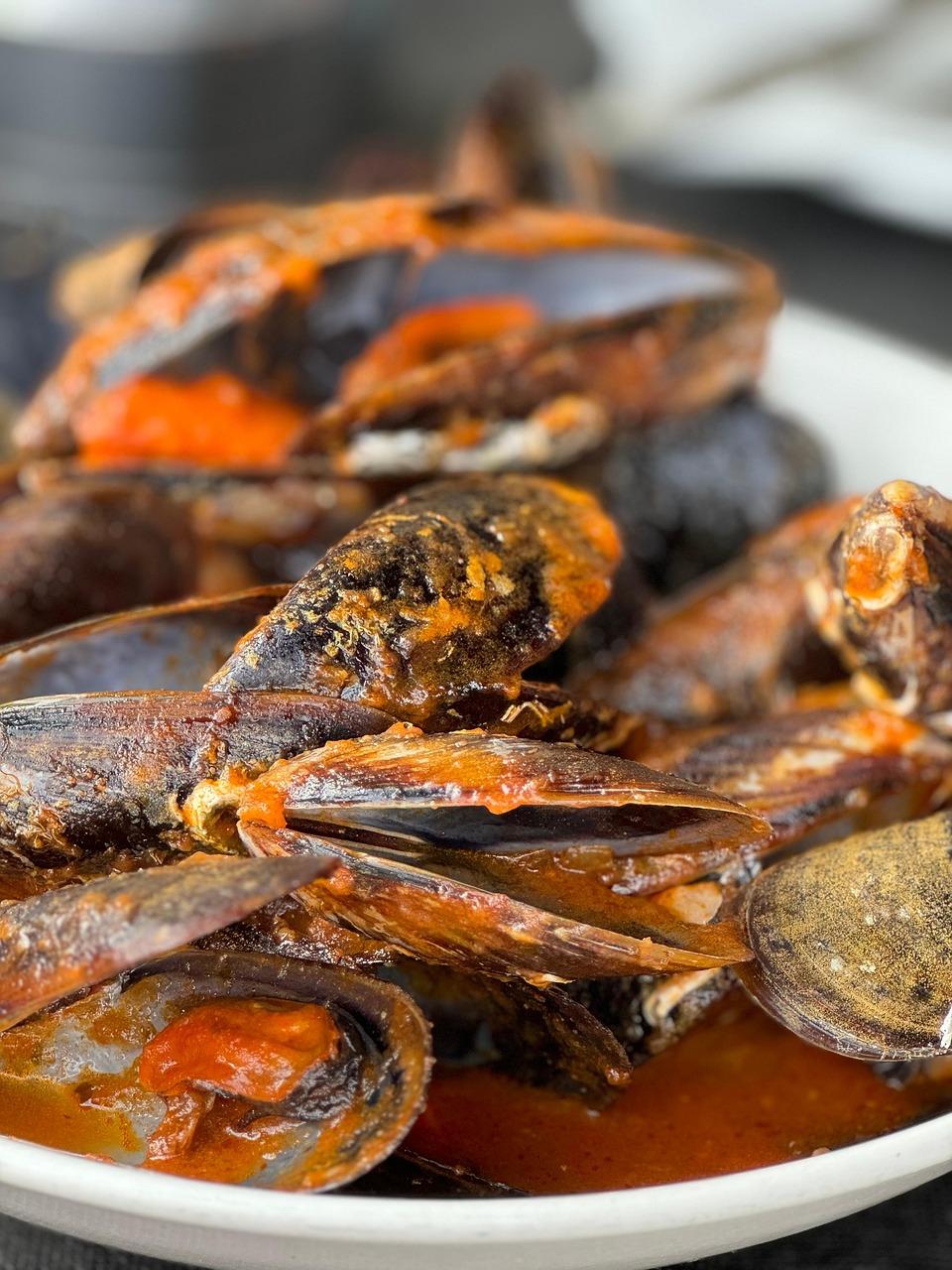
Midia saganakiMussels with tomato and feta
Thessaloniki is Greece's mussel capital, with farms in the Thermaic Gulf a few kilometres from the seafront ouzeries where this two-handled pan arrives, still bubbling, at the table. Mussels steam open in a quick sauce of peppers, tomato and chilli, and crumbled feta melts into the juices at the end. Bread is essential. The classic version adds a splash of ouzo; this one is alcohol-free, using a pinch of fennel seed for that aniseed note (add 2 tbsp ouzo with the tomatoes if you like). Common mistake: overcooking — take the pan off the heat as soon as the shells open. Chef's tip: buy mussels on the day and keep them in the fridge in a bowl covered with a damp cloth, never in water.
 Greek
