
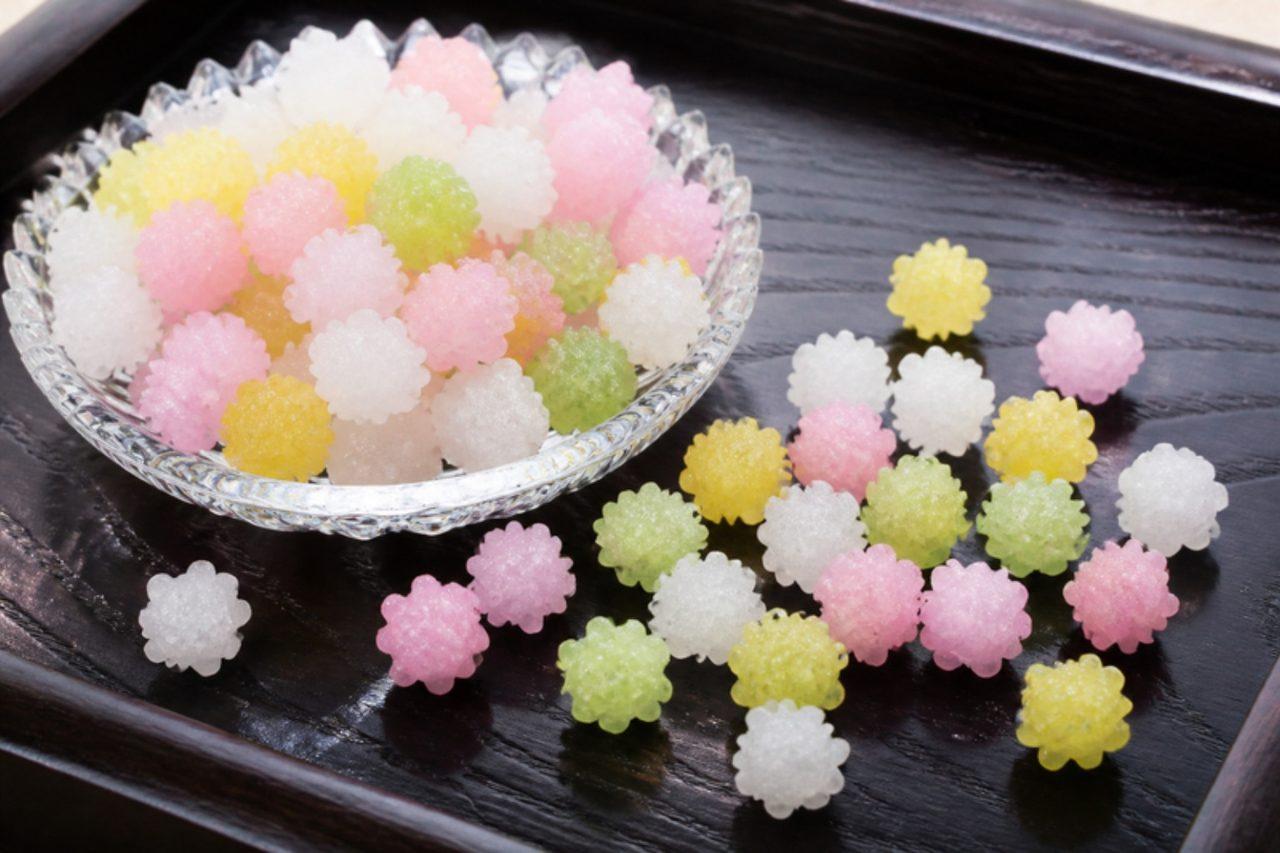
AI-generated image
Konpeito (Japanese sugar stars)
Tiny star-shaped sugar candies built up by rolling syrup over sugar crystals



Konpeito came to Japan with Portuguese traders in the sixteenth century and became a treasured gift; Kyoto confectioners still make them the old way, rolling them in a tilted, heated pan for two weeks or more. Today the tiny pastel stars are given as wedding and birth favours, slipped into tins of emergency hardtack biscuits, and nibbled with green tea. They crunch like a sugar cube and taste purely of sugar, sometimes with a hint of fruit. This home version uses a wok over the lowest heat and a few patient hours, which gives smaller, knobbly stars rather than the perfect shop ones. They are naturally egg-free: they are made of nothing but sugar, and the setting comes from thin layers of syrup crystallising one after another. Chef's tip: add the syrup a teaspoon at a time and keep the crystals rolling until dry. The common mistake is pouring in too much, which glues everything into one clump.
- Total time
- 240 min
- Difficulty
- hard
- Serves
- 20
Ingredients
- 1 oz coarse sugar crystalsthe largest crystals you can find
- 14 oz granulated sugar
- ¾ cup water
- 3 drops natural food colouring (optional)
Shop this recipe on Amazon
What you'll need
Spices & pantry
Links open Amazon in a new tab. As an Amazon Associate, WhatToEat.Today earns from qualifying purchases.
Method
0/7 doneStep 1: Put 14 oz granulated sugar and ¾ cup water in a small pan over a medium heat and stir until dissolved. Simmer to 225°F, until slightly syrupy, then keep it warm over the lowest heat.
8 minStep 2: Heat a heavy wok or wide frying pan over the lowest possible heat until it feels hot to the palm held just above it. Add 1 oz coarse sugar crystals and spread them out.
3 minStep 3: Drizzle 1 tsp of the warm syrup over the crystals and keep them rolling with your fingers or a wide spatula until they look dry and white again, about 2–3 minutes.
3 minStep 4: Repeat, adding 1 tsp of syrup every 2–3 minutes and keeping the crystals moving. Shake them through a coarse sieve now and then and break apart any that stick together.
60 minStep 5: After about an hour, small bumps start to appear on each crystal. Keep going, with the same rhythm, for another 2 hours, until the stars are 5–8 mm across with clear points.
120 minStep 6: For coloured stars, stir 3 drops natural food colouring into the last 3 tbsp of syrup and use it for the final layers.
30 minStep 7: Spread the konpeito on a tray to cool and dry for 30 minutes, then store airtight. They keep for months.
Nutrition per serving
- Calories
- 80 kcal
- Protein
- 0 g
- Carbs
- 20 g
- Fat
- 0 g
- Fibre
- 0 g
Nutrition values are estimates.
KrazyBadal
Good to know
- How long does konpeito (Japanese sugar stars) take?
- About 240 minutes in total: 10 minutes to prepare and 230 minutes to cook.
- How many people does it serve?
- 20 as written. Change the servings above the ingredients and every amount scales to match.
- Is it vegan?
- Yes. It has no meat, fish, dairy or eggs.
- Is it gluten free?
- Yes, as written. Check the labels on stock, sauces and spice mixes, which sometimes contain gluten.
- What can I use instead of granulated sugar?
- Caster sugar, same amount.
Reviews
No reviews yet. Be the first to cook it.
Rate this recipe
Sign in to rate and review this recipe.
You might also like

Miso soup
Miso soup (味噌汁) is drunk every day in homes all over Japan, at breakfast as well as dinner, beside a bowl of rice. The base is dashi; this vegan version uses kombu and dried shiitake instead of bonito, which gives it a deep, rounded flavour. Silken tofu and wakame seaweed are the classic fillings. It takes ten minutes; just remember not to boil the miso. Chef's tip: add the miso at the very end and never let it boil. Boiling kills the miso's fresh, fermented aroma; Japanese cooks say the soup should only 'smile', with the surface barely trembling.


Yaki onigiriGrilled rice balls
Yaki onigiri (焼きおにぎり) are rice balls grilled until they form a crisp, toasty crust, then brushed with soy sauce glaze. They are eaten all over Japan, at izakaya, at barbecues and from the freezer section, as a snack or with miso soup. The inside stays soft and steamy while the outside crackles. Best eaten hot, straight from the pan. Chef's tip: let the shaped rice balls dry for 10 minutes before they go in the pan. A drier surface forms a better crust and won't stick, and the glaze goes on only at the end so it doesn't burn.
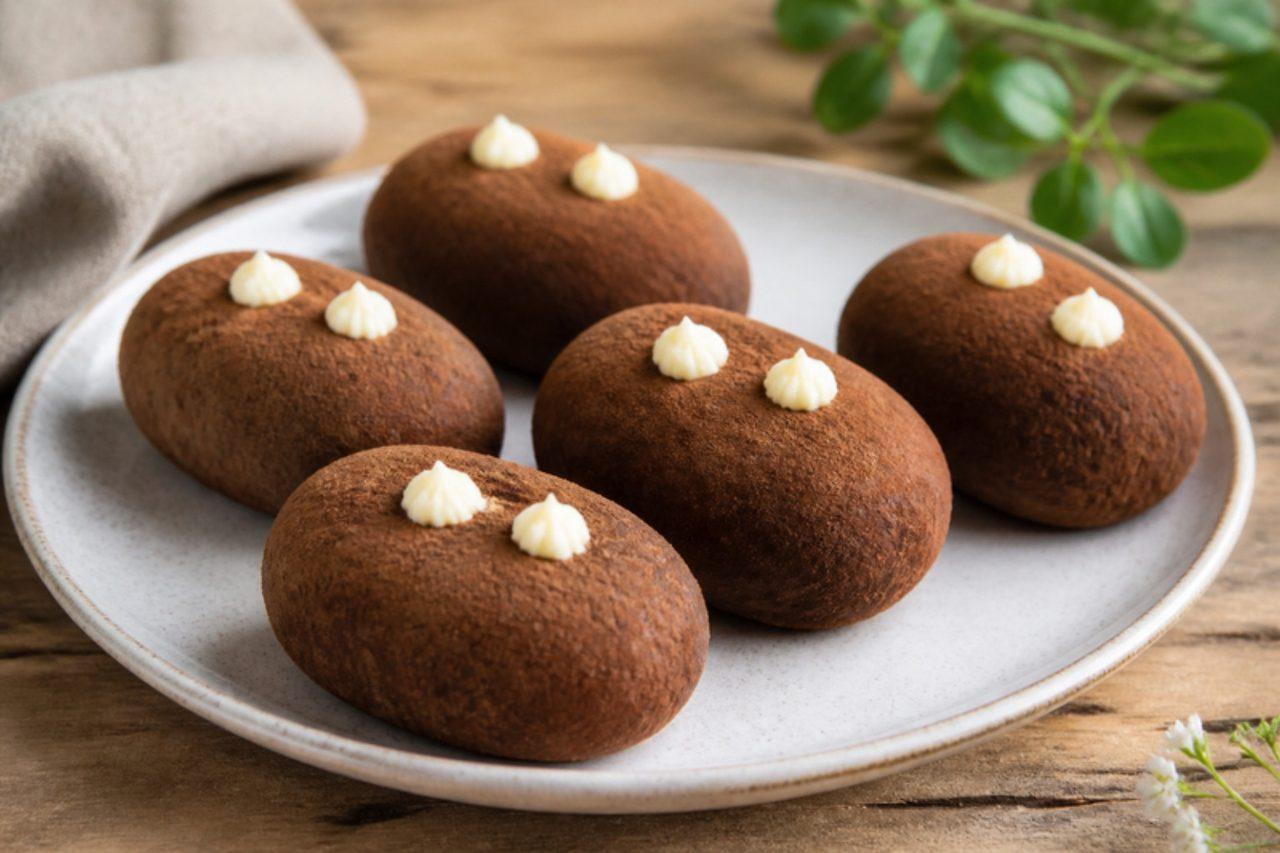
Kartoshka cakeCocoa and cake crumb truffles
Soviet cafés and school canteens sold these knobbly brown 'potatoes' for a few kopecks, and they began as a thrifty way to use up sponge and biscuit trimmings at the bakery. Crumbs are bound with butter and sweetened condensed milk, flavoured with cocoa and vanilla, shaped into little potatoes, rolled in cocoa and finished with two dabs of pale butter cream for the sprouts. They are fudgy and dense like a brownie truffle, need no oven, and children love making them. Traditional bakers added a spoonful of rum, an optional extra for adult batches only; this version is alcohol-free with vanilla. The usual slip is coarse crumbs, which make the potatoes crack, so blitz them as fine as sand. Chef's tip: chill the shaped potatoes for at least 20 minutes so they hold their shape and slice cleanly.
 Russian