
AI-generated image
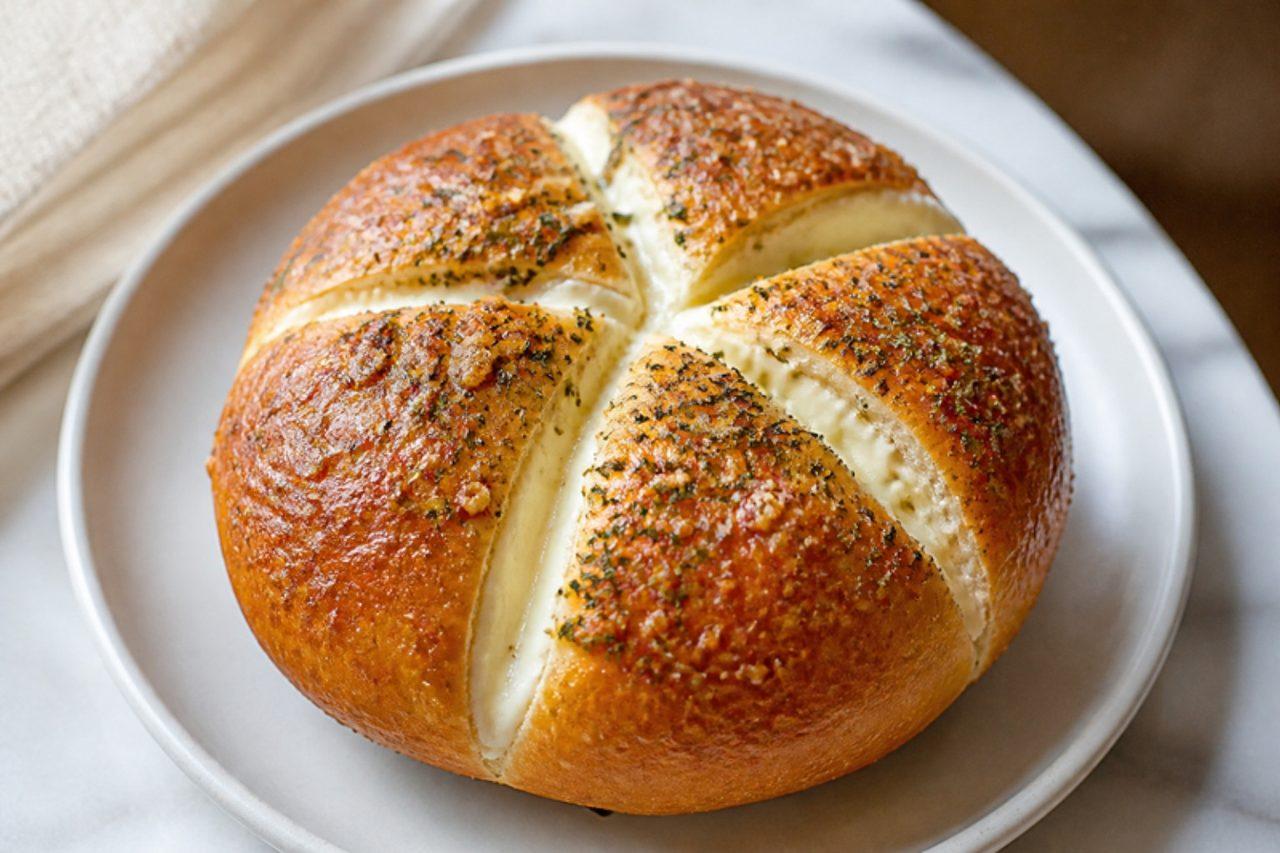
Korean garlic cream cheese bread
Gangneung's six-wedge buns stuffed with cream cheese and soaked in garlic butter
 Korean
Gangneung, the seaside city on Korea's east coast, made this bun famous: its name, yukjjok maneul-ppang (육쪽마늘빵), means 'six-clove garlic bread', because each round loaf is cut into six wedges like a bulb of garlic. The cuts are piped full of sweet cream cheese, then the whole bun is dunked in a garlicky butter custard and baked again, so it comes out crisp and golden on top, soft and rich inside, sweet, salty and savoury in one bite. Tourists queue for it at market stalls and cafés, and it is now a Korean café favourite eaten with iced americano. The most common slip is cutting right through the base; the wedges then fall apart in the garlic bath, so stop about 1 cm short. Chef's tip: bake and cool the buns a day ahead, or use day-old buns; firm, cooled bread slices cleanly and soaks up the garlic butter without going soggy.
- Total time
- 170 min
- Difficulty
- medium
- Serves
- 6
Ingredients
For the buns
- 10 ½ oz strong white bread flour
- 1 oz caster sugar
- ⅛ oz salt
- ⅛ oz instant dried yeast
- ¾ cup whole milklukewarm
- ⅞ oz unsalted buttersoft
For the cream cheese filling
- 7 oz full-fat cream cheeseat room temperature
- 1 oz icing sugar
- 1 tbsp milk
For the garlic butter
- 2 ⅞ oz unsalted buttermelted
- 6 cloves garlicvery finely minced
- 1 eggbeaten; for egg-free, leave out and add 2 tbsp milk
- 1 ⅜ oz sweetened condensed milk
- 1 tbsp honey
- ¼ tsp salt
- 1 tsp dried parsleyor 1 tbsp finely chopped fresh
Shop this recipe on Amazon
What you'll need
Spices & pantry
Fresh ingredients (7)
Links open Amazon in a new tab. As an Amazon Associate, WhatToEat.Today earns from qualifying purchases.
Method
0/11 doneStep 1: Mix 10 ½ oz strong white bread flour, 1 oz caster sugar, ⅛ oz salt and ⅛ oz instant dried yeast. Add ¾ cup whole milk and mix to a soft dough, then knead for 5 minutes, add ⅞ oz unsalted butter and knead for 7–8 minutes more until smooth and elastic.
13 minStep 2: Cover and leave in a warm place for about 1 hour, until doubled.
60 minStep 3: Divide into 6 pieces, shape into tight balls and set on a lined tray, well apart. Cover and prove for 35–40 minutes, until puffy.
38 minStep 4: Meanwhile heat the oven to 375°F (350°F fan). Bake for 14–16 minutes, until golden, hollow-sounding underneath and about 194°F in the centre. Cool completely.
15 minStep 5: Beat 7 oz full-fat cream cheese, 1 oz icing sugar and 1 tbsp milk until smooth and put into a piping bag with a plain nozzle (or a sandwich bag with the corner snipped off).
Step 6: With a serrated knife, cut each bun into 6 wedges from the top, stopping about 1 cm above the base so the wedges stay joined.
Step 7: Gently open the cuts and pipe cream cheese generously into each one, then a little on top in the centre.
Step 8: Whisk 2 ⅞ oz unsalted butter, 6 cloves garlic, 1 egg, 1 ⅜ oz sweetened condensed milk, 1 tbsp honey, ¼ tsp salt and 1 tsp dried parsley in a wide bowl until smooth.
Step 9: Dip each bun upside down into the garlic butter for a few seconds, then spoon more over the sides and into the cuts so the whole surface is coated. Set on a lined tray and spoon over any leftover garlic butter.
Step 10: Heat the oven to 350°F (300°F fan). Bake for 12–15 minutes, until the tops are crisp and deep golden and the garlic butter has set with no wet, eggy patches.
14 minStep 11: Cool for 10 minutes before eating warm. Keep leftovers in the fridge for up to 2 days and reheat in the oven for 5 minutes.
10 min
Nutrition per serving
- Calories
- 520 kcal
- Protein
- 11 g
- Carbs
- 52 g
- Fat
- 30 g
- Fibre
- 2 g
Nutrition values are estimates.
KrazyBadal
Good to know
- How long does korean garlic cream cheese bread take?
- About 170 minutes in total: 140 minutes to prepare and 30 minutes to cook.
- How many people does it serve?
- 6 as written. Change the servings above the ingredients and every amount scales to match.
- Is it vegetarian?
- Yes. It has no meat or fish.
- What can I use instead of strong white bread flour?
- Plain flour, same amount (the dough will be softer and rise a little less).
- What can I use instead of caster sugar?
- Caster sugar, same amount.
Reviews
No reviews yet. Be the first to cook it.
Rate this recipe
Sign in to rate and review this recipe.
You might also like

ChipaCheese bread rings
In Paraguay you hear 'chipa, chipa!' called by vendors with big baskets on buses and street corners, and every family bakes it for Holy Week, when chipa is the food of Good Friday. Cassava starch, a little cornmeal, butter, eggs and a lot of hard cheese are kneaded into a dough scented with aniseed, shaped into rings or small rolls and baked in a hot oven, traditionally a domed clay tatakua. It's chewy, crisp outside and best warm with cocido (toasted yerba tea). Chef's tip: the dough should feel soft and slightly greasy; add milk a spoon at a time, as too much makes the chipa spread flat.
 Paraguayan

SalufPuffy flatbread
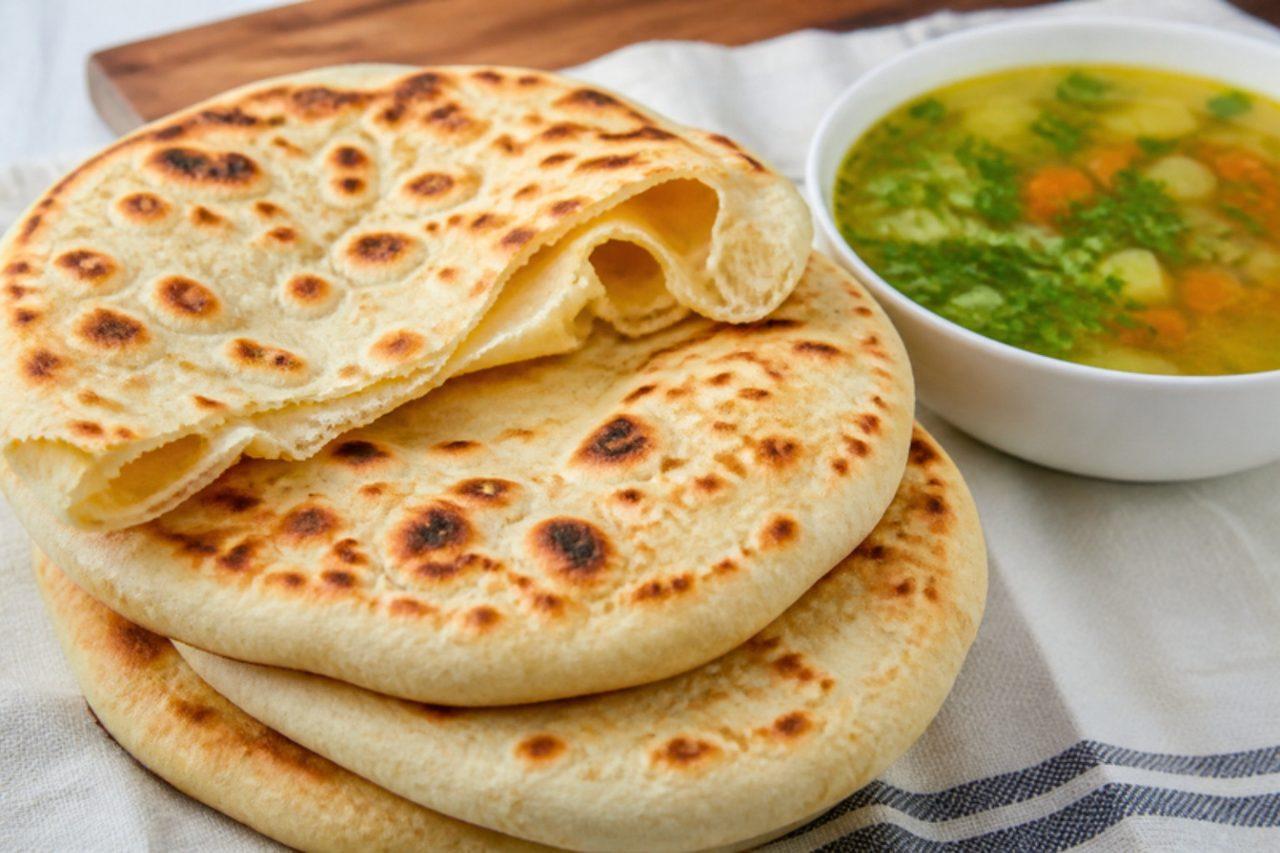
Saluf is the everyday bread of Yemenite Israelis, slapped onto a hot pan or taboon in Rosh HaAyin and Sha'arayim in Rehovot and eaten with marak temani, hilbe and zhug. It is soft and blistered, thicker than pita and with no pocket, made to tear and dunk. Home cooks often roll it too thin, which gives a cracker; it should be about 1 cm thick so it stays pillowy. Chef's tip: cook it under a lid on a very hot dry pan for the first minute, which traps steam and puffs it the way a taboon does.
 Israeli

DakjukChicken and rice porridge
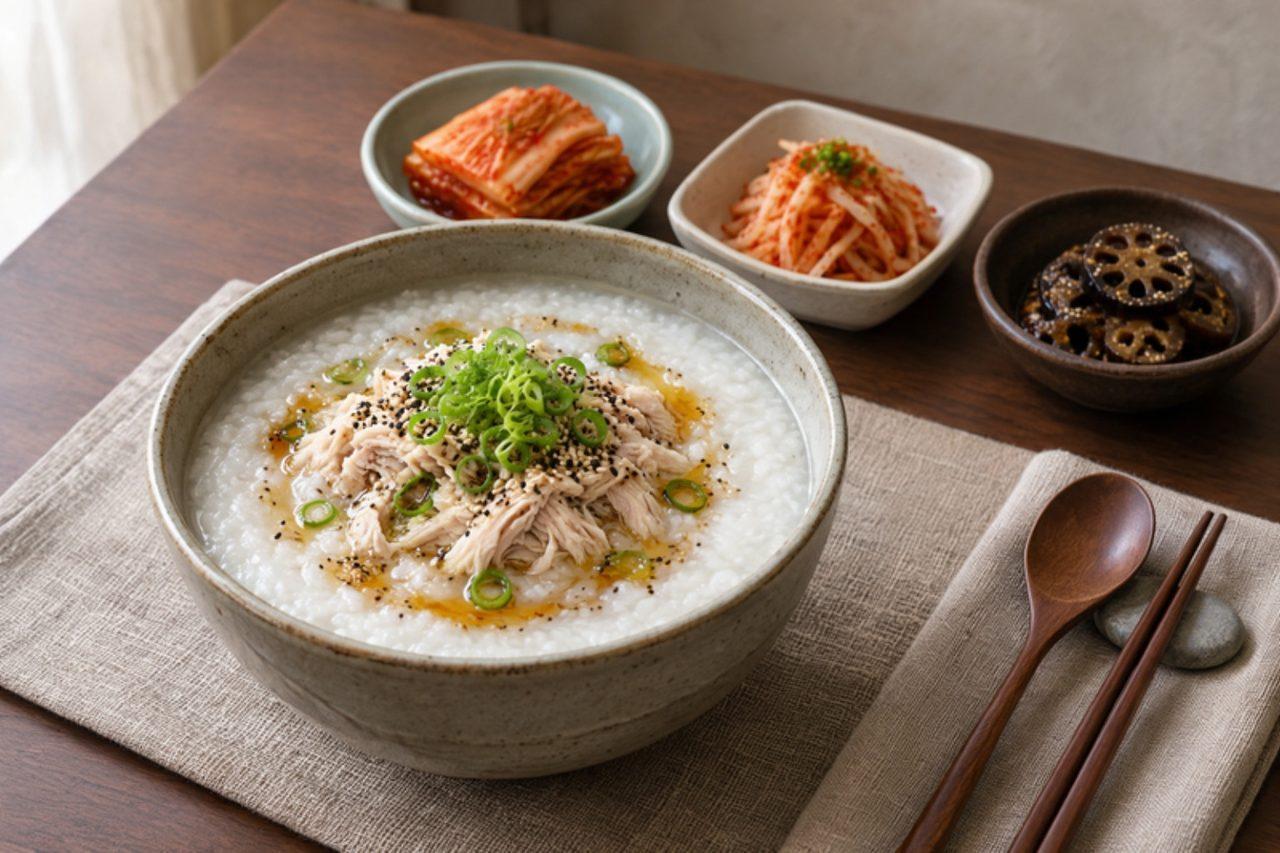
All over Korea, dakjuk is the bowl a mother makes on a cold morning or when someone is under the weather: chicken simmered with garlic and ginger, the meat pulled into shreds, and soaked rice cooked down in the broth until it turns into a soft, savoury porridge finished with sesame oil. It is eaten for breakfast or as a gentle lunch, with a little kimchi on the side. The usual mistake is boiling the chicken hard, which clouds the broth and toughens the meat; keep it at a lazy simmer. Chef's tip: fry the soaked rice in sesame oil for two minutes before the broth goes in, so the grains toast lightly and the porridge tastes nutty rather than flat.