
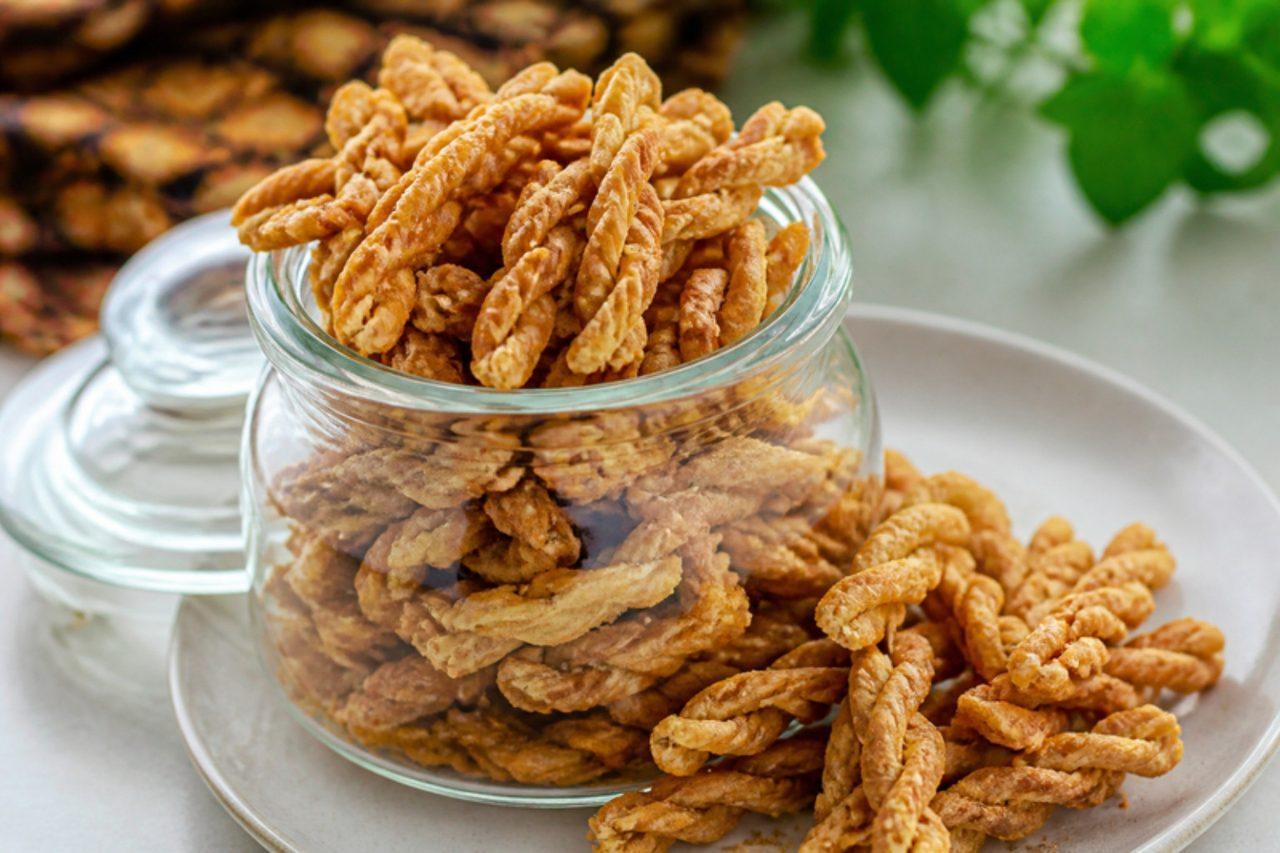
AI-generated image
Kue akar kelapa
Fried coconut root twists
Crunchy fried 'coconut root' twists from Betawi Jakarta for Lebaran


Kue akar kelapa, 'coconut root cookies', are a Betawi Lebaran tradition in Jakarta, piped in tangled squiggles that look like the roots of a coconut palm and fried until crisp and golden. The dough of rice flour, coconut milk and egg gives a light crunch and a gently sweet, coconutty flavour, and the jars are filled days before Eid so they can be passed around to visiting relatives. Chef's tip: keep the oil at a steady medium heat, as oil that is too hot browns the outside before the inside dries and they turn chewy.
- Total time
- 60 min
- Difficulty
- medium
- Serves
- 12
Ingredients
For the dough
- 9 oz rice flour
- 1 ¾ oz tapioca starch
- 3 ½ oz caster sugar
- 1 egg
- ¾ cup thick coconut milkwarmed
- ⅔ oz buttermelted
- ½ tsp salt
- 2 tbsp white sesame seedsopt
For frying
- 4 ¼ cups vegetable oil
Shop this recipe on Amazon
What you'll need
Spices & pantry
Links open Amazon in a new tab. As an Amazon Associate, WhatToEat.Today earns from qualifying purchases.
Method
0/5 doneStep 1: Dry-toast 9 oz rice flour and 1 ¾ oz tapioca starch in a wok over a low heat for 8–10 minutes, stirring, until the flour feels light and squeaky; leave it to cool.
10 minStep 2: Whisk 1 egg with 3 ½ oz caster sugar and ½ tsp salt until pale, then stir in ⅔ oz butter and the warm ¾ cup thick coconut milk.
5 minStep 3: Add the flours and 2 tbsp white sesame seeds and knead to a smooth, soft dough that you can pipe; add a spoon of coconut milk if it cracks.
5 minStep 4: Heat 4 ¼ cups vegetable oil to 325°F. Press the dough through a cookie press or piping bag fitted with a star nozzle straight into the oil in short, tangled squiggles, a few at a time. Fry for 3–4 minutes, turning once, until light golden and the bubbling slows almost to nothing. A common mistake is frying them pale; under-fried twists go soft in the jar.
25 minStep 5: Drain on paper and cool completely before sealing in airtight jars; they keep for 2–3 weeks.
15 min
Nutrition per serving
- Calories
- 180 kcal
- Protein
- 2 g
- Carbs
- 22 g
- Fat
- 9 g
- Fibre
- 1 g
Nutrition values are estimates.
KrazyBadal
Good to know
- How long does kue akar kelapa take?
- About 60 minutes in total: 30 minutes to prepare and 30 minutes to cook.
- How many people does it serve?
- 12 as written. Change the servings above the ingredients and every amount scales to match.
- Is it vegetarian?
- Yes. It has no meat or fish.
- Is it gluten free?
- Yes, as written. Check the labels on stock, sauces and spice mixes, which sometimes contain gluten.
- Can I make it ahead?
- Yes. It keeps well, so you can cook it earlier in the day or the day before and reheat it.
- What can I use instead of caster sugar?
- Caster sugar, same amount.
- What can I use instead of egg?
- 1 tbsp ground flaxseed + 3 tbsp water per egg, left for 5 minutes (baking only; vegan).
Reviews
No reviews yet. Be the first to cook it.
Rate this recipe
Sign in to rate and review this recipe.
You might also like

Sayur lodehVegetables in coconut milk
Sayur lodeh is everyday cooking in Central Java, made in big pots in Solo and Semarang kitchens and ladled over rice, with lontong rice cakes at Lebaran, or alongside opor and sambal goreng on festive tables. It's soupy rather than thick: a fragrant broth of coconut milk, galangal, lemongrass and lime leaf that carries chunks of aubergine, long beans, chayote and sweetcorn, plus tempeh and tofu to make it a meal. The flavour is mellow and slightly sweet, so the heat comes from sambal on the side. Chef's tip: keep the pot at a gentle simmer once the coconut milk goes in and stir now and then — a rolling boil splits the coconut milk into oily curds.



SakarpadaSweet fried dough diamonds
Sakarpada (shakarpara) are little sweet diamonds of a rich dough made with ghee, milk and sugar, fried until golden and crunchy. They are a Diwali favourite with tea, and the cubes go into bhusu too. They keep for weeks in an air-tight tin.
 Indian

Yaki onigiriGrilled rice balls
Yaki onigiri (焼きおにぎり) are rice balls grilled until they form a crisp, toasty crust, then brushed with soy sauce glaze. They are eaten all over Japan, at izakaya, at barbecues and from the freezer section, as a snack or with miso soup. The inside stays soft and steamy while the outside crackles. Best eaten hot, straight from the pan. Chef's tip: let the shaped rice balls dry for 10 minutes before they go in the pan. A drier surface forms a better crust and won't stick, and the glaze goes on only at the end so it doesn't burn.
 Japanese
Perfect for:Eid