
AI-generated image
Kuih lapis
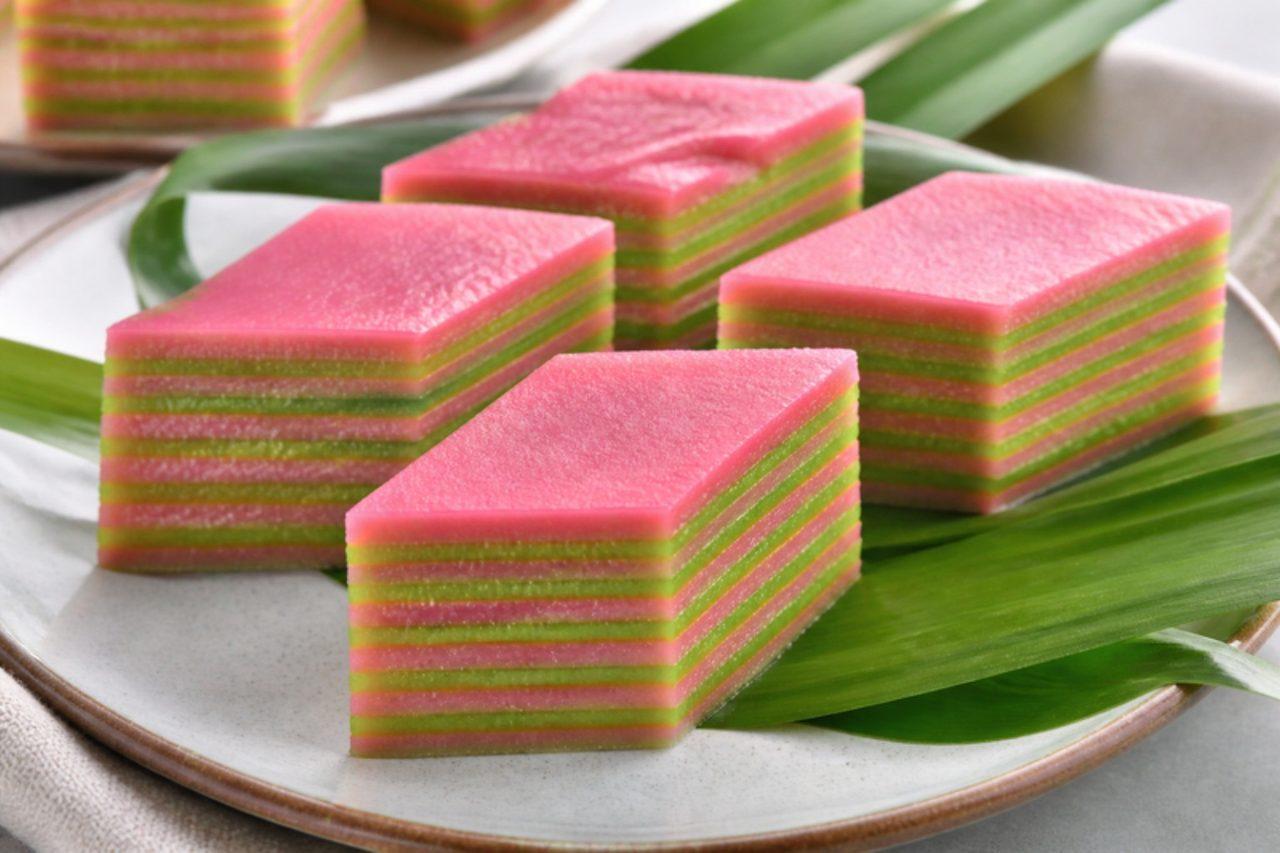
Steamed nine-layer coconut cake in pink and pandan green



Kuih lapis is the striped, bouncy cake piled on trays at Malaysian pasar malam (night markets) and laid out for guests at Hari Raya, Deepavali and Chinese New Year open houses. It's built from a thin coconut-milk batter of rice flour and tapioca starch, steamed one layer at a time, so each slice shows nine neat stripes, and children everywhere peel them off one by one. The texture is soft, springy and slightly chewy; the flavour is gentle coconut and pandan. It takes patience rather than skill. Chef's tip: steam the empty tin for 5 minutes before the first layer, so it sets evenly from the bottom.
- Total time
- 120 min
- Difficulty
- hard
- Serves
- 16
Ingredients
For the syrup
For the batter
Shop this recipe on Amazon
What you'll need
Spices & pantry
Links open Amazon in a new tab. As an Amazon Associate, WhatToEat.Today earns from qualifying purchases.
Method
0/8 doneStep 1: Simmer 8 oz sugar, 1 ¼ cups water and 4 pandan leaves in a pan over a medium heat for 5 minutes, stirring until the sugar dissolves and the syrup smells of pandan. Leave to cool until just warm; take out the leaves.
5 minStep 2: Whisk 5 ½ oz rice flour, 7 oz tapioca starch and ½ tsp salt in a big bowl. Gradually whisk in 2 ½ cups coconut milk, then the syrup, until completely smooth. Strain through a sieve to catch any lumps.
5 minStep 3: Divide the batter between two jugs (weigh them so they're even). Stir 3 tbsp pandan juice into one and 3 drops red food colouring into the other, to a soft pink.
Step 5: Stir the green batter well and pour about 100 ml into the hot tin, tilting to cover the base. Steam over a high heat for 5–6 minutes, until the layer is set, glossy and no longer liquid when you touch the middle. The usual mistake is pouring without stirring: the starch sinks fast, and the layers turn out thick on one side and thin on the other.
6 minStep 6: Stir the pink batter and pour the next 100 ml layer over the set one. Steam 5–6 minutes. Keep alternating, stirring before every pour, until all the batter is used, about nine layers.
50 minStep 7: Steam the final layer for 20 minutes, until the whole cake is firm and springy.
20 minStep 8: Cool completely, at least 4 hours at room temperature, before cutting. Warm kuih lapis is gummy and smears. Loosen the edges, turn out and cut into diamonds or bars with an oiled knife or a plastic scraper.
Nutrition per serving
- Calories
- 215 kcal
- Protein
- 1 g
- Carbs
- 38 g
- Fat
- 7 g
- Fibre
- 1 g
Nutrition values are estimates.
KrazyBadal
Good to know
- How long does kuih lapis take?
- About 120 minutes in total: 30 minutes to prepare and 90 minutes to cook.
- How many people does it serve?
- 16 as written. Change the servings above the ingredients and every amount scales to match.
- Is it vegan?
- Yes. It has no meat, fish, dairy or eggs.
- Is it gluten free?
- Yes, as written. Check the labels on stock, sauces and spice mixes, which sometimes contain gluten.
- What can I use instead of sugar?
- Caster sugar, same amount.
- What can I use instead of coconut milk?
- Single cream, same amount (not dairy free).
Reviews
No reviews yet. Be the first to cook it.
Rate this recipe
Sign in to rate and review this recipe.
You might also like
Baklava
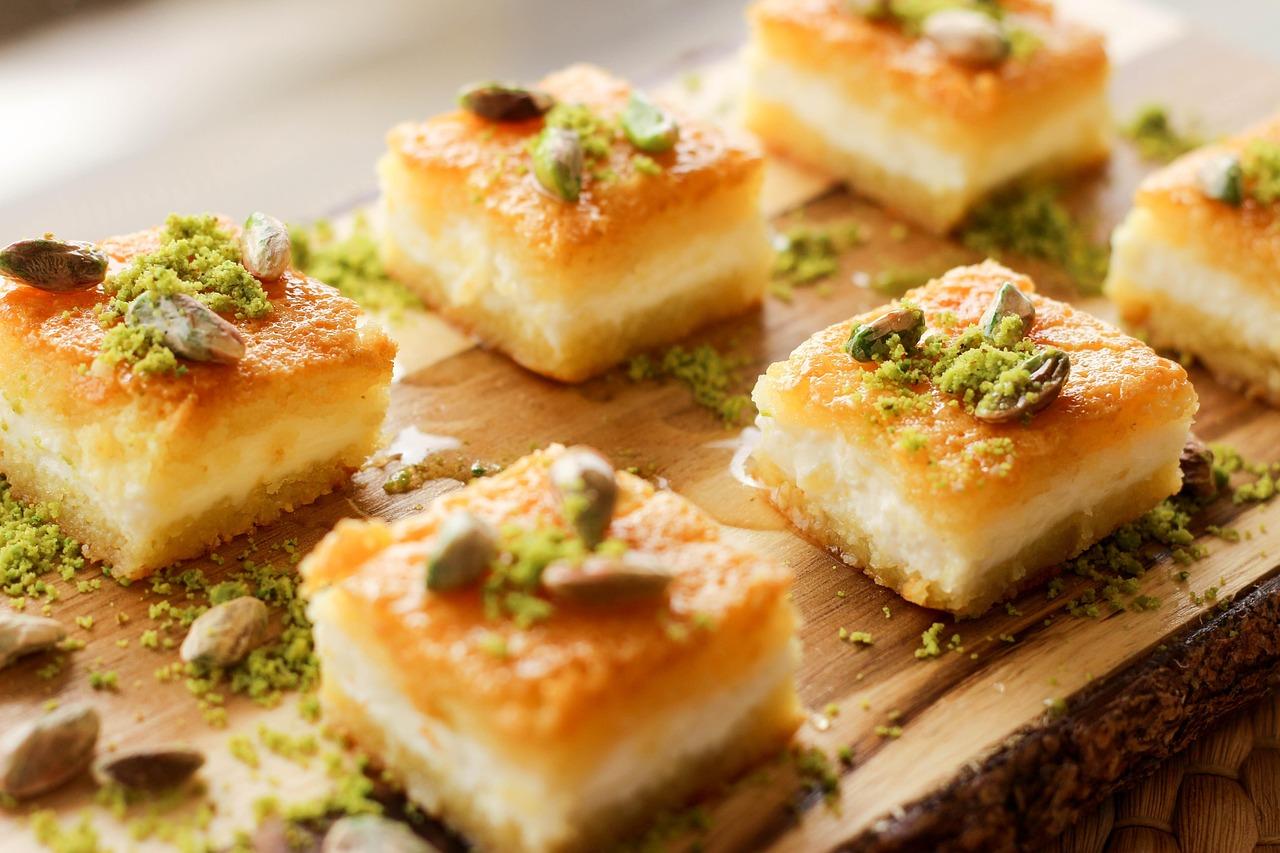
The famous layered pastry: crisp sheets of buttered fillo sandwich a filling of almonds, pistachios and cashews spiced with cinnamon, cardamom and saffron. After baking, the hot baklava is soaked in a syrup of sugar, honey, lemon, rose and cardamom and decorated with almond and pistachio flakes. Cut into 40 diamonds; serve with fresh cream or ice cream.

Laksam
Kota Bharu's morning market has its own noodle: laksam, thick sheets of steamed rice batter rolled up like little carpets and sliced into wheels. They are drowned in a pale, creamy gravy of pounded fish and coconut milk, then heaped with raw herbs and vegetables (ulam): cucumber, long beans, bean sprouts, daun kesum and torch ginger flower, with a spoonful of fiery chilli and budu, the region's fermented anchovy sauce. The result is soft and slippery, rich and cool at the same time. Locals eat it for breakfast or as a mid-morning snack. Chef's tip: pound the cooked fish with the shallots instead of blending it smooth; the gravy should feel faintly textured, like a thin porridge.

Marquesitas
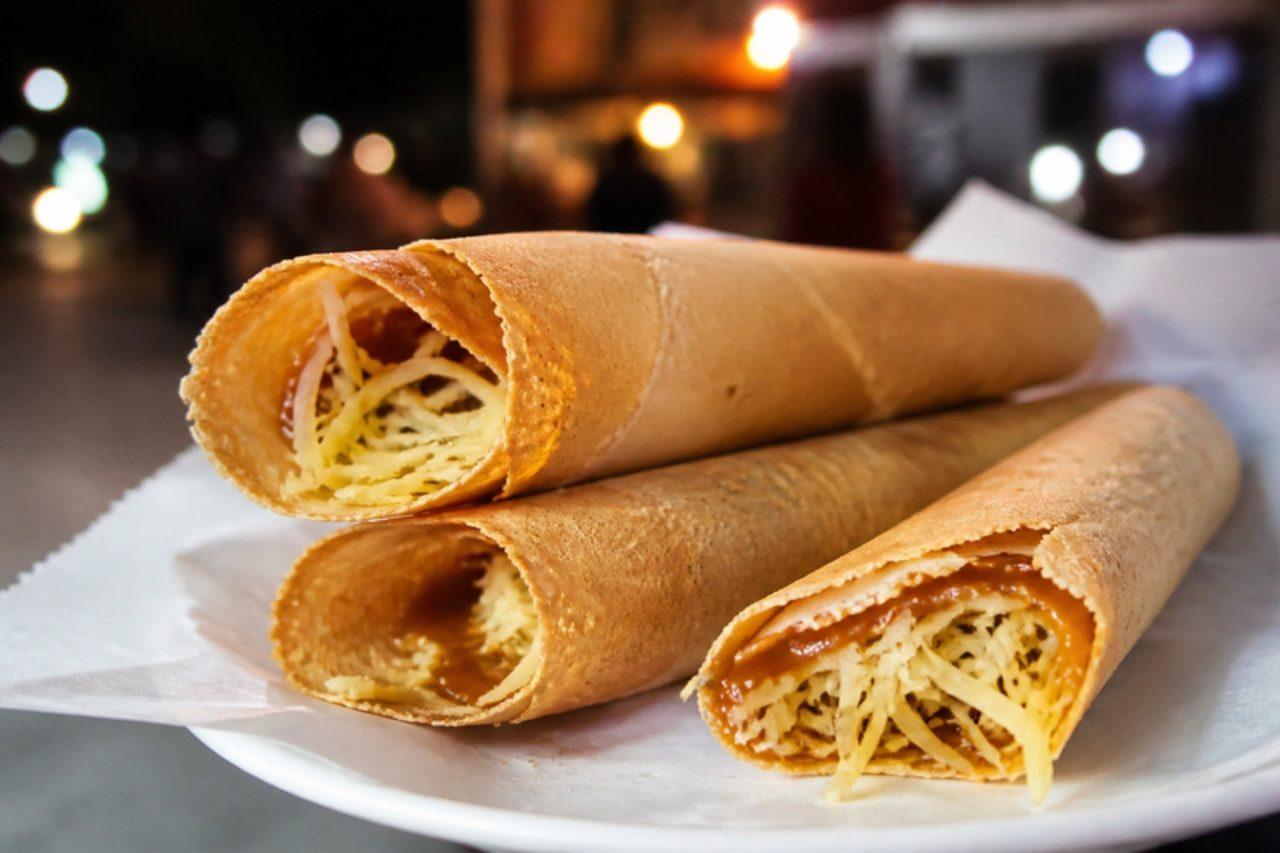
Evening in Mérida's Plaza Grande means the smell of marquesitas: thin batter pressed in hot hinged irons until crisp, then rolled like a cigar around grated Edam cheese and a sweet filling such as cajeta, chocolate-hazelnut spread or jam. Edam came to the Yucatán through the port trade with the Netherlands and became part of the local cooking, and the salty-sweet combination is the whole point. At home you can cook them in a thin, wide frying pan. Edam is usually made with animal rennet, so check the label or use a vegetarian Gouda-style cheese. Chef's tip: roll while the crêpe is still in the pan and hot; within seconds it hardens and will crack.
 Mexican