
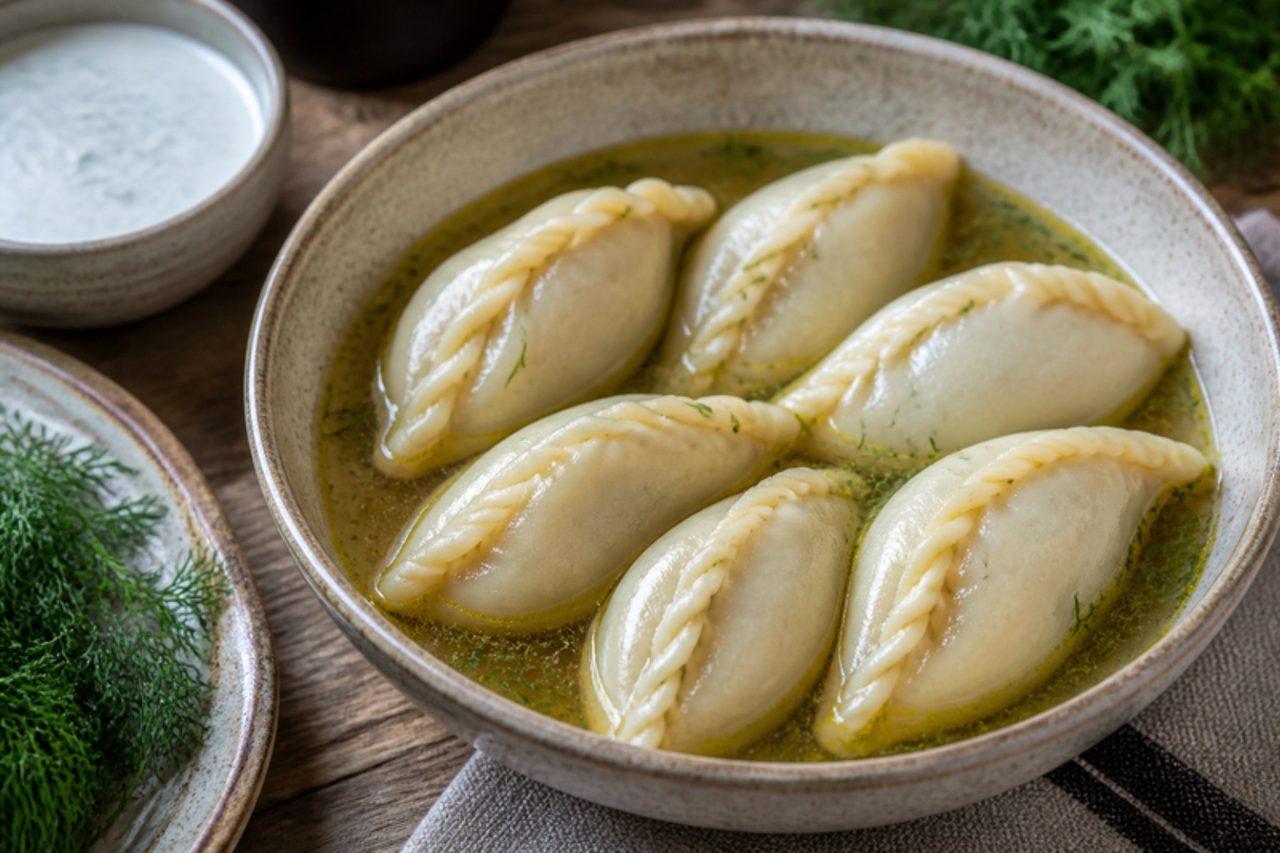
AI-generated image
Kurze
Kurze (курзе): Dagestani pleated teardrop dumplings with lamb, served in broth with garlic
 Russian
Every mountain people of Dagestan, Avars, Laks and Dargins among them, has its own kurze, but all share the beautiful plaited seam that runs along each teardrop dumpling like a braid. The lamb filling is chopped with plenty of onion and a little fat, then the dumplings are boiled and served in their broth with a sharp garlic and tomato dressing. In mountain villages they are made in big batches for guests, and in summer the same dough is filled with pumpkin or young nettles. The usual slip is overfilling, which makes the pleats burst in the pot. Chef's tip: practise the plait on a few pieces without filling first; once your fingers know the rhythm it goes quickly.
- Total time
- 105 min
- Difficulty
- hard
- Serves
- 4
Ingredients
For the dough
- 12 ½ oz plain flour
- ¾ cup warm water
- 1 egg
- ½ tsp salt
For the filling
- 2 onionsvery finely chopped
- 1 tsp salt
- ¾ tsp black pepperfreshly ground
- ½ tsp ground cumin
- 3 tbsp ice-cold water
For cooking and the dressing
- 6 ¼ cups lamb or beef stock
- 4 garlic clovescrushed
- ¾ cup tomato passata
- 1 tbsp cider vinegar
- ⅓ oz fresh coriander (optional)chopped
Shop this recipe on Amazon
Spices & pantry
Fresh ingredients (5)
Links open Amazon in a new tab. As an Amazon Associate, WhatToEat.Today earns from qualifying purchases.
Method
0/7 doneStep 1: Mix the 12 ½ oz plain flour, ½ tsp salt, 1 egg and warm ¾ cup warm water and knead for 8 minutes into a smooth, firm dough. Cover and rest for 30 minutes.
38 minStep 2: Mix the 16 oz lamb mince (or finely chopped lamb shoulder), 2 onions, 1 tsp salt, ¾ tsp black pepper, ½ tsp ground cumin and 3 tbsp ice-cold water until sticky. Keep in the fridge.
7 minStep 3: Roll the dough to 1.5 mm on a floured surface and cut out 8 cm rounds; you should get about 32.
10 minStep 4: Hold a round in one hand, add a teaspoon of filling and fold it over. Starting at one end, pinch and fold the edge alternately left and right to make a plaited seam, finishing with a point to form a teardrop.
30 minStep 5: Bring the 6 ¼ cups lamb or beef stock to a gentle boil in a wide pan and cook the dumplings in two batches for 8–9 minutes, until they float and the filling, tested in one, is no longer pink and reaches 160°F.
18 minStep 6: Meanwhile warm the ¾ cup tomato passata with the 4 garlic cloves and 1 tbsp cider vinegar in a small pan over a low heat for 3 minutes, until fragrant.
3 minStep 7: Serve the kurze in bowls with a ladle of the broth, spoon over the garlic dressing and scatter with ⅓ oz fresh coriander.
2 min
Nutrition per serving
- Calories
- 520 kcal
- Protein
- 29 g
- Carbs
- 62 g
- Fat
- 17 g
- Fibre
- 3 g
Nutrition values are estimates.
KrazyBadal
Good to know
- How long does kurze take?
- About 105 minutes in total: 80 minutes to prepare and 25 minutes to cook.
- How many people does it serve?
- 4 as written. Change the servings above the ingredients and every amount scales to match.
- What can I use instead of plain flour?
- Self-raising flour, same amount (then leave out the baking powder).
- What can I use instead of egg?
- 1 tbsp ground flaxseed + 3 tbsp water per egg, left for 5 minutes (baking only; vegan).
Reviews
No reviews yet. Be the first to cook it.
Rate this recipe
Sign in to rate and review this recipe.
You might also like

Kartoshka cake
Soviet cafés and school canteens sold these knobbly brown 'potatoes' for a few kopecks, and they began as a thrifty way to use up sponge and biscuit trimmings at the bakery. Crumbs are bound with butter and sweetened condensed milk, flavoured with cocoa and vanilla, shaped into little potatoes, rolled in cocoa and finished with two dabs of pale butter cream for the sprouts. They are fudgy and dense like a brownie truffle, need no oven, and children love making them. Traditional bakers added a spoonful of rum, an optional extra for adult batches only; this version is alcohol-free with vanilla. The usual slip is coarse crumbs, which make the potatoes crack, so blitz them as fine as sand. Chef's tip: chill the shaped potatoes for at least 20 minutes so they hold their shape and slice cleanly.
Tteokgalbi
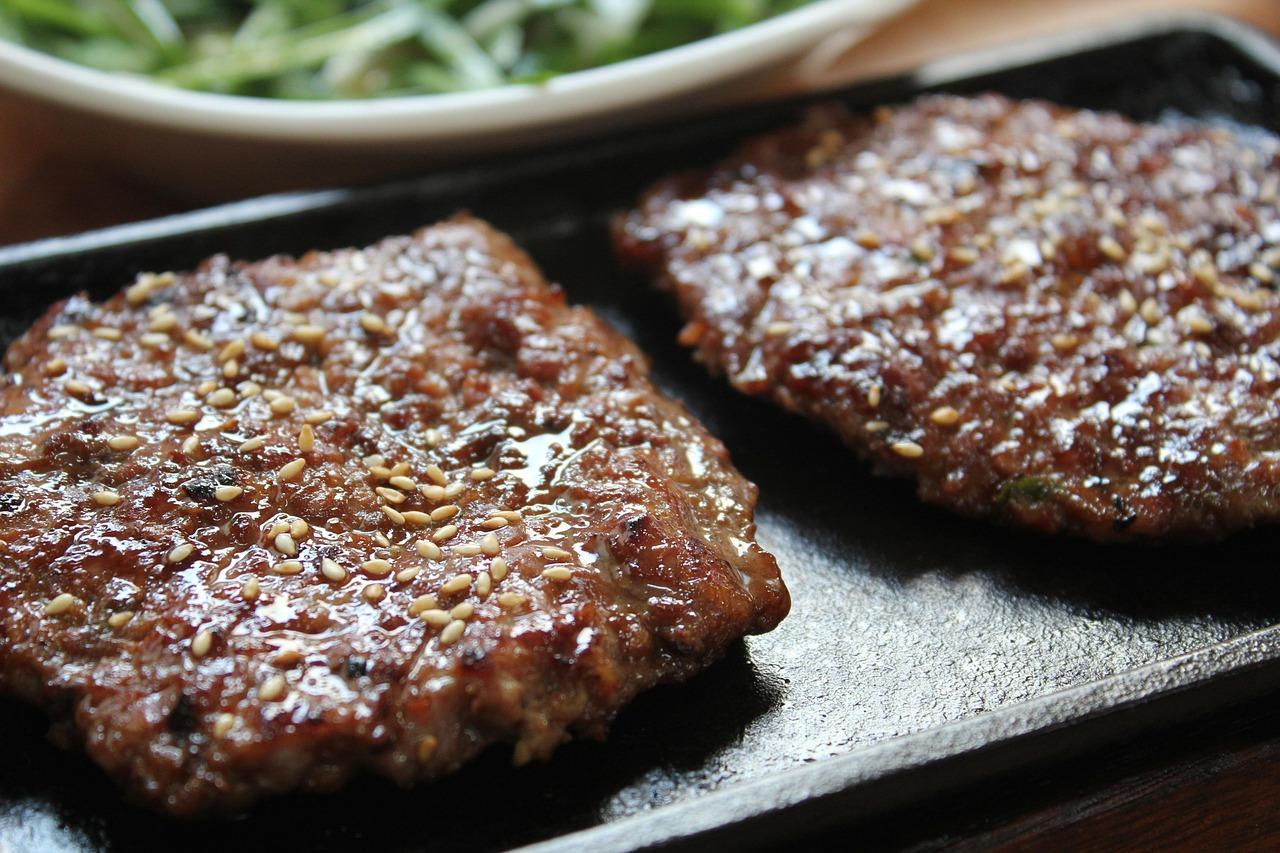
Tteokgalbi is rib meat chopped finely, pressed back into neat slabs and grilled, so it's soft enough to eat without struggling with a bone. Two places in South Jeolla claim it: Damyang, the bamboo county, where all-beef patties come with rice steamed in bamboo tubes, and Gwangju's Songjeong district, whose restaurant street near the railway station mixes beef with pork. This home version uses minced beef and pork, seasoned with soy, garlic and pear, then brushed with a soy and honey glaze as it cooks. Serve with rice, lettuce and a few banchan; leftovers are good cold in a lunchbox. Chef's tip: slap the mince against the bowl for a few minutes; it turns sticky and the patties hold together on the grill without any breadcrumbs.
 Korean

Pork souvlaki
This is a pork recipe. Walk through any Greek town after dark, from Athens to Thessaloniki, and the smell of souvlaki stands drifts down the street; cubes of pork shoulder grilled on thin skewers are the country's favourite cheap supper, eaten standing up or at a plastic-table taverna. At home you marinate the meat in lemon, olive oil, garlic and dried oregano, grill it hard and fast, and pile it on warm pitta with tzatziki, tomato and red onion. Chef's tip: cut the pork into even 2.5 cm cubes and leave a little fat on; lean loin dries out, shoulder stays juicy over high heat.
 Greek