
 Pakistani
Lachha paratha
Layered flaky paratha
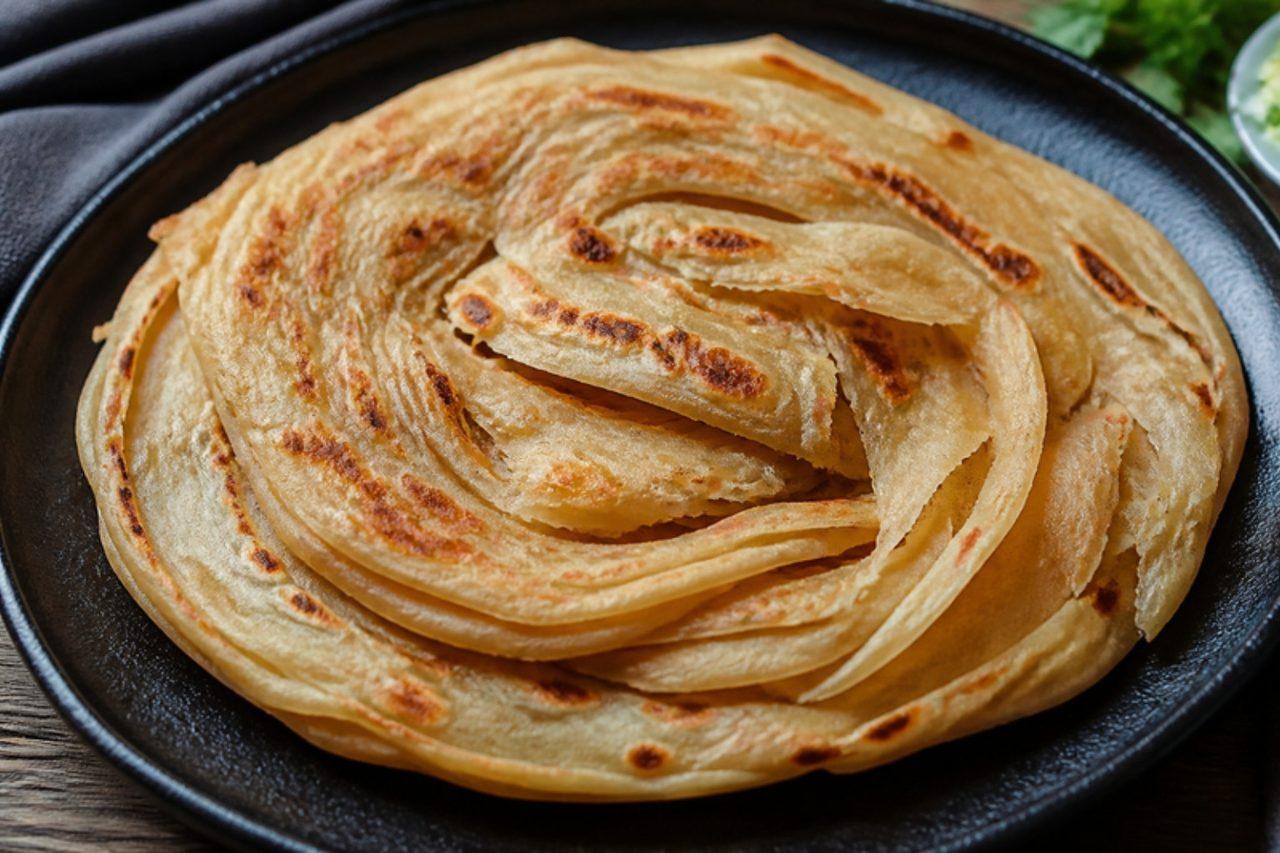
لچھا پراٹھا (lachha paratha): a pleated, coiled wholewheat paratha with dozens of crisp, flaky layers
The word lachha means a coil or a hank of thread, and the best way to understand the bread is to watch a paratha-maker at a Peshawar or Lahore breakfast stall pleat a thin sheet of ghee-smeared dough like a paper fan, wind it into a snail and roll it out again. On the tawa the layers separate into rings of crisp, flaky dough that you can pull apart with your fingers, and a quick scrunch between the palms when it comes off the heat opens them up even more. It is the paratha for Sunday breakfasts with omelette or chana, for Eid lunches with qorma and for weddings beside tandoori dishes. What lets most home cooks down is a stingy hand with the ghee between the pleats, which welds the layers back together. Chef's tip: dust each greased sheet with a little dry flour before pleating; the flour and ghee together keep the layers apart as they cook.
- Prep
- 25 min
- Cook
- 20 min
- Difficulty
- Medium
- Serves
- 4
- Per serving
- 420 kcal
Ingredients
For the dough
- 10 ½ oz wholewheat flour (chapati atta)
- 3 /4 tsp salt
- 1 tbsp ghee
- ¾ cup waterabout
For layering and cooking
- 6 tbsp gheemelted
- 2 tbsp plain flour (maida)for dusting the layers
Tick what you have; the rest goes in the basket.
Method
0/10 doneStep 1: Mix 10 ½ oz wholewheat flour (chapati atta) and 3 /4 tsp salt, rub in 1 tbsp ghee and add ¾ cup water gradually, kneading for 5 minutes into a soft, smooth dough.
Step 2: Cover and rest for 15 minutes so the gluten relaxes and the dough rolls thin.
Step 3: Divide the dough into four balls and roll one into a very thin round about 25 cm across.
Step 4: Brush the round with 2 teaspoons of 2 ⅜ tbsp ghee and sprinkle it lightly with 2 tbsp plain flour (maida).
Step 5: Starting at one edge, pleat the sheet back and forth into a 2 cm wide fan, like folding paper, then stretch the pleated strip gently to lengthen it.
Step 6: Coil the strip into a tight spiral, tuck the end underneath and press it flat; repeat with the other balls and rest the coils for 5 minutes.
Step 7: Roll each coil gently into a 16 cm round, pressing only lightly so the layers are not crushed.
Step 8: Cook on a tawa over a medium heat for about 1 minute until light brown spots appear underneath, then flip.
3 minStep 10: Take the hot paratha off the heat and scrunch it between your palms (or two spatulas) to open the layers, then serve straight away.
KrazyBadal
Reviews
No reviews yet. Be the first to cook it.
Rate this recipe
Sign in to rate and review this recipe.
You might also like
SalufPuffy flatbread
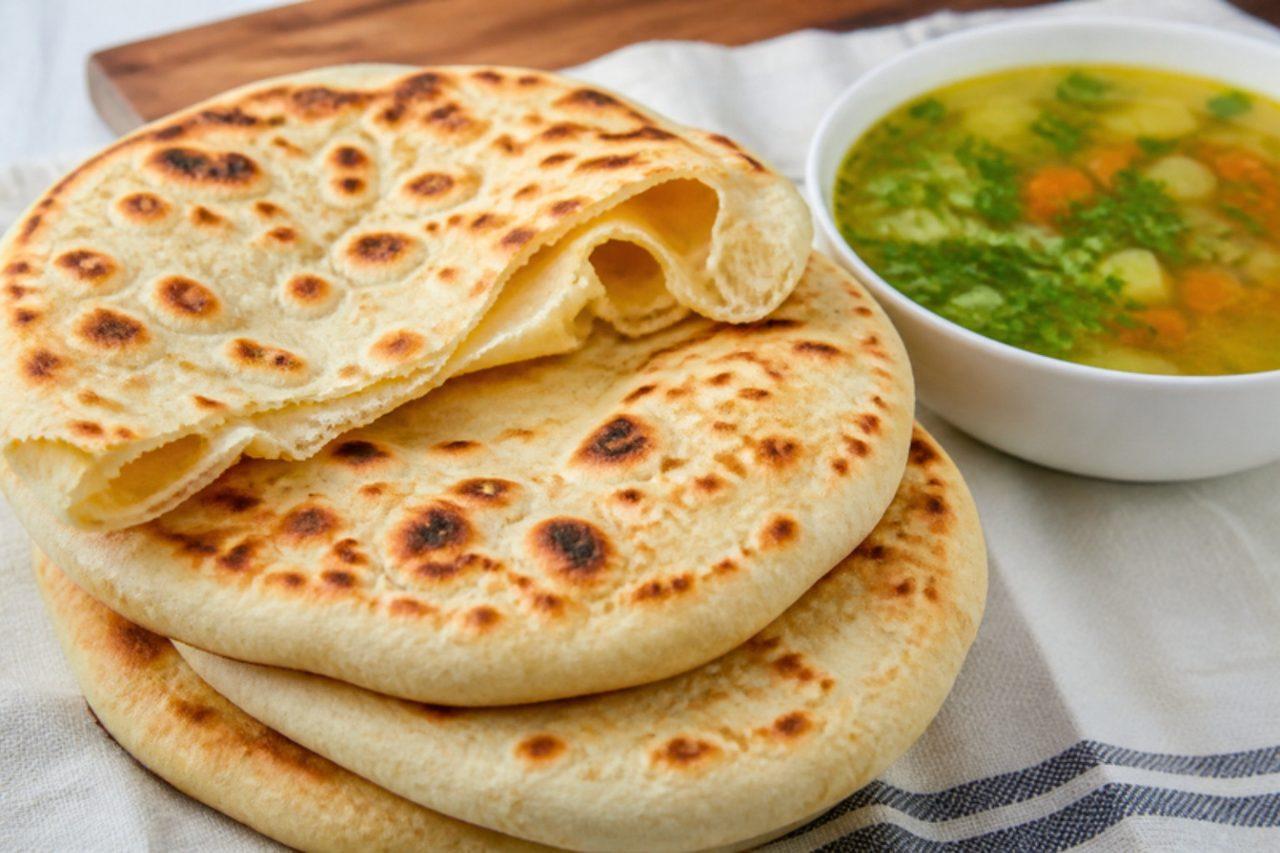
Saluf is the everyday bread of Yemenite Israelis, slapped onto a hot pan or taboon in Rosh HaAyin and Sha'arayim in Rehovot and eaten with marak temani, hilbe and zhug. It is soft and blistered, thicker than pita and with no pocket, made to tear and dunk. Home cooks often roll it too thin, which gives a cracker; it should be about 1 cm thick so it stays pillowy. Chef's tip: cook it under a lid on a very hot dry pan for the first minute, which traps steam and puffs it the way a taboon does.
 Israeli


ChipaCheese bread rings
In Paraguay you hear 'chipa, chipa!' called by vendors with big baskets on buses and street corners, and every family bakes it for Holy Week, when chipa is the food of Good Friday. Cassava starch, a little cornmeal, butter, eggs and a lot of hard cheese are kneaded into a dough scented with aniseed, shaped into rings or small rolls and baked in a hot oven, traditionally a domed clay tatakua. It's chewy, crisp outside and best warm with cocido (toasted yerba tea). Chef's tip: the dough should feel soft and slightly greasy; add milk a spoon at a time, as too much makes the chipa spread flat.
 Paraguayan

Lempeng kelapaThin coconut pancakes
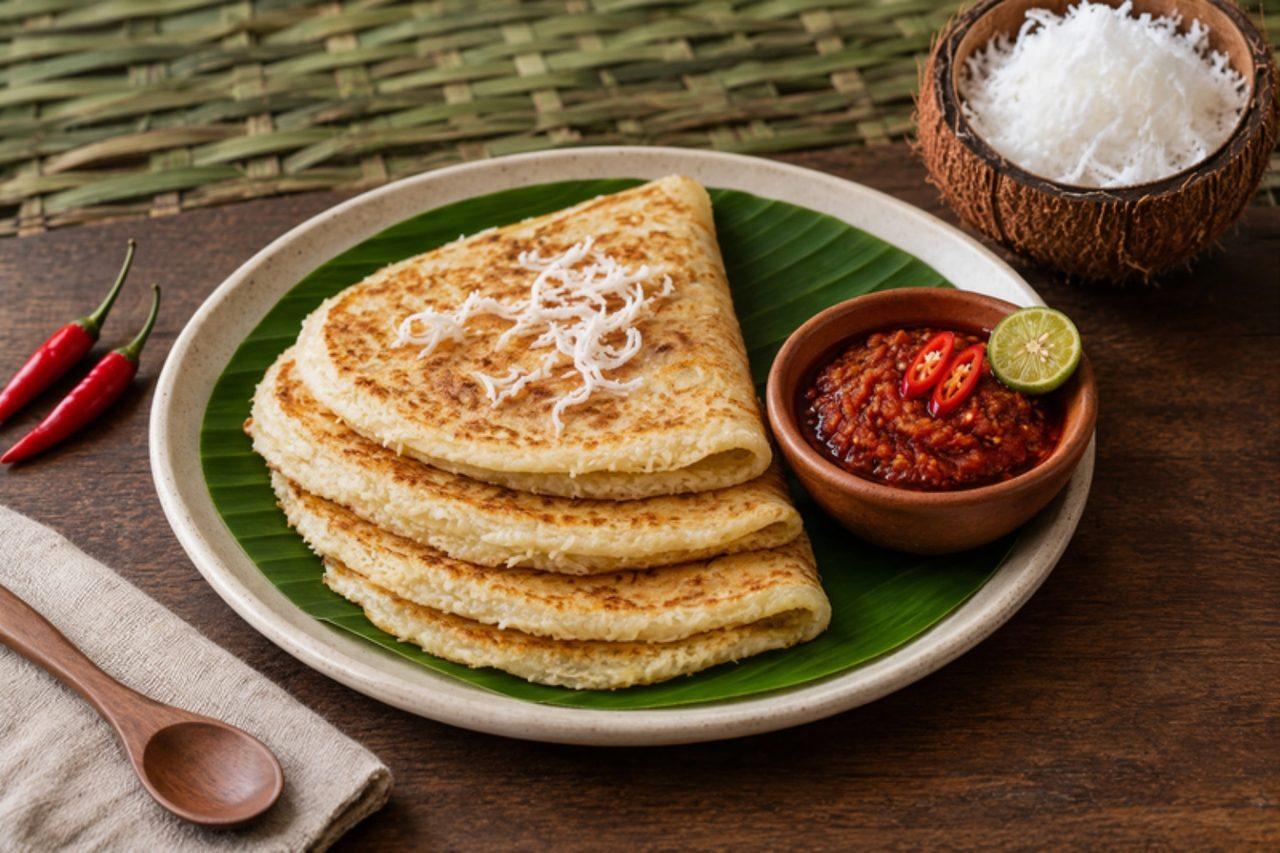
On Malaysia's east coast, in Terengganu and Kelantan, lempeng is the morning flatbread nobody buys because every home can make it in minutes: flour, freshly grated coconut, salt and water, spread thin on a griddle. It is eaten warm, torn and dipped into sambal tumis or last night's fish or vegetable curry. The mistake is a thick batter; it should spread on its own into a thin round, or the middle stays doughy. Chef's tip: let the batter rest for 10 minutes so the coconut softens and the flour hydrates, which gives lempeng that bend without tearing.
 Malaysian