
AI-generated image
Lakhamari
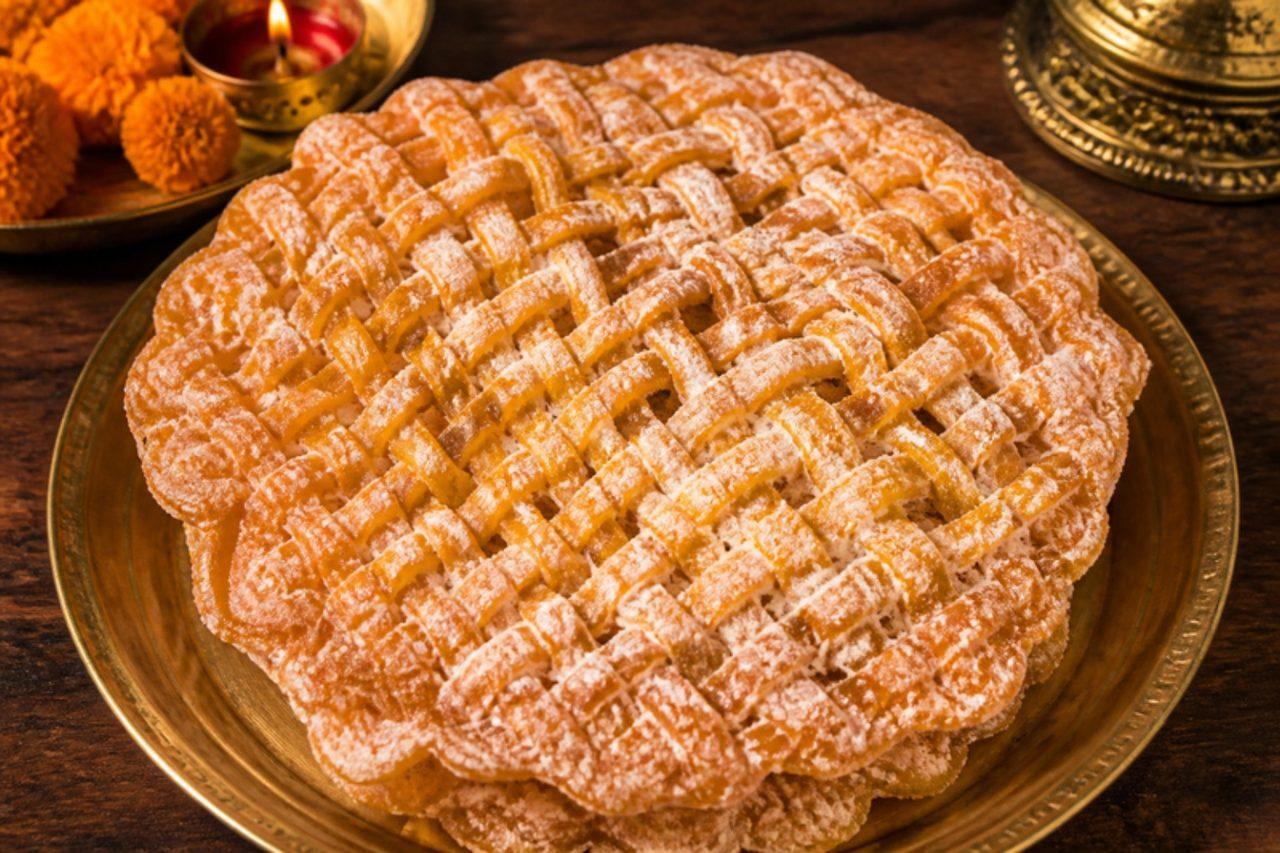
लाखामरी (lakhamari): the big lattice-shaped, sugar-glazed Newari wedding bread of rice and wheat flour

No Newar wedding in the Kathmandu Valley is complete without lakhamari, the large, crunchy, sugar-coated rounds that the groom's family carries to the bride's house in baskets as part of the ritual gifts, and which are then shared out among relatives for days. The dough is a mix of rice flour and wheat flour shortened with plenty of ghee, rolled into ropes and coiled into a lattice like a flat wheel, fried slowly until hard and pale gold, and glazed with a white sugar crust. It keeps for weeks in a tin and is broken into pieces to eat with tea. Where most cooks go wrong is frying too hot, which browns the outside while the thick lattice stays raw and soft inside. Chef's tip: keep the oil at a gentle 150 °C and fry each wheel for a good 8–10 minutes so it dries out and becomes crunchy right through.
- Total time
- 120 min
- Difficulty
- hard
- Serves
- 12
Ingredients
For the dough
- 7 oz fine rice flour
- 7 oz plain flour
- 2 ⅞ oz ghee, melted
- 1 pinch salt
- ¾ cup waterapproximately
- 4 ¼ cups vegetable oil, for deep frying
For the sugar glaze
- 10 ½ oz white sugar
- ½ cup water
Shop this recipe on Amazon
Spices & pantry
Links open Amazon in a new tab. As an Amazon Associate, WhatToEat.Today earns from qualifying purchases.
Method
0/8 doneStep 1: Mix 7 oz fine rice flour, 7 oz plain flour and 1 pinch salt in a bowl, add 2 ⅞ oz ghee, melted and rub it in with your fingertips until the mixture looks like damp sand.
5 minStep 2: Add ¾ cup water gradually and knead for 5 minutes to a firm, smooth dough that does not crack when pressed. Cover and rest for 20 minutes.
5 minStep 3: Divide into 12 balls. Roll each into thin ropes about 5 mm thick and lay them over and across each other in a criss-cross lattice about 15 cm wide, pressing the joins and sealing with a coil of rope round the edge.
30 minStep 4: Heat 4 ¼ cups vegetable oil, for deep frying in a wide pan over a low-medium heat to 300°F; a scrap of dough should rise slowly with small bubbles.
2 minStep 5: Fry one or two at a time for 8–10 minutes, turning once, until pale gold, firm and crunchy all the way through. Drain upright on a rack.
50 minStep 6: For the glaze, boil 10 ½ oz white sugar and ½ cup water in a wide pan over a medium heat for 8–10 minutes until it reaches the thread stage (a drop pulled between finger and thumb forms a thread).
12 minStep 7: Dip each lakhamari in the syrup or brush it generously over both sides, then set on a rack; the syrup will dry to a white crust within 30 minutes as it cools.
10 minStep 8: Store in an airtight tin for up to 3 weeks and break into pieces to serve with tea.
Nutrition per serving
- Calories
- 380 kcal
- Protein
- 4 g
- Carbs
- 58 g
- Fat
- 15 g
- Fibre
- 1 g
Nutrition values are estimates.
KrazyBadal
Good to know
- How long does lakhamari take?
- About 120 minutes in total: 60 minutes to prepare and 60 minutes to cook.
- How many people does it serve?
- 12 as written. Change the servings above the ingredients and every amount scales to match.
- Is it vegetarian?
- Yes. It has no meat or fish.
- Can I make it ahead?
- Yes. It keeps well, so you can cook it earlier in the day or the day before and reheat it.
- What can I use instead of plain flour?
- Self-raising flour, same amount (then leave out the baking powder).
- What can I use instead of ghee, melted?
- Butter, same amount (keep the heat a little lower, butter burns sooner).
Reviews
No reviews yet. Be the first to cook it.
Rate this recipe
Sign in to rate and review this recipe.
You might also like
Kartoshka cake
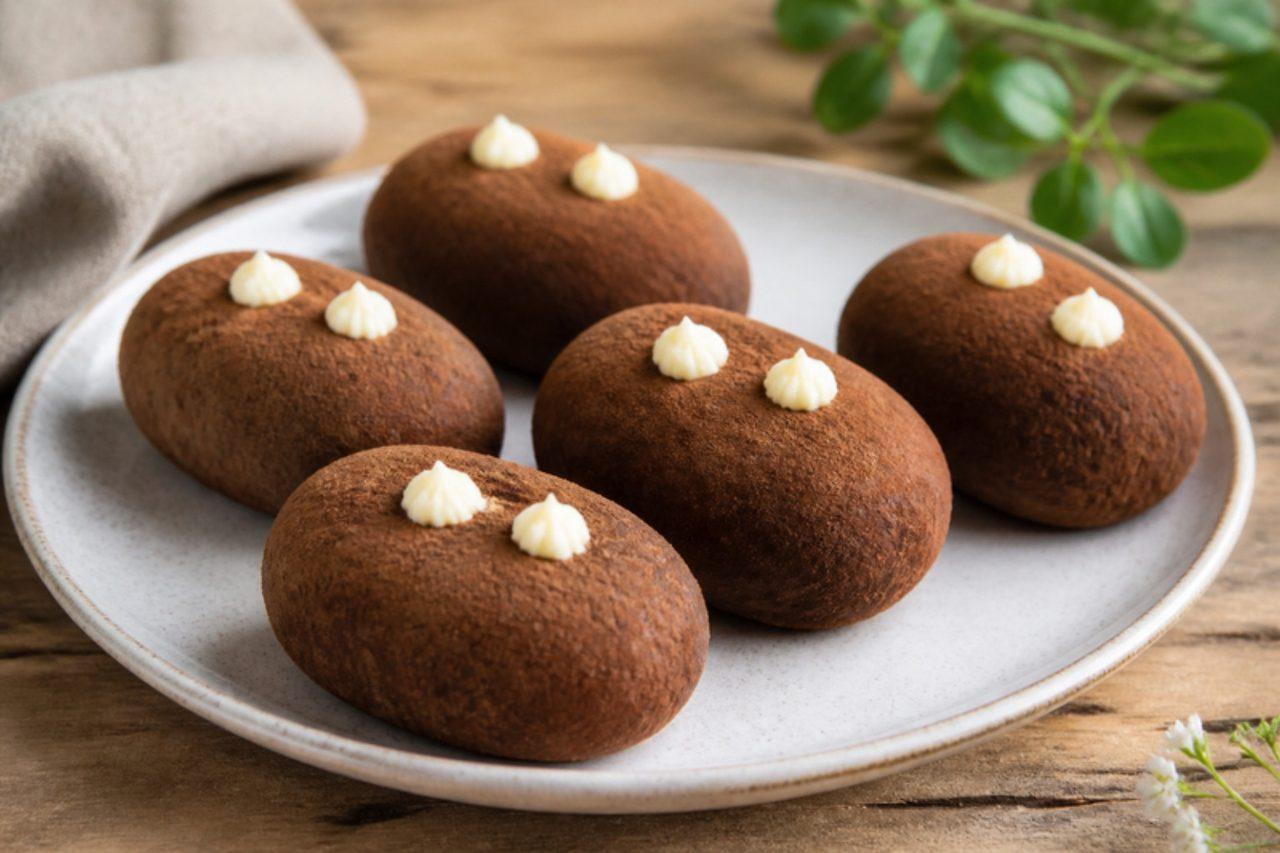
Soviet cafés and school canteens sold these knobbly brown 'potatoes' for a few kopecks, and they began as a thrifty way to use up sponge and biscuit trimmings at the bakery. Crumbs are bound with butter and sweetened condensed milk, flavoured with cocoa and vanilla, shaped into little potatoes, rolled in cocoa and finished with two dabs of pale butter cream for the sprouts. They are fudgy and dense like a brownie truffle, need no oven, and children love making them. Traditional bakers added a spoonful of rum, an optional extra for adult batches only; this version is alcohol-free with vanilla. The usual slip is coarse crumbs, which make the potatoes crack, so blitz them as fine as sand. Chef's tip: chill the shaped potatoes for at least 20 minutes so they hold their shape and slice cleanly.
 Russian
Undu walalu
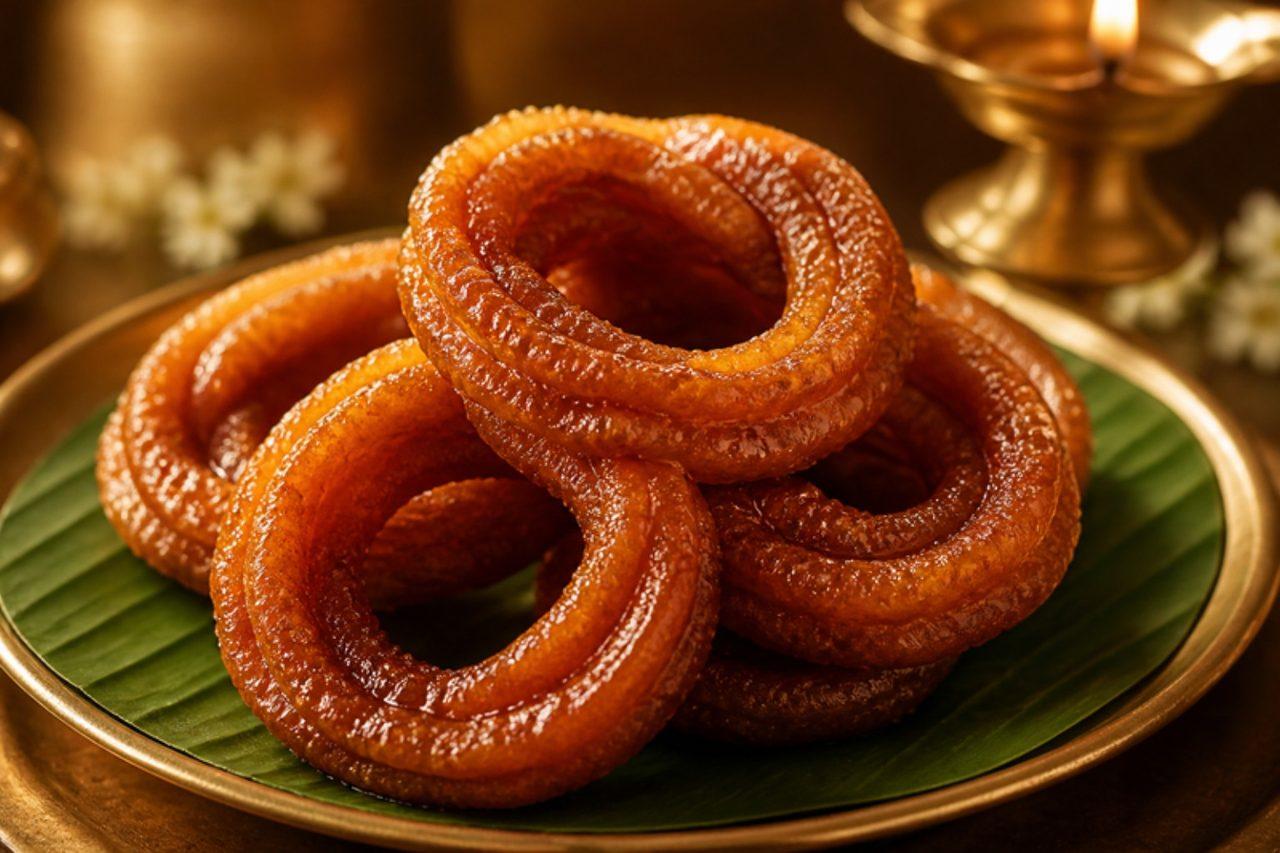
Walalu means bangles, and these dark, sticky rings of fried urad dal soaked in kithul treacle are a sweet that Sinhala families bring out for Avurudu and for special almsgivings, often made in large batches by an aunt known for her steady hand. A thick, fluffy paste of ground black gram is piped into loops and fried until crisp, then plunged straight into warm treacle, so the rings stay crunchy on the outside while drinking up the syrup. They taste a little like a darker, smokier jalebi, with a toffee finish from the palm treacle. Watery batter is what ruins them; it spreads into flat blobs, so grind the soaked dal with as little water as possible and beat it until light. This recipe uses no asafoetida, so it is naturally gluten free. Chef's tip: pipe the rings onto small squares of baking paper and lower them into the oil paper and all; the paper peels away in seconds.
 Sri Lankan


Baklava
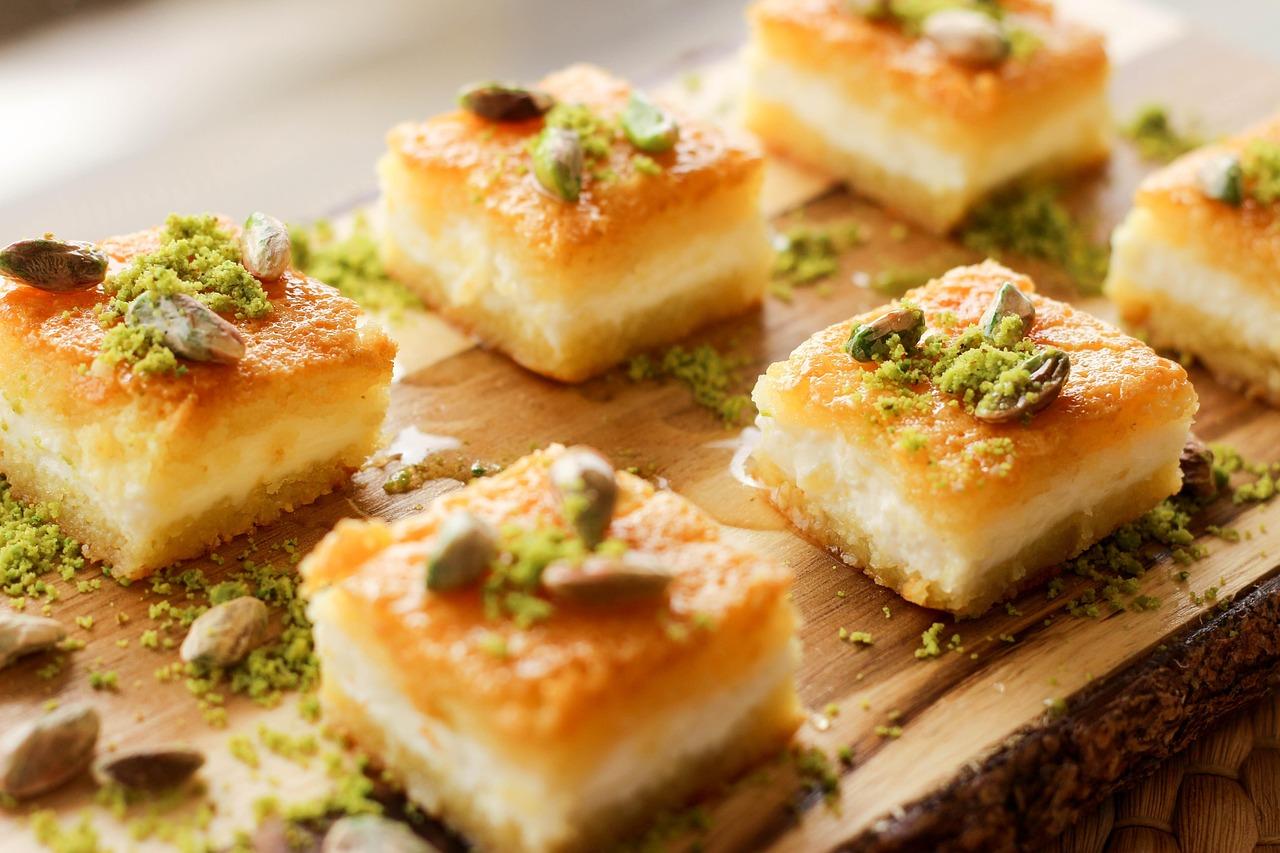
The famous layered pastry: crisp sheets of buttered fillo sandwich a filling of almonds, pistachios and cashews spiced with cinnamon, cardamom and saffron. After baking, the hot baklava is soaked in a syrup of sugar, honey, lemon, rose and cardamom and decorated with almond and pistachio flakes. Cut into 40 diamonds; serve with fresh cream or ice cream.