
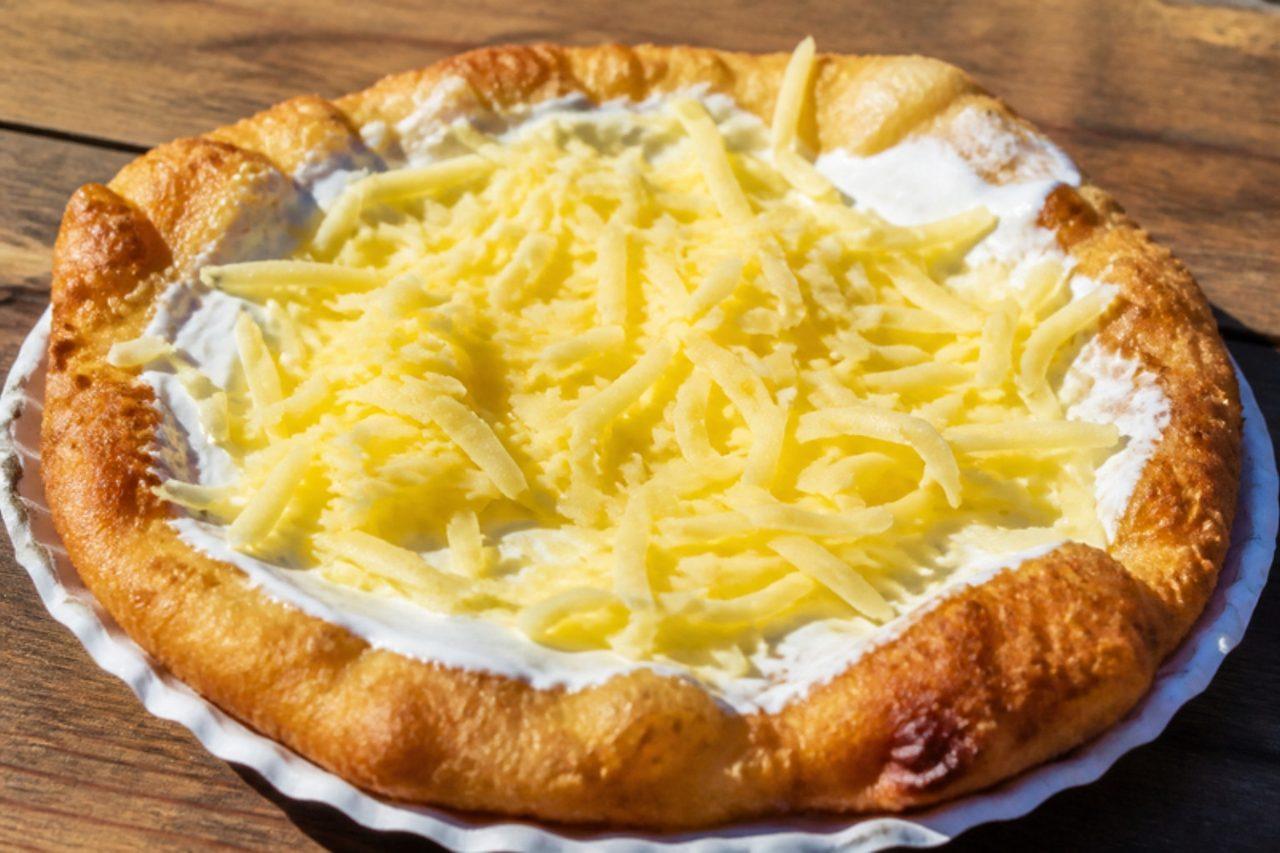
AI-generated image
Lángos
Hungarian fried bread with garlic, sour cream and cheese

Lángos is the deep-fried flatbread of Hungarian beaches and markets: it is eaten in swimsuits on the shore of Lake Balaton, at Budapest's Great Market Hall and at every summer fair. The dough is soft and yeasted, often enriched with mashed potato, and it fries into a puffy disc that is crisp at the edges and chewy in the middle. The classic topping is garlic water brushed on hot, then sour cream and a snowfall of grated cheese. Chef's tip: stretch the dough thinner in the centre than at the rim; the edge puffs into a crisp crust while the middle stays soft enough to hold the toppings. Choose a cheese made with vegetarian rennet (many supermarket Cheddars and Edams are).
- Total time
- 60 min
- Difficulty
- medium
- Serves
- 6
Ingredients
For the dough
For frying
To top
Shop this recipe on Amazon
Spices & pantry
Fresh ingredients (4)
Links open Amazon in a new tab. As an Amazon Associate, WhatToEat.Today earns from qualifying purchases.
Method
0/8 doneStep 1: Mix 14 oz strong white bread flour, ¼ oz fast-action dried yeast, 1 tsp sugar and 1 ½ tsp salt in a large bowl. Add 7 oz floury potato, ¾ cup lukewarm milk and 3 ½ tbsp lukewarm water and knead for 8–10 minutes until the dough is very soft, smooth and slightly sticky. It should be softer than bread dough.
10 minStep 2: Cover and leave in a warm place for 45–60 minutes, until doubled and full of bubbles when you press it.
60 minStep 3: Stir 4 cloves garlic into 3 tbsp water with ½ tsp salt and set aside; the longer it sits, the stronger it gets.
Step 4: Oil your hands and divide the dough into 6 balls. Rest for 10 minutes so the gluten relaxes.
10 minStep 5: Heat 1 litre sunflower oil in a wide, deep pan to 350°F over a medium-high heat; a scrap of dough should rise and sizzle steadily, not violently.
Step 6: With oiled fingers, stretch one ball into a 18–20 cm round, thin in the middle (almost see-through) with a thicker rim. Common mistake: rolling with a pin; it squeezes out the air and the lángos fries flat and tough.
Step 7: Slide it into the oil away from you. Fry for 1–2 minutes per side, spooning oil over the top, until puffed and deep golden brown. Drain upright for a moment, then on kitchen paper. Repeat with the rest.
12 minStep 8: While each is hot, brush with the garlic water, spread with 1 ¼ cups sour cream (20%) and pile on 7 oz Trappista, Edam or mild Cheddar. Eat immediately with your hands.
Nutrition per serving
- Calories
- 520 kcal
- Protein
- 15 g
- Carbs
- 62 g
- Fat
- 24 g
- Fibre
- 3 g
Nutrition values are estimates.
KrazyBadal
Good to know
- How long does lángos take?
- About 60 minutes in total: 30 minutes to prepare and 30 minutes to cook.
- How many people does it serve?
- 6 as written. Change the servings above the ingredients and every amount scales to match.
- Is it vegetarian?
- Yes. It has no meat or fish.
- What can I use instead of floury potato?
- Sweet potato, same weight (sweeter, cooks a little faster).
- What can I use instead of strong white bread flour?
- Plain flour, same amount (the dough will be softer and rise a little less).
Reviews
No reviews yet. Be the first to cook it.
Rate this recipe
Sign in to rate and review this recipe.
You might also like
Zapiekanka
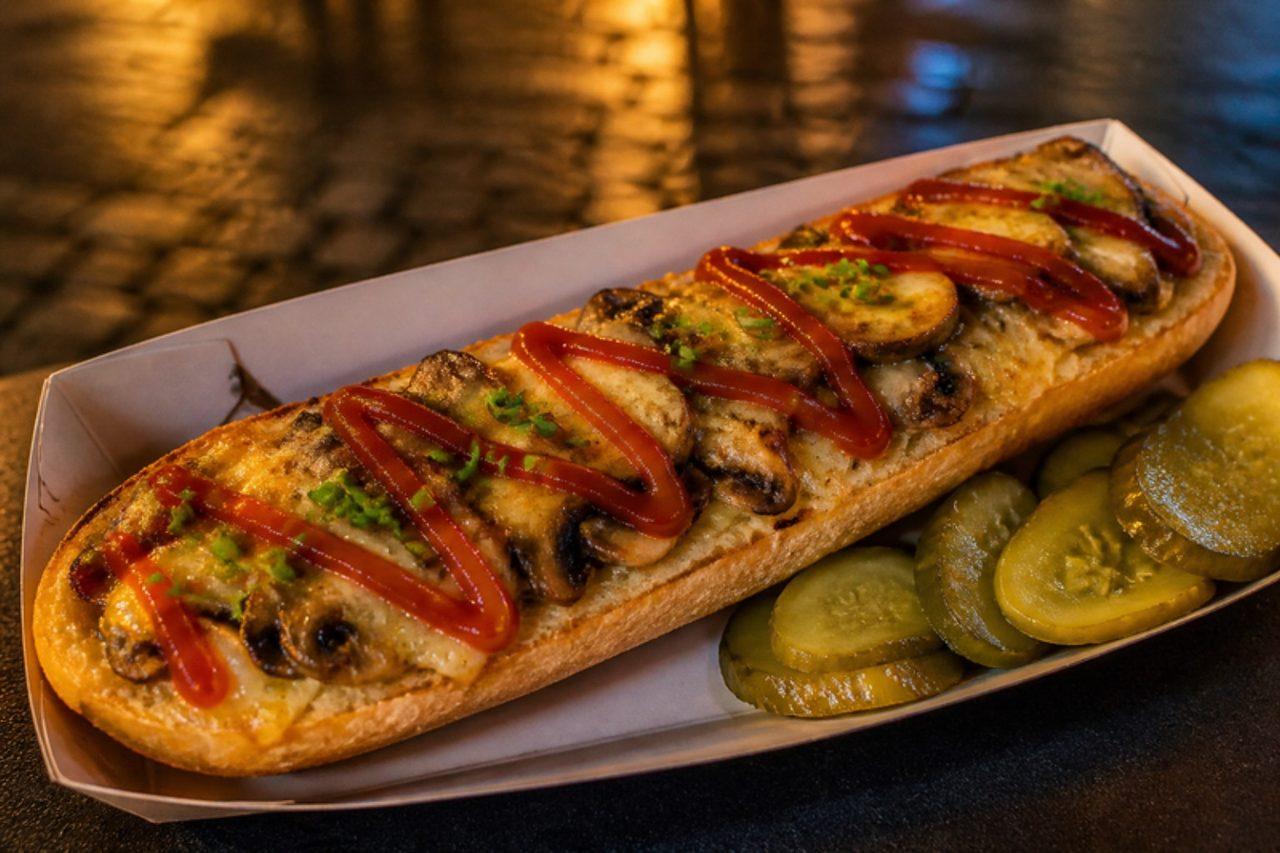
Zapiekanka is Polish street food born in the 1970s and perfected at the hatch windows around Plac Nowy in Kraków's Kazimierz district, where students and night owls queue for one at midnight. Half a long baguette is topped with mushrooms fried with onion, covered in grated cheese and baked until crisp at the edges and bubbling, then finished with a zigzag of ketchup and chives. The classic version has no meat at all. Use a hard cheese made with vegetarian rennet (many supermarket mild Cheddars and Goudas are). Chef's tip: fry the mushrooms until completely dry before they go on the bread; wet mushrooms make the baguette soggy instead of crisp.
 Polish
Doubles
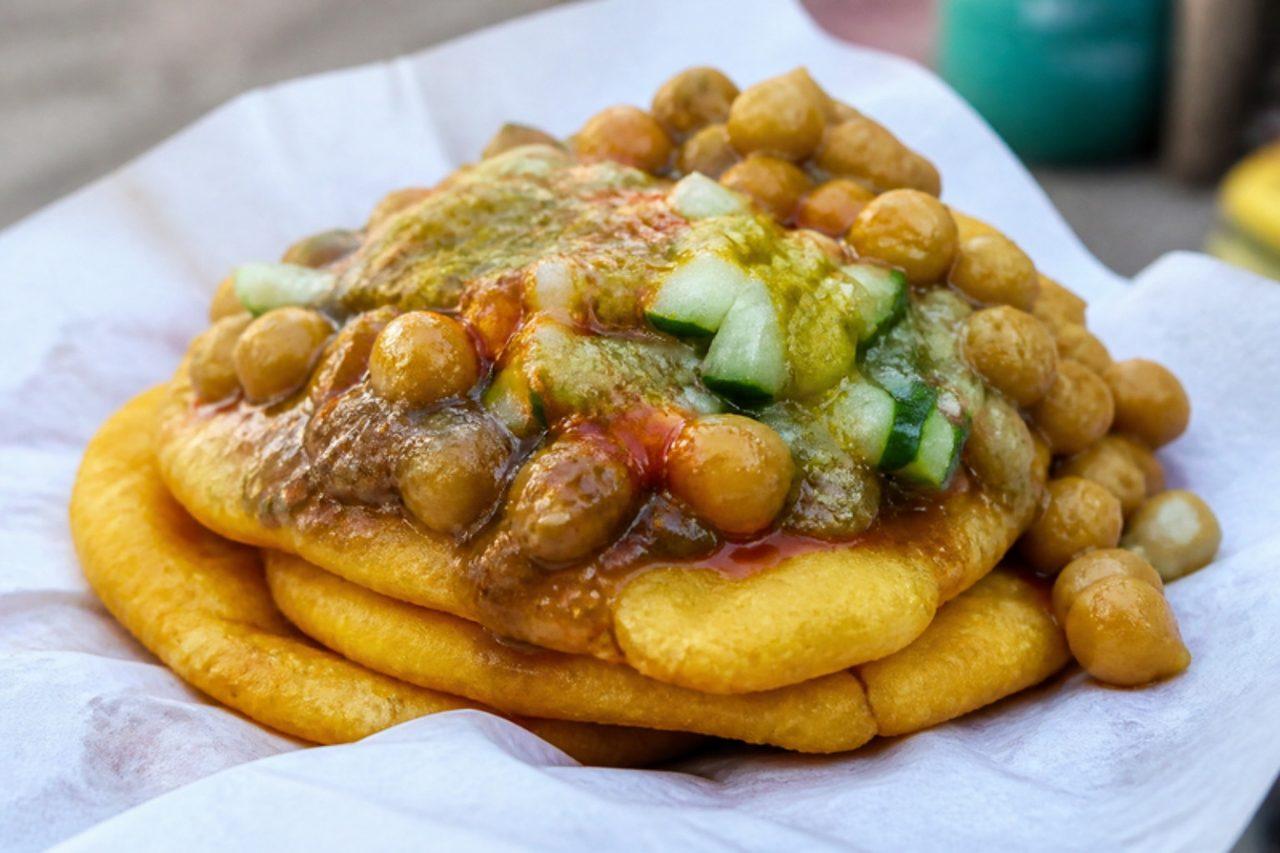
Doubles are Trinidad's favourite street food, sold from carts at dawn on corners from Curepe to San Fernando and said to have started in Princes Town in the 1930s. Two pieces of bara, a soft, puffy fried flatbread coloured with turmeric, are piled with soft curried chickpeas (channa), then spooned with sweet tamarind sauce, cool cucumber chutney, shado beni sauce and as much pepper sauce as you dare ('slight' or 'heavy'). They're messy, cheap and wonderful, eaten standing up from a square of paper. These are different from Indian chole bhature: the bara is light and yeasty, the channa is cooked very soft in Caribbean curry, and the toppings are sweet, sour and fiery all at once. Chef's tip: keep the bara dough very soft and wet, and handle it only with oiled hands. Stretch each ball thin over your fingers and slide it straight into the hot oil, so it puffs light and stays soft instead of turning into a crisp puri.
 Trinidadian


Mazorca desgranada
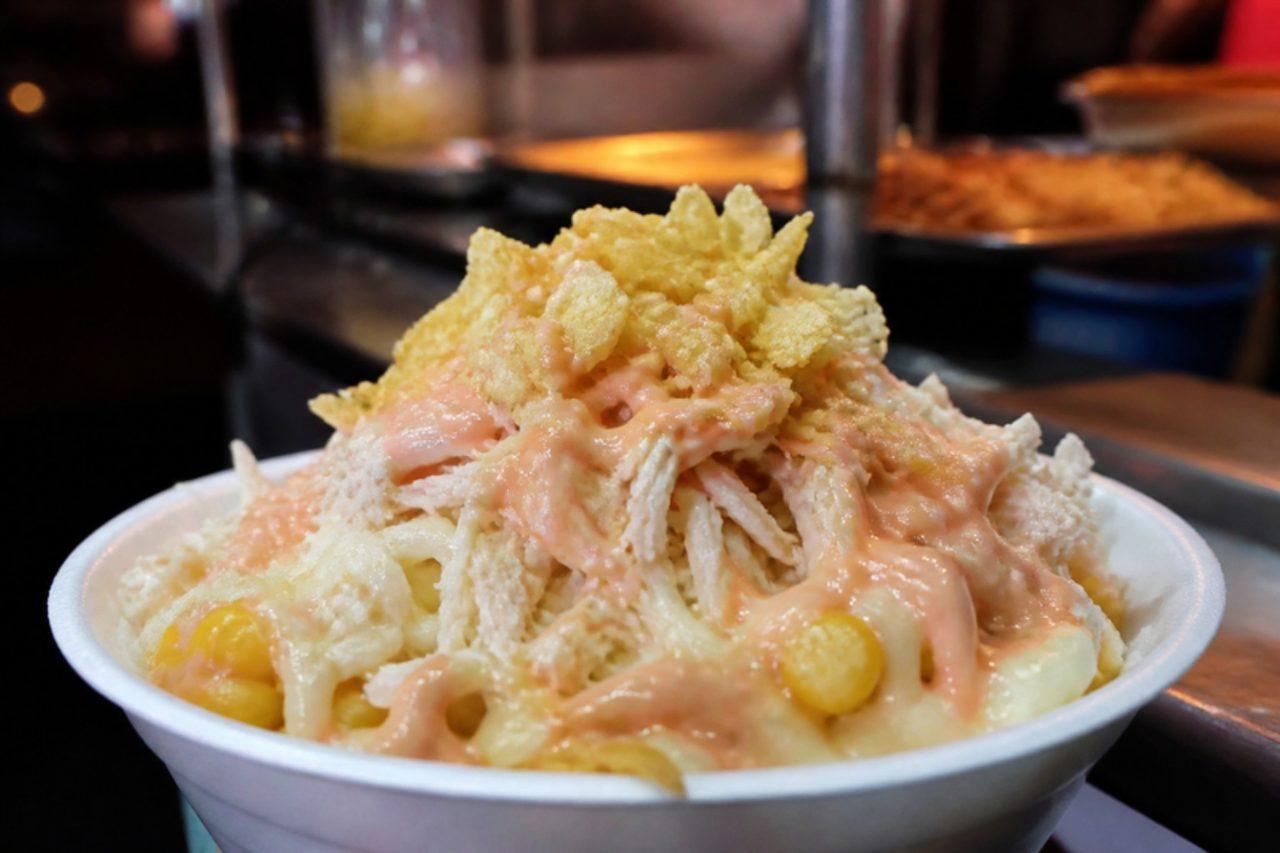
Food trucks and street corners in Bogotá and Medellín sell mazorca desgranada in plastic tubs, late into the evening: sweet corn kernels cut off the cob, fried in butter and layered with shredded chicken, melted cheese, crunchy potato sticks, pineapple sauce and salsa rosada. Some stands add bacon, beef or quail eggs; this version keeps to chicken. It is sweet, salty and gooey, and a hit with teenagers. Using tinned corn without draining it well is a common error: the water dilutes the sauces and the tub gets soggy. Chef's tip: fry the corn until a few kernels brown and pop; that caramelised edge stands up to all the sweet sauces. For a vegetarian tub, skip the chicken and use a cheese made with microbial rennet.
 Colombian
