
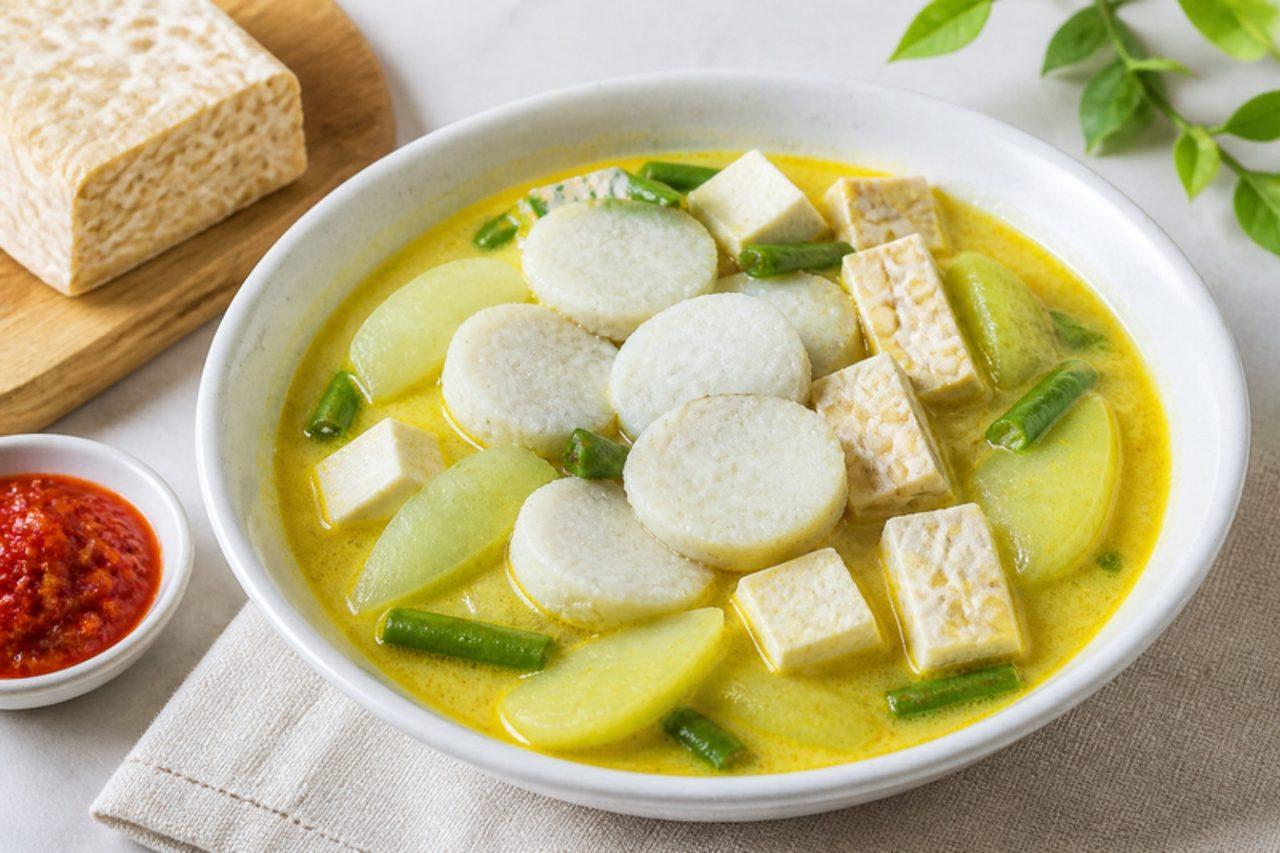
AI-generated image
Lontong sayur
Rice cakes in coconut vegetable broth
Lontong sayur: pressed rice cakes in a turmeric coconut broth with chayote, long beans, tofu and tempeh



In Jakarta, lontong sayur is what the morning carts sell before offices open: firm slices of pressed rice sitting in a thin, golden coconut broth with chayote, long beans and squares of tofu and tempeh. Betawi families also cook a big pot of it for Lebaran morning. Street versions often add dried shrimp to the spice paste; this one keeps the flavour with candlenuts, galangal and salam leaf instead. Serve with sambal, fried shallots and crackers. Chef's tip: cook the lontong the day before and chill it overnight; cold rice cakes slice cleanly and soak up the broth without falling apart.
- Total time
- 135 min
- Difficulty
- medium
- Serves
- 4
Ingredients
For the lontong
- 12 ½ cups waterfor boiling
For the spice paste
- 6 shallotspeeled
- 4 cloves garlic
- 3 candlenutsor 6 macadamias
- 2 large red chilliesseeded
- 1 ⅛ in fresh turmericor 1 tsp ground
- ¾ in ginger
- 3 tbsp vegetable oil
For the broth
- 1 ⅛ in galangalsliced and bruised
- 2 stalks lemongrassbruised and knotted
- 3 salam leaves (Indonesian bay)or 2 bay leaves
- 2 chayote (labu siam)peeled and cut into matchsticks
- 5 ½ oz long beanscut into 4 cm pieces
- 7 oz firm tofucut into cubes
- 5 ½ oz tempehcut into cubes
- 1 ¾ cups coconut milk
- 3 cups water
- 1 tbsp palm sugar
- 1 ½ tsp salt
To serve
- 4 tbsp fried shallots (optional)
- 4 tsp sambal oelek (optional)
Shop this recipe on Amazon
What you'll need
Spices & pantry
Fresh ingredients (9)
Links open Amazon in a new tab. As an Amazon Associate, WhatToEat.Today earns from qualifying purchases.
Method
0/8 doneStep 1: Rinse 9 oz jasmine or other long-grain rice until the water runs clear. Spoon it into two heatproof boil-in-bags or into foil parcels lined with banana leaf, filling each only a third full, then seal tightly; the rice needs room to swell into a solid cake.
10 minStep 2: Bring 12 ½ cups water to the boil in a large pan, add the parcels, cover and simmer over a medium-low heat for 90 minutes, topping up with boiling water so they stay submerged. They are ready when they feel firm and heavy all through when squeezed with tongs.
90 minStep 3: Lift out the parcels and leave them to cool completely, ideally chilled overnight. Unwrap and cut into 2 cm slices with a wet knife.
Step 4: Blend 6 shallots, 4 cloves garlic, 3 candlenuts, 2 large red chillies, 1 ⅛ in fresh turmeric and ¾ in ginger with a splash of water to a smooth paste.
5 minStep 5: Heat 3 tbsp vegetable oil in a deep pan over a medium heat. Fry the paste with 1 ⅛ in galangal, 2 stalks lemongrass, 3 salam leaves (Indonesian bay) and 3 makrut lime leaves, stirring, for 6–8 minutes, until it darkens a shade, smells sweet rather than raw and the oil seeps out at the edges. Common mistake: rushing this step; a pale, raw paste makes the broth taste sharp and soapy.
8 minStep 6: Add 7 oz firm tofu and 5 ½ oz tempeh and turn them in the paste for 2 minutes. Pour in 3 cups water, add 2 chayote (labu siam) and 5 ½ oz long beans and simmer for 8 minutes, until the chayote is just tender.
10 minStep 7: Stir in 1 ¾ cups coconut milk, 1 tbsp palm sugar and 1 ½ tsp salt. Bring back to a bare simmer over a low heat, stirring often so the coconut milk doesn't split, and cook for 5 minutes. Taste; the broth should be savoury, mildly sweet and thin enough to ladle.
5 minStep 8: Put lontong slices in bowls and ladle over the vegetables and broth. Finish with 4 tbsp fried shallots and a spoon of 4 tsp sambal oelek.
Nutrition per serving
- Calories
- 430 kcal
- Protein
- 14 g
- Carbs
- 52 g
- Fat
- 19 g
- Fibre
- 6 g
Nutrition values are estimates.
KrazyBadal
Good to know
- How long does lontong sayur take?
- About 135 minutes in total: 25 minutes to prepare and 110 minutes to cook.
- How many people does it serve?
- 4 as written. Change the servings above the ingredients and every amount scales to match.
- Is it vegan?
- Yes. It has no meat, fish, dairy or eggs.
- Is it gluten free?
- Yes, as written. Check the labels on stock, sauces and spice mixes, which sometimes contain gluten.
- Can I make it ahead?
- Yes. It keeps well, so you can cook it earlier in the day or the day before and reheat it.
- What can I use instead of jasmine or other long-grain rice?
- Any long-grain rice, same amount.
- What can I use instead of shallots?
- Half an onion per 2 shallots.
Reviews
No reviews yet. Be the first to cook it.
Rate this recipe
Sign in to rate and review this recipe.
You might also like

Sayur lodehVegetables in coconut milk
Sayur lodeh is everyday cooking in Central Java, made in big pots in Solo and Semarang kitchens and ladled over rice, with lontong rice cakes at Lebaran, or alongside opor and sambal goreng on festive tables. It's soupy rather than thick: a fragrant broth of coconut milk, galangal, lemongrass and lime leaf that carries chunks of aubergine, long beans, chayote and sweetcorn, plus tempeh and tofu to make it a meal. The flavour is mellow and slightly sweet, so the heat comes from sambal on the side. Chef's tip: keep the pot at a gentle simmer once the coconut milk goes in and stir now and then — a rolling boil splits the coconut milk into oily curds.



Sabudana khichdiSago with peanuts and potato
Sabudana khichdi is the dish that sees Maharashtra through every vrat (fast), from Navratri to Ekadashi, but it's so good that people eat it any day of the week. Soaked sago pearls are tossed in a pan with crushed roasted peanuts, cubes of potato, cumin and green chilli until each pearl turns glassy and separate, then finished with lemon and coriander. It's soft, chewy, nutty and gently hot. Fasting rules vary from family to family, so check yours; this version uses rock salt and no asafoetida, onion or garlic. Traditionally it's cooked in ghee; use ghee instead of oil if you aren't keeping it vegan. Chef's tip: soak the sago in just enough water to cover by the height of the pearls themselves, no more; too much water is the reason khichdi turns into one sticky lump.
 Indian
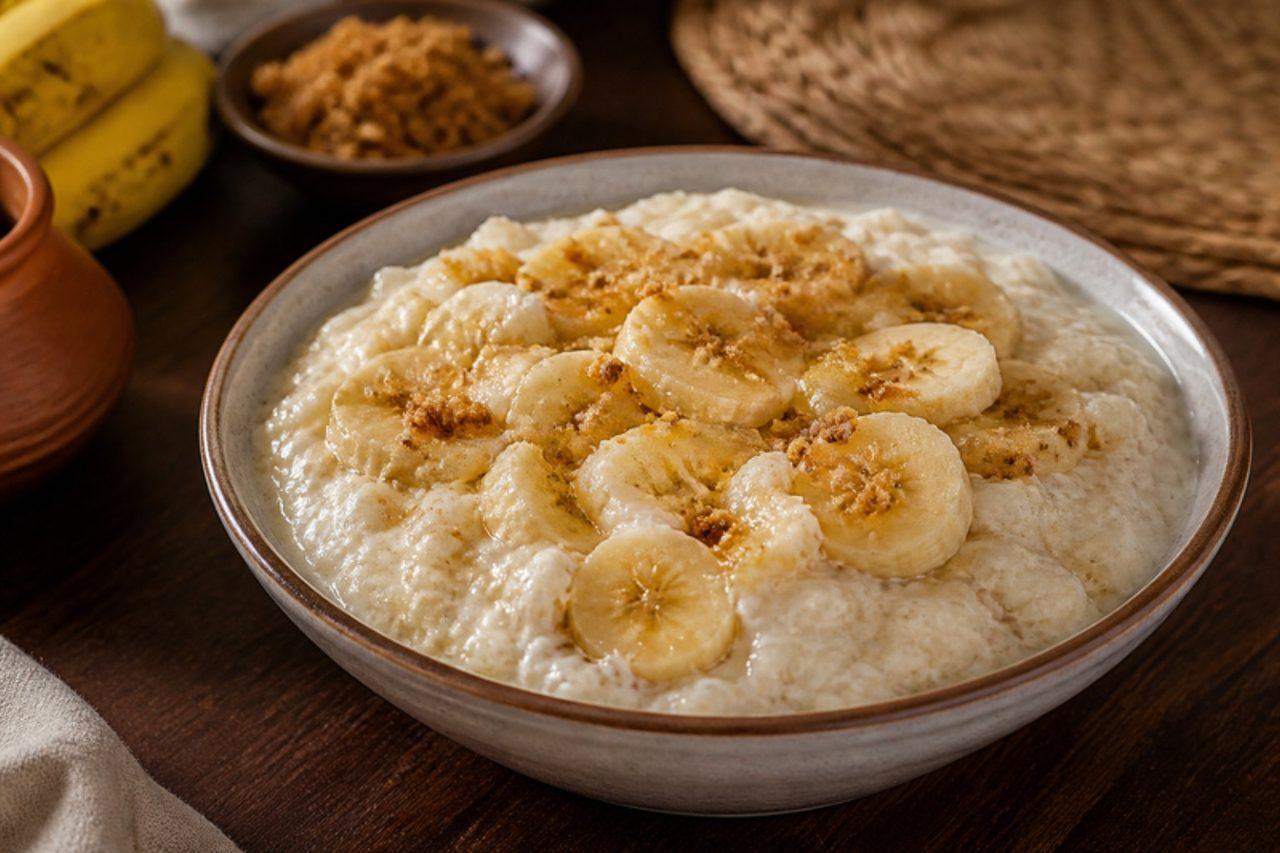
Doi chiraFlattened rice with curd
Nothing is cooked for doi chira, which is why it has been the breakfast of farmers and fishermen in Barisal for generations: flattened rice is rinsed, softened in thick, slightly sour curd and sweetened with jaggery or sugar, then mashed together with a ripe banana. The texture is soft and creamy with a little chew from the rice flakes, and the taste is cool, sweet and tangy. It is eaten on hot summer mornings, at village fairs and as part of the Pohela Boishakh spread, and it is a favourite of children and of anyone fasting who wants something gentle. The usual misstep is soaking the chira for too long, which turns it to paste; a quick rinse is all it needs before the curd does the rest. Chef's tip: use thick-cut chira, not the thin kind for frying, so the flakes hold their shape.
 Bangladeshi