
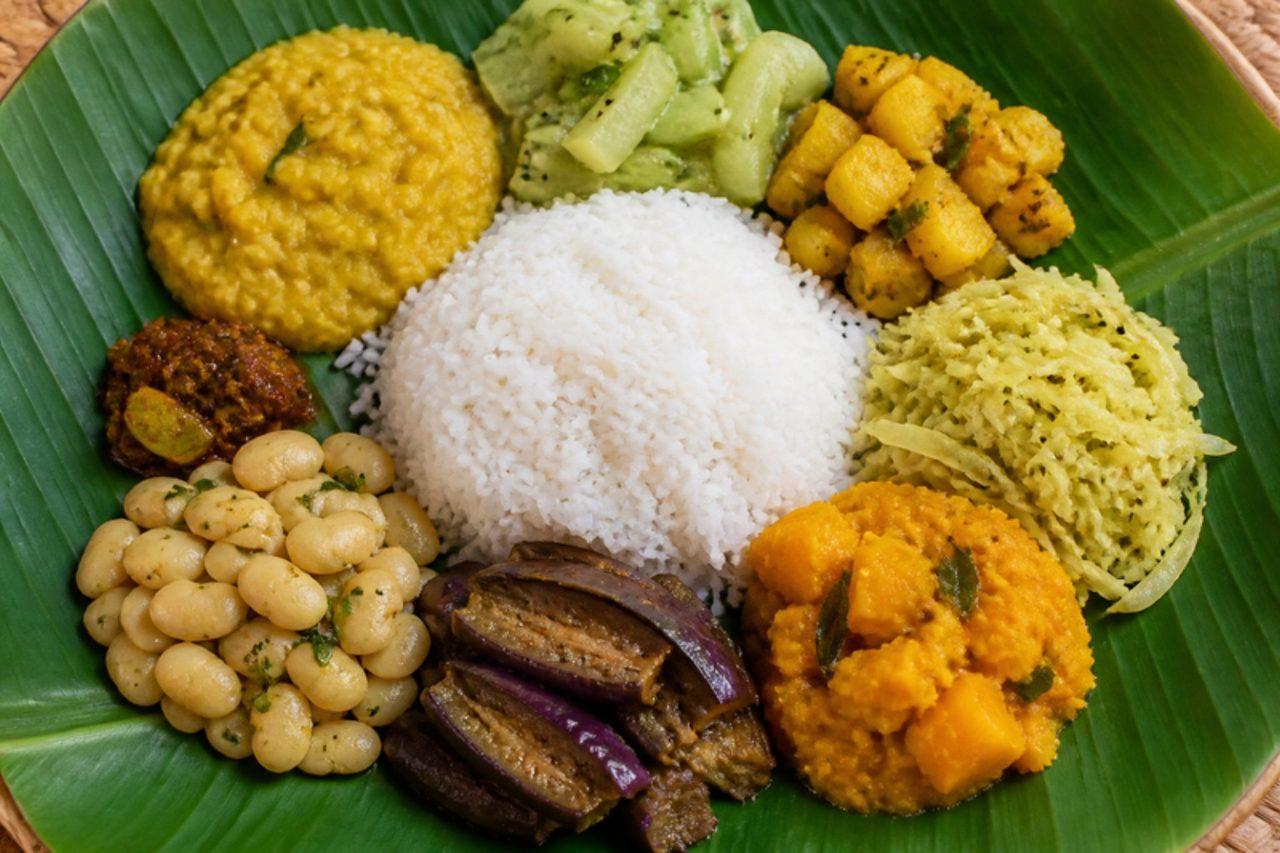
AI-generated image
Sept cari
Seven vegetable curries
Sept cari: the Mauritian Tamil and Hindu feast of seven small vegetarian curries on a banana leaf



Weddings, Cavadee and the days after a Tamil or Hindu prayer end with guests sitting in rows while volunteers walk past with buckets, spooning rice and seven little curries onto each banana leaf. There is no meat, egg or fish: soft yellow dholl, sweet crushed pumpkin, glossy tamarind aubergine, chayote, green banana with mustard seeds, butter beans in tomato and a curry of cabbage and potato, each with its own texture so the leaf never tastes the same twice. At home it looks daunting, but the trick is a shared base of onion, garlic and ginger prepared once and a cooking order that lets the sturdy curries wait while the delicate ones go last. The usual mistake is to tip curry powder into the pan and add the vegetables straight away, which leaves a dusty, raw taste; fry it with a splash of water until the oil runs red-brown first. Eat it with your right hand if you like, and finish with a spoon of pickle or chatini on the side. Chef's tip: everything except the pumpkin and green banana reheats beautifully, so cook the dholl, beans and cabbage the evening before and the feast day becomes a two-hour job.
- Total time
- 180 min
- Difficulty
- hard
- Serves
- 8
Ingredients
Shared base (divided between the curries)
- ¾ cup sunflower oil
- 4 onionsfinely sliced, kept in one bowl
- 12 cloves garlic
- 1 ¾ oz fresh gingerpeeled
- 4 tbsp Mauritian curry powdercheck the label is gluten free
- 2 tsp ground turmeric
- 25 curry leaves
- 4 green chilliesslit
- 4 tsp salt
1. Dholl
- 9 oz toor dal (split pigeon peas)rinsed until the water runs clear
- 1 tsp cumin seeds
2. Gros pois (butter beans)
- 1 lb cooked butter beanstwo 400 g tins, drained and rinsed
- 2 tomatoeschopped
3. Chou (cabbage and potato)
- 1 ⅛ lb white cabbageshredded
- 2 potatoespeeled, 2 cm dice
4. Bringelle (aubergine)
- 2 auberginescut into 3 cm chunks
- 1 tbsp tamarind paste
6. Banane (green banana)
- 4 green cooking bananasunripe, skin still hard and green
- 1 tsp black mustard seeds
7. Giraumon (pumpkin)
- 1 ¾ lb pumpkinpeeled, 3 cm chunks
- 4 sprigs fresh thyme
To serve
- 1 ⅓ lb long-grain white rice
- 8 banana leaves (optional)wiped, cut into plate-sized pieces
- 1 handful fresh coriander (optional)chopped
Shop this recipe on Amazon
Spices & pantry
Fresh ingredients (15)
Links open Amazon in a new tab. As an Amazon Associate, WhatToEat.Today earns from qualifying purchases.
Method
0/22 doneStep 1: Before you light a burner, pound the garlic and ginger to a coarse paste, slice the onions, and set out seven small bowls, one per curry, so you are not chopping while things catch. Cook in this order: dholl, butter beans, cabbage, aubergine, chayote, green banana, then pumpkin with the rice. The first four sit happily off the heat; the last three are best fresh.
Step 2: Put 9 oz toor dal (split pigeon peas) in a pot with 1.2 litres of water and 1 tsp ground turmeric. Bring to the boil, skim the foam, then simmer on a low heat, half covered, until the grains collapse when stirred.
40 minStep 3: Whisk the dholl hard for a minute to make it smooth and pourable, like thin custard, adding hot water if it is thick. Stir in ⅝ tsp salt.
Step 4: For the tempering, heat 1 ½ tbsp sunflower oil in a small pan over a medium heat. Add 1 tsp cumin seeds, 5 curry leaves, ⅜ onions and 1 ¼ cloves garlic and fry until the onion is golden at the edges, then pour the sizzling oil into the dholl and cover.
4 minStep 5: Butter beans: heat 2 tbsp sunflower oil in a wide pan over a medium heat and fry ⅝ onions until soft and pale gold.
5 minStep 6: Add 1 ¾ cloves garlic, ⅓ oz fresh ginger and 1 tbsp Mauritian curry powder with 2 tablespoons of water. Fry, stirring, until the paste darkens and the oil separates at the edges, about 2 minutes. This step is what keeps the curry from tasting raw.
2 minStep 7: Add 2 tomatoes, 1 lb cooked butter beans, 1 green chillies, 5 curry leaves, ⅝ tsp salt and 200 ml of water. Simmer on a low heat until the sauce clings to the beans and a few have crushed into it.
15 minStep 8: Cabbage: in a second pan, heat 2 tbsp sunflower oil over a medium heat and fry ⅝ onions until soft, then add 1 ¾ cloves garlic, ⅓ oz fresh ginger, 1 tbsp Mauritian curry powder and 5 curry leaves with a splash of water and fry until fragrant and the oil separates.
7 minStep 9: Add 2 potatoes and 150 ml of water, cover and cook on a low heat until a knife meets a little resistance in the centre.
10 minStep 10: Stir in 1 ⅛ lb white cabbage, 1 green chillies and ⅝ tsp salt. Cook uncovered on a medium heat, stirring now and then, until the cabbage is tender but still slightly bright and the potatoes are soft.
10 minStep 11: Aubergine: heat 2 ½ tbsp sunflower oil in a frying pan over a medium-high heat and fry 2 aubergines in two batches until golden on most sides and soft. Lift onto a plate.
10 minStep 12: In the same pan, fry ⅝ onions until soft, then add 1 ¾ cloves garlic, ⅓ oz fresh ginger and 1 tbsp Mauritian curry powder with a splash of water and fry until the oil separates.
6 minStep 13: Return the aubergine with 1 tbsp tamarind paste, ⅝ tsp salt and 100 ml of water. Simmer gently, turning the pieces, until they are silky and glossy and the sauce has almost gone.
8 minStep 14: Chayote: wipe a drop of oil on your hands if you have not prepared the chayote yet, as the sap leaves a tight film on the skin. Heat 2 tbsp sunflower oil over a medium heat and fry ⅝ onions until soft, then add 1 ¾ cloves garlic, ⅓ oz fresh ginger, 1 tbsp Mauritian curry powder and 5 curry leaves and fry until the oil separates.
7 minStep 15: Add 3 chayotes, 1 tomato, 1 green chillies and ⅝ tsp salt. Cover and cook on a low heat, stirring once or twice, until the chayote turns translucent and a knife slides in easily. Chayote gives off its own water, so add none unless it catches.
15 minStep 16: Green banana: oil your hands, top and tail 4 green cooking bananas, slit the skins lengthwise and peel them off. Cut into 2 cm chunks and drop straight into a pan of boiling water. Simmer until just tender, then drain.
12 minStep 17: Heat 1 ½ tbsp sunflower oil in a frying pan over a medium-high heat and add 1 tsp black mustard seeds. When they start to pop, add 5 curry leaves, ⅝ onions, 1 ¾ cloves garlic, ⅓ oz fresh ginger and 1 tsp ground turmeric and fry for 2 minutes.
3 minStep 18: Add the drained banana and ⅜ tsp salt and toss over a medium heat until every piece is yellow and lightly crisp at the edges.
5 minStep 19: Rice: rinse 1 ⅓ lb long-grain white rice three times, put it in a pot with 900 ml of water, bring to the boil, then cover and cook on the lowest heat. Turn off the heat and leave it covered for 10 minutes more.
15 minStep 20: Pumpkin, while the rice cooks: heat 2 tbsp sunflower oil in a wide pan over a medium heat and fry ⅝ onions, 1 ¾ cloves garlic, 4 sprigs fresh thyme and 1 green chillies until the onion is soft.
5 minStep 22: Reheat the dholl, beans, cabbage and aubergine until steaming. Lay a piece of 8 banana leaves on each plate or tray, put a mound of rice in the middle and spoon a small heap of each of the seven curries around it, with the dholl in a cup or poured over the rice. Scatter 1 handful fresh coriander over the curries if you like.
Nutrition per serving
- Calories
- 560 kcal
- Protein
- 16 g
- Carbs
- 92 g
- Fat
- 15 g
- Fibre
- 15 g
Nutrition values are estimates.
KrazyBadal
Good to know
- How long does sept cari take?
- About 180 minutes in total: 60 minutes to prepare and 120 minutes to cook.
- How many people does it serve?
- 8 as written. Change the servings above the ingredients and every amount scales to match.
- Is it vegan?
- Yes. It has no meat, fish, dairy or eggs.
- Is it gluten free?
- Yes, as written. Check the labels on stock, sauces and spice mixes, which sometimes contain gluten.
- What can I use instead of onions?
- 2 shallots per onion.
- What can I use instead of garlic?
- ½ tsp garlic paste or ⅛ tsp garlic powder per clove.
Reviews
No reviews yet. Be the first to cook it.
Rate this recipe
Sign in to rate and review this recipe.
You might also like

Sayur lodehVegetables in coconut milk
Sayur lodeh is everyday cooking in Central Java, made in big pots in Solo and Semarang kitchens and ladled over rice, with lontong rice cakes at Lebaran, or alongside opor and sambal goreng on festive tables. It's soupy rather than thick: a fragrant broth of coconut milk, galangal, lemongrass and lime leaf that carries chunks of aubergine, long beans, chayote and sweetcorn, plus tempeh and tofu to make it a meal. The flavour is mellow and slightly sweet, so the heat comes from sambal on the side. Chef's tip: keep the pot at a gentle simmer once the coconut milk goes in and stir now and then — a rolling boil splits the coconut milk into oily curds.
 Indonesian


Chana masala
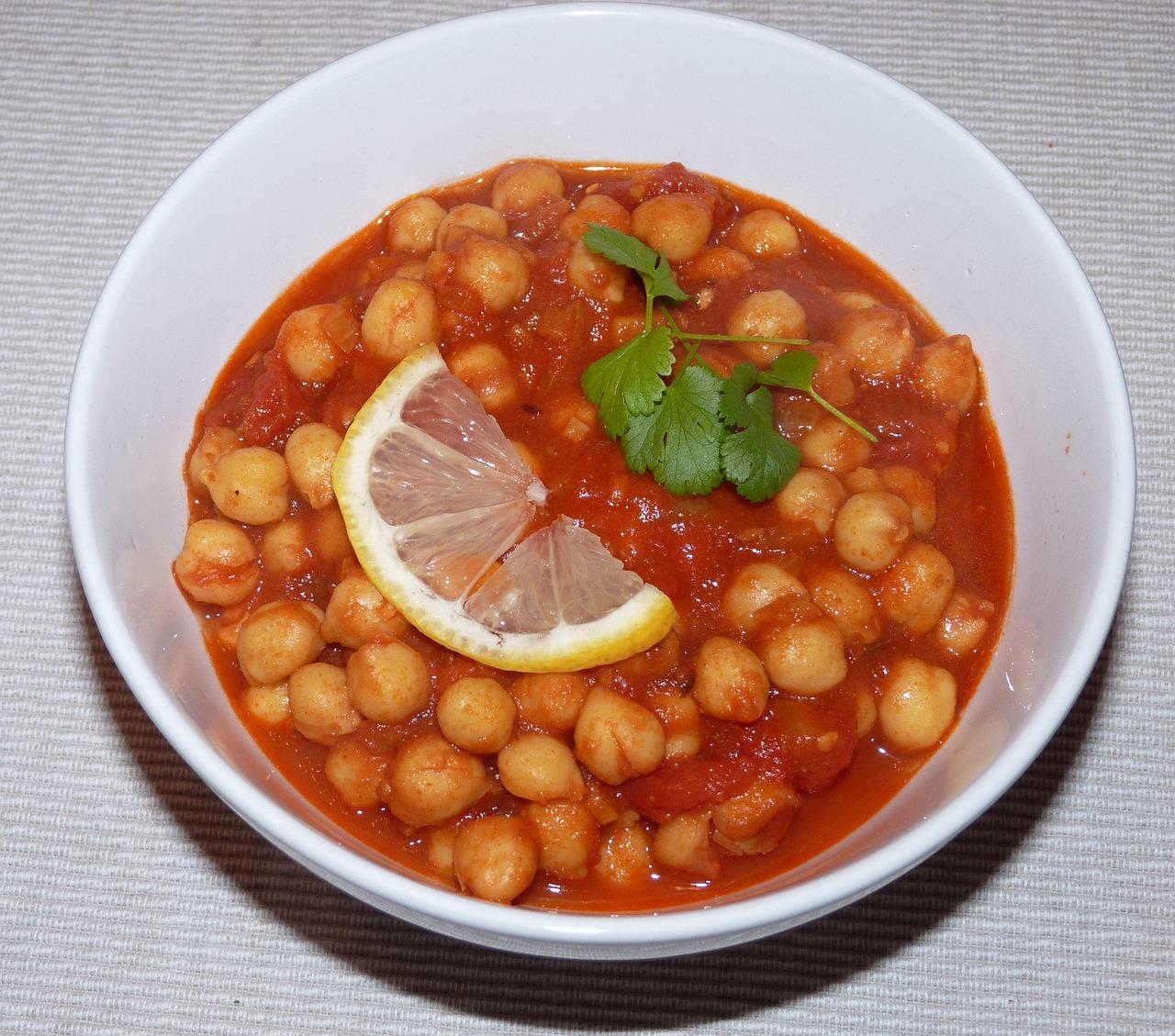
A North Indian staple that comes together from the store cupboard. Toasted cumin, slow-softened onion and a good spoonful of garam masala give tinned chickpeas real depth. Serve with rice, naan or a stack of warm rotis.
 Indian

Bagara bainganBaby aubergines in peanut sesame sauce
Bagara baingan is a Hyderabadi wedding dish of small aubergines cooked whole in a dark, tangy gravy of roasted peanuts, sesame, dried coconut and tamarind. Unlike a Gujarati stuffed brinjal, the aubergines here are only quartered at the base and fried until silky, then left to soak up a thin-but-rich sauce that is finished with a tempering, the 'baghar' that gives the dish its name. It's sour, nutty and gently spiced, and is served with biryani, bagara rice or plain rice. Chef's tip: choose small, glossy purple aubergines that feel heavy for their size; soft, light ones are full of seeds and turn mushy before the gravy has a chance to cling.