
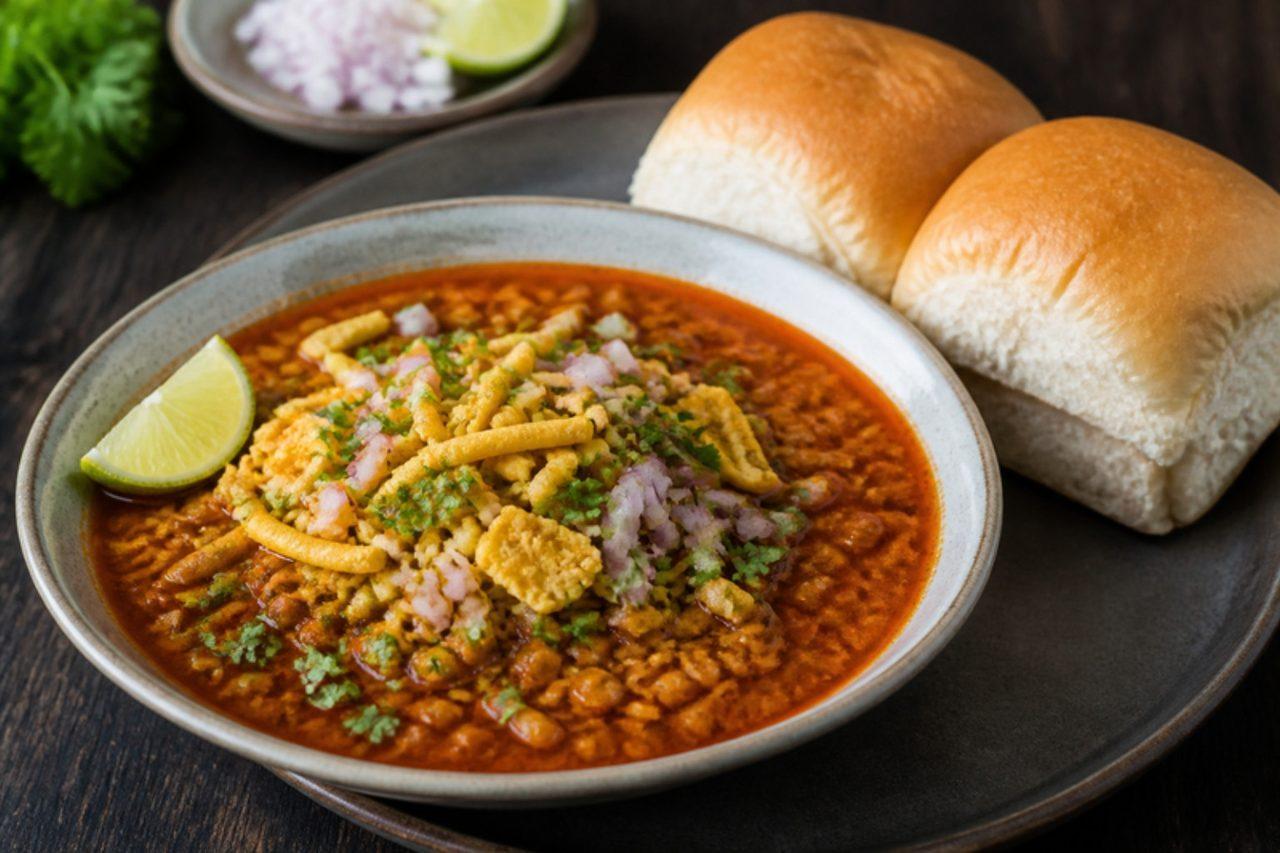
AI-generated image
Misal pav
Sprouted bean curry with bread rolls
Fiery Maharashtrian sprouted moth bean curry with farsan, onion and soft rolls (sprout the beans for 1–2 days)



Misal pav is Maharashtra's great street breakfast, eaten from Pune's old eateries to the hot, red misal of Kolhapur. Sprouted moth beans (matki) are cooked into a thick usal, then drowned at the table in a fiery, oily, thin curry called kat or tarri, and topped with crunchy farsan, raw onion, coriander and a squeeze of lemon. It comes with soft pav to mop it all up. Each person builds their own bowl, adding as much tarri as their tongue can take. Chef's tip: let the kat simmer until a red layer of oil floats on top; Pune vendors skim this 'tarri' off and spoon it over each bowl, and that oily, spicy film is the whole point of a good misal.
- Total time
- 60 min
- Difficulty
- medium
- Serves
- 4
Ingredients
For the usal (sprouts)
- 7 oz moth beans (matki)sprouted, see step 1; or 300 g ready sprouted
- 1 tbsp sunflower or groundnut oil
- ½ tsp mustard seeds
- ¼ tsp asafoetida (hing)
- ½ tsp ground turmeric
- 1 ¼ cups water
- ¾ tsp salt
For the kat masala paste
- 1 tbsp sunflower or groundnut oil
- 1 onionsliced
- 4 tbsp desiccated coconut
- 6 cloves garlic
- ½ oz fresh ginger
- 2 tomatoeschopped
For the kat (spicy curry)
- 4 tbsp sunflower or groundnut oil
- 1 tsp cumin seeds
- 12 curry leaves
- 1 tbsp Kashmiri chilli powder
- 1 tsp hot red chilli powderuse less for a milder misal
- 3 kokum petals or tamarind pastekokum, or 1 tsp tamarind
- 1 tsp jaggery
- 3 ¼ cups hot water
- 1 tsp salt
To serve
- 1 red onionfinely chopped
- 4 tbsp fresh corianderchopped
- 1 lemoncut into wedges
Shop this recipe on Amazon
What you'll need
Spices & pantry
Fresh ingredients (9)
Links open Amazon in a new tab. As an Amazon Associate, WhatToEat.Today earns from qualifying purchases.
Method
0/8 doneStep 1: To sprout the beans, rinse 7 oz moth beans (matki) and soak in plenty of water for 8 hours. Drain, tip into a sieve or tie in a damp muslin cloth, cover and leave in a warm place for 24–36 hours, rinsing once or twice a day, until most have 5 mm tails. Short sprouts taste nuttier; long ones go bitter.
Step 2: For the usal, heat 1 tbsp sunflower or groundnut oil in a pan over a medium heat. Add ½ tsp mustard seeds and, when it crackles, ¼ tsp asafoetida (hing) and ½ tsp ground turmeric. Add the sprouts, 1 ¼ cups water and ¾ tsp salt, cover and simmer for 12–15 minutes, until the sprouts are tender but still whole with a slight bite. Don't pressure cook them to mush.
15 minStep 3: For the masala paste, heat 1 tbsp sunflower or groundnut oil in a frying pan over a medium heat and fry 1 onion for 6–7 minutes until golden-brown. Add 4 tbsp desiccated coconut and stir for 2 minutes until it turns a deep golden colour. Add 6 cloves garlic and ½ oz fresh ginger for 1 minute, then 2 tomatoes for 3 minutes until soft.
12 minStep 4: Cool slightly, then blend to a smooth paste with a splash of water.
Step 5: For the kat, heat 4 tbsp sunflower or groundnut oil in a deep pan over a medium heat. Add 1 tsp cumin seeds and 12 curry leaves; when they sizzle, add the masala paste and fry for 5–6 minutes, stirring, until it darkens and the oil separates. Don't skimp on this frying: under-fried paste gives a raw, flat-tasting kat.
6 minStep 6: Lower the heat, add 1 tbsp Kashmiri chilli powder, 1 tsp hot red chilli powder and 2 tsp goda masala or garam masala and stir for 30 seconds; take care, chilli powder burns quickly in hot oil and turns bitter.
Step 7: Pour in 3 ¼ cups hot water, add 3 kokum petals or tamarind paste, 1 tsp jaggery, 1 tsp salt and 3 tbsp of the cooked sprouts (they thicken it slightly). Simmer uncovered for 10–12 minutes, until the kat is thin but full-bodied and a layer of red oil floats on top.
12 minStep 8: To serve, spoon a ladle of hot usal into each deep bowl and pour over a ladle of kat. Skim some of the red tarri from the top of the kat and spoon it over. Pile on 5 ½ oz farsan (spicy mixed savoury mix), 1 red onion and 4 tbsp fresh coriander, add 1 lemon wedges and serve with 8 pav (soft bread rolls, dairy-free), warmed on a tawa. Keep extra kat at the table for second helpings.
Nutrition per serving
- Calories
- 560 kcal
- Protein
- 19 g
- Carbs
- 70 g
- Fat
- 24 g
- Fibre
- 13 g
Nutrition values are estimates.
KrazyBadal
Good to know
- How long does misal pav take?
- About 60 minutes in total: 20 minutes to prepare and 40 minutes to cook.
- How many people does it serve?
- 4 as written. Change the servings above the ingredients and every amount scales to match.
- Is it vegan?
- Yes. It has no meat, fish, dairy or eggs.
- Is it very spicy?
- It has some heat. Use less chilli for a milder version, or more if you like it hot.
- What can I use instead of mustard seeds?
- Cumin seeds, same amount (different flavour, same crackle).
- What can I use instead of asafoetida (hing)?
- A pinch each of garlic powder and onion powder (asafoetida stands in for onion and garlic).
Reviews
No reviews yet. Be the first to cook it.
Rate this recipe
Sign in to rate and review this recipe.
You might also like
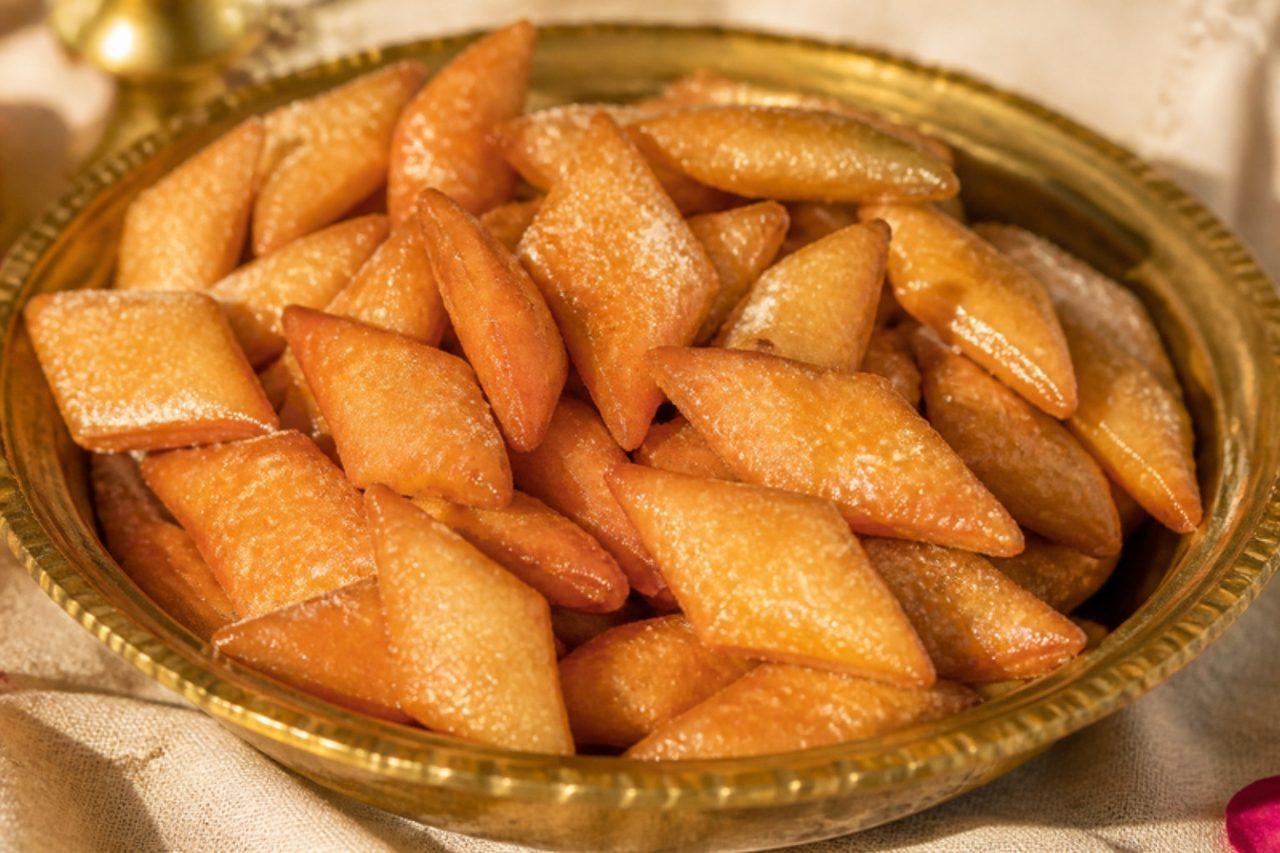
SakarpadaSweet fried dough diamonds
Sakarpada (shakarpara) are little sweet diamonds of a rich dough made with ghee, milk and sugar, fried until golden and crunchy. They are a Diwali favourite with tea, and the cubes go into bhusu too. They keep for weeks in an air-tight tin.
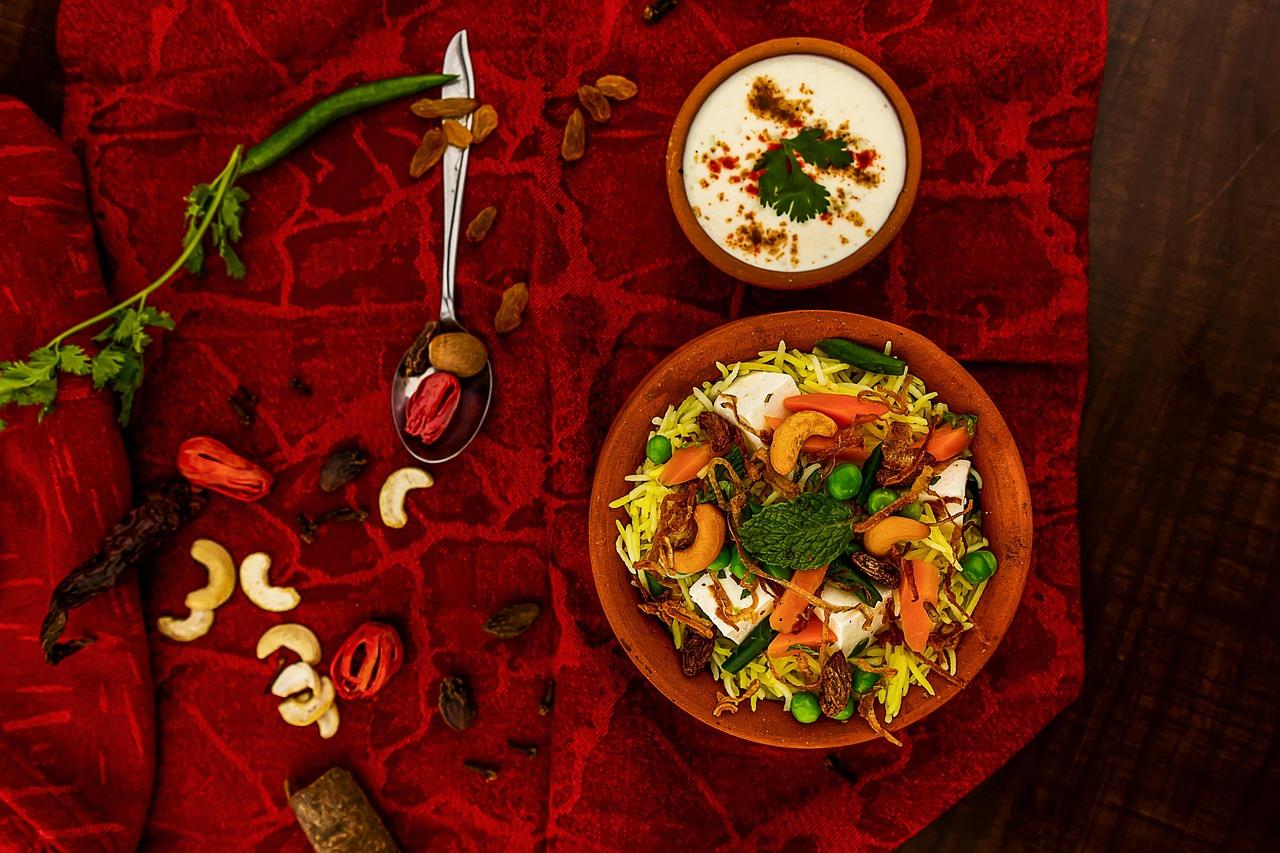
Paneer biryaniRice and moong dal in coconut milk
A mild, creamy biryani: rice and husked green gram roasted in ghee, then cooked in coconut milk with peas, carrots, potatoes, peanuts and cashews, and finished with soft fried paneer and a fresh coriander yogurt. Serve hot, garnished with more fried cashews and paneer.


Sabudana khichdiSago with peanuts and potato
Sabudana khichdi is the dish that sees Maharashtra through every vrat (fast), from Navratri to Ekadashi, but it's so good that people eat it any day of the week. Soaked sago pearls are tossed in a pan with crushed roasted peanuts, cubes of potato, cumin and green chilli until each pearl turns glassy and separate, then finished with lemon and coriander. It's soft, chewy, nutty and gently hot. Fasting rules vary from family to family, so check yours; this version uses rock salt and no asafoetida, onion or garlic. Traditionally it's cooked in ghee; use ghee instead of oil if you aren't keeping it vegan. Chef's tip: soak the sago in just enough water to cover by the height of the pearls themselves, no more; too much water is the reason khichdi turns into one sticky lump.
