
 Indonesian
 Vegan
 Gluten free
Misro
Cassava palm sugar fritters
Misro (amis di jero): Sundanese cassava fritters with a molten palm-sugar centre
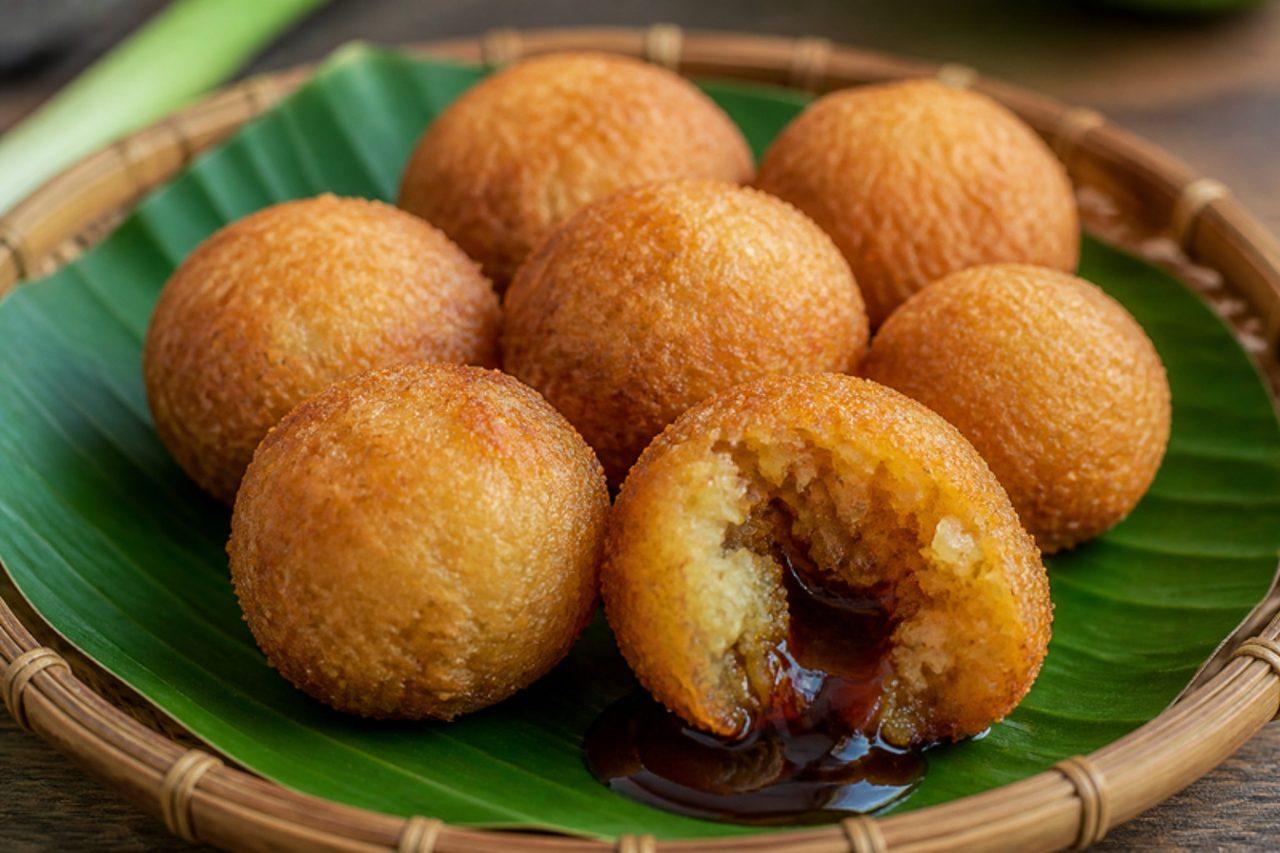
In West Java combro and misro are sold side by side, savoury and sweet; misro's name means 'sweet inside', and biting through the crisp shell releases a trickle of melted palm sugar into the chewy grated cassava. Gorengan sellers in Sumedang and Bandung fry them in the afternoon and they vanish with glasses of hot tea. They need only cassava, coconut, salt and gula aren. Chef's tip: let them rest for two minutes before eating; the sugar centre is far hotter than the shell and is the most common burnt tongue in Java.
- Prep
- 20 min
- Cook
- 20 min
- Difficulty
- Easy
- Serves
- 4
- Per serving
- 420 kcal
Ingredients
- 1 ⅛ lb cassavapeeled, cored, finely grated (or frozen grated cassava, thawed)
- 2 ⅛ oz grated coconutfresh, or desiccated soaked in 2 tbsp warm water
- ½ tsp salt
- 3 ⅛ oz palm sugar (gula aren)chopped into 1 cm pieces
- 3 ¼ cups vegetable oilfor deep frying
Tick what you have; the rest goes in the basket.
Method
0/5 doneStep 1: Squeeze 1 ⅛ lb cassava hard in a clean cloth until most of the liquid is out, then mix with 2 ⅛ oz grated coconut and ½ tsp salt until the dough holds when pressed.
Step 2: Flatten a golf-ball portion in your palm, set a piece or two of 3 ⅛ oz palm sugar (gula aren) in the centre and close the cassava round it into a round or slightly flattened ball. Seal well so the sugar can't leak. Make about 12.
Step 3: Heat 3 ¼ cups vegetable oil to 325°F over a medium heat. Fry 4 at a time, turning gently, until golden brown and crisp and a skewer passes easily through the cassava.
7 minStep 4: Drain on a rack and repeat, keeping the oil steady so the outsides don't brown before the cassava is cooked.
13 minStep 5: Rest the misro for 2 minutes before serving with tea; the sugar inside is molten.
KrazyBadal
Reviews
No reviews yet. Be the first to cook it.
Rate this recipe
Sign in to rate and review this recipe.
You might also like

Sayur lodehVegetables in coconut milk
Sayur lodeh is everyday cooking in Central Java, made in big pots in Solo and Semarang kitchens and ladled over rice, with lontong rice cakes at Lebaran, or alongside opor and sambal goreng on festive tables. It's soupy rather than thick: a fragrant broth of coconut milk, galangal, lemongrass and lime leaf that carries chunks of aubergine, long beans, chayote and sweetcorn, plus tempeh and tofu to make it a meal. The flavour is mellow and slightly sweet, so the heat comes from sambal on the side. Chef's tip: keep the pot at a gentle simmer once the coconut milk goes in and stir now and then — a rolling boil splits the coconut milk into oily curds.

Masala khakhraCrisp roasted wheat crackers
Khakhra are thin chapaties roasted slowly on a griddle until they turn crisp, like a cracker. This masala version adds gram flour, fresh fenugreek, turmeric and chilli to the wheat dough. They are a light Gujarati breakfast or tea-time snack, and lovely with pickle, chutney or a smear of butter. You can also make them in a roti maker.
 Indian

SakarpadaSweet fried dough diamonds
Sakarpada (shakarpara) are little sweet diamonds of a rich dough made with ghee, milk and sugar, fried until golden and crunchy. They are a Diwali favourite with tea, and the cubes go into bhusu too. They keep for weeks in an air-tight tin.