
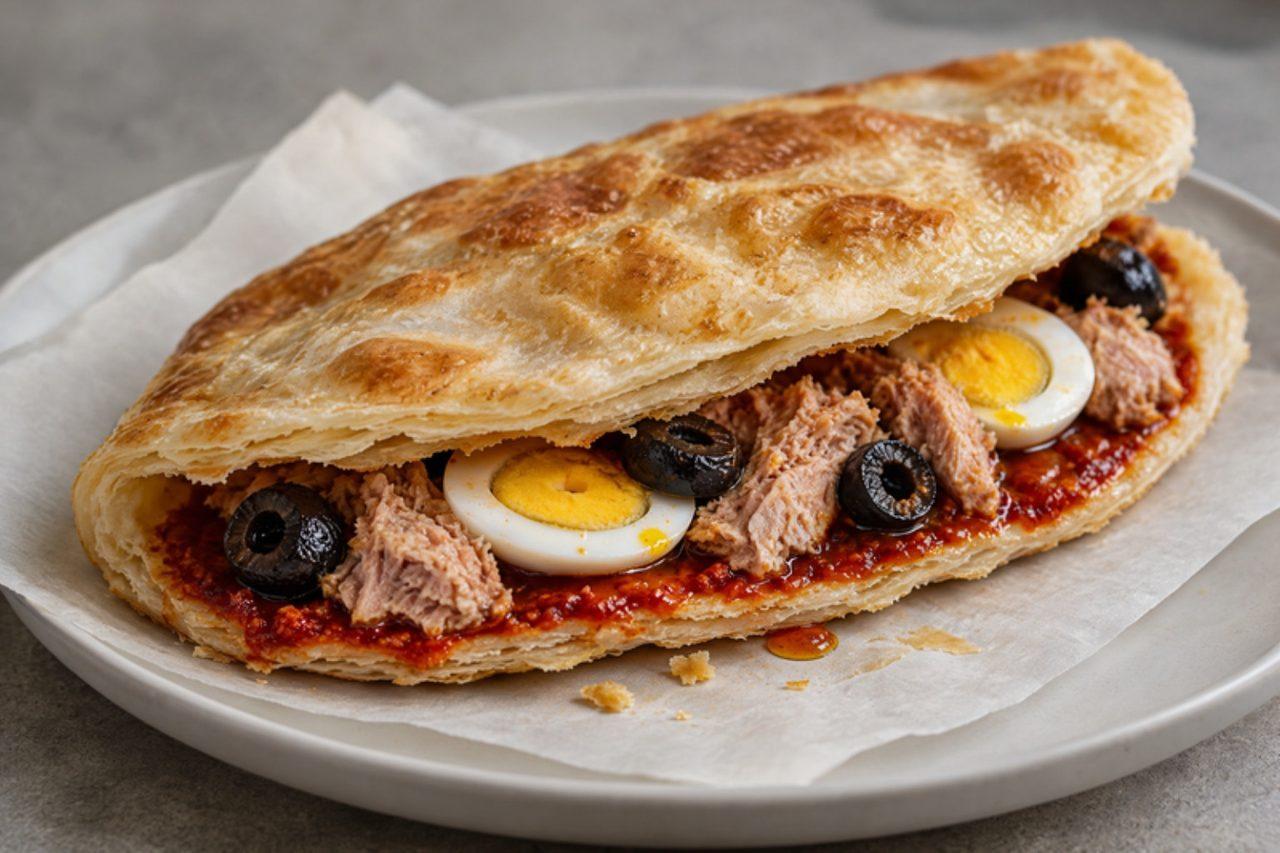
AI-generated image
Mlawi
Folded flatbread with tuna
ملاوي (mlawi): Tunisia's flaky folded griddle bread, filled with tuna, harissa, egg and olives

Mlawi is the flaky griddle bread of Tunisian street corners: a semolina dough oiled, folded and flattened into a square, then cooked on a hot plate until blistered and layered like puff pastry. In the Medina of Tunis, around Bab Bhar and the lanes leading to the Zitouna Mosque, women roll and flip them all morning, and the classic order is a mlawi spread with fiery harissa and rolled around tuna, sliced egg and black olives, eaten hot for breakfast or a mid-morning snack. It contains wheat, fish and egg. Chef's tip: let the folded squares rest for 5 minutes before the final flattening, so they spread without springing back.
- Total time
- 60 min
- Difficulty
- medium
- Serves
- 4
Ingredients
For the dough
- 5 ½ oz fine semolina
- 5 ½ oz plain flour
- 1 tsp salt
- ¾ cup warm waterabout
- 6 tbsp olive oilfor the dough and folding
For the filling
- 3 eggs
- 4 tsp harissa paste
- 8 ½ oz tinned tuna in oildrained weight
- 2 ⅛ oz pitted black olivessliced
- 2 tbsp flat-leaf parsley (optional)chopped
Shop this recipe on Amazon
Spices & pantry
Fresh ingredients (2)
Links open Amazon in a new tab. As an Amazon Associate, WhatToEat.Today earns from qualifying purchases.
Method
0/8 doneStep 1: Mix 5 ½ oz fine semolina, 5 ½ oz plain flour and 1 tsp salt, add ¾ cup warm water gradually with 1 tablespoon of 6 tbsp olive oil and knead for 8–10 minutes, until very smooth and soft.
10 minStep 2: Divide into 4 balls, rub each with oil, cover and rest for 20 minutes.
20 minStep 3: Meanwhile, lower 3 eggs into boiling water and cook for 10 minutes, until the yolks are fully set. Cool in cold water, peel and slice.
12 minStep 4: Oil the work surface and your hands. Flatten a ball with your palms and stretch it into a very thin round about 30 cm across. Brush with oil, fold the left and right sides into the middle, then fold the top and bottom in to make a square. Repeat with the rest.
8 minStep 5: Rest the squares for 5 minutes, then press each one out with oiled hands into a 20 cm square. Common mistake: flattening too soon; the dough shrinks back and the layers fuse together.
5 minStep 6: Cook one at a time on a dry, heavy frying pan or griddle over a medium heat for 3 minutes per side, pressing with a spatula, until puffed, flaky and spotted golden brown.
12 minStep 7: While each mlawi is hot, spread it thinly with 4 tsp harissa paste, scatter over 8 ½ oz tinned tuna in oil, the egg slices, 2 ⅛ oz pitted black olives and 2 tbsp flat-leaf parsley, then fold or roll it up and wrap in paper.
Step 8: Vegetarian version: leave out the tuna and fill with harissa, the sliced egg and grated cheese; traditional cheeses may be made with animal rennet, so choose one labelled vegetarian.
Nutrition per serving
- Calories
- 520 kcal
- Protein
- 25 g
- Carbs
- 54 g
- Fat
- 23 g
- Fibre
- 3 g
Nutrition values are estimates.
KrazyBadal
Good to know
- How long does mlawi take?
- About 60 minutes in total: 35 minutes to prepare and 25 minutes to cook.
- How many people does it serve?
- 4 as written. Change the servings above the ingredients and every amount scales to match.
- What can I use instead of plain flour?
- Self-raising flour, same amount (then leave out the baking powder).
- What can I use instead of eggs?
- 1 tbsp ground flaxseed + 3 tbsp water per egg, left for 5 minutes (baking only; vegan).
Reviews
No reviews yet. Be the first to cook it.
Rate this recipe
Sign in to rate and review this recipe.
You might also like

BsissaRoasted barley flour with olive oil
A tin of bsissa sits in many Tunisian kitchen cupboards, from Tunis flats to farmhouses in the south: a finely ground flour of roasted barley, roasted chickpeas and spices such as coriander, fennel and aniseed. In the morning a few spoonfuls are worked with olive oil and something sweet into a nutty, crumbly paste, or stirred with water into a thick drink, and it keeps you going until lunch. Travellers and pilgrims once carried it for the road. Roasting your own flour takes 15 minutes and makes a jar that lasts weeks. Sugar and dates keep it vegan; some families use honey. Chef's tip: roast the flours separately over a low heat and stir constantly; the moment they smell like toasted biscuits and turn light tan, tip them out of the pan.


ChipaCheese bread rings
In Paraguay you hear 'chipa, chipa!' called by vendors with big baskets on buses and street corners, and every family bakes it for Holy Week, when chipa is the food of Good Friday. Cassava starch, a little cornmeal, butter, eggs and a lot of hard cheese are kneaded into a dough scented with aniseed, shaped into rings or small rolls and baked in a hot oven, traditionally a domed clay tatakua. It's chewy, crisp outside and best warm with cocido (toasted yerba tea). Chef's tip: the dough should feel soft and slightly greasy; add milk a spoon at a time, as too much makes the chipa spread flat.
 Paraguayan

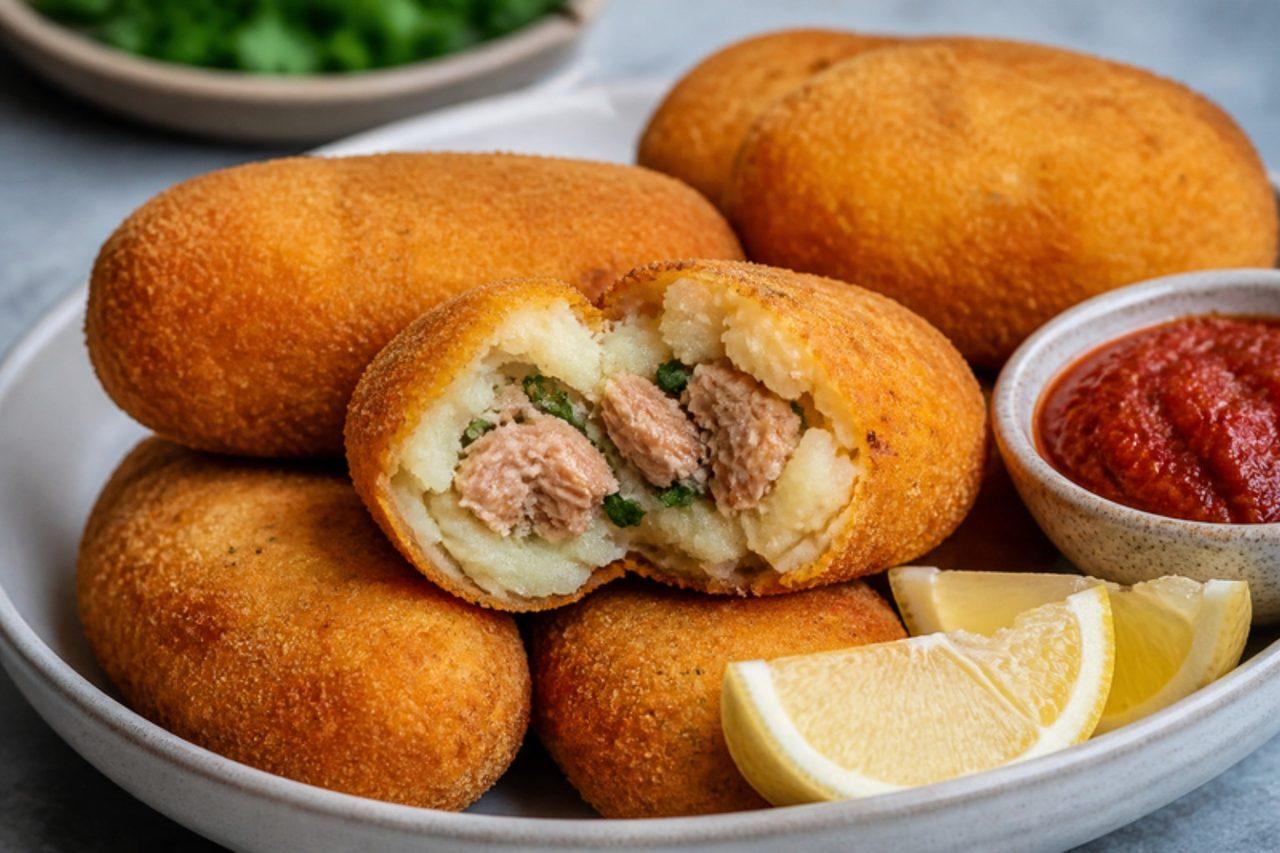
Banatage (tuna potato croquettes)
Golden, crunchy outside and soft inside, banatage are mashed-potato croquettes hiding a spoon of tuna, parsley and harissa, rolled in breadcrumbs and fried. They come out during Ramadan beside the brik and chorba, are tucked into lunchboxes and are a favourite with children all over Tunisia. Leftover mash works well, as long as it is firm. Serve them hot with lemon wedges, a salad or a dab of harissa. Chef's tip: dry the boiled potatoes in the hot pan for a minute before mashing; wet, watery mash is the usual mistake and makes croquettes that split open in the oil.