
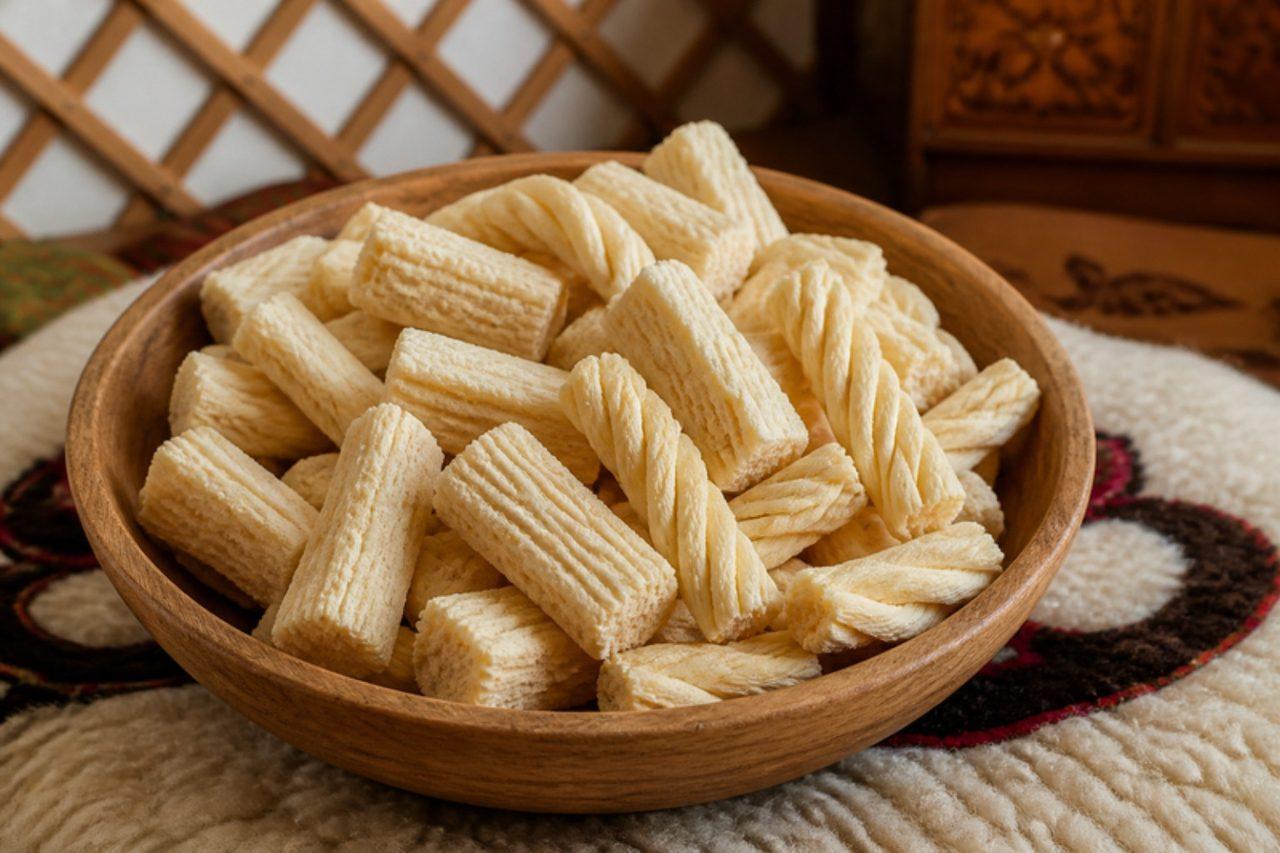
AI-generated image
Aaruul
Dried milk curds
Mongolian dried milk curds


Aaruul are the hard, sour little curds that dry on the roofs of gers all over Mongolia in summer, when the herds give the most milk, and they are carried in pockets as a snack through the long winter. Milk is soured and boiled until the curds separate, then strained, pressed, cut into pieces and dried in the sun and wind for days. They are chewed slowly, almost like a sweet, and offered to guests. This home method dries them in a very low oven. A common mistake is under-drying; any moisture left lets mould grow. Chef's tip: stir a little sugar into the curd if you want the softer, sweeter style sold in Ulaanbaatar markets.
- Total time
- 510 min
- Difficulty
- medium
- Serves
- 12
Ingredients
- 12 ½ cups whole milk
- 9 oz plain live yoghurt
- 2 tbsp sugar (optional)
Shop this recipe on Amazon
What you'll need
Spices & pantry
Fresh ingredients (2)
Links open Amazon in a new tab. As an Amazon Associate, WhatToEat.Today earns from qualifying purchases.
Method
0/5 doneStep 1: Stir 9 oz plain live yoghurt into 12 ½ cups whole milk in a large pot, cover and leave at warm room temperature for 12–24 hours until it has set and soured like thin yoghurt.
720 minStep 2: Heat slowly over a medium-low heat, stirring gently now and then, until it comes to a simmer and the curds clearly separate from the greenish whey, about 30–40 minutes. Do not let it boil hard.
40 minStep 4: Unwrap and cut or shape into small pieces, about 3 cm long and 1 cm thick.
15 minStep 5: Lay on a rack and dry in the oven at its lowest setting (50–140°F) with the door propped open for 6–8 hours, or in a dry, airy, sunny place for 2–3 days, until rock hard right through. Store in an airtight jar.
480 min
Nutrition per serving
- Calories
- 60 kcal
- Protein
- 6 g
- Carbs
- 3 g
- Fat
- 3 g
- Fibre
- 0 g
Nutrition values are estimates.
KrazyBadal
Good to know
- How long does aaruul take?
- About 510 minutes in total: 30 minutes to prepare and 480 minutes to cook.
- How many people does it serve?
- 12 as written. Change the servings above the ingredients and every amount scales to match.
- Is it vegetarian?
- Yes. It has no meat or fish.
- Is it gluten free?
- Yes, as written. Check the labels on stock, sauces and spice mixes, which sometimes contain gluten.
- Can I make it ahead?
- Yes. It keeps well, so you can cook it earlier in the day or the day before and reheat it.
- What can I use instead of whole milk?
- Semi-skimmed milk with 1 tbsp cream per 240ml (1 cup).
- What can I use instead of plain live yoghurt?
- Sour cream or buttermilk, same amount.
Reviews
No reviews yet. Be the first to cook it.
Rate this recipe
Sign in to rate and review this recipe.
You might also like

Masala khakhraCrisp roasted wheat crackers
Khakhra are thin chapaties roasted slowly on a griddle until they turn crisp, like a cracker. This masala version adds gram flour, fresh fenugreek, turmeric and chilli to the wheat dough. They are a light Gujarati breakfast or tea-time snack, and lovely with pickle, chutney or a smear of butter. You can also make them in a roti maker.
 Indian

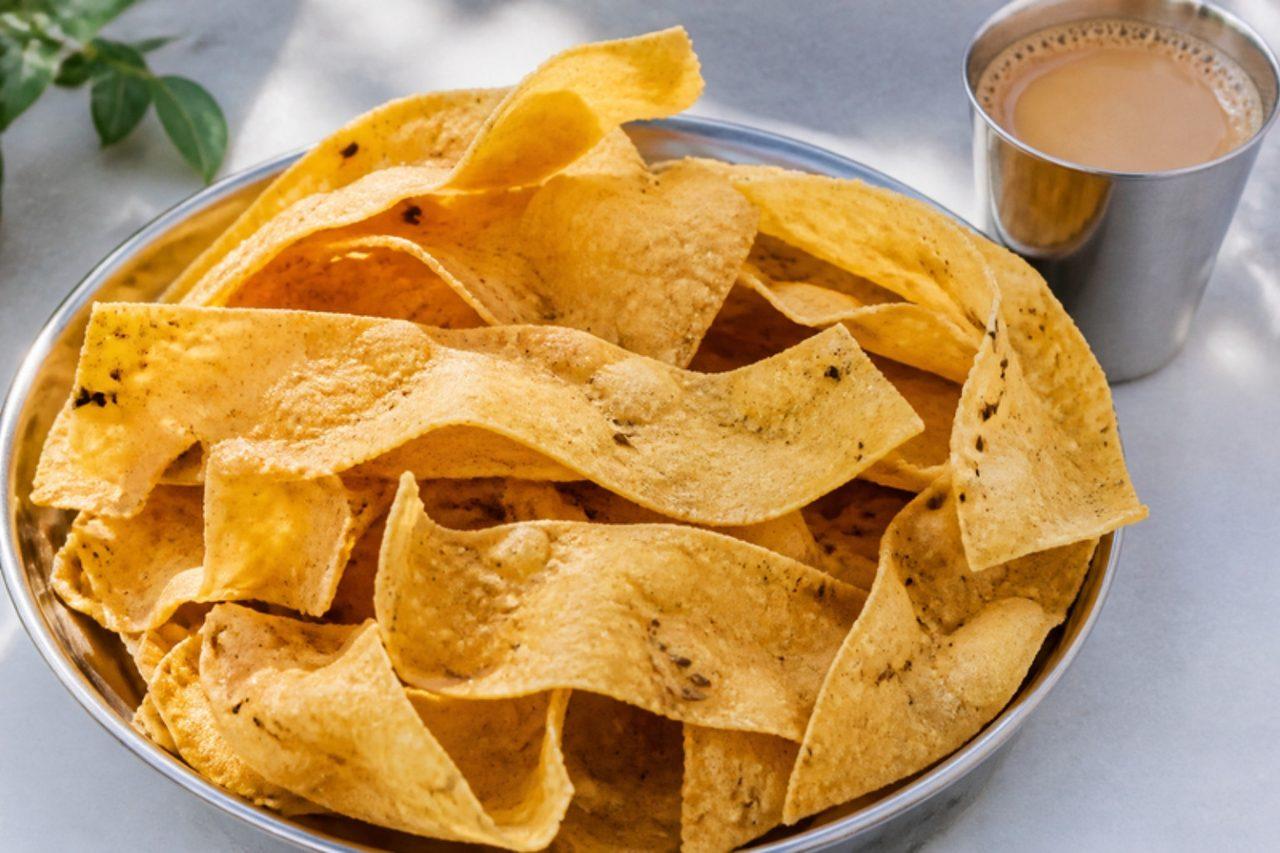
Patta gathiaThin gram flour ribbons
Patta gathia are flat, ribbon-like strips of gram flour dough, rolled paper-thin under the palm on a wooden board and fried until crisp. Black pepper and ajwain give them their flavour. They are a classic Gujarati tea-time snack and are great with fried chillies and papaya sambharo.
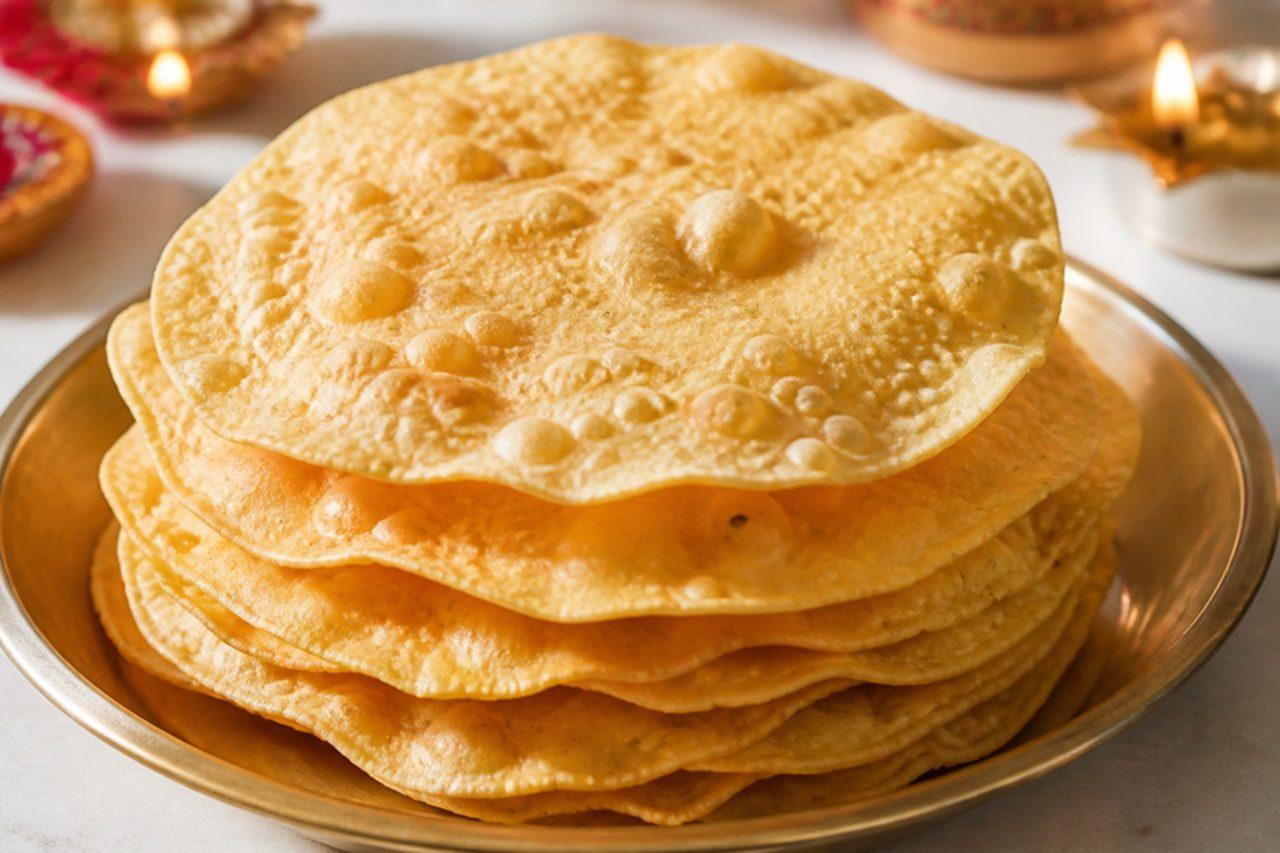
MathiaMoong and urad dal wafers
Mathia are thin, crisp, slightly sweet and peppery wafers made from mathia flour, a mix of ground husked moong and urad dal. They are a classic Gujarati Diwali snack. The dough is pounded until pale, rolled very thin between plastic sheets and fried one at a time. They are fragile, so store them gently. To make mathia flour, finely grind 4 parts husked green gram lentils with 1 part husked black gram lentils.