
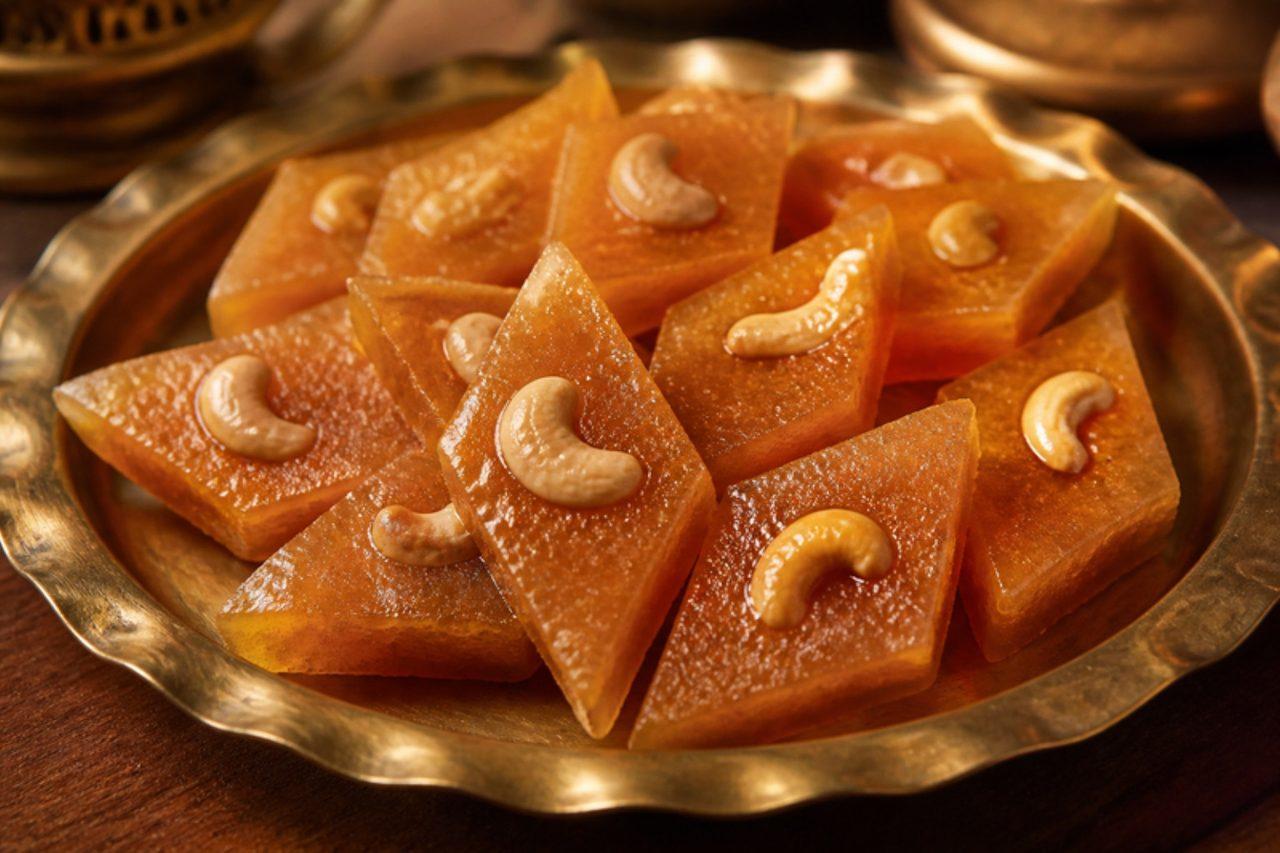
AI-generated image
Muscat
Semolina milk sweet
මස්කට් (muscat): chewy, translucent Sri Lankan Muslim sweet of semolina milk, sugar, ghee and cashews (plus 1 hour soaking)

Walk past the Muslim sweet shops of Pettah in Colombo or the old trading streets of Beruwala before Eid and you will see trays of muscat, dense, jewel-like diamonds that are glossy with ghee and studded with cashews. The texture is the whole appeal: firm and chewy, almost like a soft Turkish delight, with a sweet, buttery, cardamom-scented flavour, and it is shared with neighbours at Eid, weddings and the Avurudu table. Traditional cooks extract the starch from wheat flour; this home version soaks and blends semolina, then strains it, which gives the same clear, bouncy set. Most failures come from adding the ghee too quickly, so it pools on top instead of being absorbed; pour it in a spoonful at a time and keep stirring. Chef's tip: the muscat is done when it rolls into a single glossy mass that leaves the pan clean and the ghee starts to seep back out at the edges.
- Total time
- 65 min
- Difficulty
- medium
- Serves
- 16
Ingredients
For the starch milk
- 7 oz fine semolina
- 3 cups water
For the muscat
- 10 ½ oz sugar
- 5 ½ oz gheemelted, plus extra for the tray
- 1 tsp ground cardamom
- 2 ⅛ oz cashewsroughly chopped
- 2 drops food colouring (pink or yellow) (optional)
- 1 tsp rosewater (optional)
Shop this recipe on Amazon
What you'll need
Spices & pantry
Links open Amazon in a new tab. As an Amazon Associate, WhatToEat.Today earns from qualifying purchases.
Method
0/8 doneStep 1: Soak 7 oz fine semolina in 3 cups water for 1 hour, stirring once or twice.
60 minStep 2: Blend the semolina and water until smooth, then strain through a fine cloth, squeezing well; you should have about 650 ml of milky starch water. Throw away the grit.
Step 3: Grease a 20 cm square tray with a little ghee.
Step 4: Pour the starch water into a heavy non-stick pan, add 10 ½ oz sugar and cook over a medium heat, stirring constantly, for 12–15 minutes until it turns thick and translucent.
15 minStep 5: Add 5 ½ oz ghee a tablespoon at a time, stirring hard after each addition until it is absorbed before adding the next; this takes 20–25 minutes.
25 minStep 6: Stir in 1 tsp ground cardamom, 2 ⅛ oz cashews, 2 drops food colouring (pink or yellow) and 1 tsp rosewater and keep cooking for 4–5 minutes until the mixture leaves the sides of the pan in one glossy mass and ghee begins to seep out.
5 minStep 7: Spread it in the tray, smooth the top with an oiled spoon and leave to cool and set for at least 2 hours.
Step 8: Cut into small diamonds and store in an airtight box for up to a week.
Nutrition per serving
- Calories
- 210 kcal
- Protein
- 2 g
- Carbs
- 32 g
- Fat
- 9 g
- Fibre
- 0 g
Nutrition values are estimates.
KrazyBadal
Good to know
- How long does muscat take?
- About 65 minutes in total: 15 minutes to prepare and 50 minutes to cook.
- How many people does it serve?
- 16 as written. Change the servings above the ingredients and every amount scales to match.
- Is it vegetarian?
- Yes. It has no meat or fish.
- Can I make it ahead?
- Yes. It keeps well, so you can cook it earlier in the day or the day before and reheat it.
- What can I use instead of sugar?
- Caster sugar, same amount.
- What can I use instead of ghee?
- Butter, same amount (keep the heat a little lower, butter burns sooner).
Reviews
No reviews yet. Be the first to cook it.
Rate this recipe
Sign in to rate and review this recipe.
You might also like

Polos curryYoung green jackfruit curry
Polos is the tiny unripe jackfruit picked in the Western and Sabaragamuwa provinces long before it sweetens, and cooked low and slow it becomes one of the island's most loved festival curries, especially at Sinhala and Tamil New Year in April and at wedding lunches. The firm, pale flesh soaks up a very dark roasted curry powder, garlic, ginger, goraka (a smoky souring fruit) and coconut milk until it turns almost black-brown and tastes rich, sour and meaty. Fresh polos is hard to find abroad; tinned young green jackfruit in brine works well. A frequent mistake is not cooking it long enough, which leaves it squeaky; the pieces must be soft enough to break with a spoon. Chef's tip: oil your hands and knife before cutting fresh jackfruit; the sticky white sap washes off oiled skin but not dry skin.



Undu walaluFried urad dal rings in treacle
Walalu means bangles, and these dark, sticky rings of fried urad dal soaked in kithul treacle are a sweet that Sinhala families bring out for Avurudu and for special almsgivings, often made in large batches by an aunt known for her steady hand. A thick, fluffy paste of ground black gram is piped into loops and fried until crisp, then plunged straight into warm treacle, so the rings stay crunchy on the outside while drinking up the syrup. They taste a little like a darker, smokier jalebi, with a toffee finish from the palm treacle. Watery batter is what ruins them; it spreads into flat blobs, so grind the soaked dal with as little water as possible and beat it until light. This recipe uses no asafoetida, so it is naturally gluten free. Chef's tip: pipe the rings onto small squares of baking paper and lower them into the oil paper and all; the paper peels away in seconds.
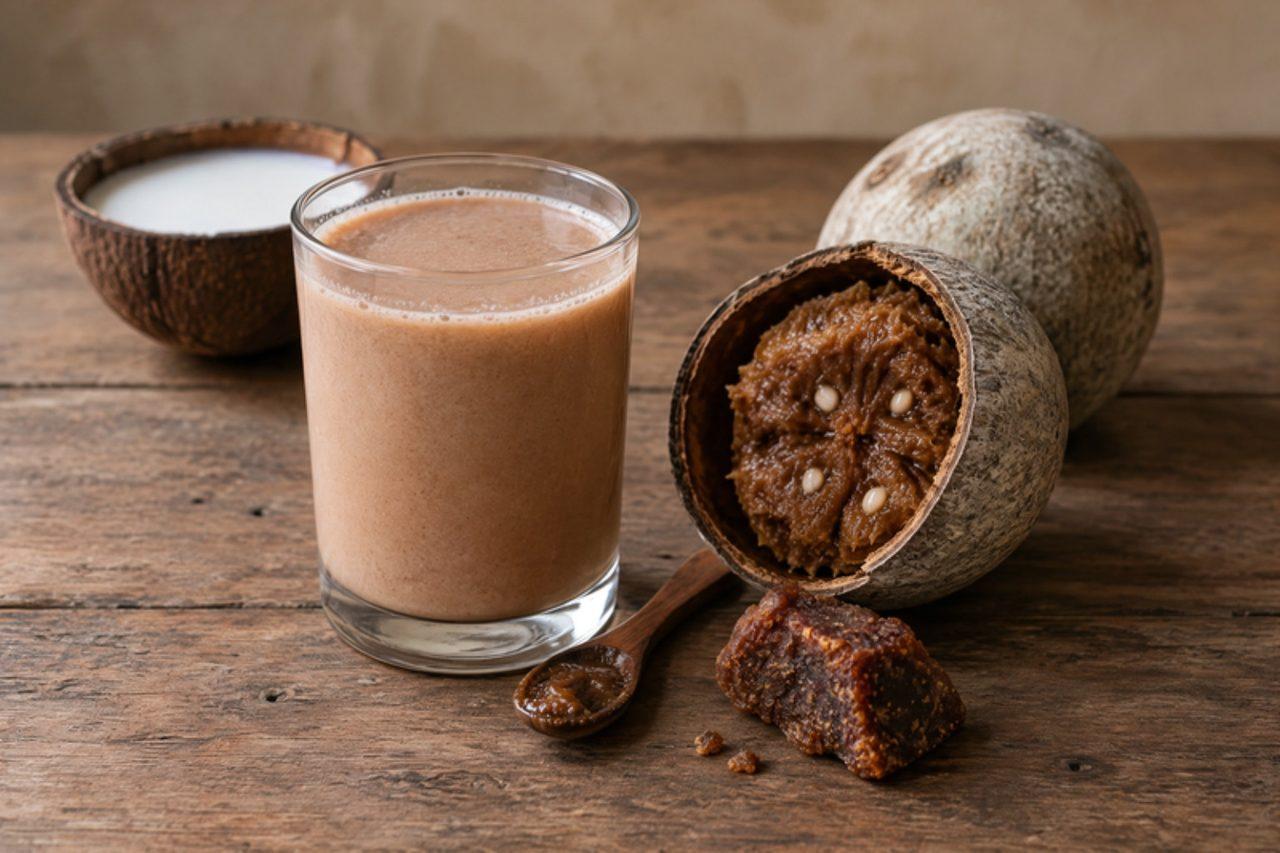
Divul kiri (wood apple drink)
In Sri Lanka's dry zone, around Anuradhapura, Polonnaruwa and down towards Hambantota, wood apple trees fruit through the hot months, and roadside sellers crack the hard grey shells open for you. Divul kiri, wood apple with coconut milk, is what families blend at home in the afternoon heat or offer guests during the Sinhala and Tamil New Year season in April. The pulp is brown, sticky and full of seeds, with a sour, funky smell that turns fruity once it meets creamy coconut milk and dark jaggery. The drink is thick and smooth, tangy-sweet and a little smoky. The common mistake is blending the seeds in: they break and make the drink gritty and bitter. Squeeze the pulp by hand and strain out every seed before blending. It is ready when it is thick enough to coat a glass, pale caramel-brown and tastes clearly sour under the sweetness. Outside Sri Lanka, look for frozen or tinned wood apple pulp in South Asian shops; there is no true substitute, though tamarind pulp with a few soft dates gives a similar sweet-sour idea. Chef's tip: pick a fruit that sounds hollow when tapped and smells strongly when cracked; it is fully ripe.