
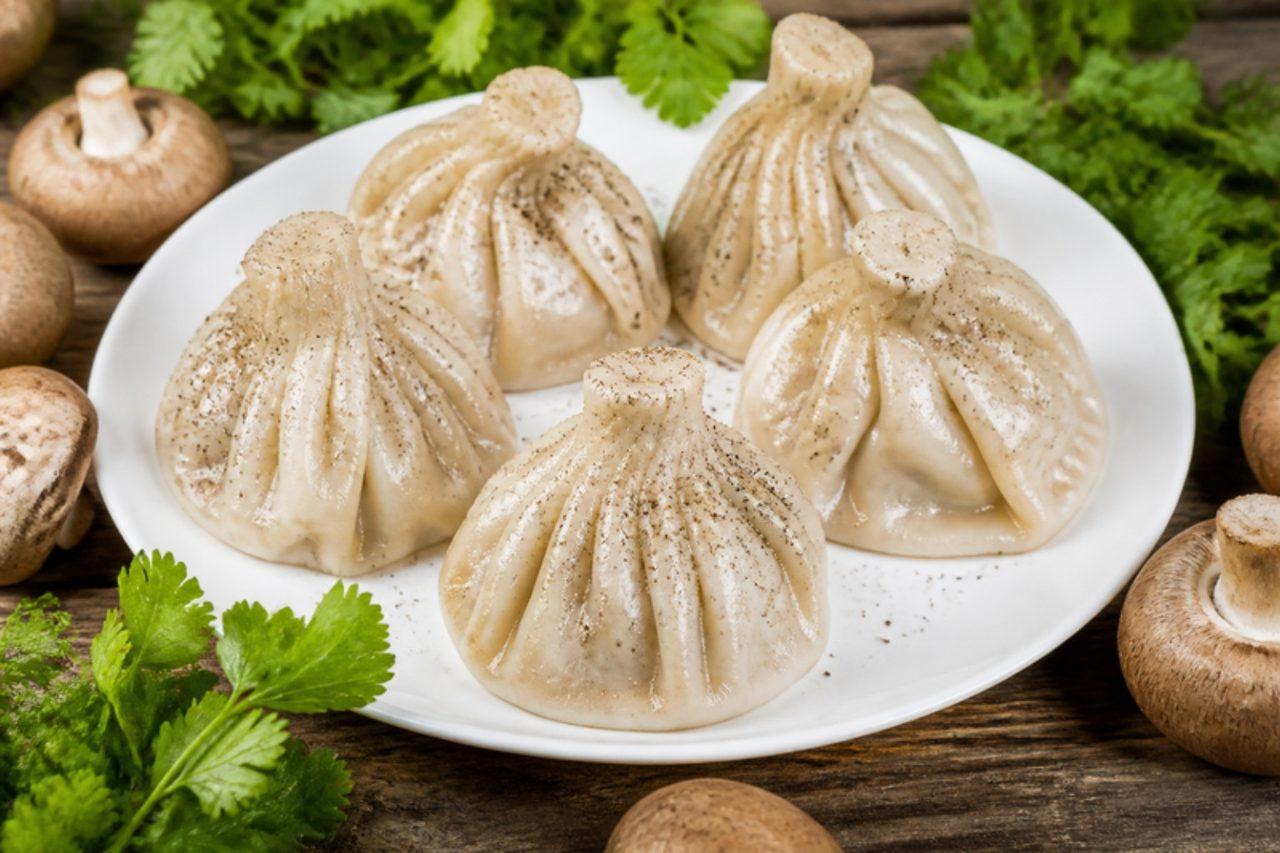
AI-generated image
Mushroom khinkali
Mushroom dumplings
Sokos khinkali: pleated mountain dumplings with a juicy mushroom filling


Khinkali come from the mountain villages of Pshavi, Khevsureti and Tusheti in Georgia's north-east, and the roadside khinkali houses of Pasanauri on the Georgian Military Road are where many Tbilisi families stop for them. The classic filling is meat, but mushroom khinkali (sokos khinkali) are made all through Orthodox Lent and are on most menus. You hold each one upside down by its twisted topknot, bite a small hole, sip the hot juices, then eat the rest and leave the doughy knot on the plate to count how many you have eaten. The common mistake is rolling the wrappers too thin or the dough too soft, so they tear in the pot and lose their juice. Chef's tip: grind black pepper over them generously at the table, as Georgians do; it wakes up the mushrooms.
- Total time
- 120 min
- Difficulty
- hard
- Serves
- 4
Ingredients
For the dough
- 1 ⅛ lb plain flourplus extra for dusting
- 1 tsp salt
- 1 cup cold water
For the filling
- 1 ⅓ lb chestnut mushroomsvery finely chopped
- 2 onionsvery finely chopped
- 3 tbsp sunflower oil
- 2 cloves garliccrushed
- ⅔ oz coriander leavesfinely chopped
- ½ tsp chilli flakes
- ½ tsp ground caraway or cumin
- 1 tsp salt
- ¼ cup watercold
To cook and serve
- 1 tbsp saltfor the cooking water
- 1 tsp black pepperfreshly ground, to serve
Shop this recipe on Amazon
Fresh ingredients (4)
Links open Amazon in a new tab. As an Amazon Associate, WhatToEat.Today earns from qualifying purchases.
Method
0/8 doneStep 1: Mix 1 ⅛ lb plain flour and 1 tsp salt, add 1 cup cold water and knead for 10 minutes into a firm, smooth dough, stiffer than bread dough. Wrap and rest for 30 minutes.
10 minStep 2: Heat 3 tbsp sunflower oil in a large frying pan over a medium-high heat. Fry 2 onions for 5 minutes until soft, then add 1 ⅓ lb chestnut mushrooms and cook for 10–12 minutes, stirring, until all the water they release has evaporated and they start to sizzle and brown.
17 minStep 3: Stir in 2 cloves garlic, ½ tsp chilli flakes and ½ tsp ground caraway or cumin for 1 minute, then take off the heat. Stir in ⅔ oz coriander leaves, 1 tsp salt and ¼ cup water; the water makes the juice inside the dumplings. Cool completely.
Step 4: Roll the dough into a log and cut into 20 pieces. Keep them covered. Roll each into a circle about 12 cm across and 2 mm thick, a little thinner at the edges than in the middle.
Step 5: Put a heaped tablespoon of filling in the centre of a wrapper. Holding it in one hand, fold the edge into small pleats all the way round with the other, turning as you go, aiming for 15–20 pleats. Gather the pleats at the top and twist firmly into a knot; pinch off any extra dough above the knot.
Step 6: Set the finished khinkali on a floured tray, not touching. Repeat with the rest.
Step 7: Bring a large pan of water to the boil with 1 tbsp salt. Lower in about 10 khinkali, stir gently once so none stick to the bottom, and boil for 10–12 minutes from when they float, until the dough is tender at the edges and the knot is just cooked.
12 minStep 8: Lift out with a slotted spoon and cook the second batch. Serve straight away with plenty of 1 tsp black pepper ground over the top, eating them by hand by the knot.
12 min
Nutrition per serving
- Calories
- 470 kcal
- Protein
- 13 g
- Carbs
- 88 g
- Fat
- 9 g
- Fibre
- 6 g
Nutrition values are estimates.
KrazyBadal
Good to know
- How long does mushroom khinkali take?
- About 120 minutes in total: 90 minutes to prepare and 30 minutes to cook.
- How many people does it serve?
- 4 as written. Change the servings above the ingredients and every amount scales to match.
- Is it vegan?
- Yes. It has no meat, fish, dairy or eggs.
- What can I use instead of plain flour?
- Self-raising flour, same amount (then leave out the baking powder).
- What can I use instead of chestnut mushrooms?
- Aubergine, diced, same weight.
Reviews
No reviews yet. Be the first to cook it.
Rate this recipe
Sign in to rate and review this recipe.
You might also like

SakarpadaSweet fried dough diamonds
Sakarpada (shakarpara) are little sweet diamonds of a rich dough made with ghee, milk and sugar, fried until golden and crunchy. They are a Diwali favourite with tea, and the cubes go into bhusu too. They keep for weeks in an air-tight tin.
 Indian

Yaki onigiriGrilled rice balls
Yaki onigiri (焼きおにぎり) are rice balls grilled until they form a crisp, toasty crust, then brushed with soy sauce glaze. They are eaten all over Japan, at izakaya, at barbecues and from the freezer section, as a snack or with miso soup. The inside stays soft and steamy while the outside crackles. Best eaten hot, straight from the pan. Chef's tip: let the shaped rice balls dry for 10 minutes before they go in the pan. A drier surface forms a better crust and won't stick, and the glaze goes on only at the end so it doesn't burn.
 Japanese

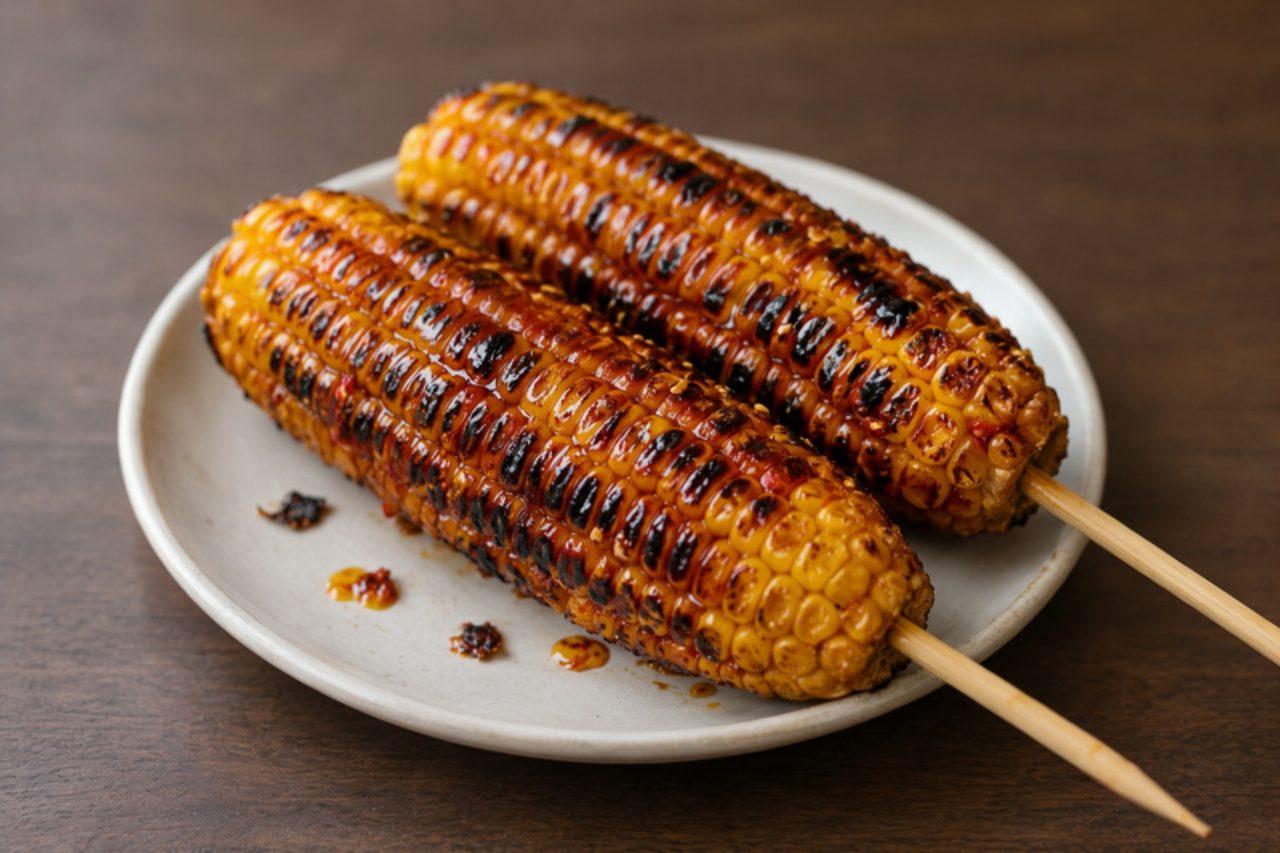
Taiwanese grilled corn
At Raohe and Shilin night markets the grilled-corn stalls are easy to find: look for the queue and the smoky, sweet smell. Cobs are par-cooked, then turned slowly over charcoal while the cook brushes them with a dark glaze of sacha sauce, thick soy paste, garlic and chilli, layer after layer, until the kernels are sticky, slightly charred and deeply savoury. It is eaten hot from a paper sleeve while walking the market. Sacha (shacha) sauce, a Taiwanese barbecue paste, usually contains dried fish and shrimp; vegetarian sacha is sold in Asian shops. Contains soy, wheat and fish. Chef's tip: brush thin coats and turn often; one thick coat burns before the corn chars.
 Taiwanese