
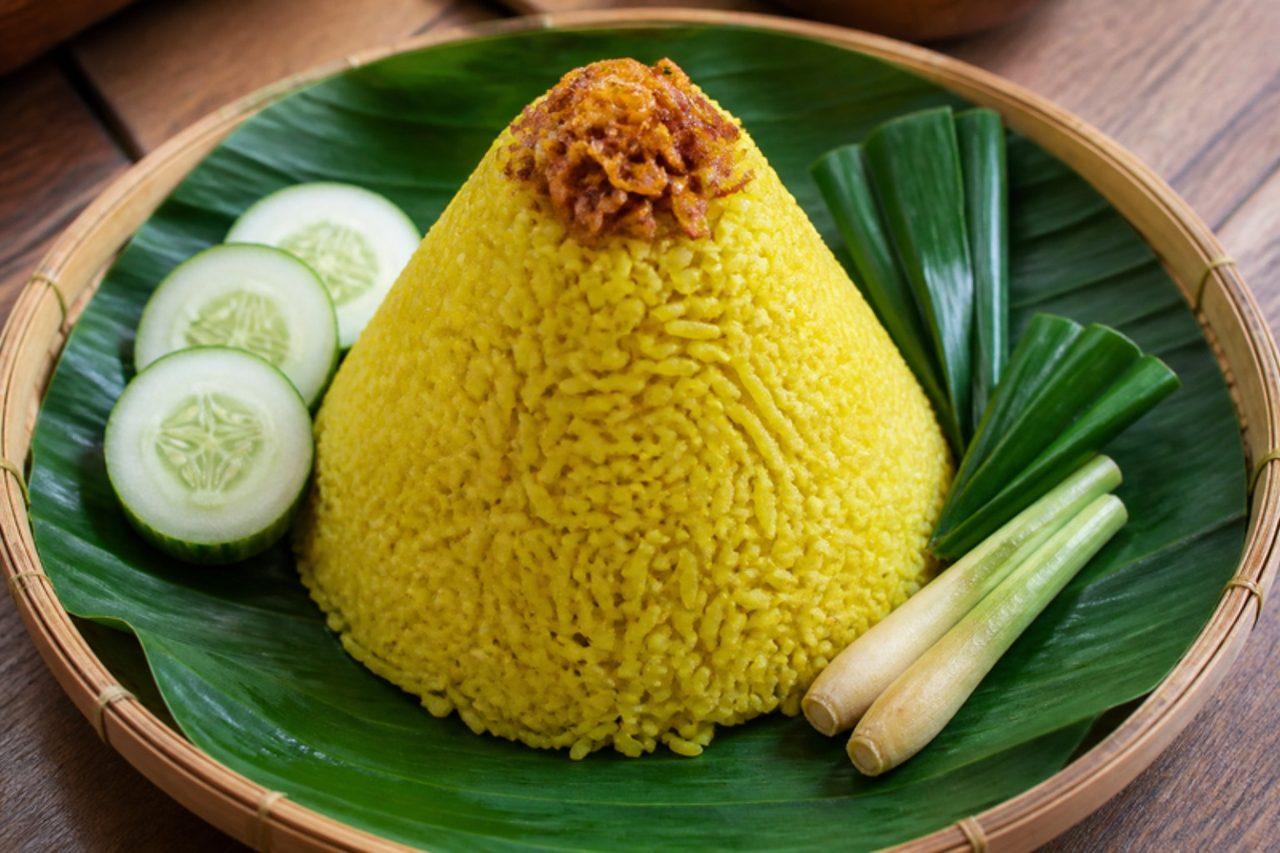
AI-generated image
Nasi kuning
Turmeric coconut rice
Golden turmeric rice cooked in coconut milk with lemongrass, bay and lime leaf



Yellow rice is Indonesia's rice for good news: shaped into a tall cone called tumpeng, it's the centrepiece at birthdays, housewarmings and thanksgiving gatherings across Java, Bali and Sulawesi, and in Manado and Banjarmasin it's also a weekday breakfast wrapped in banana leaf. The grains are cooked in coconut milk with turmeric, lemongrass, salam and lime leaf, so they come out fluffy, golden and gently fragrant, rich without being heavy. Serve it with tempe orek, perkedel, sambal and cucumber for a festive platter. Chef's tip: steam the rice after its first absorption, Javanese style, or rest it covered off the heat for 10 minutes — skipping this gives sticky, uneven grains.
- Total time
- 40 min
- Difficulty
- easy
- Serves
- 4
Ingredients
- 14 oz jasmine rice
- 1 ¾ cups coconut milk
- 1 cup water
- 1 ½ tsp ground turmericor 4 cm fresh turmeric, grated and squeezed
- 2 stalks lemongrassbruised and knotted
- 3 Indonesian bay leaves (daun salam)or 1 bay leaf
- 3 makrut lime leavestorn
- 1 pandan leaf (optional)knotted; leave out if you can't find it
- 1 tsp salt
- 1 tsp vegetable oil
To serve
- 3 tbsp crispy fried shallots (optional)
- ½ cucumber (optional)sliced
Shop this recipe on Amazon
What you'll need
Spices & pantry
Fresh ingredients (3)
Links open Amazon in a new tab. As an Amazon Associate, WhatToEat.Today earns from qualifying purchases.
Method
0/6 doneStep 1: Rinse 14 oz jasmine rice in a sieve under cold water, swishing with your fingers, until the water runs nearly clear. Drain well.
3 minStep 2: Put 1 ¾ cups coconut milk, 1 cup water, 1 ½ tsp ground turmeric, 2 stalks lemongrass, 3 Indonesian bay leaves (daun salam), 3 makrut lime leaves, 1 pandan leaf, 1 tsp salt and 1 tsp vegetable oil in a heavy pan. Bring to a simmer over a medium heat, stirring so the coconut milk doesn't catch.
5 minStep 3: Add the rice, stir once and bring back to a gentle bubble. Cook uncovered over a medium-low heat for 5–6 minutes, stirring the bottom now and then, until the liquid is mostly absorbed and the surface shows small craters. The mistake to avoid is too much turmeric: more than this turns the rice bitter and brassy rather than golden.
6 minStep 4: Cover tightly, turn the heat to its lowest setting and cook for 12 minutes. Don't lift the lid.
12 minStep 5: Turn off the heat and leave covered for 10 minutes. Remove the leaves and lemongrass and fluff with a fork; the rice should be evenly golden, separate and tender.
10 minStep 6: Press into a bowl and turn out as a dome (or shape a cone for a tumpeng), then scatter with 3 tbsp crispy fried shallots and serve with ½ cucumber.
Nutrition per serving
- Calories
- 460 kcal
- Protein
- 7 g
- Carbs
- 72 g
- Fat
- 16 g
- Fibre
- 2 g
Nutrition values are estimates.
KrazyBadal
Good to know
- How long does nasi kuning take?
- About 40 minutes in total: 10 minutes to prepare and 30 minutes to cook.
- How many people does it serve?
- 4 as written. Change the servings above the ingredients and every amount scales to match.
- Is it vegan?
- Yes. It has no meat, fish, dairy or eggs.
- Is it gluten free?
- Yes, as written. Check the labels on stock, sauces and spice mixes, which sometimes contain gluten.
- What can I use instead of jasmine rice?
- Any long-grain rice, same amount.
- What can I use instead of coconut milk?
- Single cream, same amount (not dairy free).
Reviews
No reviews yet. Be the first to cook it.
Rate this recipe
Sign in to rate and review this recipe.
You might also like

Sayur lodehVegetables in coconut milk
Sayur lodeh is everyday cooking in Central Java, made in big pots in Solo and Semarang kitchens and ladled over rice, with lontong rice cakes at Lebaran, or alongside opor and sambal goreng on festive tables. It's soupy rather than thick: a fragrant broth of coconut milk, galangal, lemongrass and lime leaf that carries chunks of aubergine, long beans, chayote and sweetcorn, plus tempeh and tofu to make it a meal. The flavour is mellow and slightly sweet, so the heat comes from sambal on the side. Chef's tip: keep the pot at a gentle simmer once the coconut milk goes in and stir now and then — a rolling boil splits the coconut milk into oily curds.


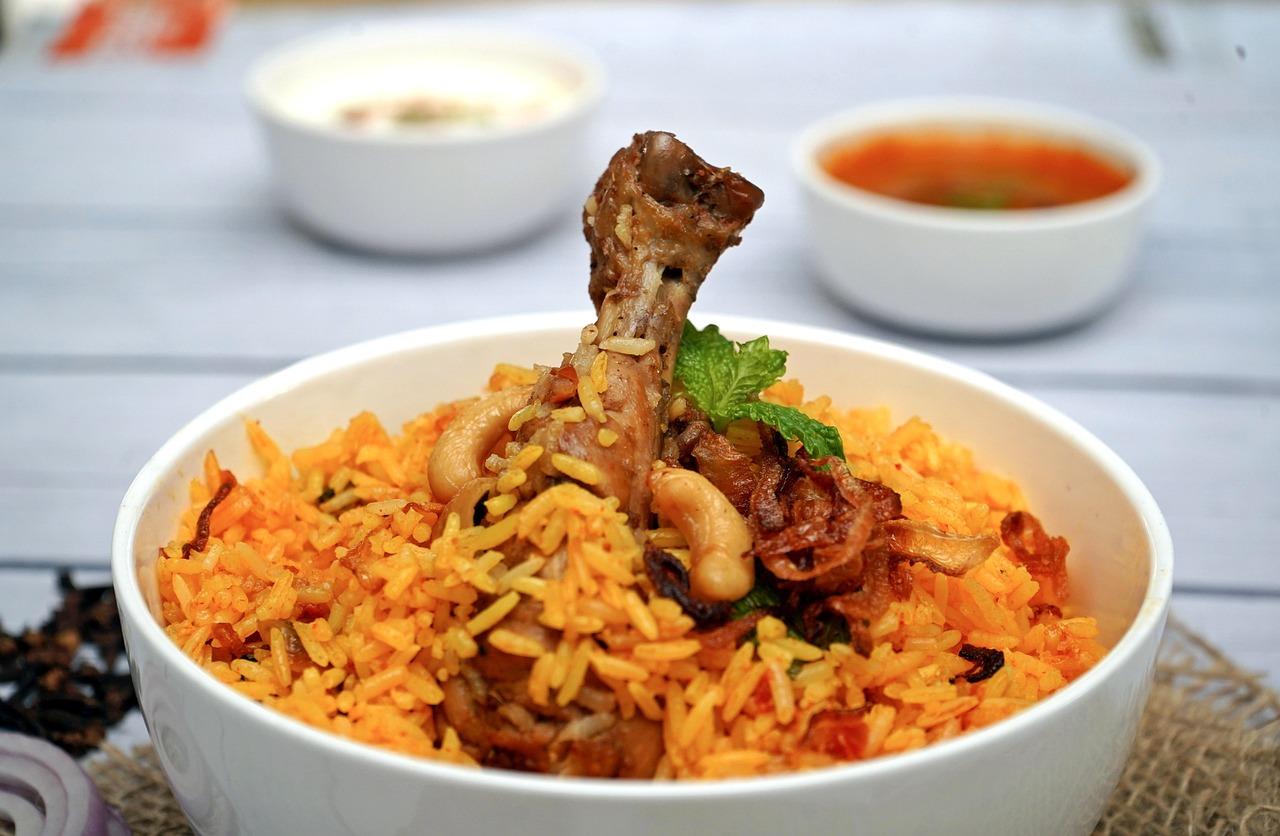
Hyderabadi chicken dum biryani
Hyderabad's biryani grew up in the kitchens of the Nizams, and the kacchi style is its proudest form: the chicken goes into the pot raw, in a thick yogurt, mint and fried-onion marinade, and cooks only in the steam trapped under part-cooked basmati. In the old city it is wedding and Eid food, ordered in huge copper deghs, and at home it's the Sunday showpiece, served with mirchi ka salan and a cooling raita. Because the meat cooks without being stirred, small bone-in thigh and drumstick pieces work best. Chef's tip: marinate overnight in the fridge — the yogurt tenderises the chicken and the flavours go right to the bone.
 Indian
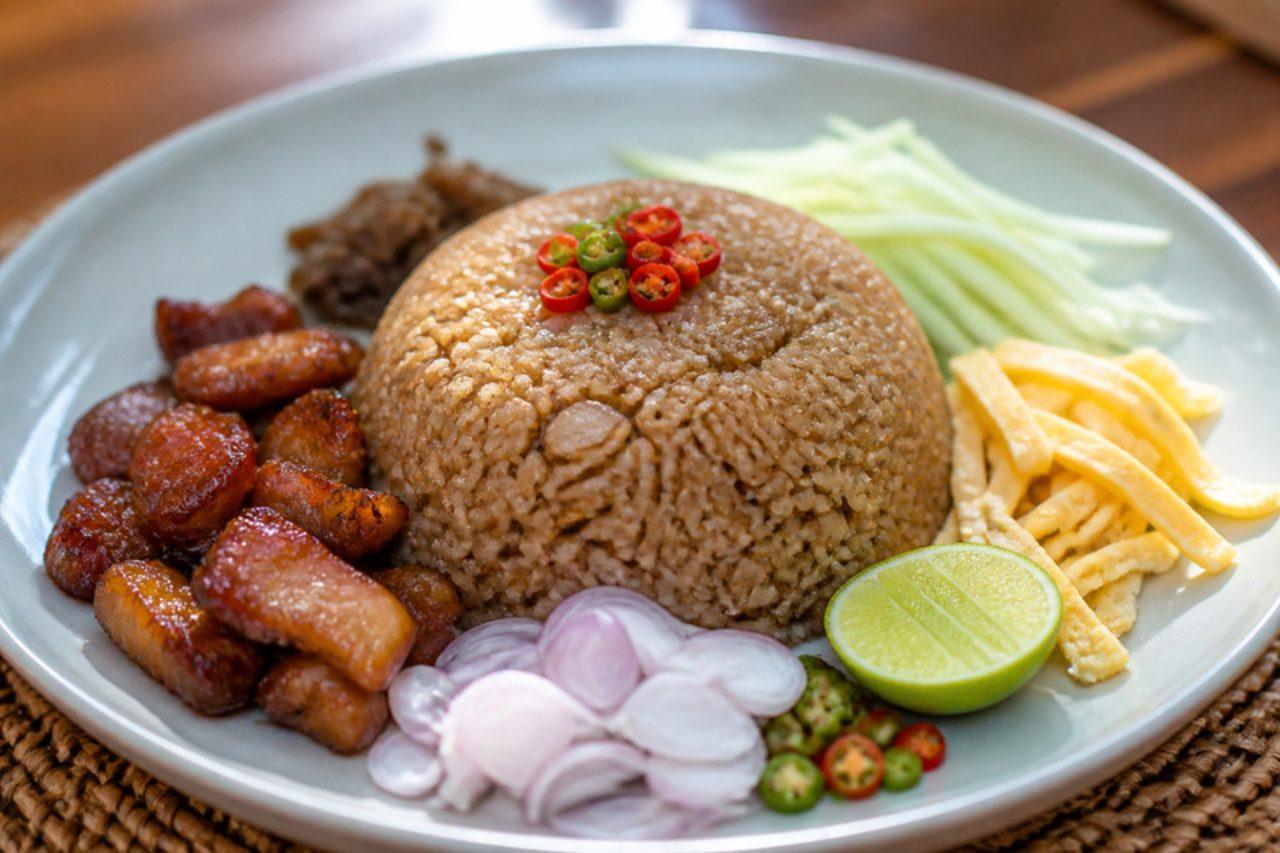
Khao kluk kapiShrimp paste rice
Everything on this central Thai plate is arranged in little heaps around a mound of rice tossed with garlic and fermented shrimp paste: sticky caramelised pork (moo wan), threads of sour green mango, shallots, chillies, sliced long beans, crisp dried shrimp and ribbons of thin omelette. You mix a bit of each into every spoonful, so salty, sweet, sour and hot arrive together. It's a favourite at Bangkok's curry-and-rice shops and a clever way to use up yesterday's rice at home; lime wedges and cucumber cool it down. Chef's tip: use day-old jasmine rice straight from the fridge, because freshly cooked rice clumps and smears the shrimp paste instead of coating each grain.
 Thai