
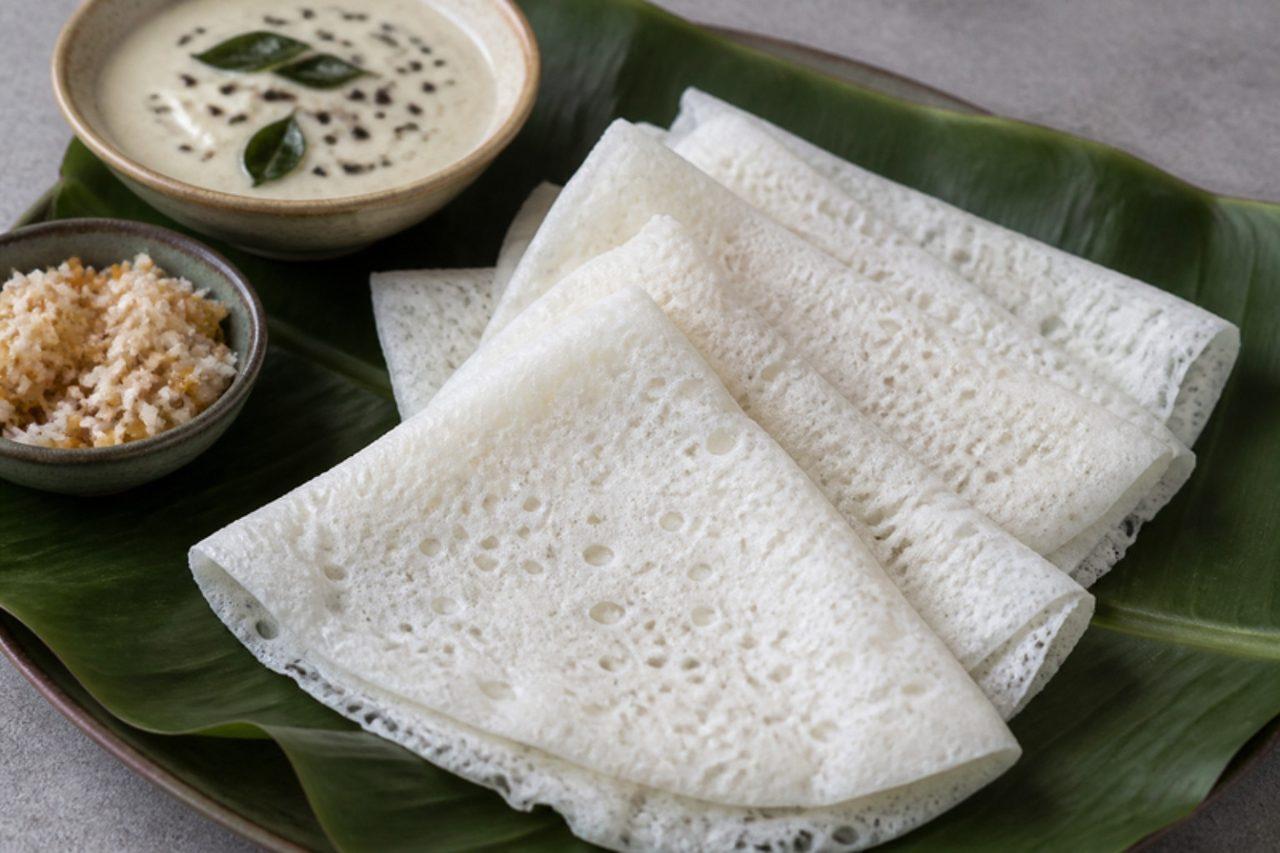
AI-generated image
Neer dosa
Thin rice crepes
ನೀರ್ ದೋಸೆ: Mangaluru's paper-thin, lacy rice crêpes, no fermenting (plus 4 hours soaking)



Neer means water in Tulu and Kannada, and that is the whole idea: a batter as thin as milk, poured onto a hot pan where it sets into a soft, lacy crêpe full of tiny holes. In Mangaluru and Udupi homes it is made fresh for breakfast or a Sunday lunch, folded into quarters and eaten warm with coconut chutney, a vegetable sagu, or simply with grated coconut and jaggery for children. Unlike most dosas, the batter is not fermented, so you can soak rice in the morning and eat by lunchtime. The crêpes are pale white, never browned, and should be tender enough to fold without cracking. Chef's tip: stir the batter from the bottom before every single dosa; the rice settles within a minute, and a batter poured from the top runs too thin and tears.
- Total time
- 45 min
- Difficulty
- easy
- Serves
- 4
Ingredients
For the batter
- 2 ⅛ oz fresh grated coconut
- 1 tsp salt
- 2 ½ cups waterabout, for grinding and thinning
For cooking
- 2 tbsp coconut or sunflower oil
To serve
- 1 cup coconut chutney (optional)
- 4 tbsp grated jaggery and coconut, mixed (optional)for a sweet version
Shop this recipe on Amazon
What you'll need
Spices & pantry
Links open Amazon in a new tab. As an Amazon Associate, WhatToEat.Today earns from qualifying purchases.
Method
0/8 doneStep 1: Rinse 10 ½ oz raw short or medium-grain rice (sona masuri or dosa rice) three times until the water runs nearly clear, then soak it in plenty of fresh water for at least 4 hours. Drain it well.
Step 2: Grind the rice with 2 ⅛ oz fresh grated coconut and about 250 ml of the 1 cup water in a blender for 4–5 minutes, until completely smooth; rub a drop between your fingers and you should feel no grit. A grainy batter gives brittle dosas that tear.
5 minStep 3: Pour the batter into a bowl, rinse the blender with the rest of the 1 ½ cups water and add enough to make a very thin batter, like single cream or slightly thinner than milk. Stir in 1 tsp salt. Do not leave it to ferment.
Step 4: Heat a non-stick or well-seasoned cast-iron pan over a medium-high heat for 2 minutes. Rub it with a little 2 tbsp coconut or sunflower oil on a folded piece of kitchen paper; a drop of water flicked on should sizzle and vanish at once.
2 minStep 5: Stir the batter from the bottom, scoop up a ladleful and pour it onto the pan from the edge inwards in a quick circle, then fill the gaps with a little more. Do not spread it with the ladle. It should sizzle and form holes straight away.
Step 6: Cover with a lid and cook for 60–90 seconds, until the top looks set and matt and the edges lift slightly. Neer dosa is cooked on one side only and should stay white with no brown spots; brown means the pan is too hot.
2 minStep 7: Common mistake: flipping it or leaving it to crisp. Instead fold it in half and in half again with a spatula while still on the pan, then lift onto a plate. Repeat, oiling the pan lightly every two or three dosas.
20 minStep 8: Keep the folded dosas covered so they stay soft and serve warm with 1 cup coconut chutney, or with the 4 tbsp grated jaggery and coconut, mixed mixture spooned over for a sweet breakfast. They harden as they cool, so make them close to eating.
Nutrition per serving
- Calories
- 330 kcal
- Protein
- 6 g
- Carbs
- 62 g
- Fat
- 8 g
- Fibre
- 2 g
Nutrition values are estimates.
KrazyBadal
Good to know
- How long does neer dosa take?
- About 45 minutes in total: 15 minutes to prepare and 30 minutes to cook.
- How many people does it serve?
- 4 as written. Change the servings above the ingredients and every amount scales to match.
- Is it vegan?
- Yes. It has no meat, fish, dairy or eggs.
- Is it gluten free?
- Yes, as written. Check the labels on stock, sauces and spice mixes, which sometimes contain gluten.
- What can I use instead of raw short or medium-grain rice (sona masuri or dosa rice)?
- Any long-grain rice, same amount.
Reviews
No reviews yet. Be the first to cook it.
Rate this recipe
Sign in to rate and review this recipe.
You might also like

Sabudana khichdiSago with peanuts and potato
Sabudana khichdi is the dish that sees Maharashtra through every vrat (fast), from Navratri to Ekadashi, but it's so good that people eat it any day of the week. Soaked sago pearls are tossed in a pan with crushed roasted peanuts, cubes of potato, cumin and green chilli until each pearl turns glassy and separate, then finished with lemon and coriander. It's soft, chewy, nutty and gently hot. Fasting rules vary from family to family, so check yours; this version uses rock salt and no asafoetida, onion or garlic. Traditionally it's cooked in ghee; use ghee instead of oil if you aren't keeping it vegan. Chef's tip: soak the sago in just enough water to cover by the height of the pearls themselves, no more; too much water is the reason khichdi turns into one sticky lump.



Bagara bainganBaby aubergines in peanut sesame sauce
Bagara baingan is a Hyderabadi wedding dish of small aubergines cooked whole in a dark, tangy gravy of roasted peanuts, sesame, dried coconut and tamarind. Unlike a Gujarati stuffed brinjal, the aubergines here are only quartered at the base and fried until silky, then left to soak up a thin-but-rich sauce that is finished with a tempering, the 'baghar' that gives the dish its name. It's sour, nutty and gently spiced, and is served with biryani, bagara rice or plain rice. Chef's tip: choose small, glossy purple aubergines that feel heavy for their size; soft, light ones are full of seeds and turn mushy before the gravy has a chance to cling.
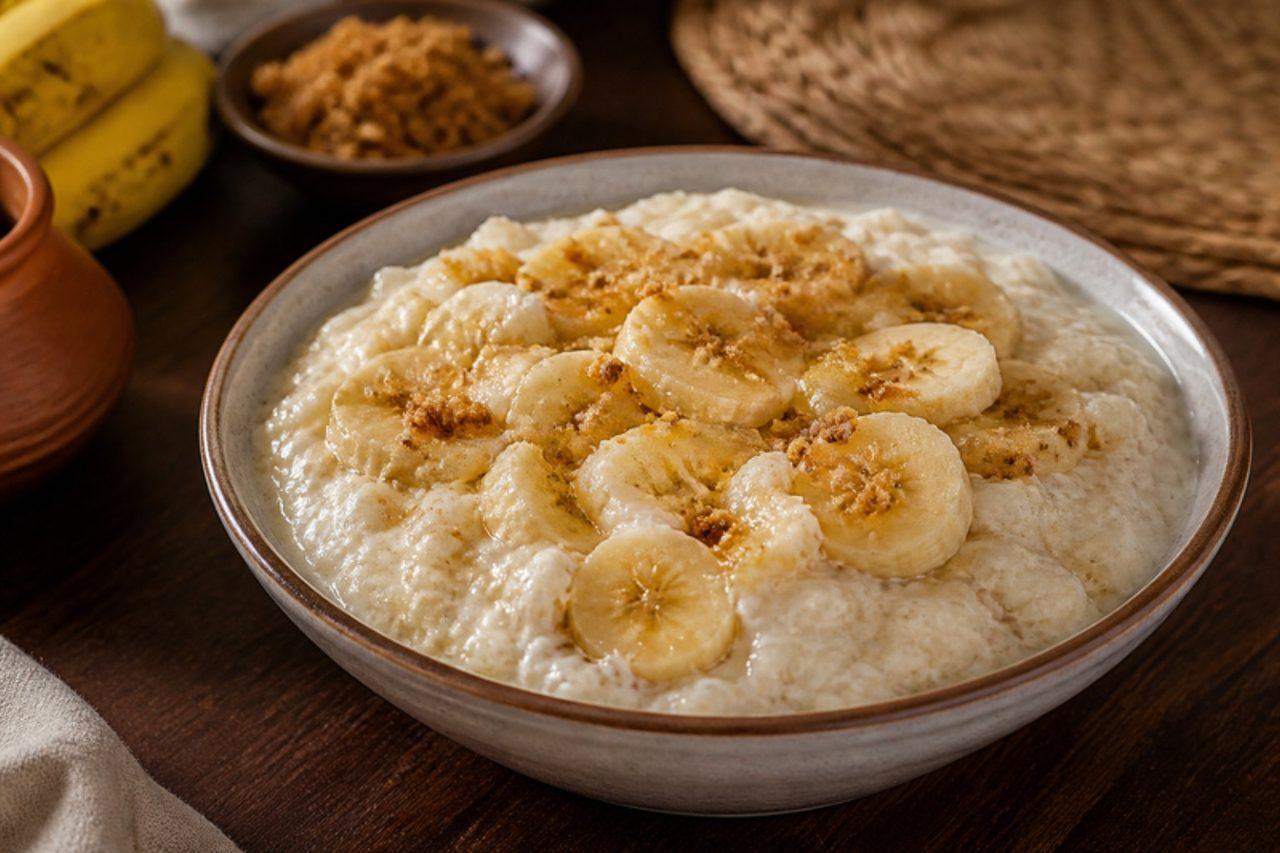
Doi chiraFlattened rice with curd
Nothing is cooked for doi chira, which is why it has been the breakfast of farmers and fishermen in Barisal for generations: flattened rice is rinsed, softened in thick, slightly sour curd and sweetened with jaggery or sugar, then mashed together with a ripe banana. The texture is soft and creamy with a little chew from the rice flakes, and the taste is cool, sweet and tangy. It is eaten on hot summer mornings, at village fairs and as part of the Pohela Boishakh spread, and it is a favourite of children and of anyone fasting who wants something gentle. The usual misstep is soaking the chira for too long, which turns it to paste; a quick rinse is all it needs before the curd does the rest. Chef's tip: use thick-cut chira, not the thin kind for frying, so the flakes hold their shape.
 Bangladeshi