
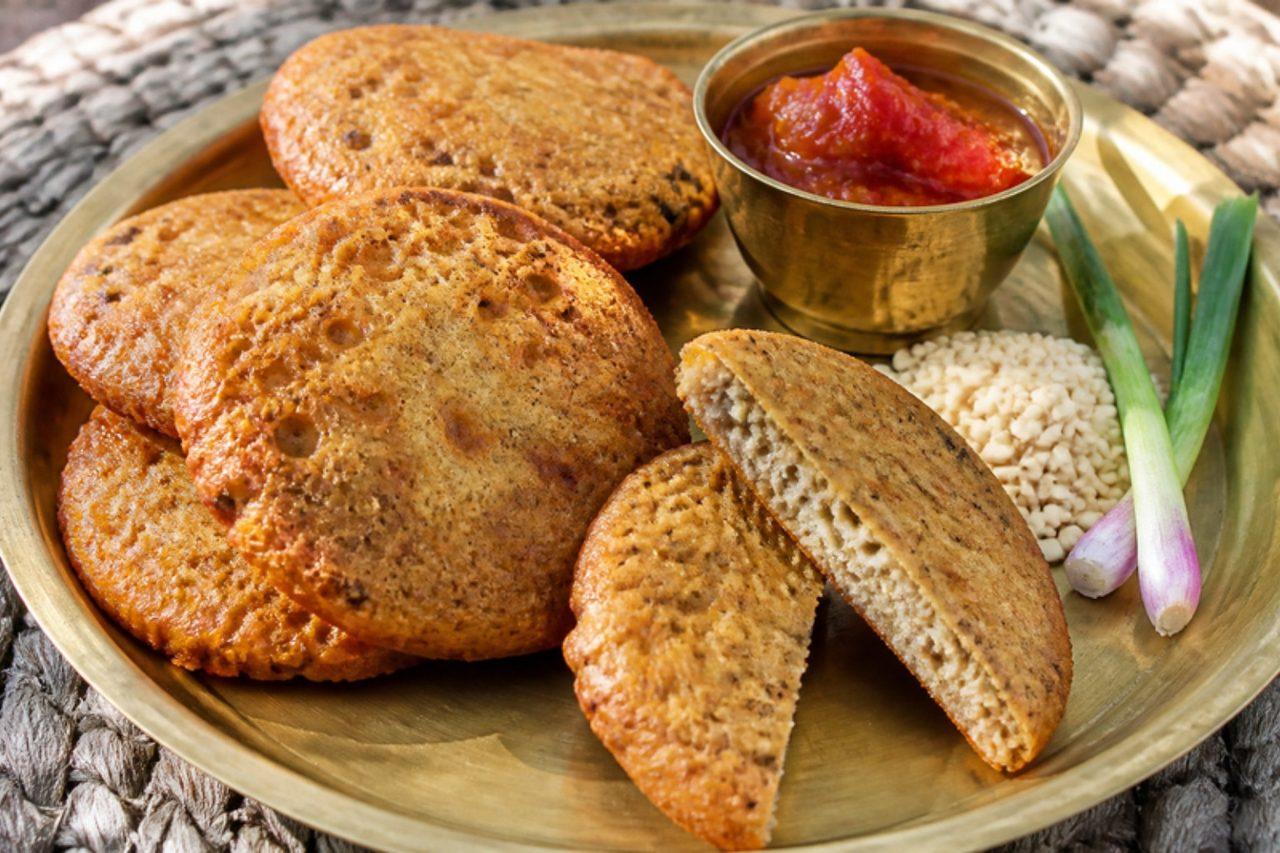
AI-generated image
Bara
Black lentil patties
Newari bara (wo): crisp-edged black lentil patties from the Kathmandu Valley



Bara, or wo in the Newar language, is a thick, savoury pancake of ground black lentils that the Newar people of the Kathmandu Valley have made for centuries. It is cooked on a flat griddle until spotted brown and lacy at the edges but soft and airy inside. It is festival food above all: it appears at Sithi Nakha in early summer, on the plates of Newar feasts and at roadside stalls in Kirtipur and Patan, where it is often topped with a cracked egg. This plant-based version keeps it plain, with ginger, garlic and cumin in the batter. Eat it hot with golbheda ko achar. The usual mistake is to add too much water when grinding: the batter must be thick enough to hold a peak, or the bara spread thin and go flat. Chef's tip: beat the ground batter by hand for 3–4 minutes until it turns pale and fluffy; the air you whip in is what makes the bara light.
- Total time
- 40 min
- Difficulty
- easy
- Serves
- 4
Ingredients
- 9 oz split husked black lentils (urad dal, maas)soaked in cold water for at least 6 hours or overnight
- ⅔ oz fresh gingerroughly chopped
- 1 tsp ground cumin
- ¼ tsp ground turmeric
- 1 tsp salt
- 2 spring onions (optional)finely chopped
- 4 tbsp mustard oilfor the griddle
To serve
Shop this recipe on Amazon
What you'll need
Fresh ingredients (3)
Links open Amazon in a new tab. As an Amazon Associate, WhatToEat.Today earns from qualifying purchases.
Method
0/7 doneStep 1: Drain 9 oz split husked black lentils (urad dal, maas) well; soaked lentils should crush easily between your fingers. Put them in a blender with ⅔ oz fresh ginger, 4 garlic cloves and 1 green chilli and 3–4 tablespoons of water, just enough to keep the blades moving.
5 minStep 2: Blend in bursts for 3–4 minutes, scraping down the sides, to a thick, slightly grainy paste. It should hold its shape on a spoon. Only add water a teaspoon at a time.
4 minStep 3: Tip into a bowl, add 1 tsp ground cumin, ¼ tsp ground turmeric, 1 tsp salt and 2 spring onions, and beat vigorously with your hand or a wooden spoon for 3–4 minutes, until the batter is pale, fluffy and a small blob floats in a cup of water.
4 minStep 4: Heat a heavy flat griddle or frying pan over a medium heat and brush with a little 1 tbsp mustard oil. When a drop of batter sizzles gently, it's ready.
2 minStep 5: Wet your fingers, take a large spoonful of batter and spread it into a round about 10 cm across and 1 cm thick, pressing a small dip in the middle with a fingertip so the centre cooks through. Make 3 or 4 at a time.
Step 6: Drizzle a little more 2 tbsp mustard oil around the edges and cook for 3–4 minutes, until the edges are lacy and crisp and the underside is deep golden. Flip and cook 3 minutes more, pressing lightly, until both sides are spotted brown and the centre springs back.
7 minStep 7: Repeat with the rest of the batter and 1 tbsp mustard oil, keeping the cooked bara warm in a low oven. Serve hot with 6 tbsp golbheda ko achar (Nepali tomato achar).
12 min
Nutrition per serving
- Calories
- 330 kcal
- Protein
- 17 g
- Carbs
- 34 g
- Fat
- 15 g
- Fibre
- 9 g
Nutrition values are estimates.
KrazyBadal
Good to know
- How long does bara take?
- About 40 minutes in total: 20 minutes to prepare and 20 minutes to cook.
- How many people does it serve?
- 4 as written. Change the servings above the ingredients and every amount scales to match.
- Is it vegan?
- Yes. It has no meat, fish, dairy or eggs.
- Is it gluten free?
- Yes, as written. Check the labels on stock, sauces and spice mixes, which sometimes contain gluten.
- What can I use instead of fresh ginger?
- ¼ tsp ground ginger per tbsp fresh (add it with the spices).
- What can I use instead of garlic cloves?
- ½ tsp garlic paste or ⅛ tsp garlic powder per clove.
Reviews
No reviews yet. Be the first to cook it.
Rate this recipe
Sign in to rate and review this recipe.
You might also like

SakarpadaSweet fried dough diamonds
Sakarpada (shakarpara) are little sweet diamonds of a rich dough made with ghee, milk and sugar, fried until golden and crunchy. They are a Diwali favourite with tea, and the cubes go into bhusu too. They keep for weeks in an air-tight tin.
 Indian

Yaki onigiriGrilled rice balls
Yaki onigiri (焼きおにぎり) are rice balls grilled until they form a crisp, toasty crust, then brushed with soy sauce glaze. They are eaten all over Japan, at izakaya, at barbecues and from the freezer section, as a snack or with miso soup. The inside stays soft and steamy while the outside crackles. Best eaten hot, straight from the pan. Chef's tip: let the shaped rice balls dry for 10 minutes before they go in the pan. A drier surface forms a better crust and won't stick, and the glaze goes on only at the end so it doesn't burn.
 Japanese

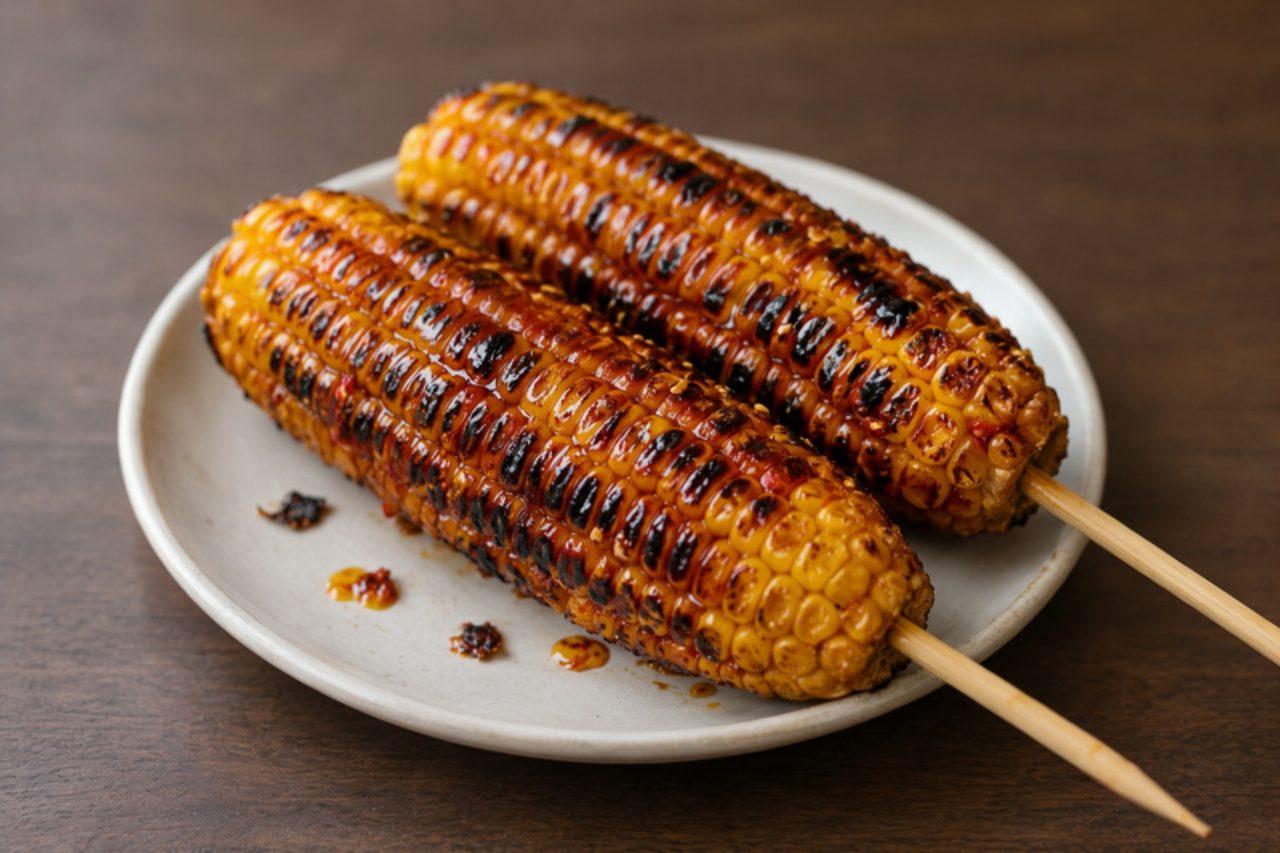
Taiwanese grilled corn
At Raohe and Shilin night markets the grilled-corn stalls are easy to find: look for the queue and the smoky, sweet smell. Cobs are par-cooked, then turned slowly over charcoal while the cook brushes them with a dark glaze of sacha sauce, thick soy paste, garlic and chilli, layer after layer, until the kernels are sticky, slightly charred and deeply savoury. It is eaten hot from a paper sleeve while walking the market. Sacha (shacha) sauce, a Taiwanese barbecue paste, usually contains dried fish and shrimp; vegetarian sacha is sold in Asian shops. Contains soy, wheat and fish. Chef's tip: brush thin coats and turn often; one thick coat burns before the corn chars.
 Taiwanese