
 Nigerian
 Vegan
 Gluten free
 Spicy
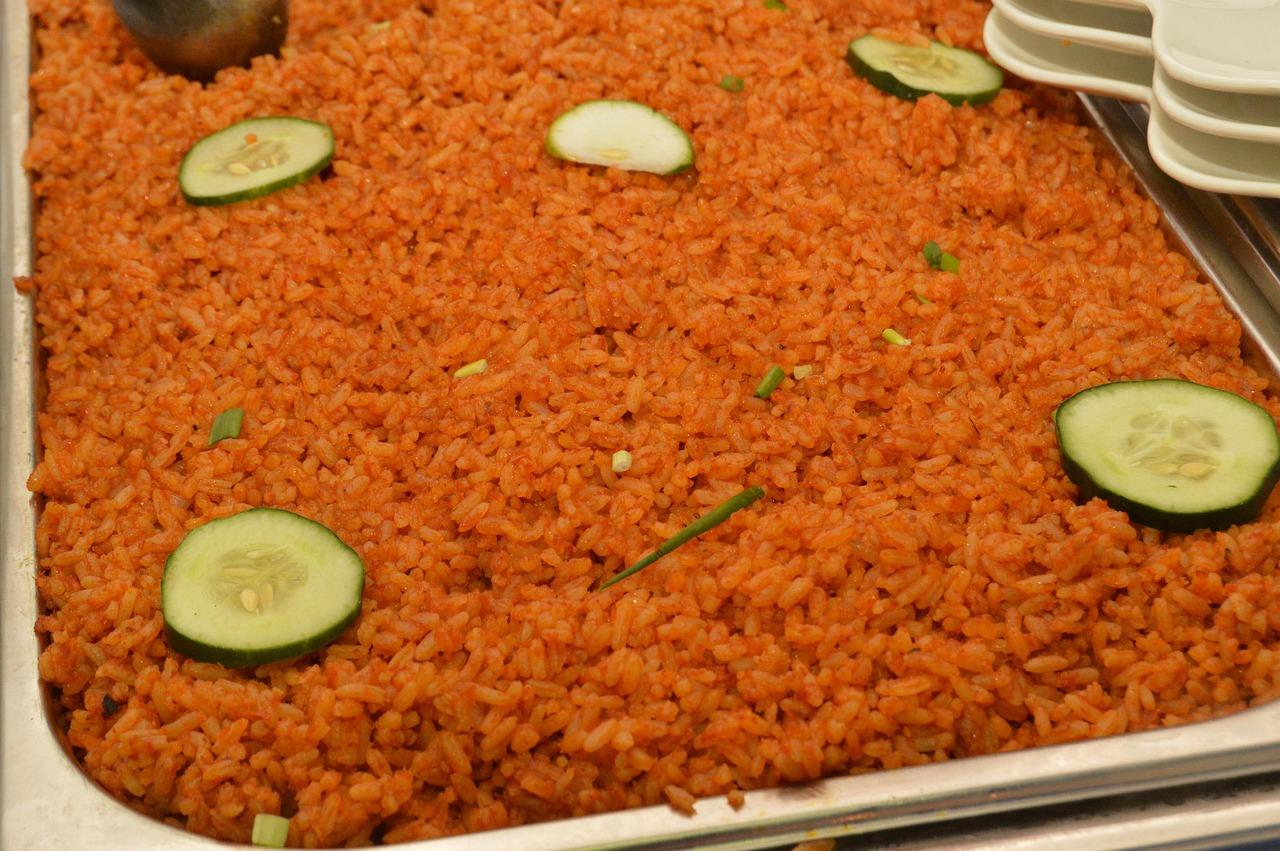
Nigerian jollof rice
Party-style smoky tomato and pepper rice cooked in one pot, with long-grain parboiled rice
Every Nigerian wedding, naming ceremony and Saturday owambe in Lagos has a giant pot of jollof, and the guests judge it before they judge the bride's dress. The rice is long-grain parboiled rice, cooked in a thick base of fried red peppers, tomatoes and scotch bonnet until every grain is orange, separate and lightly smoky. The prized bit is the slightly scorched layer at the bottom of the pot, which party cooks call the 'bottom pot' flavour. Serve it with fried ripe plantain, moi moi and a crunchy coleslaw. Chef's tip: fry the tomato paste and the blended pepper base hard, until the oil floats on top and the raw, sour smell is gone, before a single grain of rice goes in.
- Prep
- 20 min
- Cook
- 55 min
- Difficulty
- Medium
- Serves
- 6
- Per serving
- 520 kcal
Ingredients
For the pepper base
- 3 red bell peppers (tatashe)deseeded and roughly chopped
- 4 ripe plum tomatoesquartered
- 1 scotch bonnet chilli (ata rodo)stalk removed; use half for less heat
- 1 red onionhalf roughly chopped, half thinly sliced
For the rice
- 2 ½ oz tomato paste
- 2 tsp curry powder (Nigerian style)check the label is gluten free
- 1 tsp dried thyme
- 1 tbsp fresh gingergrated
- 3 cloves garlicgrated
- 1 ⅛ lb long-grain parboiled rice (easy-cook)rinsed until the water runs clear
- 2 ¾ cups vegetable stockhot
- 1 ½ tsp saltor to taste
- 1 tbsp plant butter (optional)
Shop this recipe on Amazon
What you'll need
Search Amazon for the rest
Fresh ingredients (6)
Links open Amazon in a new tab. As an Amazon Associate we earn from qualifying purchases.
Method
0/10 doneStep 1: Blend 3 red bell peppers (tatashe), 4 ripe plum tomatoes, 1 scotch bonnet chilli (ata rodo) and the chopped half of ½ red onion until smooth, with no added water if you can manage it.
Step 2: Tip the blend into a wide pot and boil it over a medium-high heat, stirring now and then, until it has reduced by about a third and looks thick and glossy.
15 minStep 3: In the pot you will cook the rice in, heat ½ cup vegetable or groundnut oil over a medium heat and fry the sliced half of ½ red onion until soft and just golden at the edges.
4 minStep 4: Stir in 2 ½ oz tomato paste and fry it, stirring all the time, until it darkens from bright red to a brick colour and starts to stick.
4 minStep 5: Add the reduced pepper base, 2 tsp curry powder (Nigerian style), 1 tsp dried thyme, 3 bay leaves, 1 tbsp fresh ginger and 3 cloves garlic. Fry over a medium heat, stirring, until the oil floats to the top in red pools and the sauce smells sweet rather than sharp.
10 minStep 6: Stir in the drained 1 ⅛ lb long-grain parboiled rice (easy-cook) until every grain is coated, then pour in 2 ¾ cups vegetable stock and add 1 ½ tsp salt. The liquid should sit just level with the rice, not above it.
2 minStep 7: Cover the pot tightly with a sheet of foil and then the lid, turn the heat to low and cook without stirring for 20 minutes. Steam, not boiling liquid, cooks party jollof.
20 minStep 8: Lift the lid. If the rice still has a hard centre, sprinkle over 3–4 tbsp water, cover again and cook for 5–10 minutes more. A common mistake is adding a big splash of stock here: the top turns to mush while the grains underneath stay chalky.
8 minStep 9: For the smoky 'bottom pot' flavour, turn the heat up to medium for the last 3–4 minutes, without stirring, until you hear a gentle crackle and smell toasting rice. Stop before it smells bitter.
4 minStep 10: Turn off the heat, fold through 1 tbsp plant butter if using, and lift the rice with a fork from the bottom up so the slightly charred grains get mixed in. Remove the bay leaves and serve hot.
Nutrition per serving
- Calories
- 520 kcal
- Protein
- 9 g
- Carbs
- 82 g
- Fat
- 18 g
- Fibre
- 4 g
Nutrition values are estimates.
KrazyBadal
Good to know
- How long does nigerian jollof rice take?
- About 75 minutes in total: 20 minutes to prepare and 55 minutes to cook.
- How many people does it serve?
- 6 as written. Change the servings above the ingredients and every amount scales to match.
- Is it vegan?
- Yes. It has no meat, fish, dairy or eggs.
- Is it gluten free?
- Yes, as written. Check the labels on stock, sauces and spice mixes, which sometimes contain gluten.
- Is it very spicy?
- It has some heat. Use less chilli for a milder version, or more if you like it hot.
- What can I use instead of ripe plum tomatoes?
- Tinned chopped tomatoes: a 400g tin for about 6 tomatoes (in cooked dishes, not salads).
- What can I use instead of red onion?
- White onion or shallots, same amount (soak raw onion in cold water for 10 minutes to soften it).
Reviews
No reviews yet. Be the first to cook it.
Rate this recipe
Sign in to rate and review this recipe.
You might also like
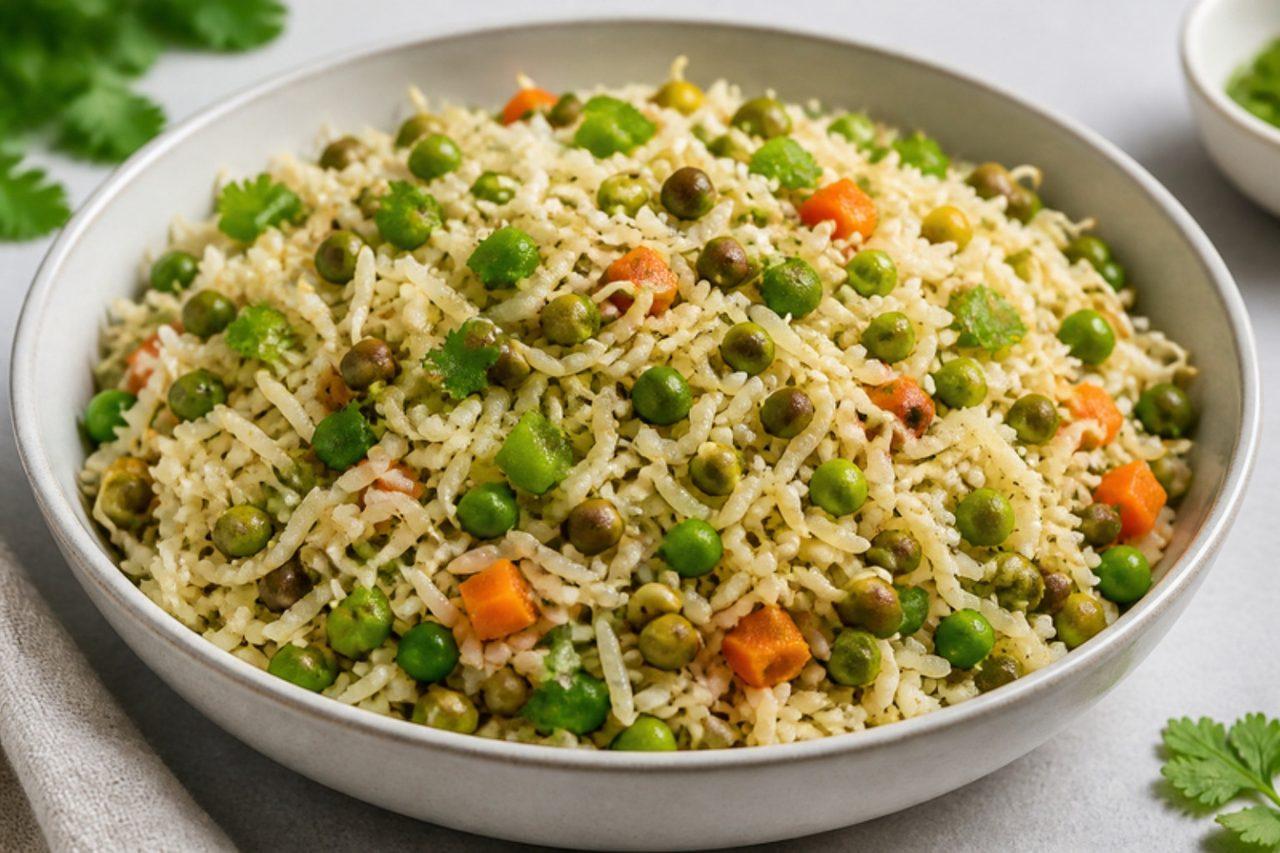
Mixed sprout pullao
A quick, low-calorie way to use leftover rice: sprouted moth beans and green grams are cooked with garlic, ginger, green chilli, capsicum, spring onions and a few spices over a cumin and asafoetida tempering, then tossed with cooked rice. Served hot with fresh tomato and coriander.
 Indian
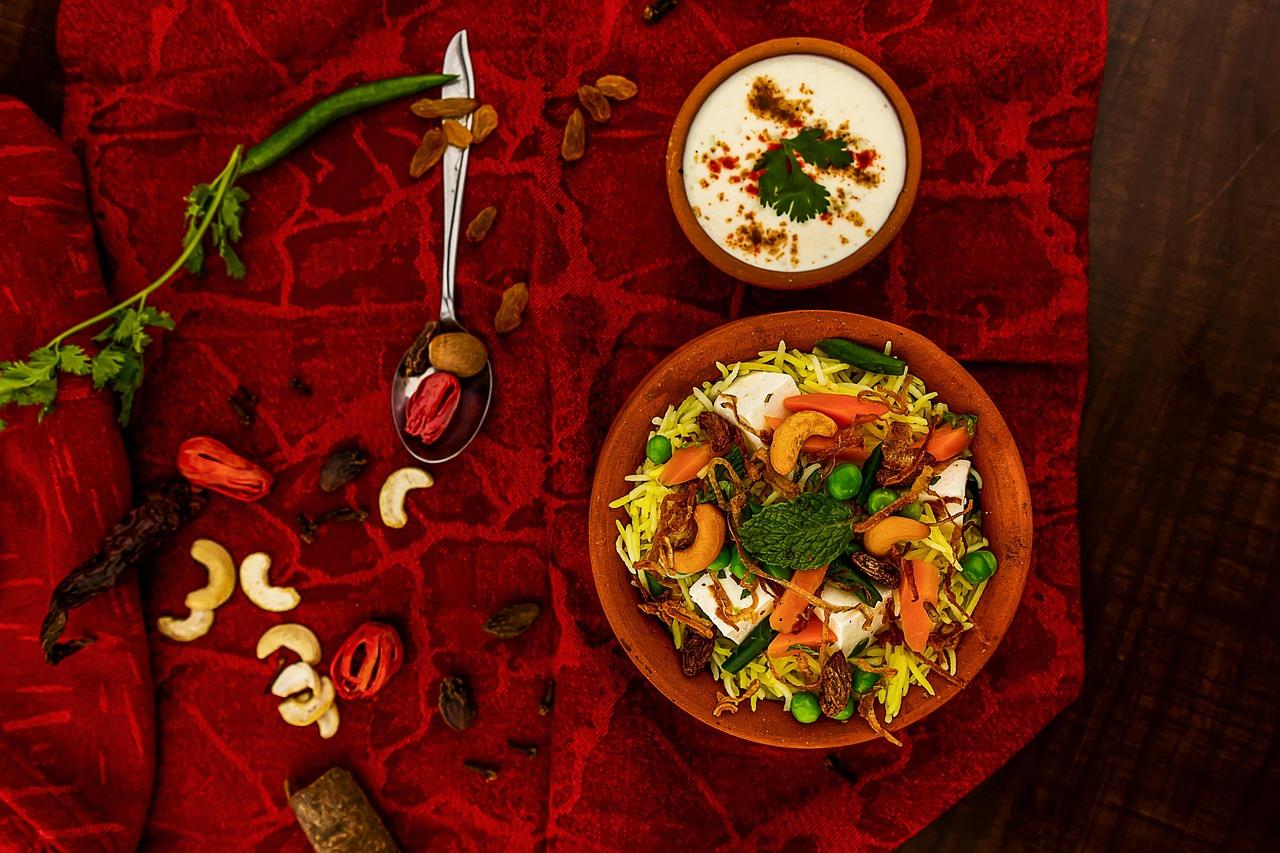
Paneer biryaniRice and moong dal in coconut milk
A mild, creamy biryani: rice and husked green gram roasted in ghee, then cooked in coconut milk with peas, carrots, potatoes, peanuts and cashews, and finished with soft fried paneer and a fresh coriander yogurt. Serve hot, garnished with more fried cashews and paneer.
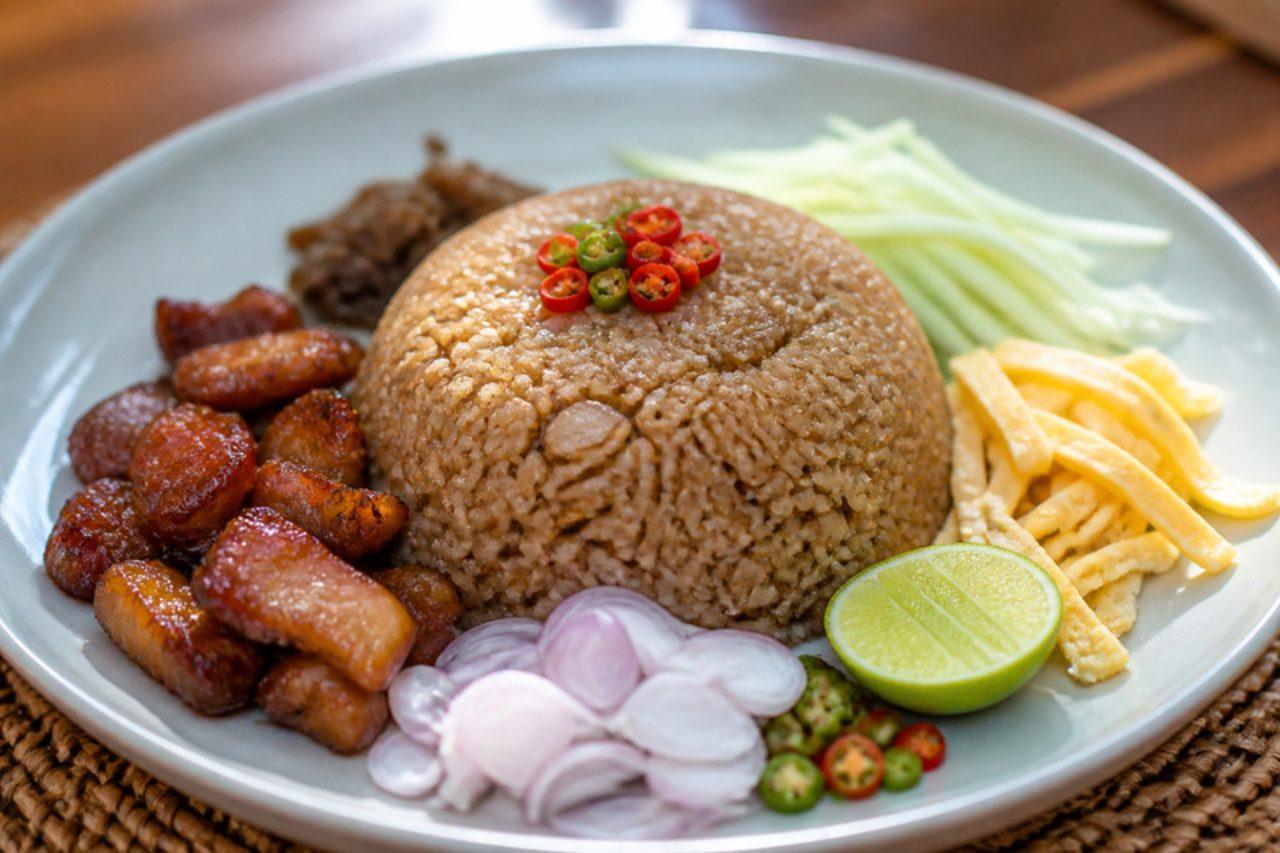
Khao kluk kapiShrimp paste rice
Everything on this central Thai plate is arranged in little heaps around a mound of rice tossed with garlic and fermented shrimp paste: sticky caramelised pork (moo wan), threads of sour green mango, shallots, chillies, sliced long beans, crisp dried shrimp and ribbons of thin omelette. You mix a bit of each into every spoonful, so salty, sweet, sour and hot arrive together. It's a favourite at Bangkok's curry-and-rice shops and a clever way to use up yesterday's rice at home; lime wedges and cucumber cool it down. Chef's tip: use day-old jasmine rice straight from the fridge, because freshly cooked rice clumps and smears the shrimp paste instead of coating each grain.
 Thai