
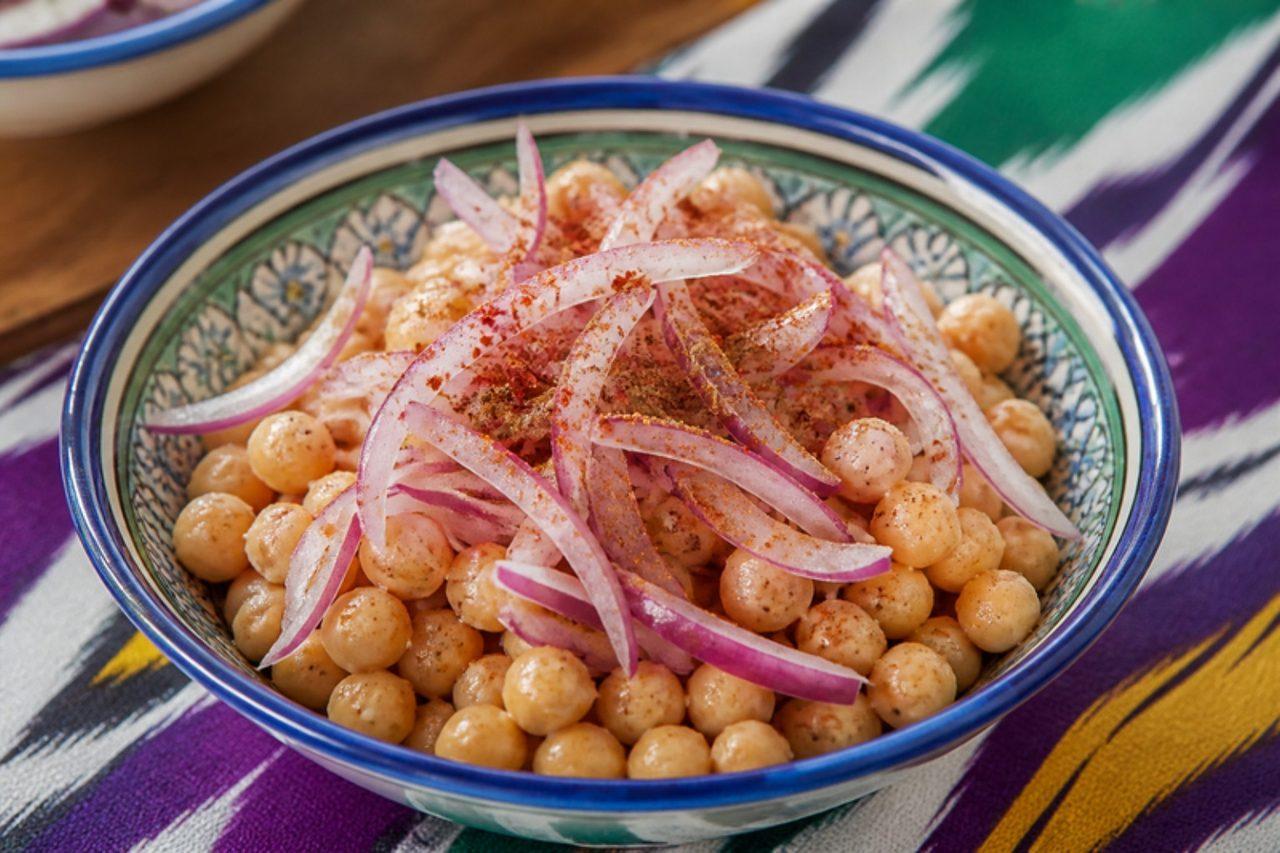
AI-generated image
Nohat shurak
Spiced chickpeas with onion
Nohat shurak: Tashkent street chickpeas with vinegared onion and chilli



At bazaars like Chorsu in Tashkent, vendors sell nohat shurak from big steaming pots: chickpeas boiled with salt until soft but whole, scooped into bowls and topped with thinly sliced onion soaked in vinegar, chilli, and sometimes a sprinkle of cumin. It is a cheap, filling snack, eaten with a spoon standing at the stall. A common mistake is adding salt at the start, which can keep the skins tough. Chef's tip: soak the onion in vinegar and a little water for 20 minutes; it softens and turns sweet-sharp, which is the whole point of the dish.
- Total time
- 90 min
- Difficulty
- easy
- Serves
- 4
Ingredients
For the chickpeas
- 9 oz dried chickpeassoaked overnight
- 8 ¼ cups water
- ¼ tsp bicarbonate of soda
- 1 ½ tsp salt
For the topping
- 1 red or white onionvery thinly sliced
- 3 tbsp white wine vinegar
- 3 tbsp water
- ½ tsp dried chilli flakes
- ¼ tsp ground cumin
Shop this recipe on Amazon
Fresh ingredients (1)
Links open Amazon in a new tab. As an Amazon Associate, WhatToEat.Today earns from qualifying purchases.
Method
0/4 doneStep 1: Drain 9 oz dried chickpeas, cover with 8 ¼ cups water, add ¼ tsp bicarbonate of soda and bring to the boil. Skim the foam.
10 minStep 2: Simmer for 1 hour, until soft and creamy inside but still whole. Add 1 ½ tsp salt in the last 15 minutes. Common mistake: salting early; the skins stay tough.
60 minStep 3: Mix 1 red or white onion with 3 tbsp white wine vinegar and 3 tbsp water and leave for 20 minutes.
Step 4: Ladle chickpeas with a little cooking liquid into bowls. Top with the drained onion, ½ tsp dried chilli flakes and ¼ tsp ground cumin.
Nutrition per serving
- Calories
- 260 kcal
- Protein
- 12 g
- Carbs
- 38 g
- Fat
- 7 g
- Fibre
- 10 g
Nutrition values are estimates.
KrazyBadal
Good to know
- How long does nohat shurak take?
- About 90 minutes in total: 15 minutes to prepare and 75 minutes to cook.
- How many people does it serve?
- 4 as written. Change the servings above the ingredients and every amount scales to match.
- Is it vegan?
- Yes. It has no meat, fish, dairy or eggs.
- Is it gluten free?
- Yes, as written. Check the labels on stock, sauces and spice mixes, which sometimes contain gluten.
- What can I use instead of dried chickpeas?
- Cannellini or butter beans, same amount.
- What can I use instead of bicarbonate of soda?
- Baking powder, three times the amount (the bake may taste slightly different).
Reviews
No reviews yet. Be the first to cook it.
Rate this recipe
Sign in to rate and review this recipe.
You might also like

SakarpadaSweet fried dough diamonds
Sakarpada (shakarpara) are little sweet diamonds of a rich dough made with ghee, milk and sugar, fried until golden and crunchy. They are a Diwali favourite with tea, and the cubes go into bhusu too. They keep for weeks in an air-tight tin.
 Indian

Yaki onigiriGrilled rice balls
Yaki onigiri (焼きおにぎり) are rice balls grilled until they form a crisp, toasty crust, then brushed with soy sauce glaze. They are eaten all over Japan, at izakaya, at barbecues and from the freezer section, as a snack or with miso soup. The inside stays soft and steamy while the outside crackles. Best eaten hot, straight from the pan. Chef's tip: let the shaped rice balls dry for 10 minutes before they go in the pan. A drier surface forms a better crust and won't stick, and the glaze goes on only at the end so it doesn't burn.
 Japanese

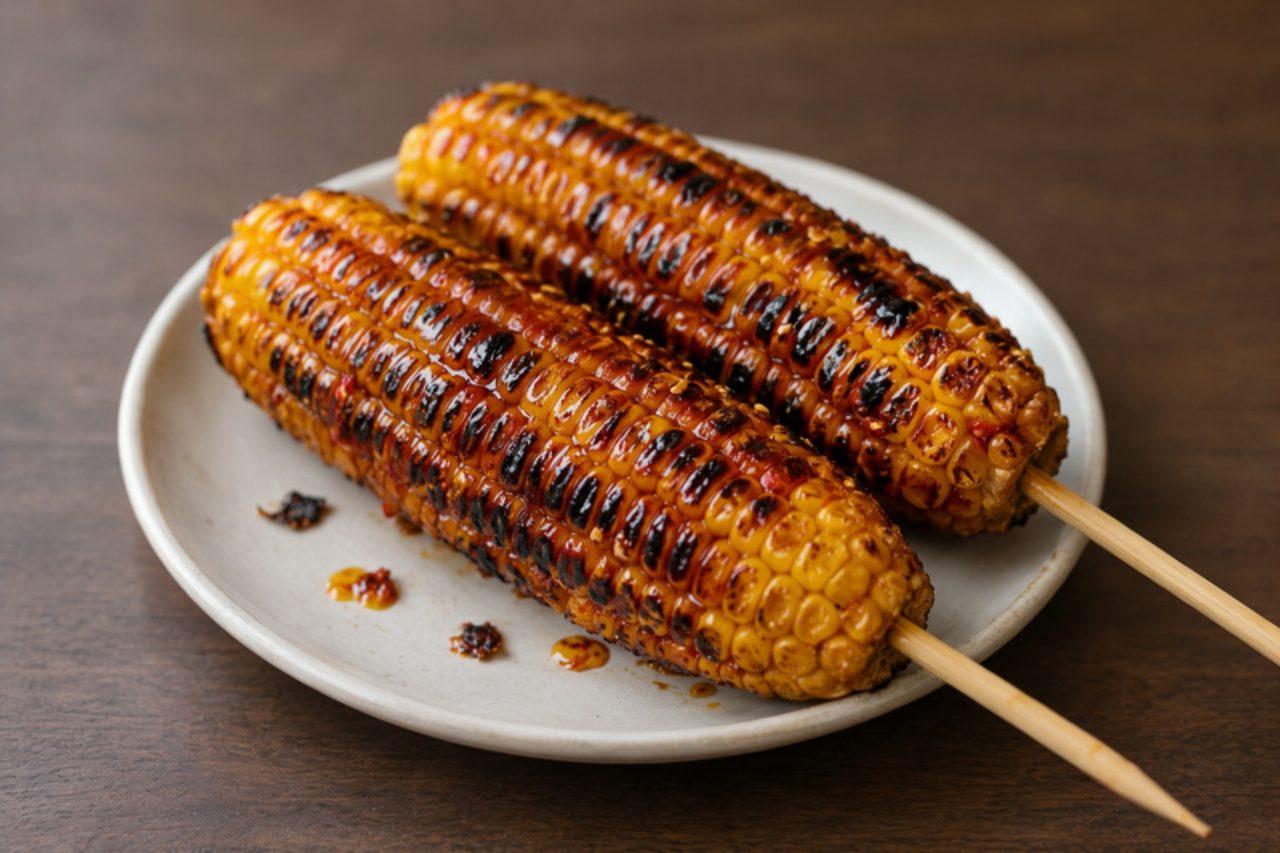
Taiwanese grilled corn
At Raohe and Shilin night markets the grilled-corn stalls are easy to find: look for the queue and the smoky, sweet smell. Cobs are par-cooked, then turned slowly over charcoal while the cook brushes them with a dark glaze of sacha sauce, thick soy paste, garlic and chilli, layer after layer, until the kernels are sticky, slightly charred and deeply savoury. It is eaten hot from a paper sleeve while walking the market. Sacha (shacha) sauce, a Taiwanese barbecue paste, usually contains dried fish and shrimp; vegetarian sacha is sold in Asian shops. Contains soy, wheat and fish. Chef's tip: brush thin coats and turn often; one thick coat burns before the corn chars.
 Taiwanese