

Ojingeo sundae
오징어순대: whole squid stuffed with rice, tofu and vegetables, steamed, sliced and fried in egg

Abai Village in Sokcho, on Gangwon's east coast, was settled by people from Hamgyeong province in the north who could not go home after the Korean War. With squid plentiful in the East Sea, they stuffed it the way they had once stuffed pork casings for sundae, and the dish is now sold in the village's small restaurants and at Sokcho's Jungang market. The squid is filled with sticky rice, tofu and vegetables, steamed, cut into rounds and fried in beaten egg until golden. It makes a good sharing plate with a soy and vinegar dip. Chef's tip: mix a little glutinous rice into the filling; it binds the slices so they don't fall apart in the pan.
- Total time
- 90 min
- Difficulty
- hard
- Serves
- 4
Ingredients
For the squid
- 4 whole squidabout 250 g each, fresh or thawed
- 1 tbsp coarse saltfor cleaning
For the filling
- 7 oz cooked short-grain ricecold
- 3 ½ oz cooked glutinous (sticky) ricecold, or use more short-grain rice
- 5 ½ oz firm tofu
- 1 carrotvery finely diced
- ½ onionvery finely diced
- 1 oz garlic chives or spring onionsfinely chopped
- 2 cloves garlicfinely grated
- 1 egg
- ¾ tsp salt
- ¼ tsp black pepper
- 1 tbsp toasted sesame oil
For frying
- 3 tbsp plain flour
- 2 eggsbeaten with a pinch of salt
- 3 tbsp vegetable oil
For the dipping sauce
- 3 tbsp soy sauce
- 1 tbsp rice vinegar
- ½ tsp Korean chilli flakes (gochugaru) (optional)
Shop this recipe on Amazon
Spices & pantry
Links open Amazon in a new tab. As an Amazon Associate, WhatToEat.Today earns from qualifying purchases.
Method
0/11 doneStep 1: Clean 4 whole squid one at a time. Hold the body and gently pull the head and tentacles out; the insides come with them. Pull out the clear, plastic-like quill from inside the body and rinse the tube well under cold water, keeping it whole.
Step 2: Cut the tentacles off just below the eyes and squeeze out the hard beak from the centre. Discard the eyes, beak and guts. Rub the bodies and tentacles with 1 tbsp coarse salt, rinse again and pat dry. Peeling off the purple skin is optional.
Step 3: Chop the tentacles finely. Wrap 5 ½ oz firm tofu in a clean cloth and squeeze hard until no more water comes out, then crumble it into a large bowl.
5 minStep 4: Add the chopped tentacles, 7 oz cooked short-grain rice, 3 ½ oz cooked glutinous (sticky) rice, 1 carrot, ½ onion, 1 oz garlic chives or spring onions, 2 cloves garlic, 1 egg, ¾ tsp salt, ¼ tsp black pepper and 1 tbsp toasted sesame oil. Knead with your hands for 2 minutes, until the mixture holds together when squeezed.
3 minStep 5: Spoon the filling into each squid body, pressing it down with the handle of a spoon. Common mistake: packing the squid to the top. Fill it only about four-fifths full, because the body shrinks as it steams and an overfilled squid splits. Close each opening with a cocktail stick threaded through like a stitch.
Step 6: Prick each squid 5 or 6 times with the cocktail stick so steam can escape. Bring water to a rolling boil in a steamer pan over a high heat.
Step 7: Steam the squid, covered, over a medium-high heat for 20 to 25 minutes, until the bodies are opaque white and firm, and a skewer pushed into the centre comes out hot (the filling should reach 160°F/160 °F, as it contains raw egg and squid).
25 minStep 8: Lift out the squid and leave them to cool for 10 minutes; they firm up and slice more cleanly. Remove the cocktail sticks and cut into rounds about 1.5 cm thick with a very sharp knife.
10 minStep 9: Mix 3 tbsp soy sauce, 1 tbsp rice vinegar and ½ tsp Korean chilli flakes (gochugaru) in a small bowl for dipping.
Step 10: Heat 3 tbsp vegetable oil in a large non-stick frying pan over a medium heat. Dust each round lightly with 3 tbsp plain flour on both cut sides, then dip it into 2 eggs.
Step 11: Fry the slices in batches for 1 to 2 minutes per side, until the egg coating is set and golden. Drain on kitchen paper and serve warm with the dipping sauce.
4 min
Nutrition per serving
- Calories
- 390 kcal
- Protein
- 32 g
- Carbs
- 38 g
- Fat
- 12 g
- Fibre
- 2 g
Nutrition values are estimates.
KrazyBadal
Good to know
- How long does ojingeo sundae take?
- About 90 minutes in total: 50 minutes to prepare and 40 minutes to cook.
- How many people does it serve?
- 4 as written. Change the servings above the ingredients and every amount scales to match.
- What can I use instead of cooked short-grain rice?
- Any long-grain rice, same amount.
- What can I use instead of carrot?
- Parsnip or sweet potato, same weight.
Reviews
No reviews yet. Be the first to cook it.
Rate this recipe
Sign in to rate and review this recipe.
You might also like
Tteokbokki
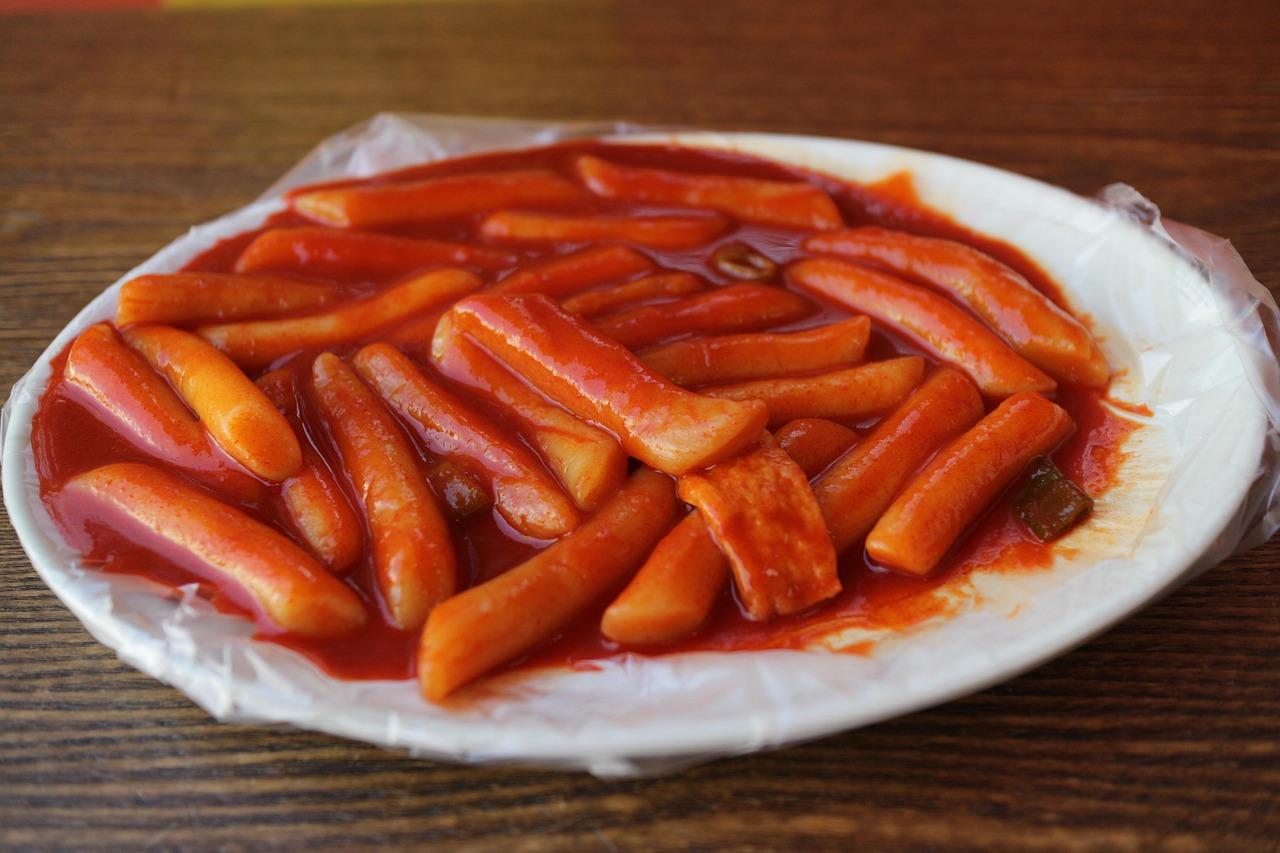
Tteokbokki (떡볶이) is Korea's best-loved street snack: chewy cylinders of rice cake simmered in a thick, glossy, sweet and spicy red sauce. It became a classic in Seoul, where it is sold from street stalls and snack bars in every neighbourhood. Street versions use anchovy stock and fish cakes; this vegan version uses a quick kelp and shiitake stock with cabbage and spring onions, and has all the same punch. Eat it hot, while the rice cakes are soft and stretchy. Chef's tip: keep stirring and scrape the bottom; the rice cakes release starch that thickens the sauce but also catches. The sauce is right when it clings to the spoon in a glossy coat.


Tteokgalbi
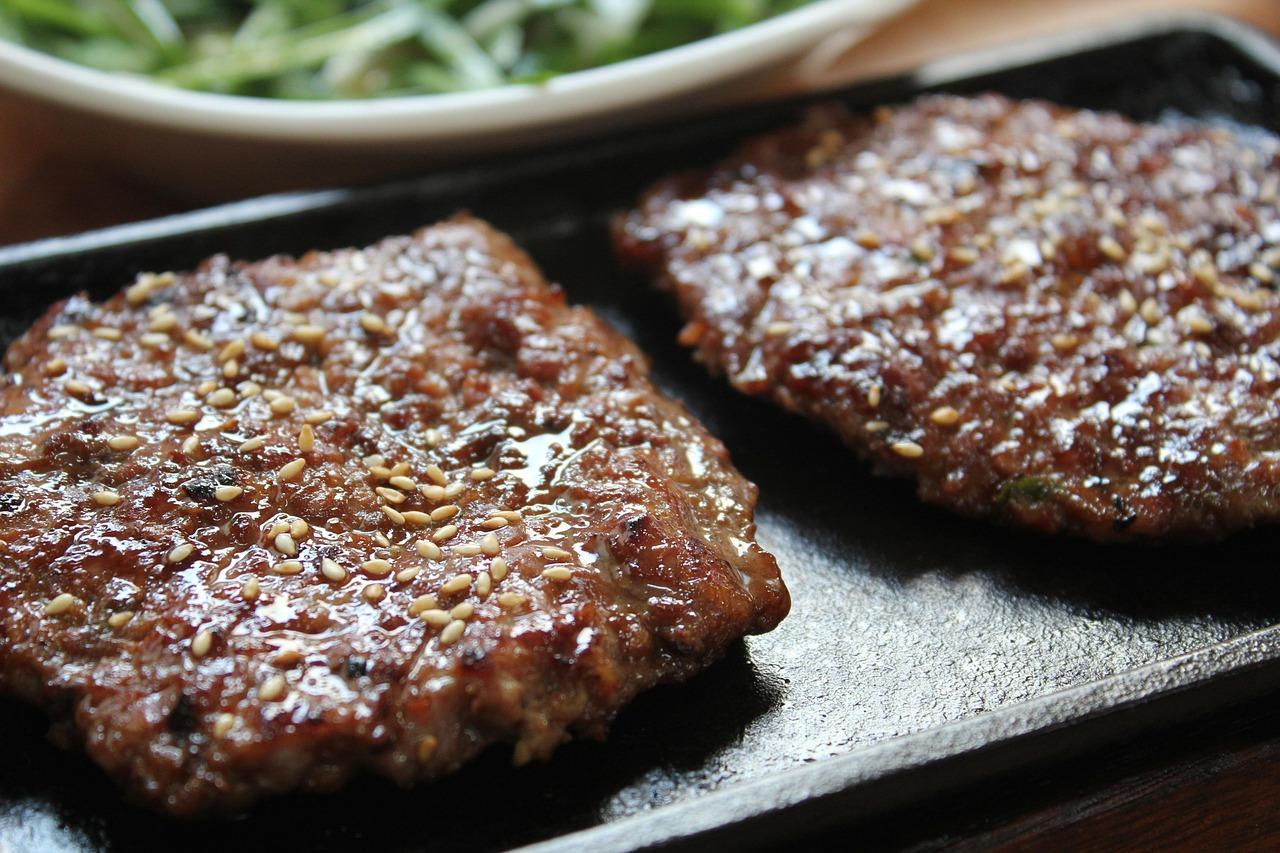
Tteokgalbi is rib meat chopped finely, pressed back into neat slabs and grilled, so it's soft enough to eat without struggling with a bone. Two places in South Jeolla claim it: Damyang, the bamboo county, where all-beef patties come with rice steamed in bamboo tubes, and Gwangju's Songjeong district, whose restaurant street near the railway station mixes beef with pork. This home version uses minced beef and pork, seasoned with soy, garlic and pear, then brushed with a soy and honey glaze as it cooks. Serve with rice, lettuce and a few banchan; leftovers are good cold in a lunchbox. Chef's tip: slap the mince against the bowl for a few minutes; it turns sticky and the patties hold together on the grill without any breadcrumbs.
Singapore chilli crab
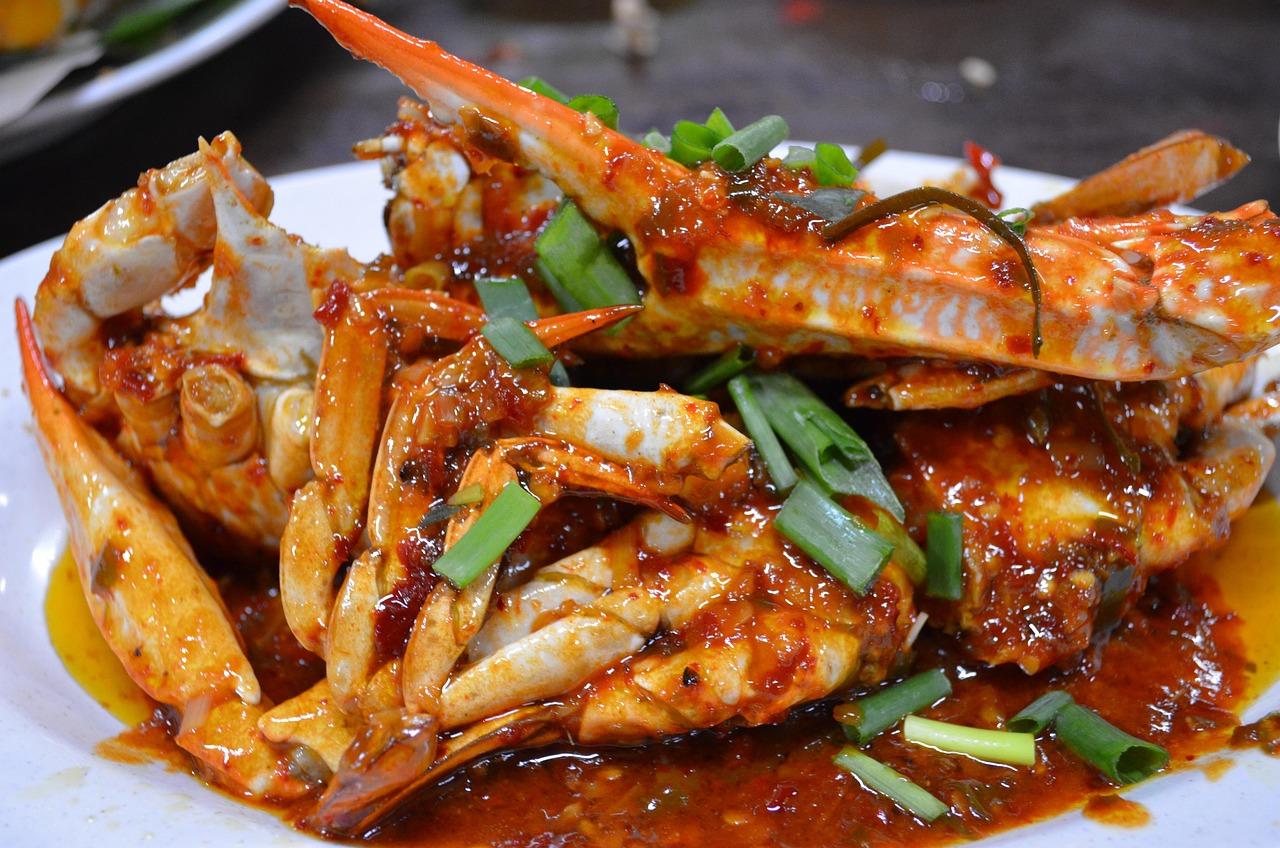
Chilli crab was first sold from a pushcart on the Kallang river in the 1950s and is now the dish visitors queue for along Singapore's East Coast seafood strip. Big mud crabs are cut up, wok-fried and simmered in a thick, sweet, tangy and gently hot sauce of chilli, tomato and garlic, which is then silked with beaten egg. Everyone eats with their hands and mops up the sauce with fried or steamed mantou buns. It is a weekend or celebration meal, messy and loud. Buy crabs live or freshly cooked the same day from a fishmonger you trust. Discard any live crab that doesn't move, smells of ammonia or has a cracked, leaking shell. The common mistake is boiling the sauce after adding the egg, which scrambles it into lumps; pour it in a thin stream over a low heat. Chef's tip: ask the fishmonger to clean and quarter the crab for you, and crack each claw lightly with the back of a cleaver so the sauce soaks in.
 Singaporean