
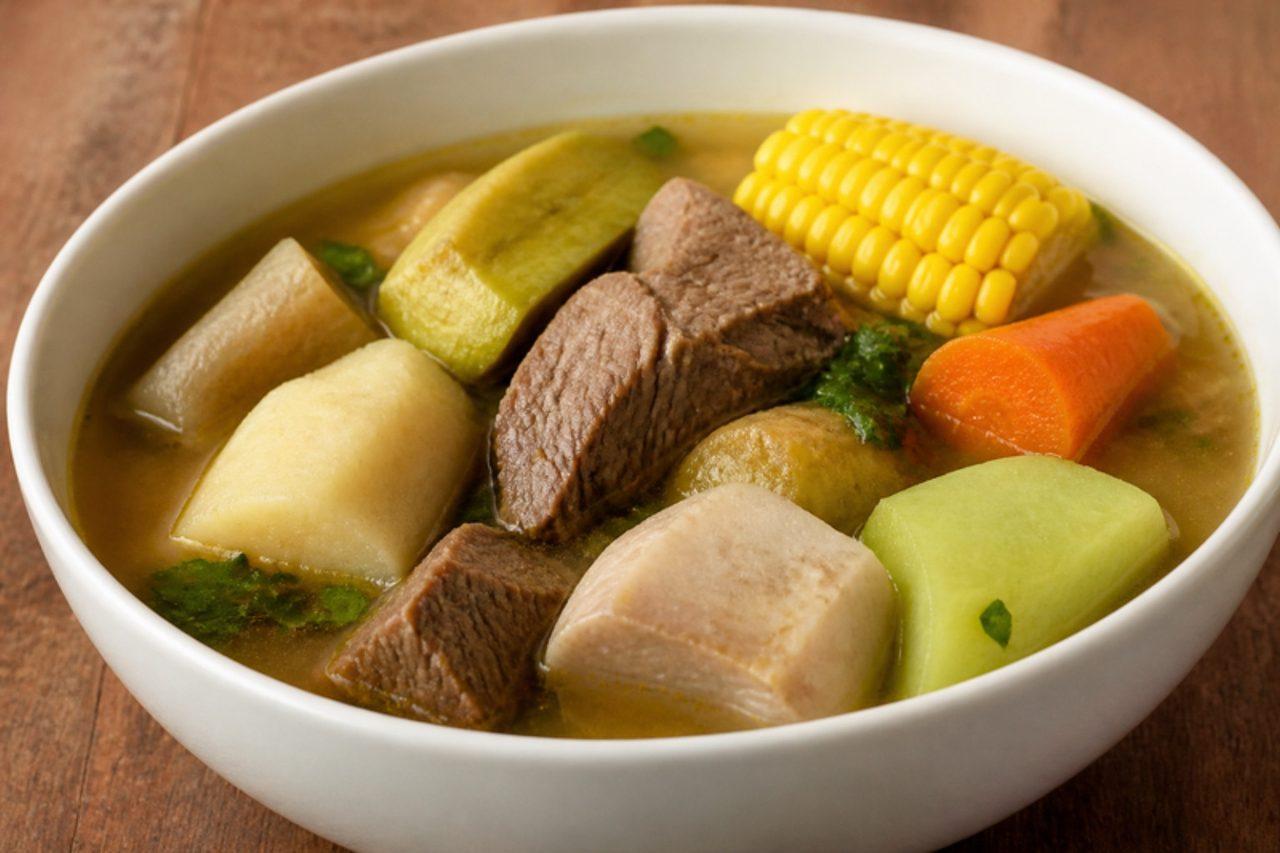
AI-generated image
Olla de carne
Beef and vegetable pot
Costa Rica's beef and vegetable pot with yuca, plantain and corn

Olla de carne, "pot of meat", is the Costa Rican Sunday soup, cooked slowly in the Central Valley around San José and in country homes: beef shin and short ribs simmered for hours in a clear broth with big pieces of yuca, chayote, green plantain, corn, carrot and taro. The broth is served first, then the meat and vegetables, with rice on the side. The mistake is putting all the vegetables in together; add the hard ones first and the soft chayote and corn last. Chef's tip: use a little bone with the beef; it gives the broth body without any stock cube.
- Total time
- 180 min
- Difficulty
- easy
- Serves
- 8
Ingredients
- 2 ⅝ lb beef shin and short ribson the bone, in large pieces
- 12 ½ cups water
- 1 onionhalved
- 4 garlic clovescrushed
- 1 red pepperin strips
- ½ oz corianderstalks and leaves
- 2 ½ tsp salt
- 14 oz yuca (cassava)peeled, in chunks
- 10 ½ oz taro (tiquisque)peeled, in chunks
- 2 green plantainspeeled, in 5 cm pieces
- 2 carrotsin chunks
- 2 chayotesquartered
- 2 corn cobsin 4 pieces
Shop this recipe on Amazon
Spices & pantry
Fresh ingredients (6)
Links open Amazon in a new tab. As an Amazon Associate, WhatToEat.Today earns from qualifying purchases.
Method
0/4 doneStep 1: Put 2 ⅝ lb beef shin and short ribs, 12 ½ cups water, 1 onion, 4 garlic cloves, 1 red pepper, the stalks of ¼ oz coriander and 2 ½ tsp salt in a large pot. Bring to the boil, skim well, then simmer partly covered for 1 hour 45 minutes, until the beef is tender.
105 minStep 2: Add 14 oz yuca (cassava), 10 ½ oz taro (tiquisque), 2 green plantains and 2 carrots and simmer for 20 minutes.
20 minStep 4: Taste and add salt. Chop the rest of ¼ oz coriander and scatter over. Serve the broth first, then the meat and vegetables, with rice.
Nutrition per serving
- Calories
- 450 kcal
- Protein
- 32 g
- Carbs
- 52 g
- Fat
- 12 g
- Fibre
- 8 g
Nutrition values are estimates.
KrazyBadal
Good to know
- How long does olla de carne take?
- About 180 minutes in total: 30 minutes to prepare and 150 minutes to cook.
- How many people does it serve?
- 8 as written. Change the servings above the ingredients and every amount scales to match.
- Is it gluten free?
- Yes, as written. Check the labels on stock, sauces and spice mixes, which sometimes contain gluten.
- What can I use instead of onion?
- 2 shallots per onion.
- What can I use instead of garlic cloves?
- ½ tsp garlic paste or ⅛ tsp garlic powder per clove.
Reviews
No reviews yet. Be the first to cook it.
Rate this recipe
Sign in to rate and review this recipe.
You might also like
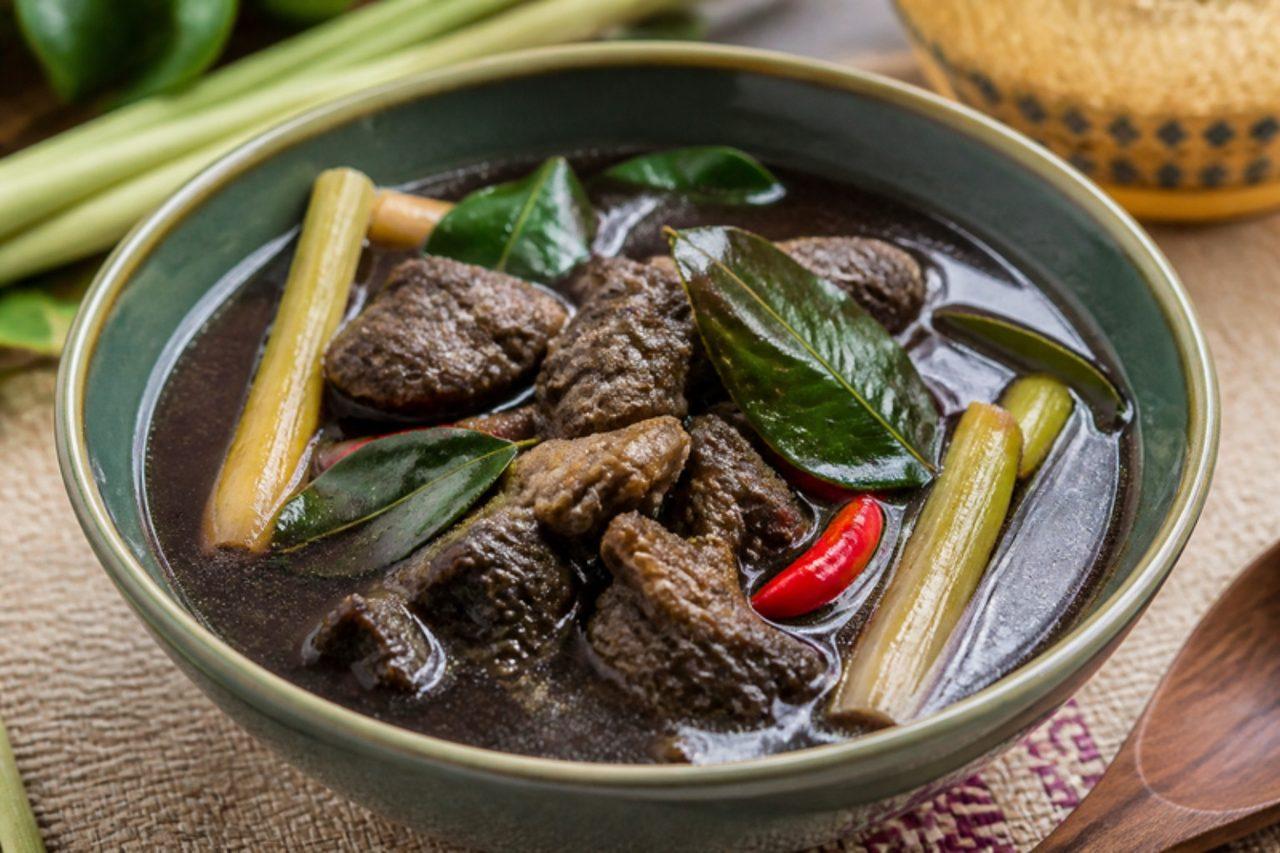
Tiyula itumBlack beef soup
Tiyula itum, 'black soup', is the pride of the Tausug people of Sulu in the far south of the Philippines, cooked for weddings, Eid celebrations and when guests come home. Beef (it is a halal, pork-free dish) is simmered with ginger, lemongrass and turmeric, then darkened with pamapa itum, a paste of grated coconut toasted until almost black and pounded with spices. The broth looks dramatic but tastes smoky, earthy and gently peppery, with heat from chillies. Serve it with plain rice. Chef's tip: toast the coconut slowly, stirring all the time, until it is very dark brown but not ashy; burnt-to-ash coconut tastes bitter and ruins the soup.
 Filipino

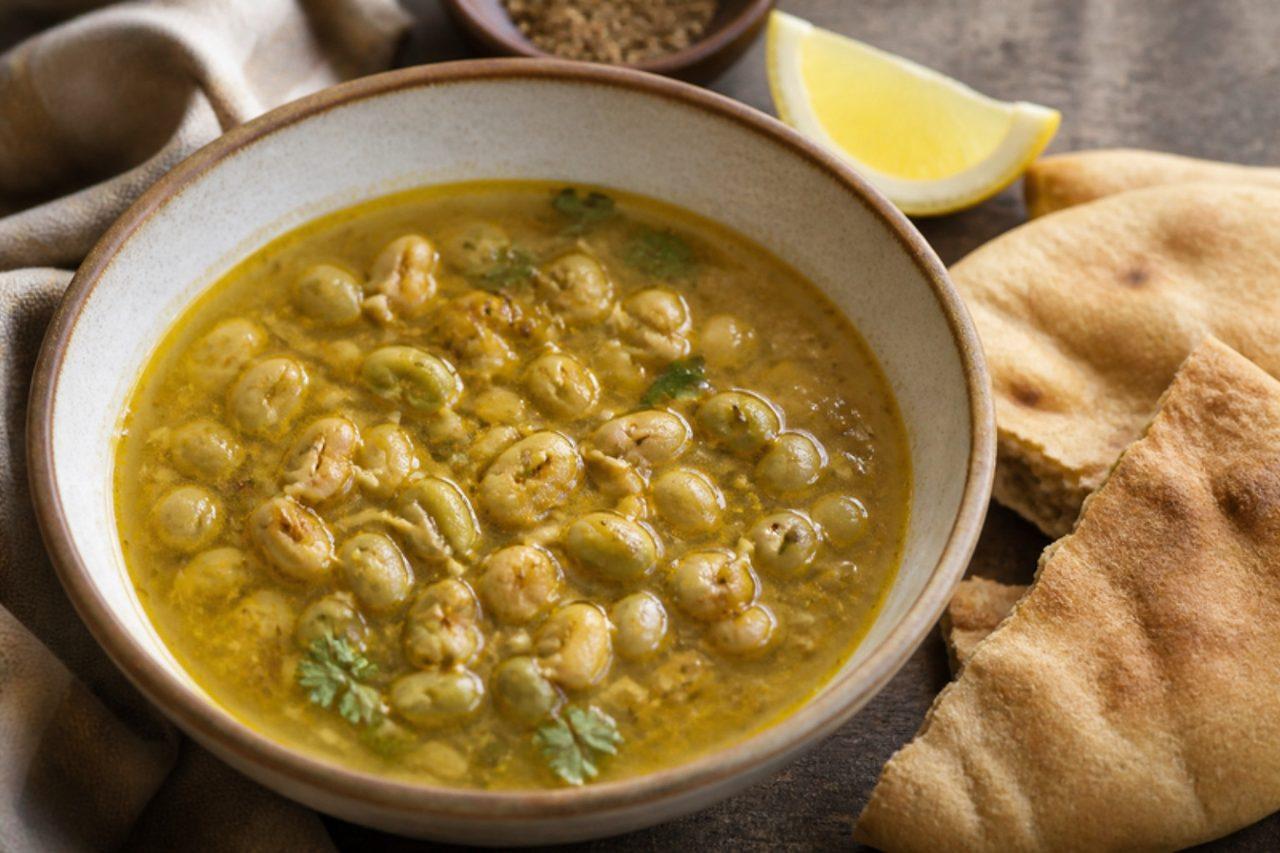
Ful nabitSprouted fava bean soup
Sprouted beans are ladled out with their cooking liquor in Cairo homes when the weather turns cold or someone is feeling run down, and Egyptians swear by the broth as a pick-me-up. The beans are soaked and left to sprout for a few days, then simmered with onion, garlic and cumin into a light, earthy soup that is sharpened at the table with plenty of lemon. You can eat the beans with a spoon or pop them from their skins. Allow 3 to 4 days for sprouting, although the hands-on work is only about 20 minutes. People with G6PD deficiency (favism) must not eat fava beans. Chef's tip: stop the sprouting when the shoots are about 1 cm long; longer sprouts taste grassy and bitter.
 Egyptian


Miso soup
Miso soup (味噌汁) is drunk every day in homes all over Japan, at breakfast as well as dinner, beside a bowl of rice. The base is dashi; this vegan version uses kombu and dried shiitake instead of bonito, which gives it a deep, rounded flavour. Silken tofu and wakame seaweed are the classic fillings. It takes ten minutes; just remember not to boil the miso. Chef's tip: add the miso at the very end and never let it boil. Boiling kills the miso's fresh, fermented aroma; Japanese cooks say the soup should only 'smile', with the surface barely trembling.
 Japanese