
AI-generated image
Doteyaki
Miso-simmered beef tendon
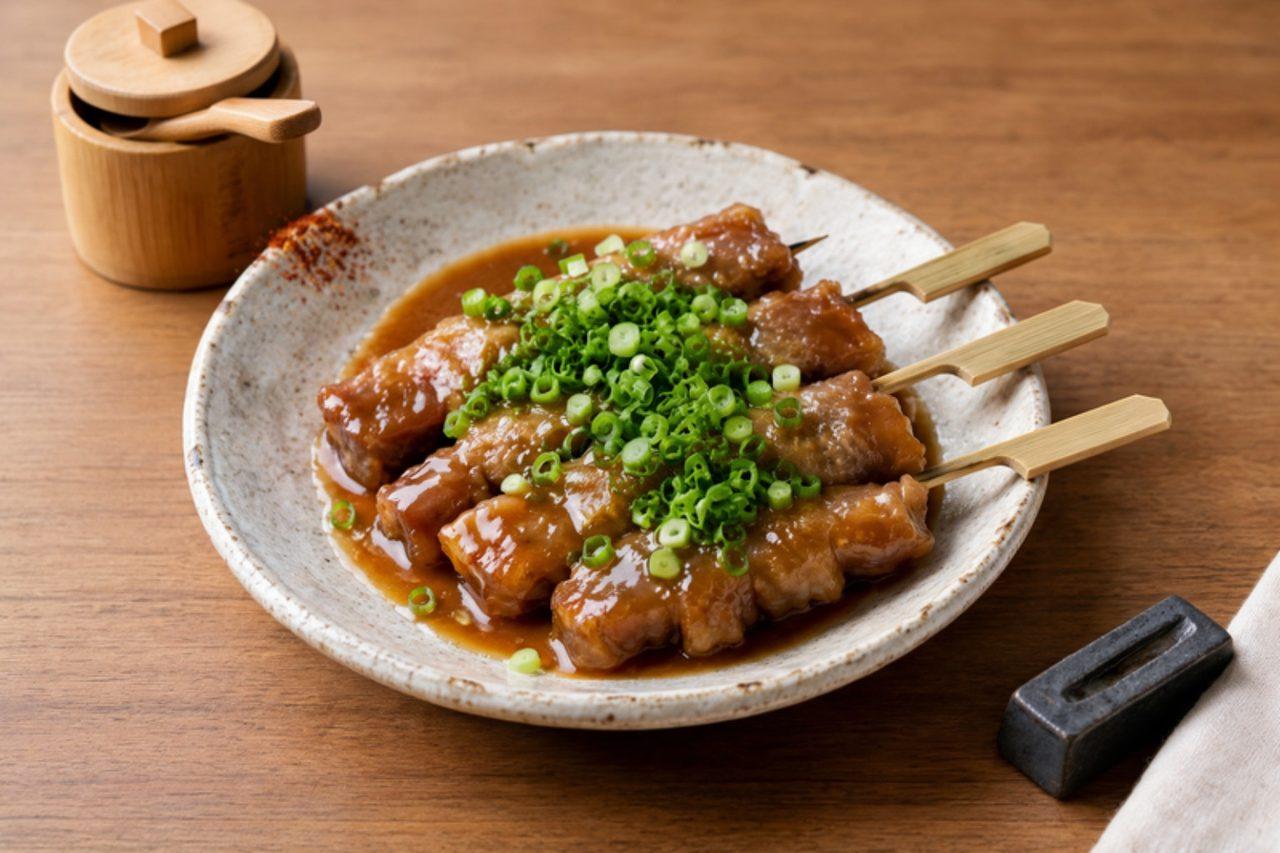
どて焼き: Shinsekai's beef tendon simmered for hours in sweet white miso, eaten with spring onion

Walk along the narrow Jan-Jan Yokochō alley in Shinsekai, under the Tsūtenkaku tower, and every kushikatsu counter has a long shallow tray of doteyaki bubbling at the front. Beef tendon is simmered until it wobbles, then stewed slowly in a glossy sauce of white miso, sugar and mirin, and it is eaten from the afternoon on, piled with raw spring onion and a shake of shichimi. The sauce contains mirin, which contains alcohol; for an alcohol-free version use 60 ml water, 1 extra tablespoon of sugar and 1 teaspoon of rice vinegar instead. Chef's tip: blanch the tendon twice and rinse it well, or the sauce turns cloudy and tastes of the butcher's shop.
- Total time
- 180 min
- Difficulty
- hard
- Serves
- 4
Ingredients
For the tendon
- 1 ⅓ lb beef tendon
- ⅔ oz fresh gingersliced
- 7 oz konnyakutorn into bite-size pieces
For the miso sauce
- 3 ½ oz white miso
- 1 oz red miso
- ¼ cup mirin
- 3 tbsp sugar
- 2 ½ cups dashi
To serve
- 4 spring onionsfinely sliced
- 1 tsp shichimi togarashi (optional)
- 12 bamboo skewers (optional)
Shop this recipe on Amazon
What you'll need
Fresh ingredients (3)
Links open Amazon in a new tab. As an Amazon Associate, WhatToEat.Today earns from qualifying purchases.
Method
0/7 doneStep 1: Put 1 ⅓ lb beef tendon in a large pan, cover with cold water, bring to the boil and boil for 10 minutes. Drain, rinse in cold water and scrub off any scum. Repeat once more with fresh water.
25 minStep 2: Return the tendon to the pan with ⅔ oz fresh ginger and enough fresh water to cover by 5 cm. Simmer gently, partly covered, for 1½ hours, until a chopstick slides in easily. Top up with hot water if needed.
90 minStep 3: Meanwhile, boil 7 oz konnyaku in water for 3 minutes, then drain.
3 minStep 4: Lift out the tendon, discard the ginger, and cut the tendon into 3 cm pieces. Thread onto 12 bamboo skewers if you like.
5 minStep 5: In a wide pan, whisk 3 ½ oz white miso, 1 oz red miso, ¼ cup mirin, 3 tbsp sugar and 2 ½ cups dashi until smooth. Add the tendon and konnyaku.
3 minStep 6: Simmer on the lowest heat for 1 hour, uncovered, stirring from the bottom every 10 minutes, until the sauce is thick and glossy and the tendon is soft and jelly-like. Common mistake: letting it boil hard; the miso catches on the base and turns bitter.
60 minStep 7: Serve in small bowls with plenty of 4 spring onions and 1 tsp shichimi togarashi to taste. It keeps for 3 days in the fridge and tastes even better reheated until piping hot.
Nutrition per serving
- Calories
- 330 kcal
- Protein
- 32 g
- Carbs
- 20 g
- Fat
- 12 g
- Fibre
- 1 g
Nutrition values are estimates.
KrazyBadal
Good to know
- How long does doteyaki take?
- About 180 minutes in total: 20 minutes to prepare and 160 minutes to cook.
- How many people does it serve?
- 4 as written. Change the servings above the ingredients and every amount scales to match.
- Can I make it ahead?
- Yes. It keeps well, so you can cook it earlier in the day or the day before and reheat it.
- What can I use instead of fresh ginger?
- ¼ tsp ground ginger per tbsp fresh (add it with the spices).
- What can I use instead of mirin?
- Rice vinegar with ½ tsp sugar per tbsp.
Reviews
No reviews yet. Be the first to cook it.
Rate this recipe
Sign in to rate and review this recipe.
You might also like

Yaki onigiriGrilled rice balls
Yaki onigiri (焼きおにぎり) are rice balls grilled until they form a crisp, toasty crust, then brushed with soy sauce glaze. They are eaten all over Japan, at izakaya, at barbecues and from the freezer section, as a snack or with miso soup. The inside stays soft and steamy while the outside crackles. Best eaten hot, straight from the pan. Chef's tip: let the shaped rice balls dry for 10 minutes before they go in the pan. A drier surface forms a better crust and won't stick, and the glaze goes on only at the end so it doesn't burn.

Pfälzer SaumagenStuffed pig's stomach
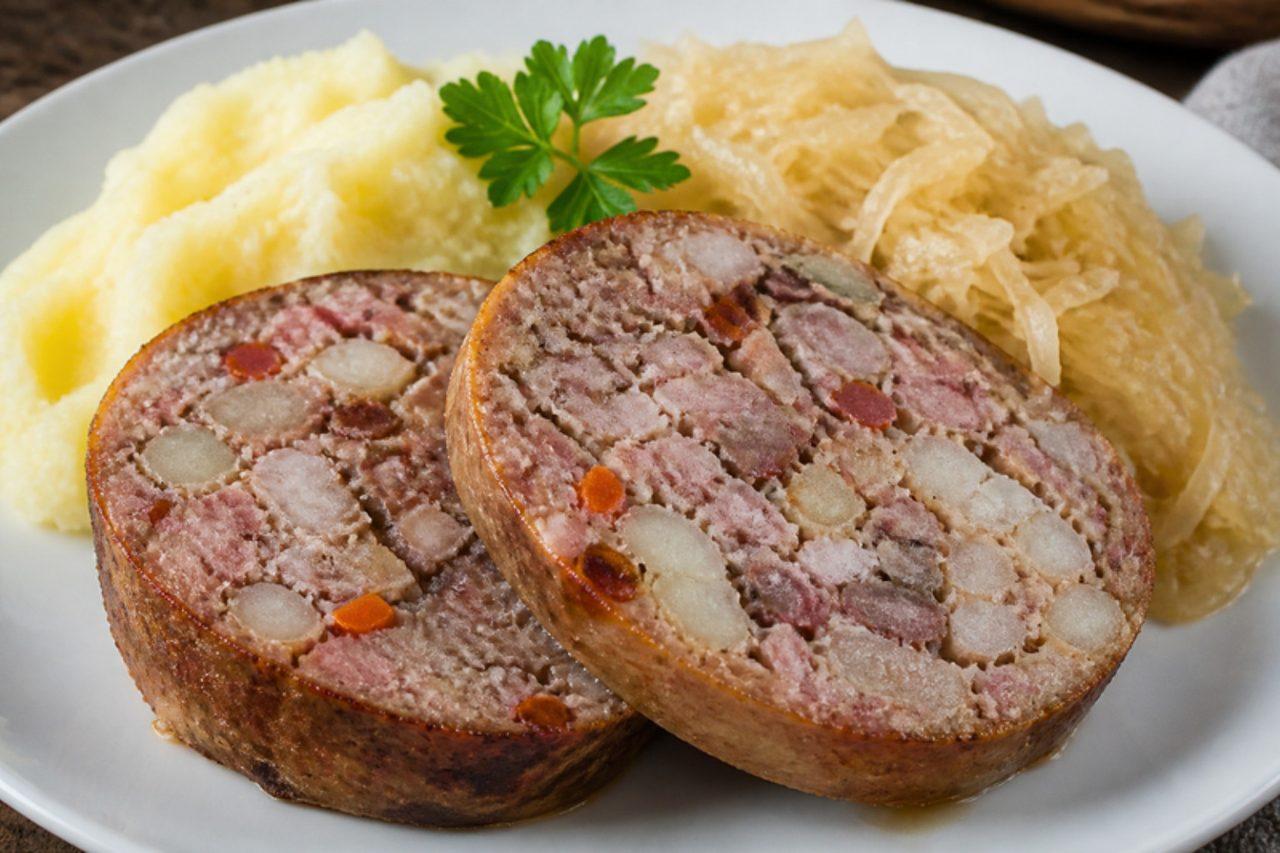
Saumagen is the pride of the Palatinate, served at wine-village festivals and family dinners from the Haardt hills to Ludwigshafen. A cleaned pig's stomach is stuffed with diced pork shoulder, pork sausage meat, potato and carrot seasoned with marjoram and nutmeg, poached slowly, then sliced thick and fried until crusty. The stomach works only as a casing and is ordered from a butcher; if you can't get one, bake the same filling in a covered terrine in a water bath. Serve with sauerkraut and mashed potato. Chef's tip: fill the stomach only three-quarters full, or it bursts as the potatoes swell.
 German


Pork souvlaki
This is a pork recipe. Walk through any Greek town after dark, from Athens to Thessaloniki, and the smell of souvlaki stands drifts down the street; cubes of pork shoulder grilled on thin skewers are the country's favourite cheap supper, eaten standing up or at a plastic-table taverna. At home you marinate the meat in lemon, olive oil, garlic and dried oregano, grill it hard and fast, and pile it on warm pitta with tzatziki, tomato and red onion. Chef's tip: cut the pork into even 2.5 cm cubes and leave a little fat on; lean loin dries out, shoulder stays juicy over high heat.
 Greek