
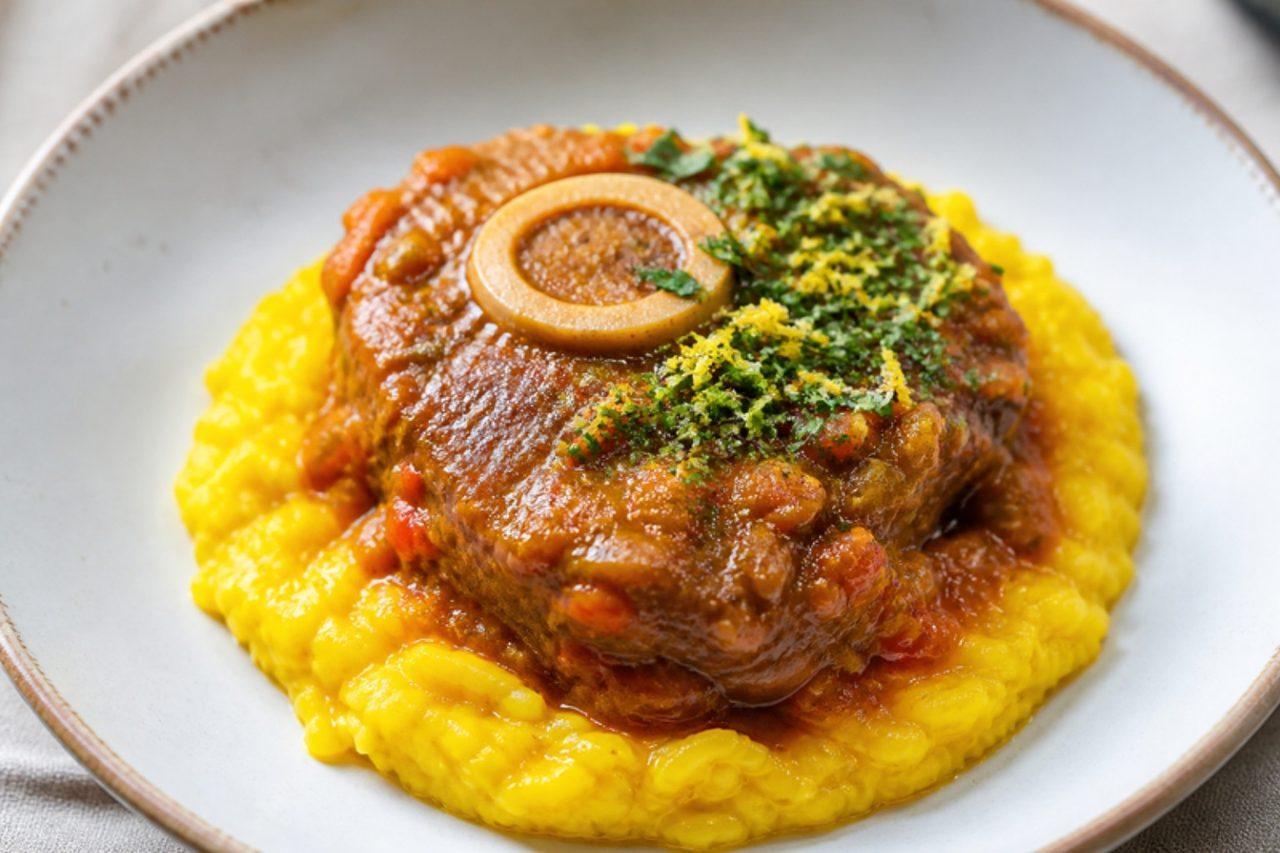
AI-generated image
Ossobuco alla milanese
Braised veal shanks
Ossobuco alla milanese: Milan's braised veal shanks with white wine and gremolata


Thick cross-cut slices of veal shank, each ringed around a hollow bone full of marrow, are browned and then braised slowly in white wine and stock until the meat is soft enough to cut with a spoon: this is Milan's great winter Sunday dish. The old Milanese way, 'in bianco', keeps tomato out, so the sauce stays golden and savoury. Just before serving it gets a shower of gremolata, a sharp mix of lemon zest, garlic and parsley that wakes up the rich braise. Serve it with risotto alla milanese, the saffron risotto that is its traditional partner (one of the few times a Milanese risotto shares the plate), or with soft polenta. Chef's tip: snip through the thin skin around each shank in three or four places before browning, so the slices stay flat in the pan instead of curling up.
- Total time
- 150 min
- Difficulty
- medium
- Serves
- 4
Ingredients
For the braise
- 4 veal shankscross-cut, 4 cm thick (about 1.2 kg)
- 3 tbsp rice flouror plain flour if you don't need it gluten free
- 1 tsp salt
- ½ tsp black pepper
- 3 tbsp olive oilor half butter, half oil if not cooking dairy free
- 1 onionfinely chopped
- 1 carrotfinely chopped
- 1 stalk celeryfinely chopped
- ¾ cup dry white wineor 200 ml stock with 2 tsp white wine vinegar
- 1 ¾ cups chicken or veal stockhot
- 1 bay leaf
For the gremolata
- 1 lemonunwaxed, zest only, finely grated
- 1 clove garlicvery finely chopped
- ½ oz flat-leaf parsleyfinely chopped
Shop this recipe on Amazon
Spices & pantry
Links open Amazon in a new tab. As an Amazon Associate, WhatToEat.Today earns from qualifying purchases.
Method
0/10 doneStep 1: Pat 4 veal shanks dry and snip the thin membrane around the edge of each in 3–4 places. If you like, tie a piece of string around each one to hold its shape. Keep raw meat on its own board.
Step 2: Season with 1 tsp salt and ½ tsp black pepper, then dust both cut sides with 3 tbsp rice flour and shake off the excess.
Step 3: Heat 3 tbsp olive oil in a wide, heavy casserole that holds the shanks in one layer over a medium-high heat. Brown the shanks for 4 minutes a side, until deep golden. Lift onto a plate.
8 minStep 5: Pour in ¾ cup dry white wine and boil for 2–3 minutes, scraping up the browned bits, until reduced by about half.
3 minStep 6: Return the shanks in a single layer, marrow side up so it doesn't fall out. Add 1 ¾ cups chicken or veal stock and 1 bay leaf; the liquid should come about two-thirds of the way up the meat.
Step 7: Cover and braise over a very low heat, at the gentlest simmer, for 1½–2 hours, turning the shanks carefully once halfway and adding a splash of water if it gets dry. A common mistake is letting it boil: the meat tightens and turns stringy instead of melting. It is ready when the meat pulls easily away from the bone.
105 minStep 8: Mix 1 lemon zest, 1 clove garlic and ½ oz flat-leaf parsley together on a board to make the gremolata.
Step 9: Lift the shanks onto warm plates and snip off any string. If the sauce is thin, boil it uncovered for a few minutes until syrupy, then spoon it over.
4 minStep 10: Scatter the gremolata over the hot meat and serve with saffron risotto alla milanese or soft polenta, with a small spoon for the marrow.
Nutrition per serving
- Calories
- 420 kcal
- Protein
- 52 g
- Carbs
- 10 g
- Fat
- 17 g
- Fibre
- 2 g
Nutrition values are estimates.
KrazyBadal
Good to know
- How long does ossobuco alla milanese take?
- About 150 minutes in total: 20 minutes to prepare and 130 minutes to cook.
- How many people does it serve?
- 4 as written. Change the servings above the ingredients and every amount scales to match.
- Is it gluten free?
- Yes, as written. Check the labels on stock, sauces and spice mixes, which sometimes contain gluten.
- What can I use instead of onion?
- 2 shallots per onion.
- What can I use instead of carrot?
- Parsnip or sweet potato, same weight.
Reviews
No reviews yet. Be the first to cook it.
Rate this recipe
Sign in to rate and review this recipe.
You might also like

Boiled pasta
The basic method for any dried pasta, from penne to spaghetti. A large pan of salted boiling water keeps the pasta from sticking, and you cook it only until just done, with a little bite left. Use it in salads, bakes or with any sauce.

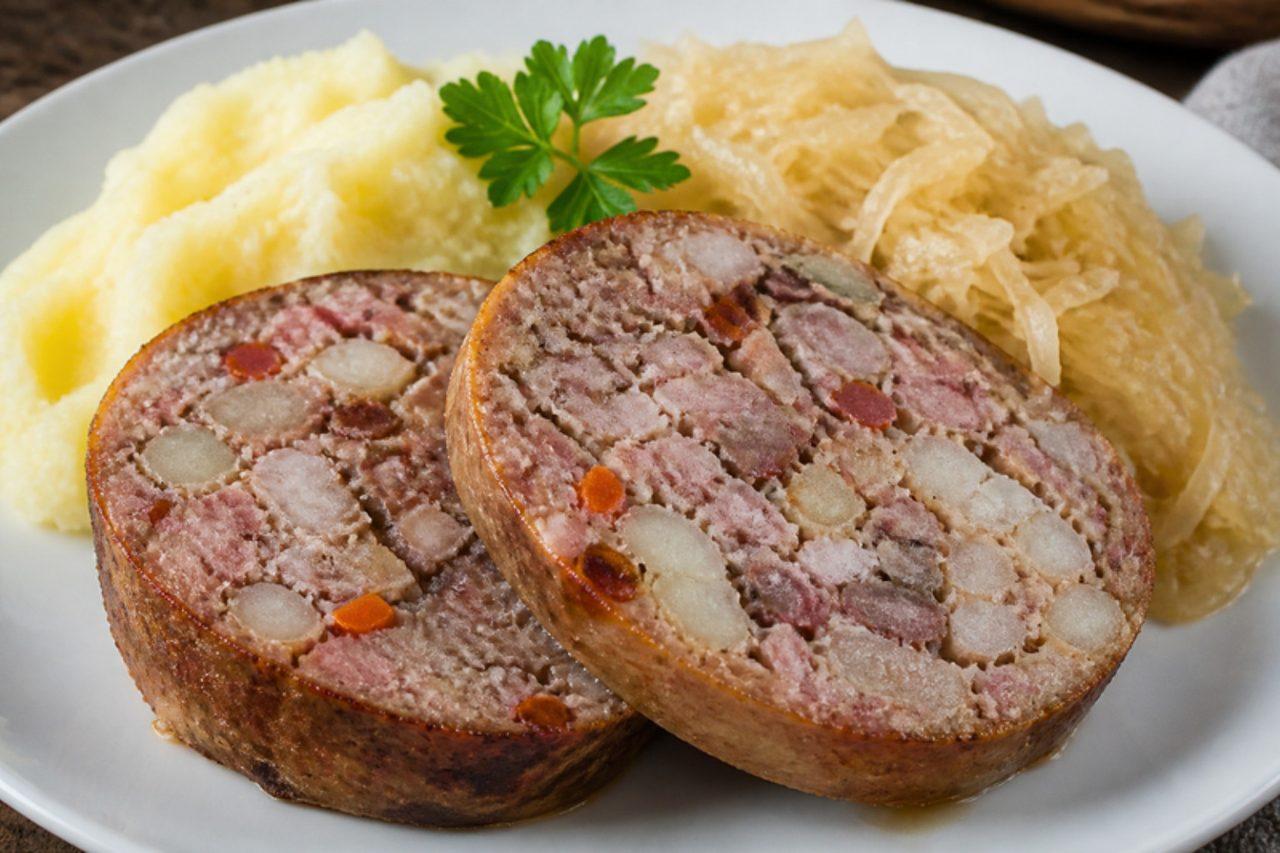
Pfälzer SaumagenStuffed pig's stomach
Saumagen is the pride of the Palatinate, served at wine-village festivals and family dinners from the Haardt hills to Ludwigshafen. A cleaned pig's stomach is stuffed with diced pork shoulder, pork sausage meat, potato and carrot seasoned with marjoram and nutmeg, poached slowly, then sliced thick and fried until crusty. The stomach works only as a casing and is ordered from a butcher; if you can't get one, bake the same filling in a covered terrine in a water bath. Serve with sauerkraut and mashed potato. Chef's tip: fill the stomach only three-quarters full, or it bursts as the potatoes swell.
 German


Pork souvlaki
This is a pork recipe. Walk through any Greek town after dark, from Athens to Thessaloniki, and the smell of souvlaki stands drifts down the street; cubes of pork shoulder grilled on thin skewers are the country's favourite cheap supper, eaten standing up or at a plastic-table taverna. At home you marinate the meat in lemon, olive oil, garlic and dried oregano, grill it hard and fast, and pile it on warm pitta with tzatziki, tomato and red onion. Chef's tip: cut the pork into even 2.5 cm cubes and leave a little fat on; lean loin dries out, shoulder stays juicy over high heat.
 Greek