
AI-generated image
Oyaki
Stuffed steamed dumplings
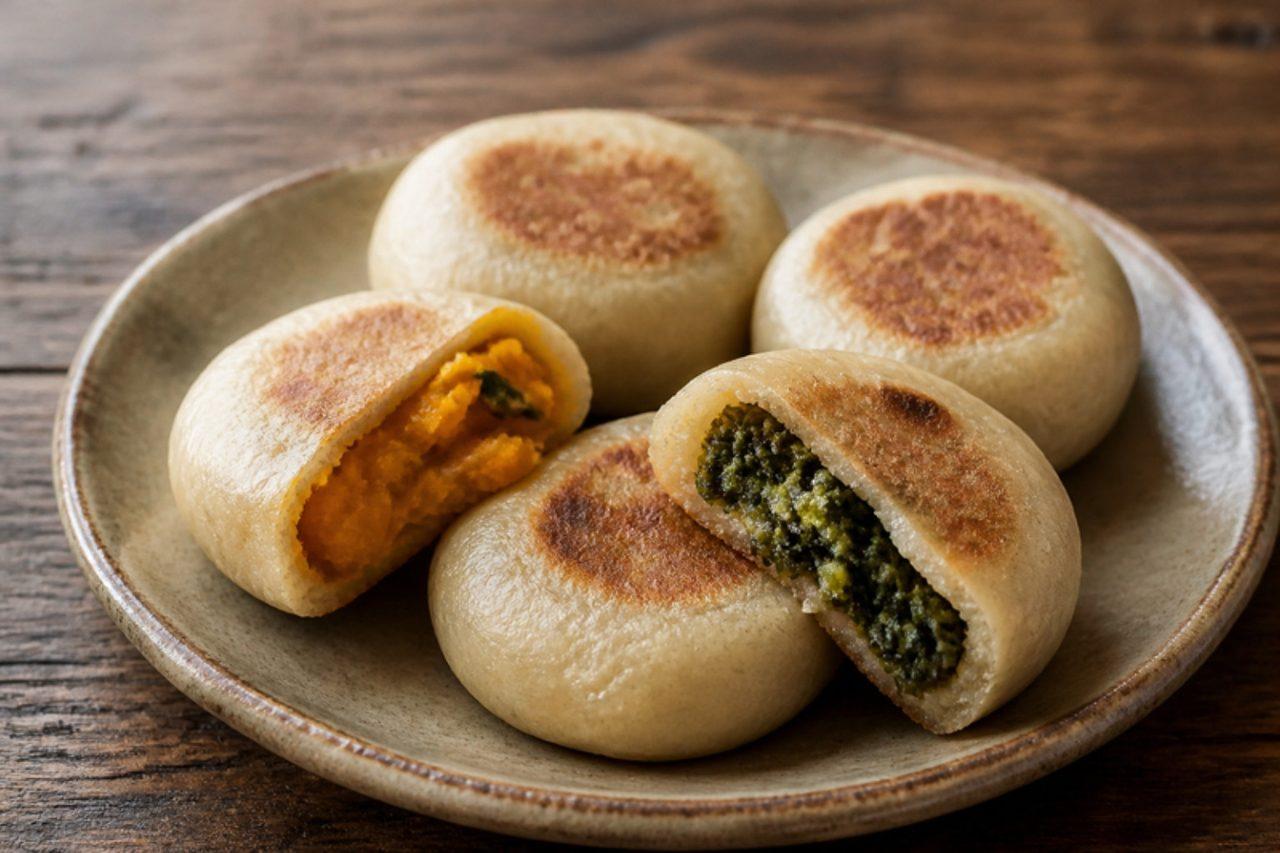
おやき (oyaki): Nagano's pan-browned, steamed dumplings stuffed with spicy greens or sweet kabocha


Oyaki are the everyday snack of Nagano's mountain villages, where rice was scarce and wheat and buckwheat grew better. The plump dumplings are filled with whatever the season gives: pickled nozawana greens in winter, aubergine and miso in summer, sweet squash in autumn. Old farmhouses baked them in the ashes of the irori hearth; today they are browned in a pan and steamed, so they come out crusty on both faces with a soft, chewy middle. They travel well, which made them the lunch of farmers and hikers on the trails around Zenkoji temple. Chef's tip: let the dough rest for at least 30 minutes. A relaxed dough stretches thin around the filling without tearing.
- Total time
- 65 min
- Difficulty
- medium
- Serves
- 8
Ingredients
For the dough
- 7 oz plain flour
- 1 ¾ oz buckwheat flouror more plain flour
- 1 tsp baking powder
- ½ tsp salt
- ¾ cup hot waterjust off the boil
For the greens filling
- 7 oz mustard greens, chard or pak choifinely chopped
- 1 tbsp sesame oil
- 1 dried chillicrumbled
- 1 tbsp soy sauce
- 1 tsp sugar
- 1 tbsp toasted sesame seeds
For the kabocha filling
- 9 oz kabocha squashpeeled, cubed
- 1 tbsp white miso
- 1 tbsp sugar
For cooking
- 1 tbsp vegetable oil
- ½ cup water
Shop this recipe on Amazon
Spices & pantry
Fresh ingredients (1)
Links open Amazon in a new tab. As an Amazon Associate, WhatToEat.Today earns from qualifying purchases.
Method
0/8 doneStep 1: Mix 7 oz plain flour, 1 ¾ oz buckwheat flour, 1 tsp baking powder and ½ tsp salt in a bowl. Pour in ¾ cup hot water and stir with chopsticks until shaggy, then knead for 3–4 minutes until smooth and soft, like an earlobe. Cover and rest for 30 minutes.
5 minStep 2: Greens filling: heat 1 tbsp sesame oil in a frying pan over medium-high heat, add 1 dried chilli and 7 oz mustard greens, chard or pak choi and stir-fry for 3 minutes until wilted. Add 1 tbsp soy sauce and 1 tsp sugar and cook until the pan is dry. Stir in 1 tbsp toasted sesame seeds and cool.
5 minStep 3: Kabocha filling: steam or microwave 9 oz kabocha squash for 6–8 minutes until soft. Mash with 1 tbsp white miso and 1 tbsp sugar into a thick paste and cool.
8 minStep 4: Divide the dough into 8 pieces. Flatten each into a 10 cm round, thinner at the edges than the centre. Put a heaped spoonful of filling in the middle (4 greens, 4 kabocha), pull the edges up over it and pinch tightly closed. Turn seam side down and press into a disc 2 cm thick.
Step 5: Common mistake: wet filling. Squeeze the cooled greens in your hand before using them. Any liquid leaks out, glues the oyaki to the pan and makes the dough soggy.
Step 6: Heat 1 tbsp vegetable oil in a large frying pan with a lid over medium heat. Add the oyaki seam side down and fry for 3 minutes until golden underneath. Turn them over.
3 minStep 7: Pour in ½ cup water, cover at once and steam over medium-low heat for 10 minutes. Uncover and cook for 2–3 minutes more, until the water has gone and the bottoms crisp again. They should sound hollow when tapped.
13 minStep 8: Serve warm. Cooled oyaki keep for 2 days in the fridge or a month frozen; reheat in a covered pan with a splash of water.
Nutrition per serving
- Calories
- 180 kcal
- Protein
- 5 g
- Carbs
- 32 g
- Fat
- 4 g
- Fibre
- 3 g
Nutrition values are estimates.
KrazyBadal
Good to know
- How long does oyaki take?
- About 65 minutes in total: 40 minutes to prepare and 25 minutes to cook.
- How many people does it serve?
- 8 as written. Change the servings above the ingredients and every amount scales to match.
- Is it vegan?
- Yes. It has no meat, fish, dairy or eggs.
- Can I make it ahead?
- Yes. It keeps well, so you can cook it earlier in the day or the day before and reheat it.
- What can I use instead of plain flour?
- Self-raising flour, same amount (then leave out the baking powder).
- What can I use instead of baking powder?
- ¼ tsp bicarbonate of soda + ½ tsp cream of tartar per 1 tsp.
Reviews
No reviews yet. Be the first to cook it.
Rate this recipe
Sign in to rate and review this recipe.
You might also like

Yaki onigiriGrilled rice balls
Yaki onigiri (焼きおにぎり) are rice balls grilled until they form a crisp, toasty crust, then brushed with soy sauce glaze. They are eaten all over Japan, at izakaya, at barbecues and from the freezer section, as a snack or with miso soup. The inside stays soft and steamy while the outside crackles. Best eaten hot, straight from the pan. Chef's tip: let the shaped rice balls dry for 10 minutes before they go in the pan. A drier surface forms a better crust and won't stick, and the glaze goes on only at the end so it doesn't burn.

Taiwanese grilled corn
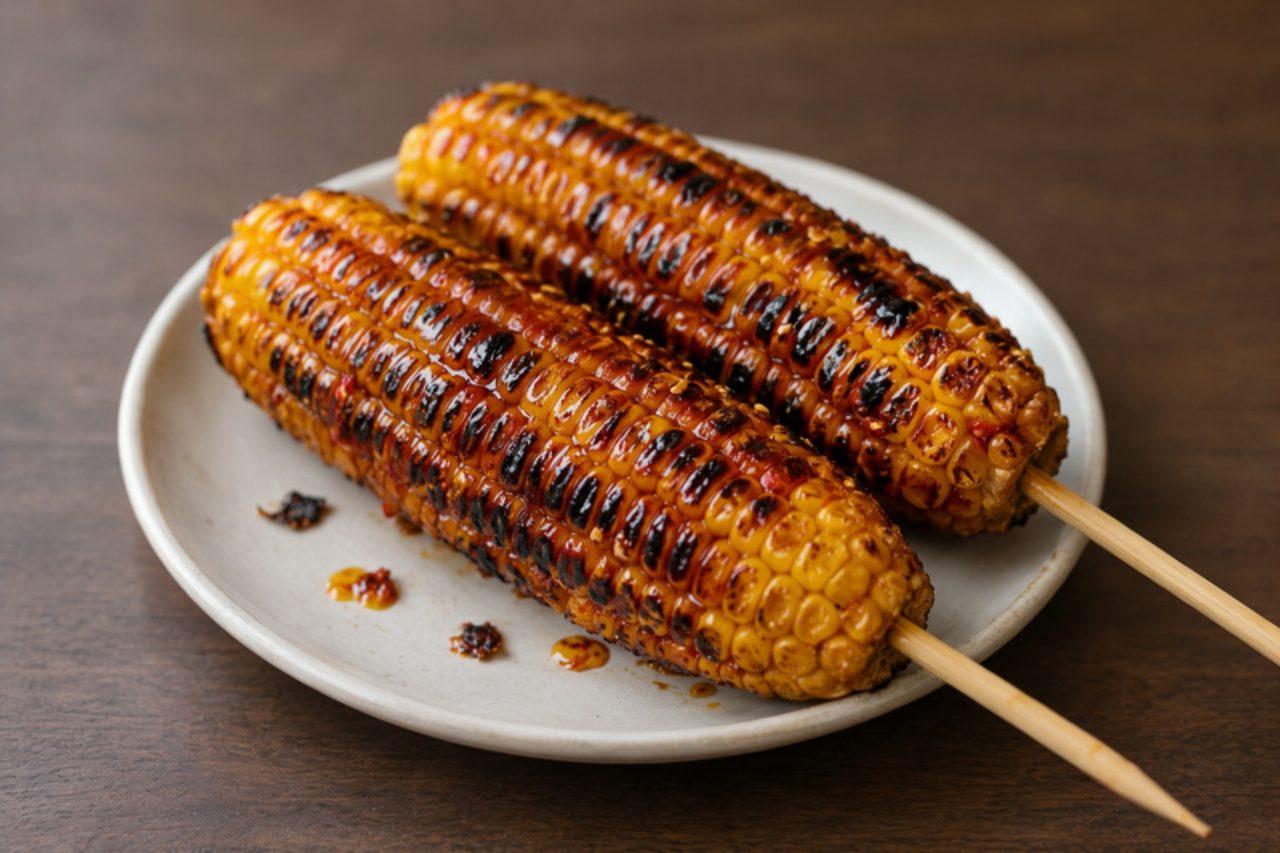
At Raohe and Shilin night markets the grilled-corn stalls are easy to find: look for the queue and the smoky, sweet smell. Cobs are par-cooked, then turned slowly over charcoal while the cook brushes them with a dark glaze of sacha sauce, thick soy paste, garlic and chilli, layer after layer, until the kernels are sticky, slightly charred and deeply savoury. It is eaten hot from a paper sleeve while walking the market. Sacha (shacha) sauce, a Taiwanese barbecue paste, usually contains dried fish and shrimp; vegetarian sacha is sold in Asian shops. Contains soy, wheat and fish. Chef's tip: brush thin coats and turn often; one thick coat burns before the corn chars.
 Taiwanese

Masala khakhraCrisp roasted wheat crackers
Khakhra are thin chapaties roasted slowly on a griddle until they turn crisp, like a cracker. This masala version adds gram flour, fresh fenugreek, turmeric and chilli to the wheat dough. They are a light Gujarati breakfast or tea-time snack, and lovely with pickle, chutney or a smear of butter. You can also make them in a roti maker.
 Indian