
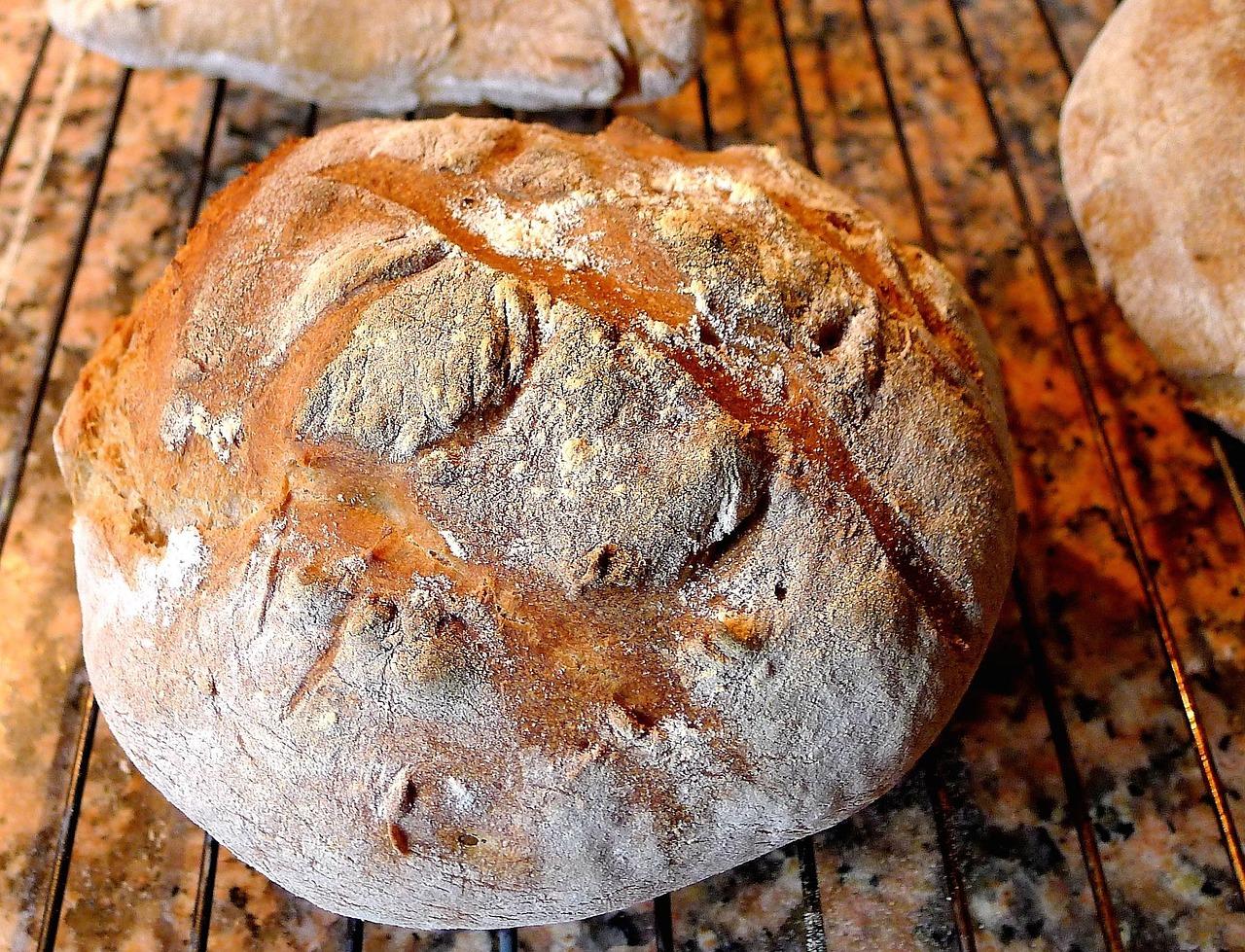
Pain de campagne
Country sourdough loaf
French country sourdough with a little rye


Picture a round, flour-dusted boule on the counter of a village bakery in Burgundy or the Auvergne: that is pain de campagne, the 'country loaf' French families once baked weekly in a shared oven and kept in a cloth for days. A little wholemeal rye in the dough gives a greyish crumb, an earthy, gently sour flavour and a thick, crackling crust that stays good for four or five days. Slice it for tartines with butter and honey, toast it for soup, or serve it with a cheese board, onion soup or a slow vegetable stew. This version builds a fresh leaven in the morning and rests the shaped loaf in the fridge overnight, so you bake first thing the next day. Many home loaves come out pale and soft because they are pulled too early; French bakers call the dark finish 'bien cuit', and that colour is where the flavour lives. Chef's tip: bake straight from the fridge into a screaming-hot lidded casserole; the cold, firm dough is easier to score and springs up higher.
- Total time
- 1335 min
- Difficulty
- hard
- Serves
- 12
Ingredients
For the leaven
- ⅞ oz sourdough starter
- 1 ¾ oz strong white bread flour
- 3 ½ tbsp waterlukewarm
For the dough
- 14 oz strong white bread flouror French T80
- 1 ¾ oz wholemeal rye flour
- 1 ½ cups waterlukewarm
- ⅓ oz fine sea salt
- 2 tbsp rice flourfor the basket
Shop this recipe on Amazon
What you'll need
Links open Amazon in a new tab. As an Amazon Associate, WhatToEat.Today earns from qualifying purchases.
Method
0/11 doneStep 1: In the morning, mix ⅞ oz sourdough starter, 1 ¾ oz strong white bread flour and 3 ½ tbsp water in a jar. Leave at warm room temperature for 4–6 hours, until doubled, bubbly and a spoonful floats in water.
300 minStep 2: Mix 14 oz strong white bread flour, 1 ¾ oz wholemeal rye flour and all but 30 ml of 1 ½ cups water in a large bowl until shaggy. Cover and rest for 45 minutes.
45 minStep 3: Add all the leaven, ⅓ oz fine sea salt and the remaining water. Pinch and fold with a wet hand for 4–5 minutes until the dough is smooth and holds together.
5 minStep 4: Cover and leave at about 75°F for 4 hours. During the first 2 hours, do a set of stretch-and-folds every 30 minutes. The dough is ready when it has grown by about half, feels airy and wobbles when you shake the bowl.
240 minStep 5: Tip it out, fold the edges into the middle to make a loose round and rest it, smooth side up, for 20 minutes.
20 minStep 6: Shape a tight boule: flip it, fold the sides into the centre, roll it over and drag it towards you on the worktop to tighten the surface. Dust a round proving basket (or a bowl lined with a tea towel) with 2 tbsp rice flour and set the loaf in, seam up.
Step 7: Cover and refrigerate overnight, 12–14 hours. The dough should have risen a little and feel firm and cold.
720 minStep 8: Put a lidded cast-iron casserole (about 24 cm) in the oven and heat to 475°F (450°F fan) for 45 minutes.
45 minStep 9: Turn the loaf onto baking paper, dust lightly with flour and score a cross or a square about 1 cm deep. Lower it into the hot pot, cover and bake for 20 minutes.
20 minStep 10: Remove the lid, lower the heat to 450°F (400°F fan) and bake for 20–25 minutes more, until the crust is a deep chestnut brown with dark edges on the cuts. The base should sound hollow and the centre read 205°F.
23 minStep 11: Cool on a rack for at least 2 hours before cutting. Keep wrapped in a cloth, cut side down on the board, for up to 5 days.
Nutrition per serving
- Calories
- 150 kcal
- Protein
- 5 g
- Carbs
- 31 g
- Fat
- 1 g
- Fibre
- 2 g
Nutrition values are estimates.
KrazyBadal
Good to know
- How long does pain de campagne take?
- About 1335 minutes in total: 1290 minutes to prepare and 45 minutes to cook.
- How many people does it serve?
- 12 as written. Change the servings above the ingredients and every amount scales to match.
- Is it vegan?
- Yes. It has no meat, fish, dairy or eggs.
- Can I make it ahead?
- Yes. It keeps well, so you can cook it earlier in the day or the day before and reheat it.
- What can I use instead of strong white bread flour?
- Plain flour, same amount (the dough will be softer and rise a little less).
- What can I use instead of strong white bread flour?
- Plain flour, same amount (the dough will be softer and rise a little less).
Reviews
No reviews yet. Be the first to cook it.
Rate this recipe
Sign in to rate and review this recipe.
You might also like
Sandwich grecKebab baguette
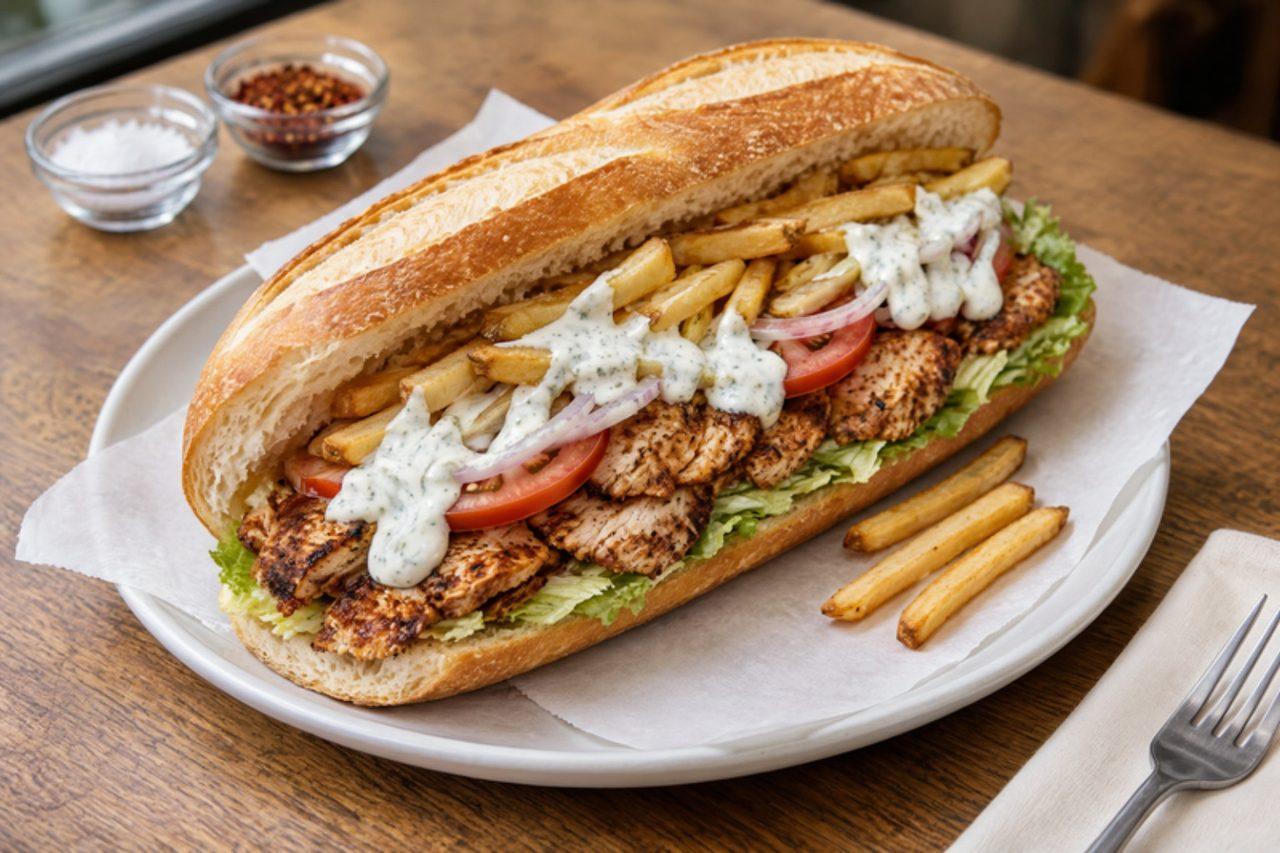
In Paris, a "grec" is the late-night kebab sandwich named after the Greek-run shops that first sold it in the Latin Quarter. On rue de la Huchette and rue Saint-André-des-Arts near Saint-Michel, students queue after a night out for crusty bread or pitta stuffed with meat shaved from a turning spit, lettuce, tomato and onion, a garlicky white sauce, and, the Paris touch, a handful of fries pushed right inside. This home version marinates chicken thighs in spiced yoghurt, sears them hard and slices them thin, with oven fries. It contains milk, egg (in the mayonnaise) and wheat. Chef's tip: slice the meat thinly across the grain after resting; thick chunks don't feel like a grec.

ChipaCheese bread rings
In Paraguay you hear 'chipa, chipa!' called by vendors with big baskets on buses and street corners, and every family bakes it for Holy Week, when chipa is the food of Good Friday. Cassava starch, a little cornmeal, butter, eggs and a lot of hard cheese are kneaded into a dough scented with aniseed, shaped into rings or small rolls and baked in a hot oven, traditionally a domed clay tatakua. It's chewy, crisp outside and best warm with cocido (toasted yerba tea). Chef's tip: the dough should feel soft and slightly greasy; add milk a spoon at a time, as too much makes the chipa spread flat.
 Paraguayan

SalufPuffy flatbread
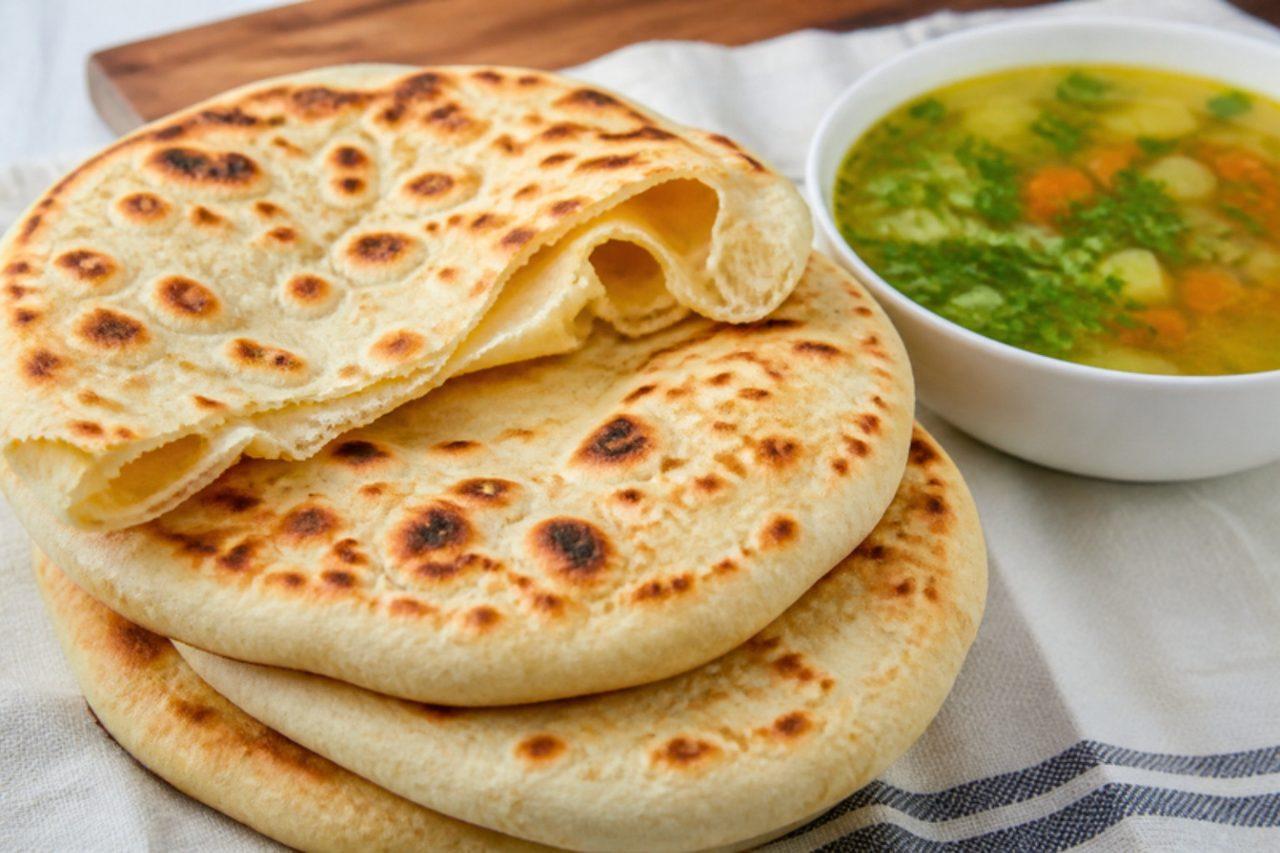
Saluf is the everyday bread of Yemenite Israelis, slapped onto a hot pan or taboon in Rosh HaAyin and Sha'arayim in Rehovot and eaten with marak temani, hilbe and zhug. It is soft and blistered, thicker than pita and with no pocket, made to tear and dunk. Home cooks often roll it too thin, which gives a cracker; it should be about 1 cm thick so it stays pillowy. Chef's tip: cook it under a lid on a very hot dry pan for the first minute, which traps steam and puffs it the way a taboon does.
 Israeli
