
AI-generated image
Millet mochi (abai)
Pork-filled millet dumplings
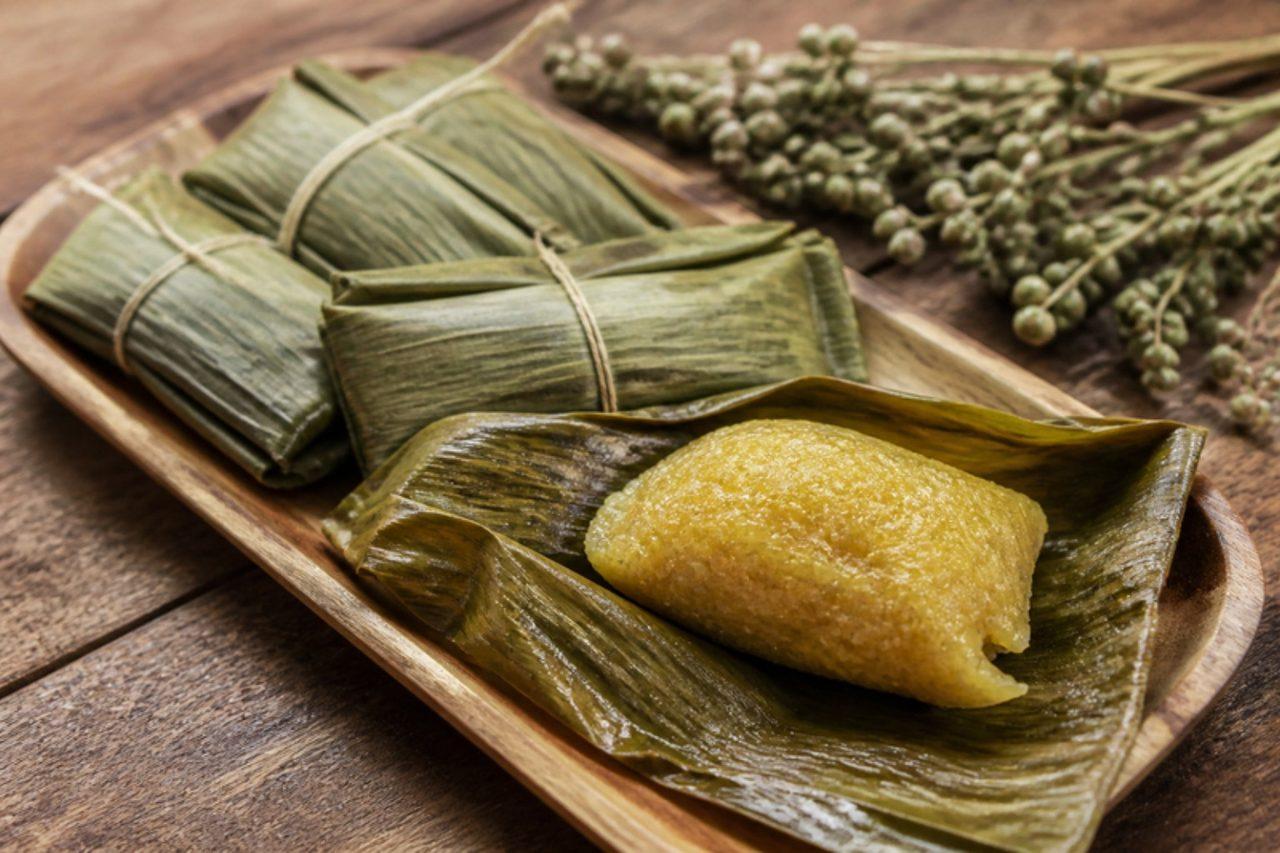
Abai (阿拜): Paiwan and Rukai leaf-wrapped millet dough with a pork filling, steamed until sticky


Paiwan and Rukai families in the mountains of Pingtung and Taitung make abai for harvest festivals, weddings and visitors, and roadside stalls in southern Taiwan sell them warm, still in their leaves. A sticky dough of millet is spread on an inner leaf, wrapped around a seasoned pork filling, then tied in an outer leaf and steamed, so each parcel comes out dense, chewy and gently perfumed by the leaves. Traditionally the inner leaf is djinavu (a soft local leaf) and the outer is shell ginger; banana leaves work well at home. A common mistake is wrapping too loosely, so steam gets in and the dough turns soggy; fold the parcels snugly and tie them firmly. Chef's tip: use wet hands to spread the dough, and keep the layer even, about 1 cm thick, so the centre cooks in the same time as the edges.
- Total time
- 120 min
- Difficulty
- hard
- Serves
- 6
Ingredients
For the dough
- 5 ½ oz foxtail milletrinsed
- 2 cups water
- 9 oz glutinous rice flouror 400 g glutinous millet flour if you can find it, with no rice flour
- ¾ cup warm water
- 1 tsp salt
For the filling
- 10 ½ oz pork shouldercut into 1 cm dice, with some fat
- 1 tsp salt
- ½ tsp ground black pepper
- 2 cloves garlicfinely chopped
For wrapping
- 12 pieces banana leavesabout 25 × 25 cm, wiped clean and softened over a flame or in hot water (or shell ginger leaves)
- 6 pieces kitchen stringabout 50 cm each
Shop this recipe on Amazon
What you'll need
Fresh ingredients (3)
Links open Amazon in a new tab. As an Amazon Associate, WhatToEat.Today earns from qualifying purchases.
Method
0/9 doneStep 1: Put 5 ½ oz foxtail millet and 2 cups water in a pan, bring to the boil, then cover and simmer on a low heat, stirring now and then, until the grains are soft and the pan looks like thick porridge.
25 minStep 2: Meanwhile, mix 10 ½ oz pork shoulder with 1 tsp salt, ½ tsp ground black pepper and 2 cloves garlic. Cover and leave in the fridge until needed.
5 minStep 3: Tip the hot millet into a large bowl and leave it to cool for 10 minutes, until warm rather than hot.
10 minStep 4: Add 9 oz glutinous rice flour and 1 tsp salt to the millet, then work in ¾ cup warm water a little at a time and knead in the bowl until you have a soft, sticky dough that holds together when pressed. Divide into six balls.
5 minStep 5: Lay two 12 pieces banana leaves crosswise, shiny side up. With wet hands, flatten a ball of dough into a 1 cm thick rectangle, about 10 × 14 cm, on the centre of the top leaf.
Step 6: Spoon a sixth of the pork in a line down the middle, then lift the sides of the leaf so the dough closes over the filling. Press the seam together through the leaf.
Step 7: Fold the leaves into a snug, flat parcel, folding the ends under, and tie firmly with 6 pieces kitchen string. Repeat with the rest of the dough and filling.
Step 8: Steam the parcels over boiling water on a medium-high heat until the dough is firm and sticky right through. Top up the water as needed. The pork in the centre must reach 160°F: check one with a probe thermometer pushed through the leaf.
60 minStep 9: Rest for 10 minutes before opening. Serve warm in the leaves, cutting each parcel into thick slices.
10 min
Nutrition per serving
- Calories
- 400 kcal
- Protein
- 15 g
- Carbs
- 58 g
- Fat
- 11 g
- Fibre
- 2 g
Nutrition values are estimates.
KrazyBadal
Good to know
- How long does millet mochi (abai) take?
- About 120 minutes in total: 45 minutes to prepare and 75 minutes to cook.
- How many people does it serve?
- 6 as written. Change the servings above the ingredients and every amount scales to match.
- Is it gluten free?
- Yes, as written. Check the labels on stock, sauces and spice mixes, which sometimes contain gluten.
- What can I use instead of ground black pepper?
- Black peppercorns, freshly ground, same amount.
- What can I use instead of garlic?
- ½ tsp garlic paste or ⅛ tsp garlic powder per clove.
Reviews
No reviews yet. Be the first to cook it.
Rate this recipe
Sign in to rate and review this recipe.
You might also like
Paneer biryaniRice and moong dal in coconut milk
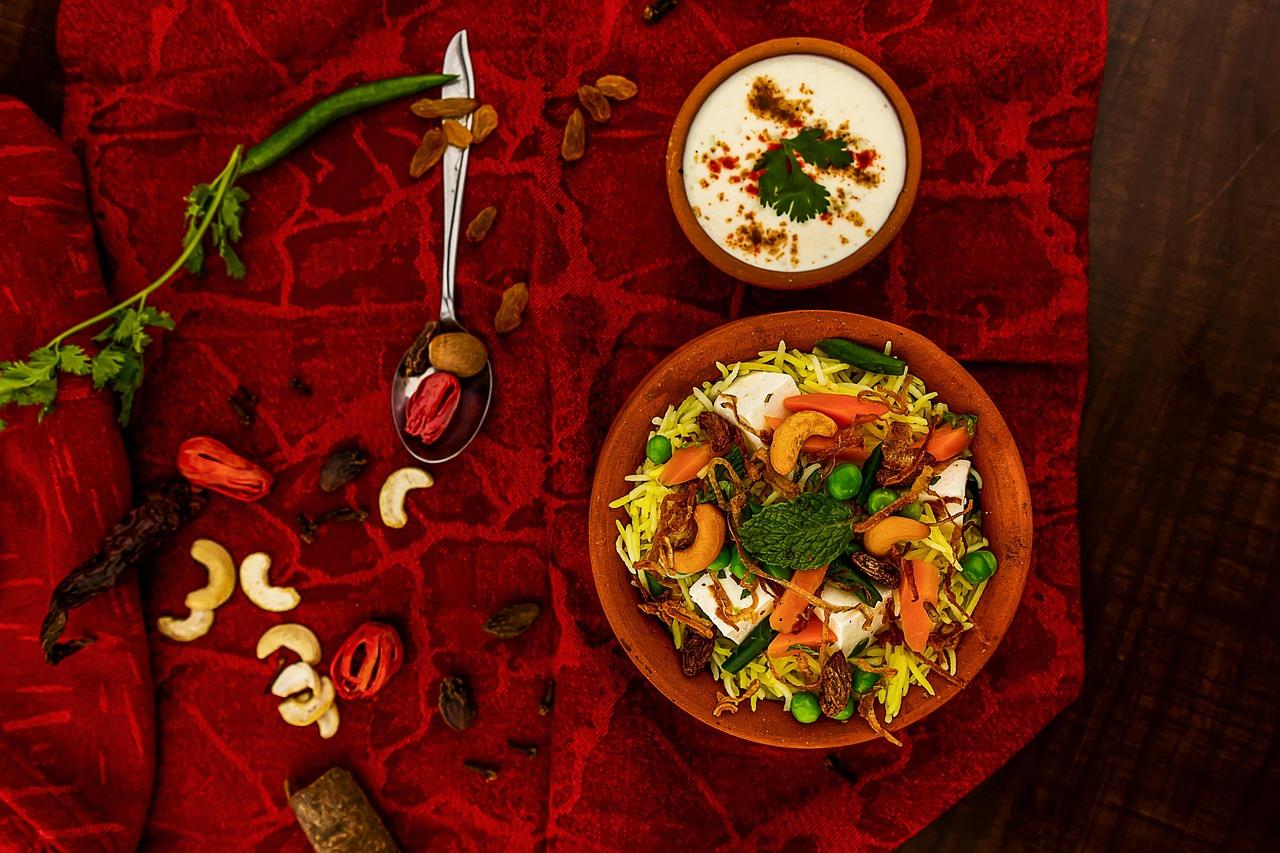
A mild, creamy biryani: rice and husked green gram roasted in ghee, then cooked in coconut milk with peas, carrots, potatoes, peanuts and cashews, and finished with soft fried paneer and a fresh coriander yogurt. Serve hot, garnished with more fried cashews and paneer.
 Indian


Taiwanese grilled corn
At Raohe and Shilin night markets the grilled-corn stalls are easy to find: look for the queue and the smoky, sweet smell. Cobs are par-cooked, then turned slowly over charcoal while the cook brushes them with a dark glaze of sacha sauce, thick soy paste, garlic and chilli, layer after layer, until the kernels are sticky, slightly charred and deeply savoury. It is eaten hot from a paper sleeve while walking the market. Sacha (shacha) sauce, a Taiwanese barbecue paste, usually contains dried fish and shrimp; vegetarian sacha is sold in Asian shops. Contains soy, wheat and fish. Chef's tip: brush thin coats and turn often; one thick coat burns before the corn chars.

Khao kluk kapiShrimp paste rice
Everything on this central Thai plate is arranged in little heaps around a mound of rice tossed with garlic and fermented shrimp paste: sticky caramelised pork (moo wan), threads of sour green mango, shallots, chillies, sliced long beans, crisp dried shrimp and ribbons of thin omelette. You mix a bit of each into every spoonful, so salty, sweet, sour and hot arrive together. It's a favourite at Bangkok's curry-and-rice shops and a clever way to use up yesterday's rice at home; lime wedges and cucumber cool it down. Chef's tip: use day-old jasmine rice straight from the fridge, because freshly cooked rice clumps and smears the shrimp paste instead of coating each grain.
 Thai