
AI-generated image
Pan de agua
Pan de agua: crusty Puerto Rican water bread for early mornings


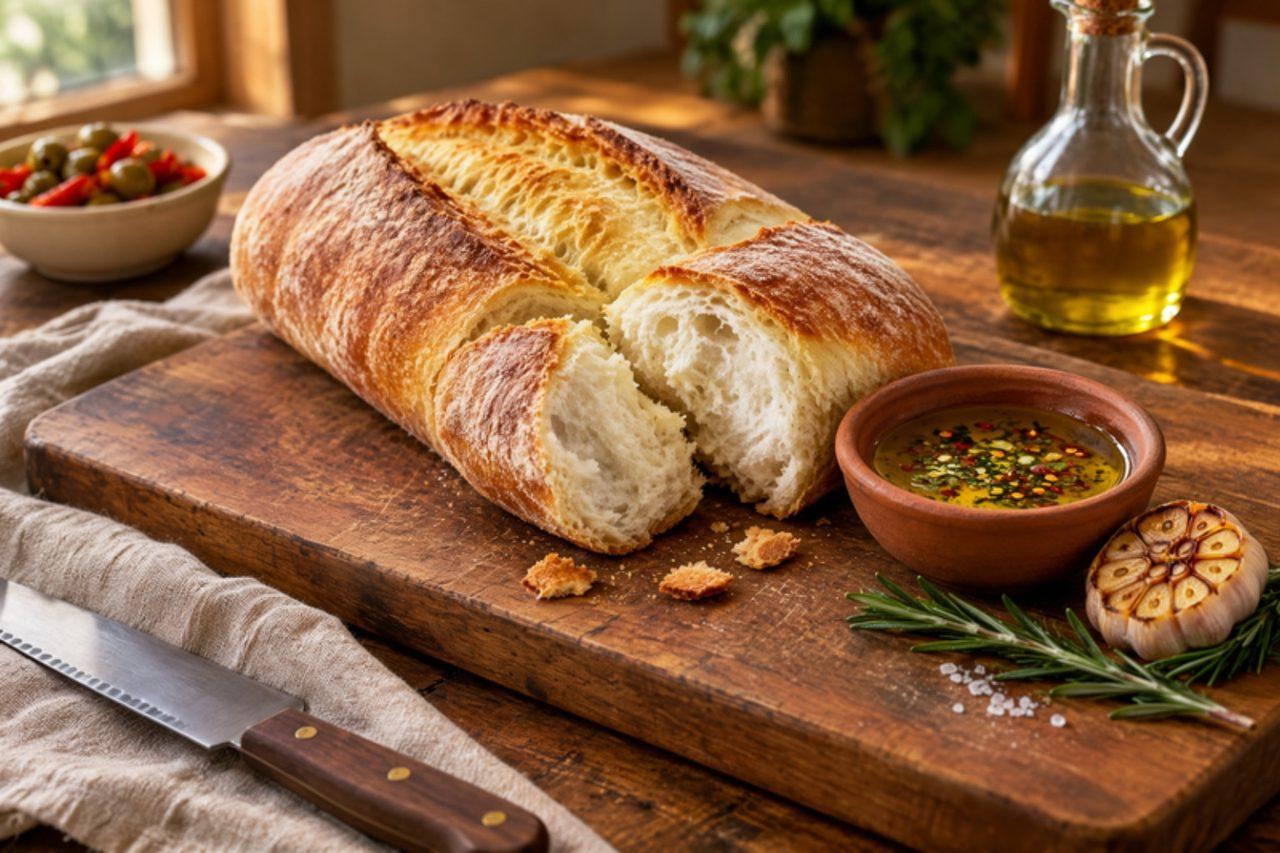
In San Juan, Ponce and every small town in between, the panadería opens before sunrise and people line up for long loaves of pan de agua, a thin-crusted, airy white bread made with only flour, water, yeast, salt and a pinch of sugar. Torn warm, buttered and dunked in café con leche, it is the island's breakfast. The trick is steam: the dough is brushed with water and baked over a tray of hot water, which gives the light, crackly crust. The common mistake is adding too much flour while kneading; a sticky dough makes the open, airy crumb. Chef's tip: let the shaped loaves rise in a cold oven above a tray of just-boiled water, then remove them while the oven heats; the warm, humid air gives a fast, even rise.
- Total time
- 180 min
- Difficulty
- medium
- Serves
- 8
Ingredients
- 1 ½ cups warm water
- ¼ oz instant dried yeast1 sachet
- 1 tbsp sugar
- 1 ⅓ lb strong white bread flourplus a little for shaping
- 2 tsp salt
- 2 tbsp cornmealfor the tray
- 3 tbsp waterfor brushing
Shop this recipe on Amazon
What you'll need
Spices & pantry
Links open Amazon in a new tab. As an Amazon Associate, WhatToEat.Today earns from qualifying purchases.
Method
0/9 doneStep 1: Stir ¼ oz instant dried yeast and 1 tbsp sugar into 1 ½ cups warm water and leave for 5 minutes until foamy.
5 minStep 2: Add 1 ⅓ lb strong white bread flour and 2 tsp salt and mix to a shaggy dough. Knead for 10 minutes until smooth, stretchy and still slightly tacky.
10 minStep 3: Cover and leave in a warm place for about 1 hour, until doubled.
60 minStep 4: Turn out, divide in two and shape each into a tight 35 cm baton by folding the edges into the centre and rolling.
Step 5: Scatter 2 tbsp cornmeal over a large baking tray and set the loaves on it. Put the tray in a cold oven on the middle shelf, with a roasting tin of just-boiled water on the shelf below. Close and leave for 45 minutes, until puffy and almost doubled.
45 minStep 6: Take out the loaves (leave the water in), and heat the oven to 400°F (350°F fan).
Step 7: Cut one long slash, 1 cm deep, down each loaf and brush all over with 3 tbsp water.
Step 8: Bake for 25–30 minutes, brushing with water again after 10 minutes, until deep golden and hollow-sounding when tapped underneath.
30 minStep 9: Cool on a rack for 15 minutes; eat warm with butter or margarine and café con leche.
Nutrition per serving
- Calories
- 220 kcal
- Protein
- 7 g
- Carbs
- 44 g
- Fat
- 1 g
- Fibre
- 2 g
Nutrition values are estimates.
KrazyBadal
Good to know
- How long does pan de agua take?
- About 180 minutes in total: 150 minutes to prepare and 30 minutes to cook.
- How many people does it serve?
- 8 as written. Change the servings above the ingredients and every amount scales to match.
- Is it vegan?
- Yes. It has no meat, fish, dairy or eggs.
- What can I use instead of sugar?
- Caster sugar, same amount.
- What can I use instead of strong white bread flour?
- Plain flour, same amount (the dough will be softer and rise a little less).
Reviews
No reviews yet. Be the first to cook it.
Rate this recipe
Sign in to rate and review this recipe.
You might also like
Flan de queso
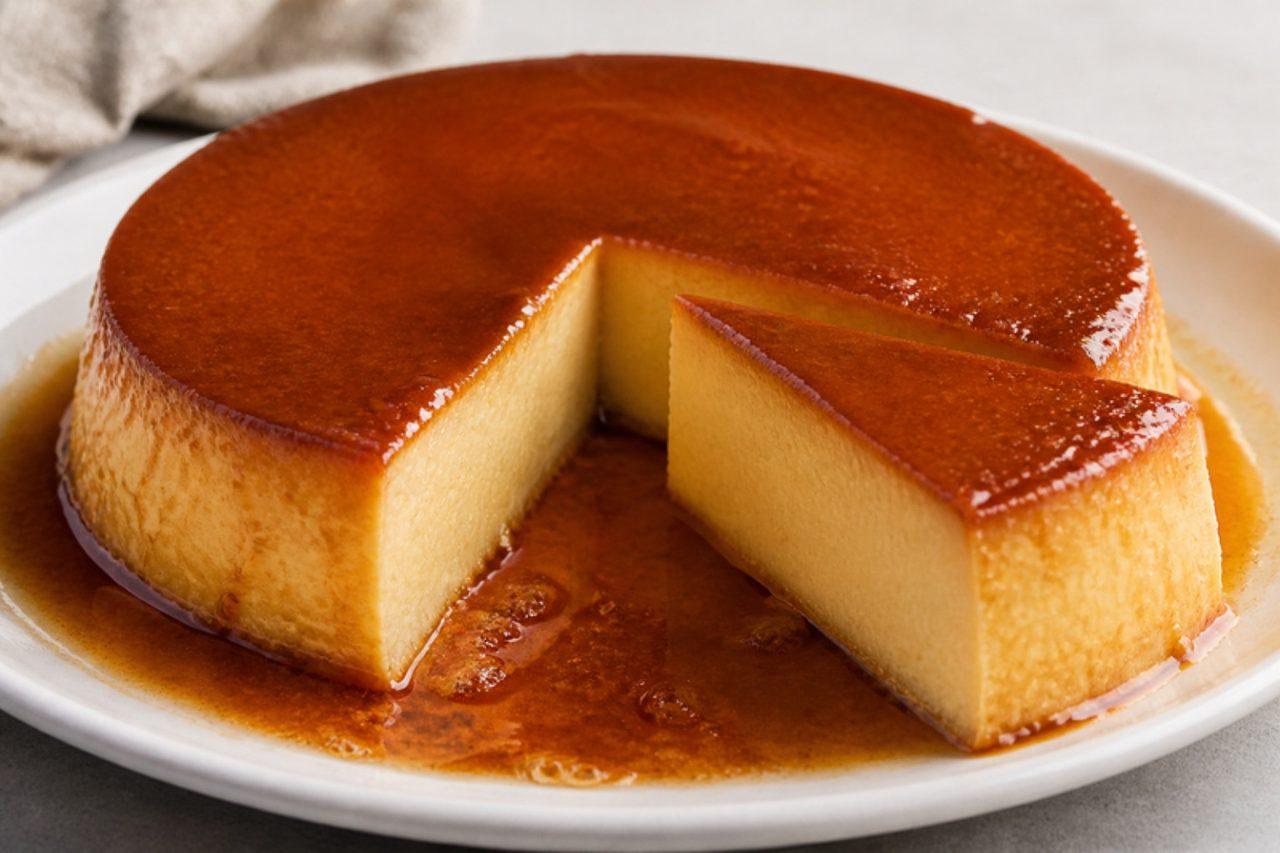
Denser and tangier than a plain egg flan, flan de queso is the dessert Puerto Rican families bake for birthdays and Nochebuena, often a day ahead so it can chill overnight. Cream cheese is blended with evaporated and condensed milk and eggs, then baked slowly in a water bath on a layer of amber caramel, so it turns out glossy, sliceable and somewhere between a flan and a cheesecake. The common mistake is baking it too hot, which makes it puff, crack and weep; low heat and a water bath keep it silky. Chef's tip: take the caramel to the colour of a dark copper coin, as a pale caramel tastes only sweet and a bitter edge balances the rich cheese.

Dominican berenjena guisada
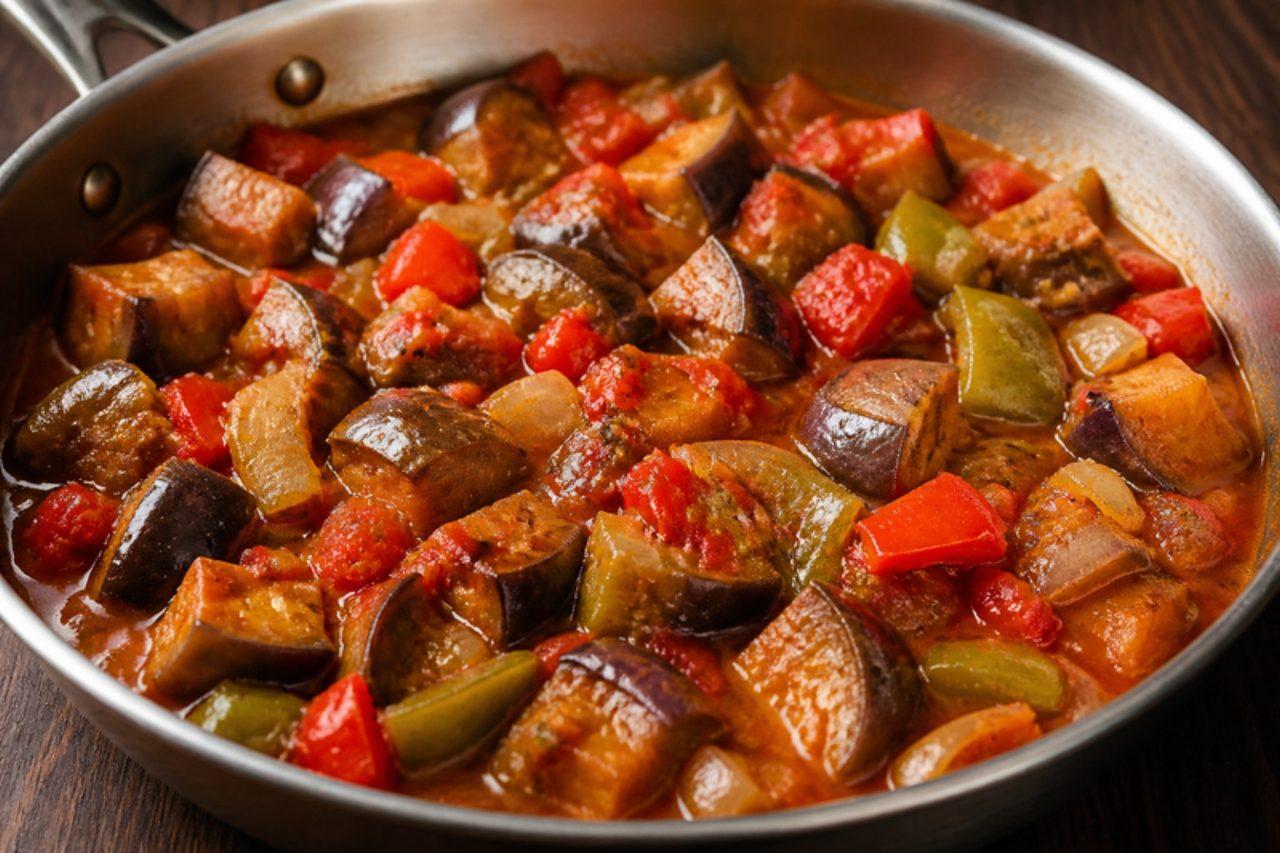
Dominican home cooks make berenjena guisada as a weekday side next to white rice and beans, the aubergine stewed down with tomato, sweet peppers and plenty of dried oregano into a soft, savoury guiso. It is light, quick and good hot or at room temperature. The common mistake is adding all the water at the start, which boils the aubergine grey; let it soak up the oil and sofrito first, then add liquid a little at a time. Chef's tip: rub the dried oregano between your palms as it goes in, to release the oils; Dominican cooks swear by it.

Dominican yaniqueques
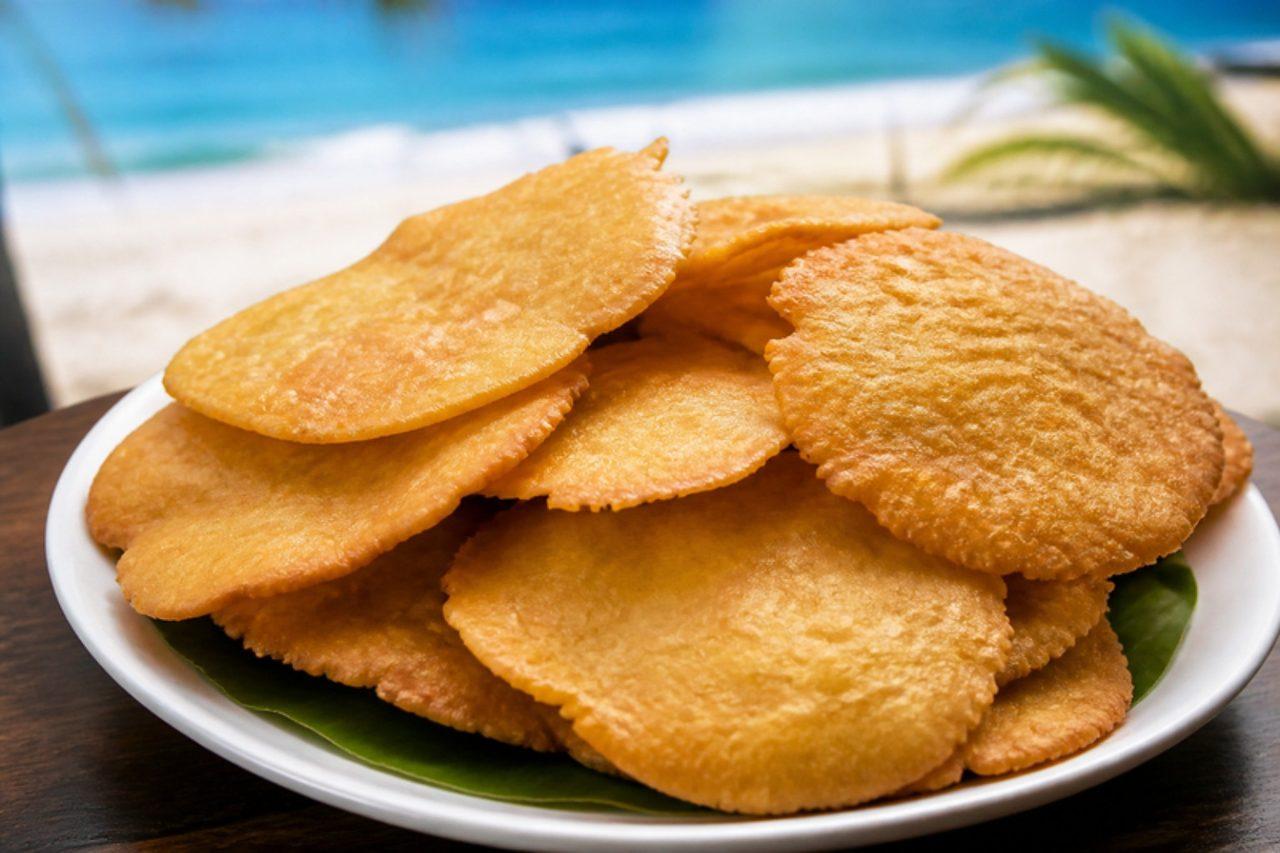
Boca Chica, just east of Santo Domingo, is where vendors walk the sand with trays of yaniqueques (the name comes from "johnny cakes"): wide, thin discs of dough fried until they puff, blister and crack like a cracker, sprinkled with salt or sugar and eaten with fried fish and a cold drink. The dough is just flour, baking powder, salt and water with a spoon of oil. The common mistake is rolling them too thick, which gives a bready fritter instead of a shatter-crisp one. Chef's tip: prick each disc a few times with a fork before frying so it blisters evenly instead of ballooning.