
Pempek
Fish and tapioca cakes
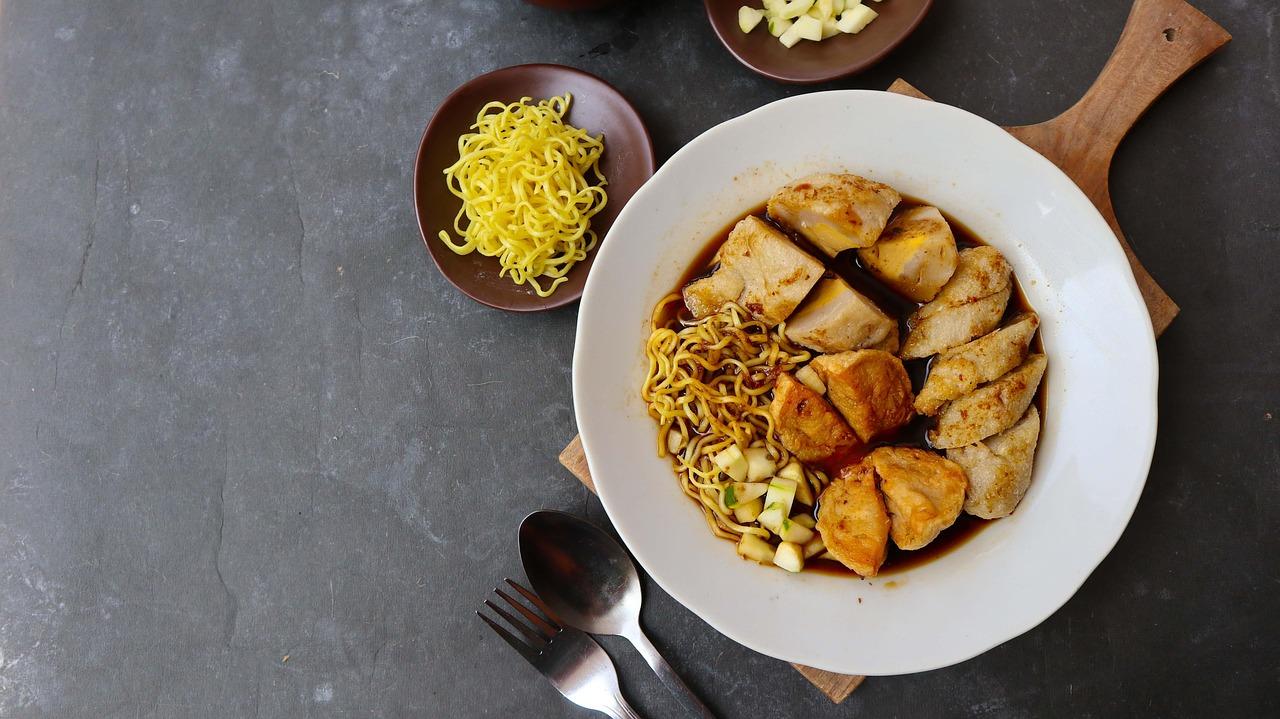
Pempek — Palembang fish and tapioca cakes in sweet-sour cuko
 Indonesian
Palembang in South Sumatra is pempek country: shops line the streets selling these chewy fish cakes by the dozen, and visitors fly home with boxes of them in their luggage. Fresh fish is worked with tapioca starch into a dough, shaped into logs, poached, then sliced and fried until blistered and golden outside while staying springy within. The real star is cuko, a thin, dark, sweet-sour-hot sauce of palm sugar, tamarind, garlic and chilli that is poured over everything, ideally with diced cucumber and a few yellow noodles. People eat it any time of day as a snack, often sipping the cuko straight from the bowl. Chef's tip: make the cuko first; it tastes best after resting for an hour or more.
- Total time
- 75 min
- Difficulty
- medium
- Serves
- 6
Ingredients
For the cuko
- 7 oz palm sugarchopped, or dark brown sugar
- 1 ¾ cups water
- 1 tbsp tamarind paste
- 6 cloves garlic
- 8 bird's eye chilliesfewer for a milder sauce
- 1 tsp salt
- 1 tbsp white vinegar
- 1 tbsp dried shrimp (optional)ground
For the pempek
- 1 ⅛ lb skinless white fish filletsSpanish mackerel, cod or haddock, chilled
- ¾ cup iced water
- 2 tsp salt
- 1 tsp sugar
- 12 ½ oz tapioca starchplus extra for your hands
- 2 cups vegetable oilfor frying
To serve
- 1 cucumberfinely diced
- 5 ½ oz cooked yellow noodles (optional)
Shop this recipe on Amazon
Spices & pantry
Fresh ingredients (3)
Links open Amazon in a new tab. As an Amazon Associate, WhatToEat.Today earns from qualifying purchases.
Method
0/9 doneStep 1: Put 7 oz palm sugar, 1 ¾ cups water and 1 tbsp tamarind paste in a small pan and simmer over a medium heat for 10 minutes until the sugar has dissolved and the sauce is dark.
10 minStep 2: Pound 6 cloves garlic and 8 bird's eye chillies to a rough paste, stir it into the pan with 1 tsp salt, 1 tbsp white vinegar and 1 tbsp dried shrimp and simmer for 5 minutes more. Leave to cool; it will be thin, like a dressing.
5 minStep 3: On a board kept for raw fish, cut 1 ⅛ lb skinless white fish fillets into chunks and blend with ¾ cup iced water, 2 tsp salt and 1 tsp sugar for 1–2 minutes until smooth, pale and sticky.
3 minStep 4: Scrape it into a large bowl and add 12 ½ oz tapioca starch a third at a time, folding with a spatula and then your hand just until no dry starch shows. Don't knead it like bread; overworked dough cooks up hard and rubbery.
3 minStep 5: Dust your hands with tapioca and roll the dough into 6 logs about 3 cm thick. It should feel soft and slightly tacky, like play dough.
Step 6: Bring a large pot of water to a gentle simmer. Lower in the logs and cook for 10–12 minutes, until they float and feel firm, then give them 2 minutes more so the fish is fully cooked. Lift out with a slotted spoon and drain on a rack.
14 minStep 7: Cool the logs for 10 minutes, then slice them on the diagonal about 1.5 cm thick.
10 minStep 8: Heat 2 cups vegetable oil in a wok or deep pan to 350°F. Fry the slices in batches for 3–4 minutes, until golden and blistered, and drain on kitchen paper. Hot oil can spit, so lower them in gently.
8 minStep 9: Pile the pempek in shallow bowls with 5 ½ oz cooked yellow noodles if using, scatter with 1 cucumber and pour over plenty of cuko.
Nutrition per serving
- Calories
- 450 kcal
- Protein
- 18 g
- Carbs
- 76 g
- Fat
- 9 g
- Fibre
- 1 g
Nutrition values are estimates.
KrazyBadal
Good to know
- How long does pempek take?
- About 75 minutes in total: 35 minutes to prepare and 40 minutes to cook.
- How many people does it serve?
- 6 as written. Change the servings above the ingredients and every amount scales to match.
- What can I use instead of palm sugar?
- Caster sugar, same amount.
- What can I use instead of garlic?
- ½ tsp garlic paste or ⅛ tsp garlic powder per clove.
Reviews
No reviews yet. Be the first to cook it.
Rate this recipe
Sign in to rate and review this recipe.
You might also like

Sayur lodehVegetables in coconut milk
Sayur lodeh is everyday cooking in Central Java, made in big pots in Solo and Semarang kitchens and ladled over rice, with lontong rice cakes at Lebaran, or alongside opor and sambal goreng on festive tables. It's soupy rather than thick: a fragrant broth of coconut milk, galangal, lemongrass and lime leaf that carries chunks of aubergine, long beans, chayote and sweetcorn, plus tempeh and tofu to make it a meal. The flavour is mellow and slightly sweet, so the heat comes from sambal on the side. Chef's tip: keep the pot at a gentle simmer once the coconut milk goes in and stir now and then — a rolling boil splits the coconut milk into oily curds.



Yaki onigiriGrilled rice balls
Yaki onigiri (焼きおにぎり) are rice balls grilled until they form a crisp, toasty crust, then brushed with soy sauce glaze. They are eaten all over Japan, at izakaya, at barbecues and from the freezer section, as a snack or with miso soup. The inside stays soft and steamy while the outside crackles. Best eaten hot, straight from the pan. Chef's tip: let the shaped rice balls dry for 10 minutes before they go in the pan. A drier surface forms a better crust and won't stick, and the glaze goes on only at the end so it doesn't burn.
 Japanese
Taiwanese grilled corn
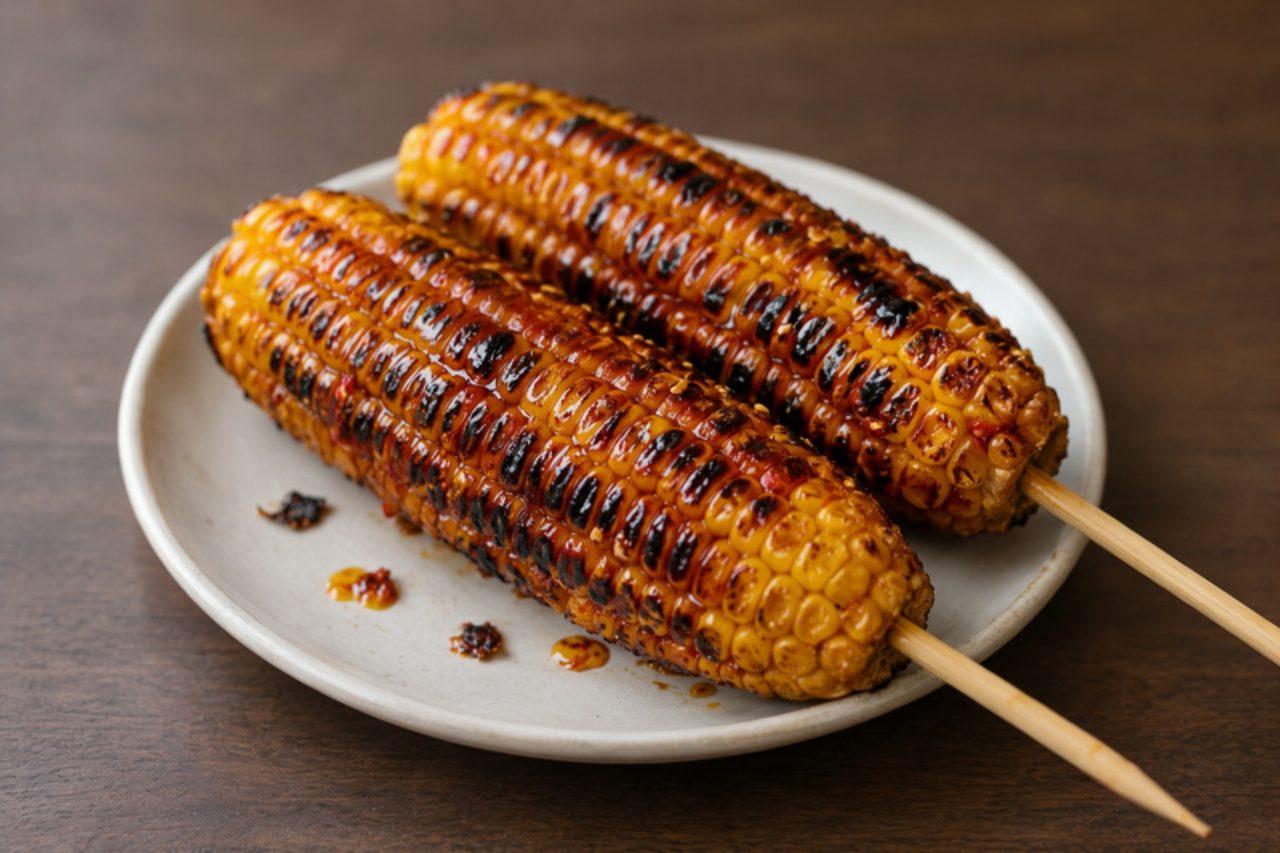
At Raohe and Shilin night markets the grilled-corn stalls are easy to find: look for the queue and the smoky, sweet smell. Cobs are par-cooked, then turned slowly over charcoal while the cook brushes them with a dark glaze of sacha sauce, thick soy paste, garlic and chilli, layer after layer, until the kernels are sticky, slightly charred and deeply savoury. It is eaten hot from a paper sleeve while walking the market. Sacha (shacha) sauce, a Taiwanese barbecue paste, usually contains dried fish and shrimp; vegetarian sacha is sold in Asian shops. Contains soy, wheat and fish. Chef's tip: brush thin coats and turn often; one thick coat burns before the corn chars.
 Taiwanese