
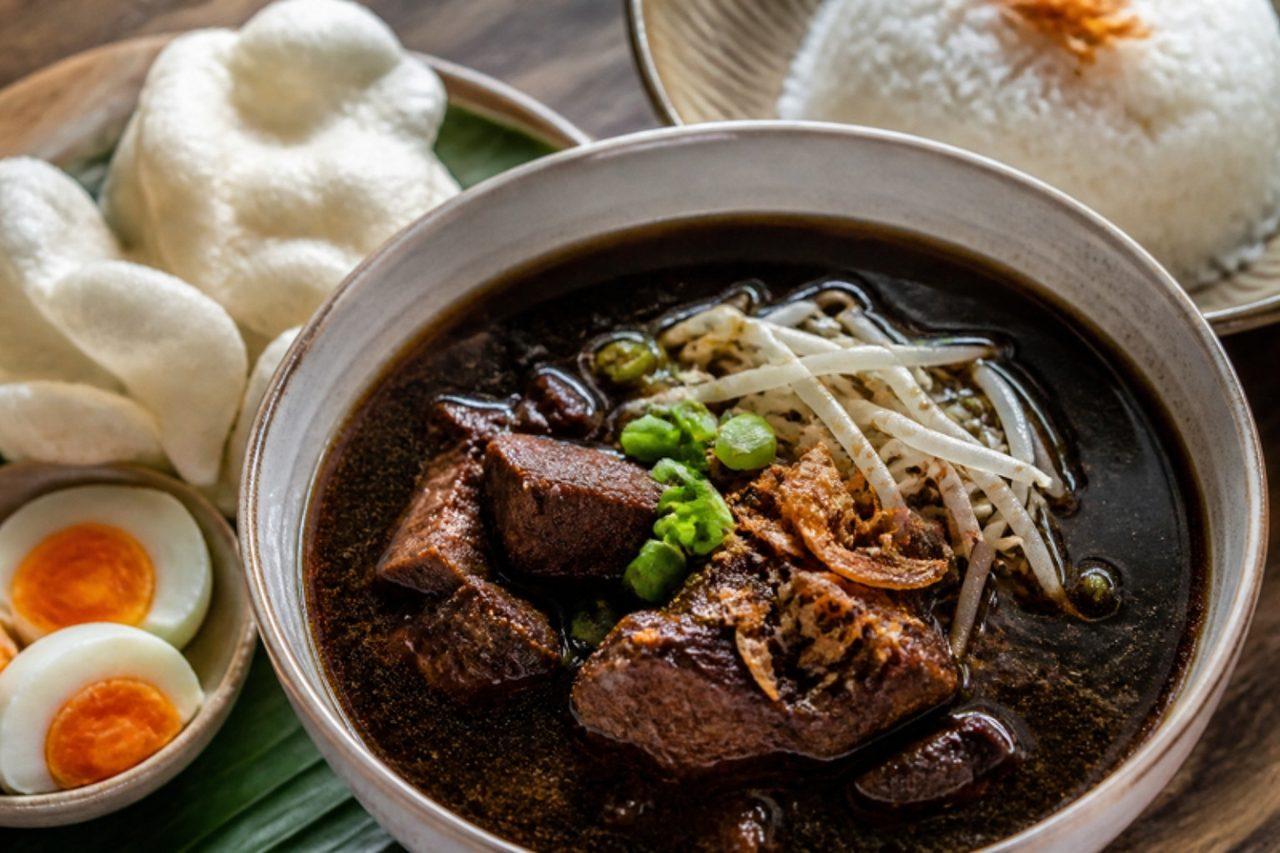
AI-generated image
Rawon
Rawon — East Javanese black beef soup coloured with keluak nuts

Nothing else on the table looks like rawon: a beef soup as dark as strong coffee, served in Surabaya from breakfast through to the late-night warungs that stay open after the football. Its colour and flavour come from keluak (kluwek), the fermented kernel of a tropical tree nut, which tastes earthy and faintly bitter, somewhere between black olive, cocoa and mushroom. Tender beef cubes swim in the broth, and it's served with rice, short crunchy bean sprouts, a salted duck egg and prawn crackers for crunch. Raw keluak contains a natural poison and is only safe after long processing, so always buy ready-prepared kluwek nuts from an Asian grocer. Chef's tip: crack one nut first and taste a crumb; good flesh is moist, black and smells chocolatey, while sour or dry, pale flesh should be thrown away.
- Total time
- 120 min
- Difficulty
- medium
- Serves
- 6
Ingredients
For the beef
For the paste
Aromatics and seasoning
To serve
Method
0/8 doneStep 1: Put 1 ¾ lb beef shin or brisket in a large pot with cold water to cover and bring to the boil over a high heat. Boil 5 minutes, drain and rinse. Keep a separate board for the raw beef.
8 minStep 2: Return the beef to the clean pot with 10 ½ cups water. Bring to the boil, skim, then simmer gently, half covered, for 60 minutes.
60 minStep 3: Meanwhile, soak the scooped-out 6 kluwek (keluak) nuts flesh in 3 tbsp hot water for 10 minutes until soft. Discard any piece that smells sour or looks pale and dry.
10 minStep 4: Blend the soaked kluwek with 8 shallots, 5 cloves garlic, 2 large red chillies, 4 candlenuts, 1 ⅛ in galangal, 1 ⅛ in fresh ginger, ¾ in fresh turmeric and 1 tsp coriander seeds to a smooth, very dark paste.
3 minStep 5: Heat 3 tbsp vegetable oil in a frying pan over a medium-low heat and fry the paste with 2 stalks lemongrass, 5 makrut lime leaves and 3 Indonesian bay leaves (daun salam) for 8–10 minutes, stirring, until it is glossy, almost black and smells toasty.
10 minStep 6: Lift the beef out and cut it into 2 cm cubes. Stir the fried paste into the broth with 2 tsp salt and 1 tbsp palm sugar, return the beef and simmer for 25–30 minutes until the meat is very tender and the soup is inky black.
30 minStep 7: Taste and adjust; it should be savoury and earthy with only a faint bitterness. If it tastes bitter, you've probably used too much kluwek — add a little more salt and sugar rather than more paste.
Step 8: Blanch 5 ½ oz bean sprouts in boiling water for 20 seconds and drain. Serve the soup in bowls with 6 portions steamed rice alongside, topped with bean sprouts and 3 spring onions, with 3 salted duck eggs, 1 handful prawn crackers and 4 tbsp sambal terasi on the table.
Nutrition per serving
- Calories
- 560 kcal
- Protein
- 36 g
- Carbs
- 52 g
- Fat
- 22 g
- Fibre
- 4 g
Nutrition values are estimates.
KrazyBadal
Good to know
- How long does rawon take?
- About 120 minutes in total: 25 minutes to prepare and 95 minutes to cook.
- How many people does it serve?
- 6 as written. Change the servings above the ingredients and every amount scales to match.
- Is it gluten free?
- Yes, as written. Check the labels on stock, sauces and spice mixes, which sometimes contain gluten.
- What can I use instead of shallots?
- Half an onion per 2 shallots.
- What can I use instead of garlic?
- ½ tsp garlic paste or ⅛ tsp garlic powder per clove.
Reviews
No reviews yet. Be the first to cook it.
Rate this recipe
Sign in to rate and review this recipe.
You might also like

Soto Banjar
Along the rivers of Banjarmasin in South Kalimantan, breakfast often means soto Banjar eaten at a wooden riverside warung, sometimes after a dawn trip to the floating market. Unlike the turmeric sotos of Java, this broth is pale and clear, perfumed with the sweet spices that traders brought up the river centuries ago: cinnamon, cloves, star anise, cardamom and nutmeg. Shredded chicken, glass noodles, carrot and a boiled egg go into the bowl with rice cakes, and lime and a little chilli sharpen it at the table. Chef's tip: toast the whole spices in the pan for a minute before the paste goes in; it brings out their sweetness without the dusty edge of ground spice.


Sayur lodeh
Sayur lodeh is everyday cooking in Central Java, made in big pots in Solo and Semarang kitchens and ladled over rice, with lontong rice cakes at Lebaran, or alongside opor and sambal goreng on festive tables. It's soupy rather than thick: a fragrant broth of coconut milk, galangal, lemongrass and lime leaf that carries chunks of aubergine, long beans, chayote and sweetcorn, plus tempeh and tofu to make it a meal. The flavour is mellow and slightly sweet, so the heat comes from sambal on the side. Chef's tip: keep the pot at a gentle simmer once the coconut milk goes in and stir now and then — a rolling boil splits the coconut milk into oily curds.


Miso soup
Miso soup (味噌汁) is drunk every day in homes all over Japan, at breakfast as well as dinner, beside a bowl of rice. The base is dashi; this vegan version uses kombu and dried shiitake instead of bonito, which gives it a deep, rounded flavour. Silken tofu and wakame seaweed are the classic fillings. It takes ten minutes; just remember not to boil the miso. Chef's tip: add the miso at the very end and never let it boil. Boiling kills the miso's fresh, fermented aroma; Japanese cooks say the soup should only 'smile', with the surface barely trembling.