
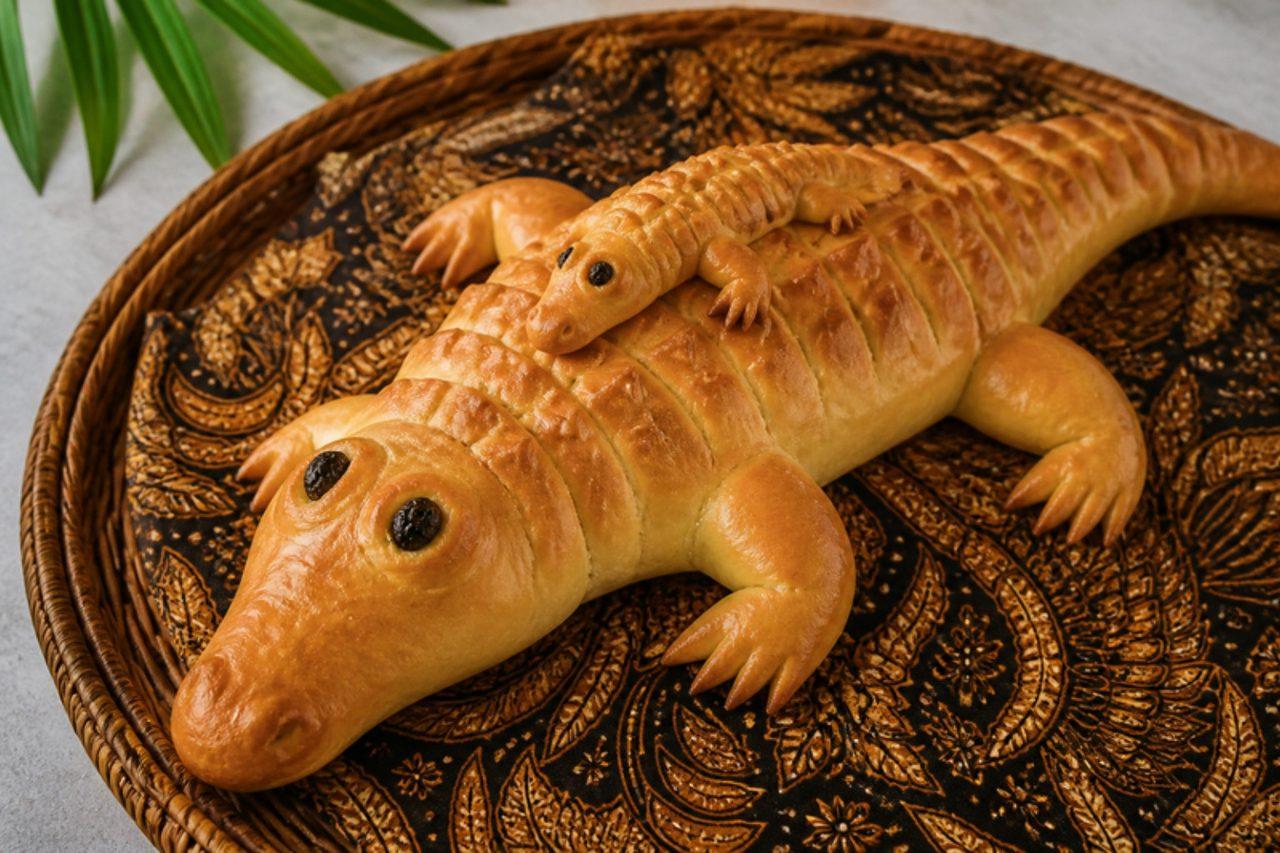
AI-generated image
Roti buaya
Crocodile-shaped bread
Jakarta's crocodile-shaped wedding bread, a symbol of loyalty
 Indonesian
Crocodiles, to the Betawi people of Jakarta, stand for faithfulness: they are said to take one mate for life. So in a Betawi wedding procession the groom's family carries a pair of roti buaya, a large male crocodile bread and a female one, often with a baby crocodile on her back, alongside the other gifts for the bride. Once the ceremony is over the bread is cut and shared among the guests and neighbours. Old-style roti buaya was plain and firm; today's are soft, lightly sweet milk bread, and some are filled with chocolate or kaya. Eat slices with coffee or sweet tea. Snipping the scales too shallowly is a common slip, since they close up as the dough rises; cut decisively at a steep angle. Chef's tip: shape the crocodile straight on the lined tray and build it from one main log, adding only the legs, so it does not crack apart in the oven.
- Total time
- 180 min
- Difficulty
- hard
- Serves
- 12
Ingredients
For the dough
- 1 ⅓ lb strong white bread flour
- ⅓ oz instant dried yeast
- 2 ½ oz sugar
- 1 tsp salt
- 1 ¼ cups whole milklukewarm
- 1 egg
- 2 ⅛ oz buttersoftened
To finish
Shop this recipe on Amazon
Spices & pantry
Fresh ingredients (4)
Links open Amazon in a new tab. As an Amazon Associate, WhatToEat.Today earns from qualifying purchases.
Method
0/10 doneStep 1: Mix 1 ⅓ lb strong white bread flour, ⅓ oz instant dried yeast, 2 ½ oz sugar and 1 tsp salt. Add 1 ¼ cups whole milk and 1 egg and mix to a soft dough.
Step 2: Knead for 5 minutes, then knead in 2 ⅛ oz butter and keep kneading for 10 minutes, until smooth and elastic.
15 minStep 3: Cover and leave in a warm place for 1 hour, until doubled.
60 minStep 4: Knock back and cut off a quarter of the dough for a smaller second crocodile, if you want a pair. Cut 4 small pieces (about 40 g each) from the larger piece for legs.
Step 5: Roll the rest of the large piece into a 45 cm log, thicker at one end. On a large lined tray, flatten the thick end into a head with a pointed snout and taper the other end into a long tail curving to one side.
Step 6: Roll the leg pieces into short sausages, tuck one end under the body on each side and snip 3 toes into the other end. Press in two 4 raisins for eyes. Repeat with the small piece for a little crocodile.
Step 7: With sharp scissors held at a steep angle, snip rows of V-shaped scales all along the back and tail, about 1 cm deep.
Step 8: Cover loosely and prove for 30–40 minutes, until puffy. Heat the oven to 350°F (325°F fan).
35 minStep 9: Brush with 1 egg yolk. Bake the big crocodile for 30–35 minutes (the small one for about 20), until deep golden, the base sounds hollow when tapped and the thickest part reads 88–194°F.
33 minStep 10: Brush with ½ oz butter while hot and cool on the tray for 15 minutes before moving to a rack.
15 min
Nutrition per serving
- Calories
- 270 kcal
- Protein
- 8 g
- Carbs
- 46 g
- Fat
- 6 g
- Fibre
- 2 g
Nutrition values are estimates.
KrazyBadal
Good to know
- How long does roti buaya take?
- About 180 minutes in total: 145 minutes to prepare and 35 minutes to cook.
- How many people does it serve?
- 12 as written. Change the servings above the ingredients and every amount scales to match.
- Is it vegetarian?
- Yes. It has no meat or fish.
- What can I use instead of strong white bread flour?
- Plain flour, same amount (the dough will be softer and rise a little less).
- What can I use instead of sugar?
- Caster sugar, same amount.
Reviews
No reviews yet. Be the first to cook it.
Rate this recipe
Sign in to rate and review this recipe.
You might also like

Sayur lodehVegetables in coconut milk
Sayur lodeh is everyday cooking in Central Java, made in big pots in Solo and Semarang kitchens and ladled over rice, with lontong rice cakes at Lebaran, or alongside opor and sambal goreng on festive tables. It's soupy rather than thick: a fragrant broth of coconut milk, galangal, lemongrass and lime leaf that carries chunks of aubergine, long beans, chayote and sweetcorn, plus tempeh and tofu to make it a meal. The flavour is mellow and slightly sweet, so the heat comes from sambal on the side. Chef's tip: keep the pot at a gentle simmer once the coconut milk goes in and stir now and then — a rolling boil splits the coconut milk into oily curds.



ChipaCheese bread rings
In Paraguay you hear 'chipa, chipa!' called by vendors with big baskets on buses and street corners, and every family bakes it for Holy Week, when chipa is the food of Good Friday. Cassava starch, a little cornmeal, butter, eggs and a lot of hard cheese are kneaded into a dough scented with aniseed, shaped into rings or small rolls and baked in a hot oven, traditionally a domed clay tatakua. It's chewy, crisp outside and best warm with cocido (toasted yerba tea). Chef's tip: the dough should feel soft and slightly greasy; add milk a spoon at a time, as too much makes the chipa spread flat.
 Paraguayan
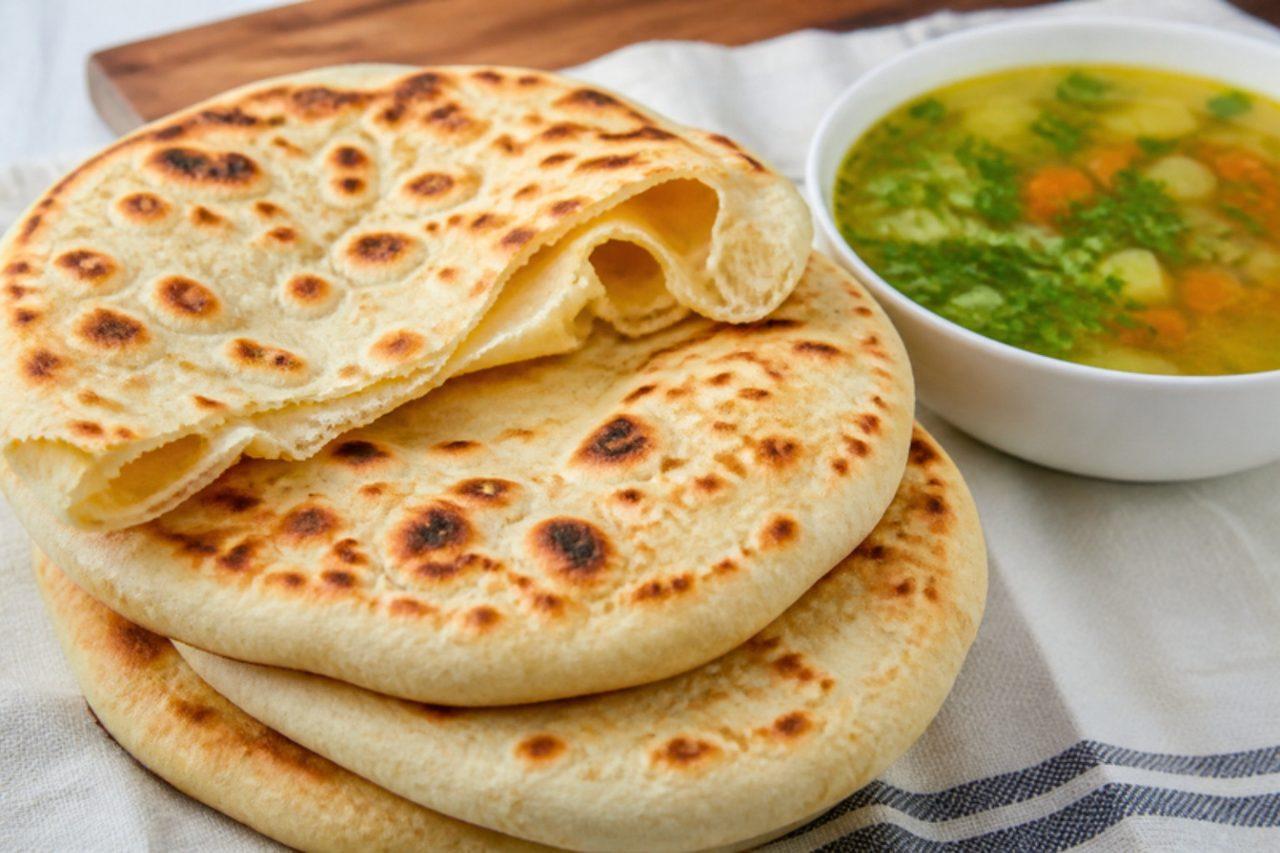
SalufPuffy flatbread
Saluf is the everyday bread of Yemenite Israelis, slapped onto a hot pan or taboon in Rosh HaAyin and Sha'arayim in Rehovot and eaten with marak temani, hilbe and zhug. It is soft and blistered, thicker than pita and with no pocket, made to tear and dunk. Home cooks often roll it too thin, which gives a cracker; it should be about 1 cm thick so it stays pillowy. Chef's tip: cook it under a lid on a very hot dry pan for the first minute, which traps steam and puffs it the way a taboon does.
 Israeli