
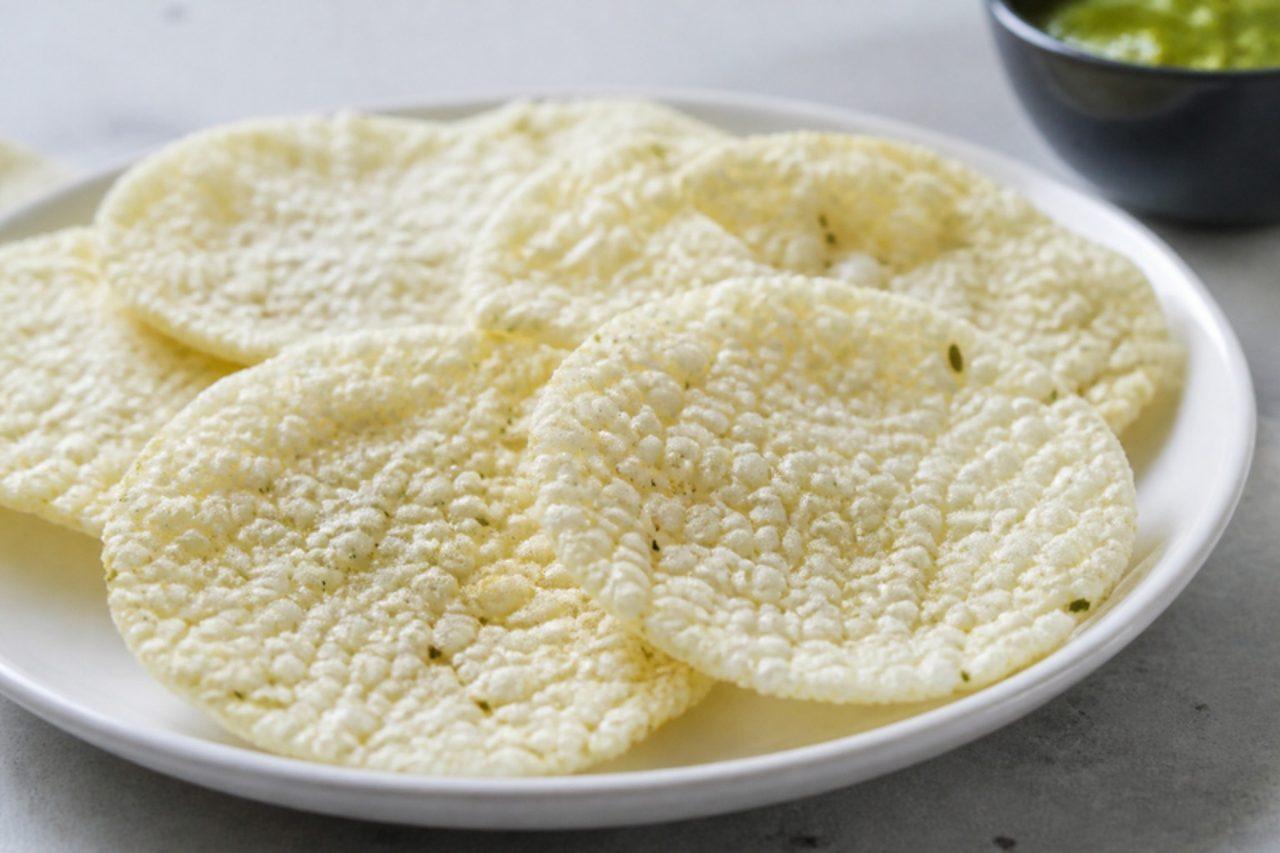
AI-generated image
Sabudana papad
Sago crisps
साबुदाणा पापड: glassy sago papads for Maharashtrian upvas days that fry up white and crisp (plus overnight soaking and 2–3 days in the sun)



When Ashadhi Ekadashi, Navratri or a Monday fast comes round in Pune and Nashik, the upvas plate needs something crunchy, and these sago papads are it. They are made in the hottest weeks of summer: soaked sabudana is boiled into a thick, glassy porridge with cumin, green chilli and rock salt, spooned onto plastic sheets and left in the sun until it turns into thin, translucent discs. In hot oil they expand to nearly double, go snow-white and crackle when you bite. They sit next to sabudana khichdi, varyache tandul (sama rice) with peanut amti, or plain farali potato bhaji. The recipe keeps to fasting rules: no grains, no turmeric or asafoetida, and sendha namak (rock salt) instead of regular salt; fry them in groundnut oil or ghee, as your household allows. Chef's tip: cook the sago until there is not a single white dot left in the pearls; any uncooked centres stay hard and chalky after drying and never puff.
- Total time
- 70 min
- Difficulty
- medium
- Serves
- 12
Ingredients
For the papads
- 5 ½ oz sabudana (sago pearls)rinsed and soaked overnight in 300 ml water
- 4 ¼ cups water
- 1 tsp cumin seeds
- 2 green chilliescrushed to a paste
- 1 tsp sendha namak (rock salt)
To fry
- 1 ¼ cups groundnut oilfor frying
Shop this recipe on Amazon
What you'll need
Spices & pantry
Fresh ingredients (1)
Links open Amazon in a new tab. As an Amazon Associate, WhatToEat.Today earns from qualifying purchases.
Method
0/6 doneStep 1: Drain 5 ½ oz sabudana (sago pearls); the pearls should be swollen and press flat between your fingers.
1 minStep 2: Bring 4 ¼ cups water to the boil in a heavy pan, add the sago, 1 tsp cumin seeds, 2 green chillies and 1 tsp sendha namak (rock salt) and cook over a medium-low heat, stirring often so it doesn't catch.
5 minStep 3: Keep cooking for 15–20 minutes, until every pearl is completely transparent and the mixture is a thick, glossy porridge that falls off the spoon in a ribbon. Common mistake: stopping while white centres remain; they never puff when fried.
20 minStep 4: Lay clean food-safe plastic sheets in the sun and weigh down the corners. Drop a tablespoon of the hot mixture onto the sheet and spread it with the back of the spoon into a thin 8–9 cm circle. Repeat, leaving space between them.
20 minStep 5: Dry for 1 day, then peel the papads off the sheet, turn them over and dry for another 1–2 days, until stiff, glassy and brittle with no soft spots. Bring them in at night.
Step 6: Store in an airtight tin for up to a year. To serve, heat 1 ¼ cups groundnut oil in a kadai over a medium-high heat to about 350°F and fry 2–3 papads at a time for a few seconds, until they puff and turn white. Lift out before they colour and drain on paper.
5 min
Nutrition per serving
- Calories
- 90 kcal
- Protein
- 0 g
- Carbs
- 14 g
- Fat
- 4 g
- Fibre
- 0 g
Nutrition values are estimates.
KrazyBadal
Good to know
- How long does sabudana papad take?
- About 70 minutes in total: 40 minutes to prepare and 30 minutes to cook.
- How many people does it serve?
- 12 as written. Change the servings above the ingredients and every amount scales to match.
- Is it vegan?
- Yes. It has no meat, fish, dairy or eggs.
- Is it gluten free?
- Yes, as written. Check the labels on stock, sauces and spice mixes, which sometimes contain gluten.
- Can I make it ahead?
- Yes. It keeps well, so you can cook it earlier in the day or the day before and reheat it.
- What can I use instead of cumin seeds?
- Ground cumin, three quarters of the amount (add it with the other ground spices, not to hot oil first).
Reviews
No reviews yet. Be the first to cook it.
Rate this recipe
Sign in to rate and review this recipe.
You might also like

SakarpadaSweet fried dough diamonds
Sakarpada (shakarpara) are little sweet diamonds of a rich dough made with ghee, milk and sugar, fried until golden and crunchy. They are a Diwali favourite with tea, and the cubes go into bhusu too. They keep for weeks in an air-tight tin.

Yaki onigiriGrilled rice balls
Yaki onigiri (焼きおにぎり) are rice balls grilled until they form a crisp, toasty crust, then brushed with soy sauce glaze. They are eaten all over Japan, at izakaya, at barbecues and from the freezer section, as a snack or with miso soup. The inside stays soft and steamy while the outside crackles. Best eaten hot, straight from the pan. Chef's tip: let the shaped rice balls dry for 10 minutes before they go in the pan. A drier surface forms a better crust and won't stick, and the glaze goes on only at the end so it doesn't burn.
 Japanese

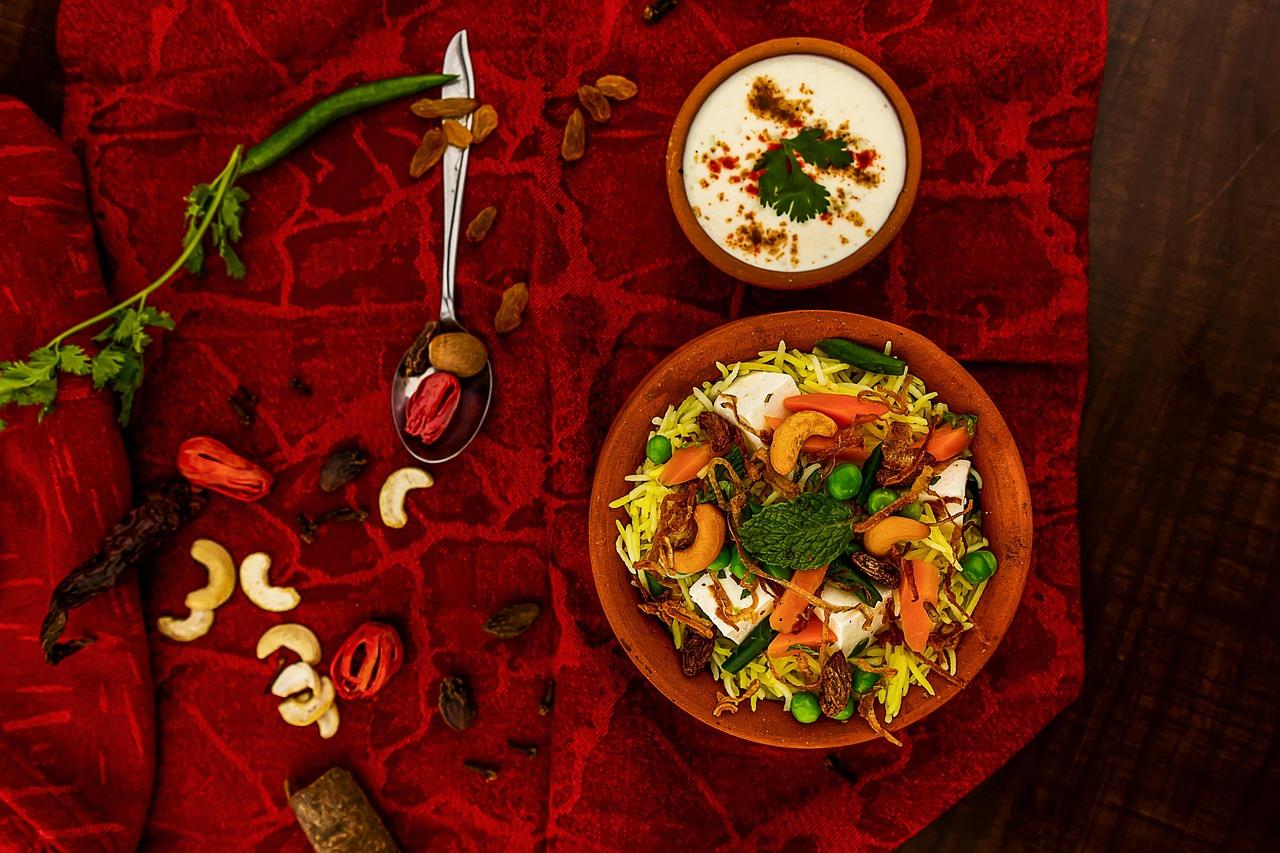
Paneer biryaniRice and moong dal in coconut milk
A mild, creamy biryani: rice and husked green gram roasted in ghee, then cooked in coconut milk with peas, carrots, potatoes, peanuts and cashews, and finished with soft fried paneer and a fresh coriander yogurt. Serve hot, garnished with more fried cashews and paneer.
