
 Korean
 Vegan
Saesongi beoseot bokkeum
King oyster mushroom stir-fry
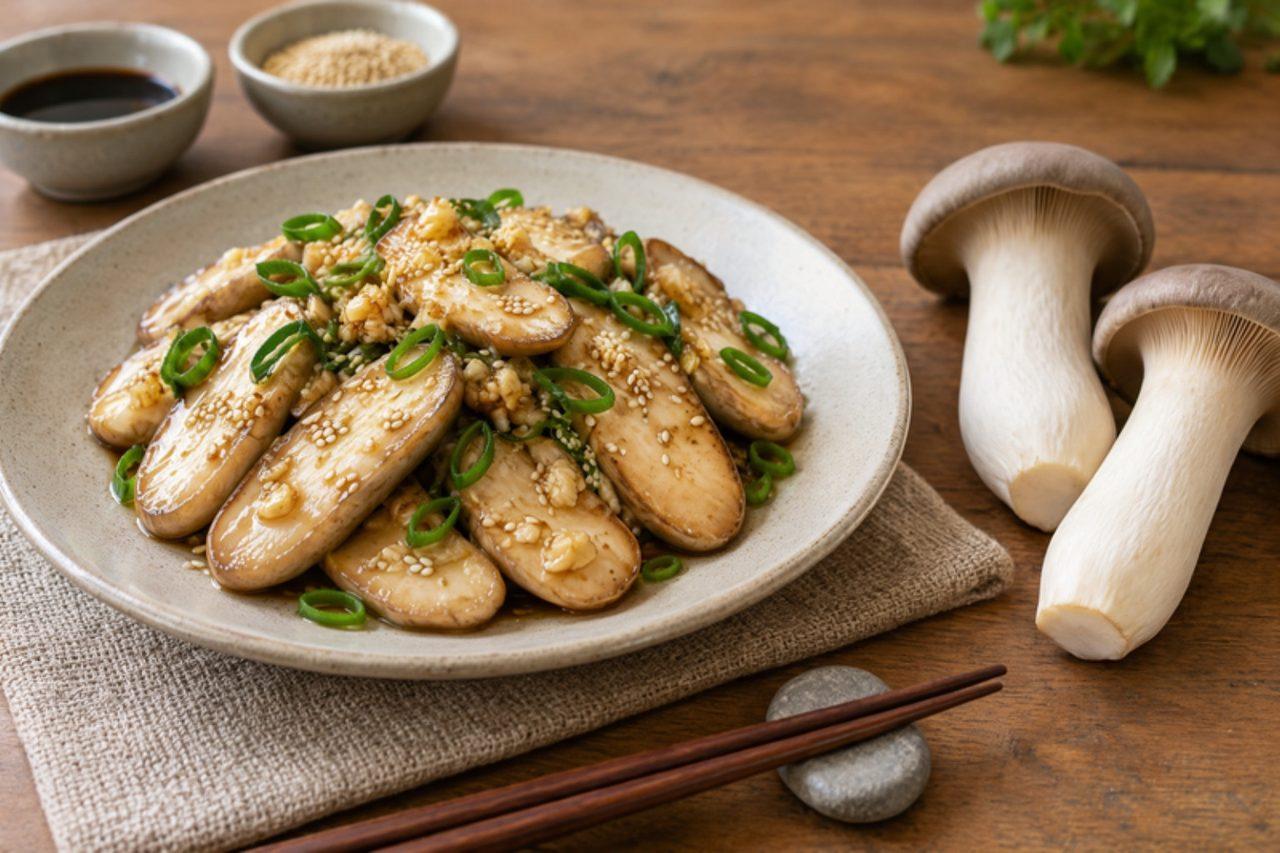
Saesongi beoseot bokkeum (새송이버섯볶음): king oyster mushrooms stir-fried with soy, garlic and spring onion
King oyster mushrooms, saesongi in Korean, are cheap and meaty, and this quick stir-fry is a staple in Korean home kitchens for dinner banchan and next-day dosirak alike. The thick stems turn juicy and almost scallop-like, seasoned with just soy, garlic and spring onion. The common mistake is salting or saucing the mushrooms as soon as they hit the pan, which draws out their water so they stew instead of browning. Chef's tip: let the slices sear undisturbed in a hot pan until golden on one side before you add anything else.
- Prep
- 5 min
- Cook
- 8 min
- Difficulty
- Easy
- Serves
- 3
- Per serving
- 70 kcal
Ingredients
- 10 ½ oz king oyster mushroomsabout 3 large
- 1 tbsp neutral oil
- 2 garlic clovesfinely chopped
- 1 tbsp soy sauce
- 1 spring onionfinely sliced
- 1 tsp toasted sesame oil
- 1 pinch ground black pepper
Shop this recipe on Amazon
Search Amazon for the rest
Fresh ingredients (2)
Links open Amazon in a new tab. As an Amazon Associate we earn from qualifying purchases.
Method
0/5 doneStep 1: Halve 10 ½ oz king oyster mushrooms crossways, then slice lengthways into 5 mm strips.
Step 2: Heat 1 tbsp neutral oil in a large frying pan over a medium-high heat. Lay the mushrooms in one layer and cook for 3 minutes without stirring, until golden underneath.
3 minStep 3: Stir, add 2 garlic cloves and cook for 2 minutes more, until the mushrooms are tender and slightly shrunk.
2 minStep 4: Add 1 tbsp soy sauce and 1 spring onion and toss for 30 seconds. Off the heat, add 1 tsp toasted sesame oil and 1 pinch ground black pepper.
Step 5: Cool before packing into a dosirak; it keeps 3 days in the fridge.
Nutrition per serving
- Calories
- 70 kcal
- Protein
- 3 g
- Carbs
- 7 g
- Fat
- 4 g
- Fibre
- 3 g
Nutrition values are estimates.
KrazyBadal
Good to know
- How long does saesongi beoseot bokkeum take?
- About 13 minutes in total: 5 minutes to prepare and 8 minutes to cook.
- How many people does it serve?
- 3 as written. Change the servings above the ingredients and every amount scales to match.
- Is it vegan?
- Yes. It has no meat, fish, dairy or eggs.
- What can I use instead of king oyster mushrooms?
- Aubergine, diced, same weight.
- What can I use instead of garlic cloves?
- ½ tsp garlic paste or ⅛ tsp garlic powder per clove.
Reviews
No reviews yet. Be the first to cook it.
Rate this recipe
Sign in to rate and review this recipe.
You might also like

TacachoMashed roasted green plantain balls
Tacacho is the breakfast of the Peruvian Amazon, from Tarapoto to Iquitos: green plantains roasted over coals, mashed with fat and salt and shaped into balls. There it comes with cecina (smoked pork) and is mashed with lard and crackling; this vegan tacacho uses good oil and a pinch of smoked paprika for the same savoury, smoky depth. The balls are dense, chewy and starchy, crisp at the edges where the plantain charred, and they are eaten hot with a fiery chilli sauce or alongside stews. Use plantains that are fully green and firm. Chef's tip: mash the plantains while they are still very hot; as green plantain cools its starch sets and it won't bind into a smooth ball.
 Peruvian

DakjukChicken and rice porridge
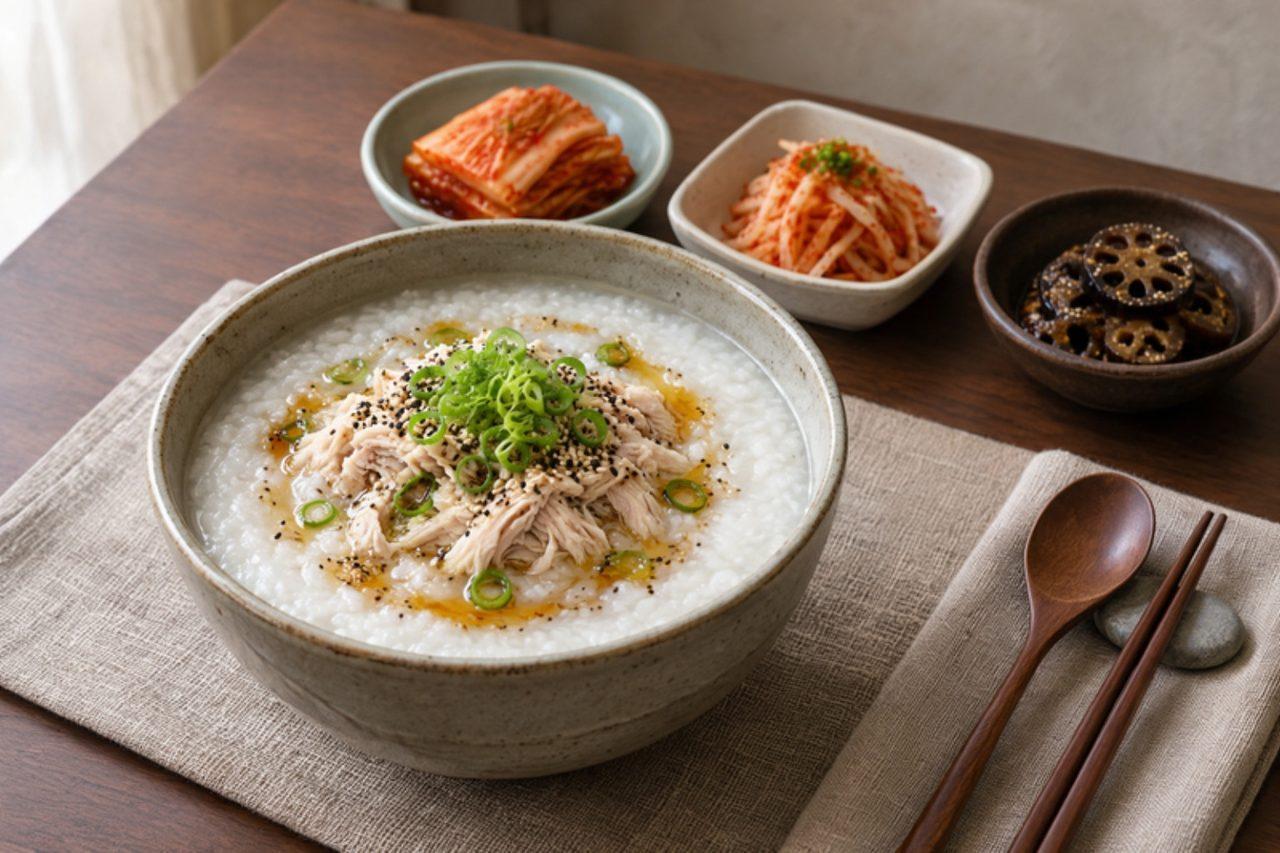
All over Korea, dakjuk is the bowl a mother makes on a cold morning or when someone is under the weather: chicken simmered with garlic and ginger, the meat pulled into shreds, and soaked rice cooked down in the broth until it turns into a soft, savoury porridge finished with sesame oil. It is eaten for breakfast or as a gentle lunch, with a little kimchi on the side. The usual mistake is boiling the chicken hard, which clouds the broth and toughens the meat; keep it at a lazy simmer. Chef's tip: fry the soaked rice in sesame oil for two minutes before the broth goes in, so the grains toast lightly and the porridge tastes nutty rather than flat.
TashmijabiMashed potatoes with stretchy cheese
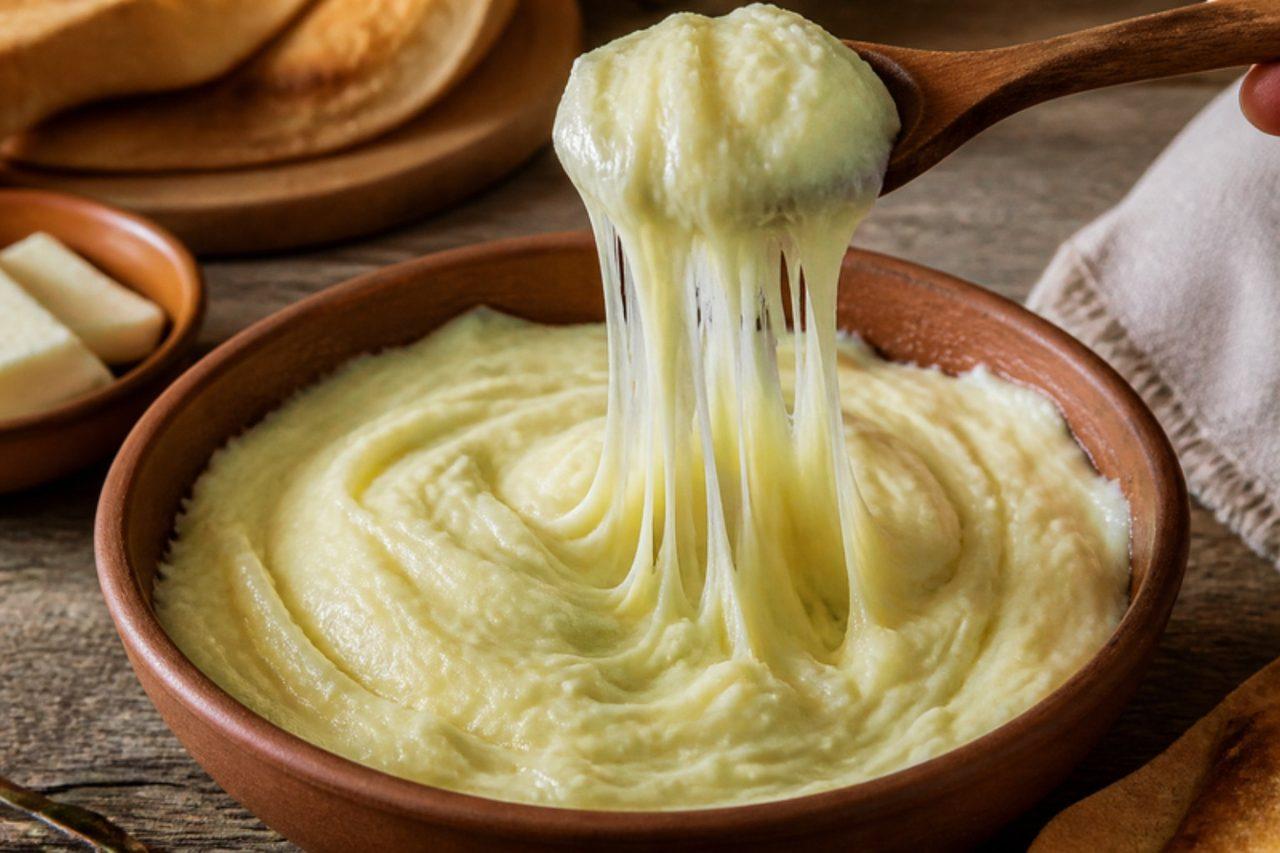
Potatoes grow well in the cold valleys of Svaneti, and tashmijabi is how families around Mestia turn them into a feast dish: they are mashed hot, then beaten with handfuls of young sulguni until the purée becomes glossy and stretches from the spoon in long strands. It is served with grilled meat, kubdari or simply with pickles and Svan salt. A common mistake is letting the potatoes cool before adding the cheese; they must be piping hot for the cheese to melt and stretch. Chef's tip: keep the pan on a low heat while you beat, and use a firm wooden spoon. Most sulguni uses animal rennet; choose a vegetarian one or use mozzarella.
 Georgian