
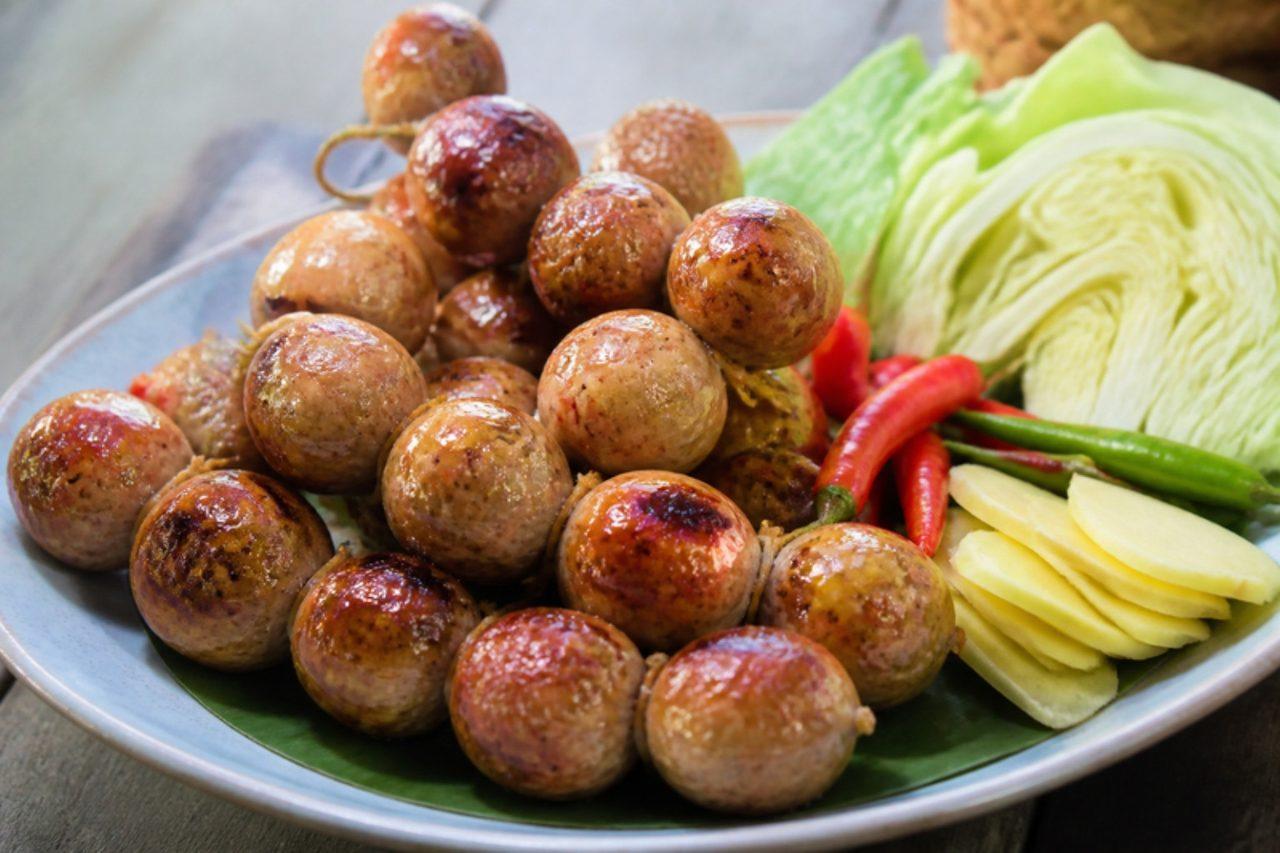
AI-generated image
Sai krok Isan
Sour pork and rice sausage
ไส้กรอกอีสาน (sai krok Isan) — sour pork-and-rice sausages, a safe fridge-cured version


Strung in little round links and grilled at night markets from Khon Kaen to Udon Thani, these garlicky sausages are tangy from fermentation, with soft rice grains in a juicy pork filling. Vendors serve them with fresh ginger slices, bird's eye chillies, raw cabbage and roasted peanuts, and every bite is a mix of sour, salty, hot and crunchy. Traditionally they are left at room temperature for two or three days to sour; that is a real food-safety risk at home without controlled cultures and curing salts, so this version cures in the fridge instead. Expect a milder tang than street-stall sai krok; a squeeze of lime at the table makes up the difference. Chef's tip: use day-old cooked rice that went into the fridge quickly; freshly cooked warm rice turns the filling mushy and keeps it in the danger zone.
- Total time
- 65 min
- Difficulty
- hard
- Serves
- 6
Ingredients
For the filling
- 1 ⅛ lb minced pork shoulderabout 20% fat, kept very cold
- 7 oz cooked jasmine or sticky ricecooked, cooled within 1 hour and chilled overnight
- 10 cloves garlicfinely chopped (about 40 g)
- 2 tsp saltabout 12 g
- 1 tsp ground white pepper
- 1 tsp sugar
For the sausages
- 1.5 m natural hog casings28–32 mm, soaked in cold water; leave out for skewered balls
- 1 tbsp vegetable oilfor brushing
To serve
- 1 oz fresh ginger (optional)cut into thin matchsticks
- 6 bird's eye chillies (optional)
- ¼ white cabbage (optional)cut into wedges
- 1 ¾ oz roasted peanuts (optional)
- 1 lime (optional)cut into wedges
Shop this recipe on Amazon
What you'll need
Spices & pantry
Fresh ingredients (5)
Links open Amazon in a new tab. As an Amazon Associate, WhatToEat.Today earns from qualifying purchases.
Method
0/8 doneStep 1: Food safety first: do not ferment these sausages at room temperature, as street vendors do. Without starter cultures and curing salts, warm fermentation can let harmful bacteria such as Salmonella and Clostridium grow. Everything below stays in the fridge until it goes on the grill.
Step 2: Rinse the soaked 1.5 m natural hog casings by running cold water through them, then keep them in fresh cold water.
Step 3: On a board kept for raw meat, put 1 ⅛ lb minced pork shoulder, 7 oz cooked jasmine or sticky rice, 10 cloves garlic, 2 tsp salt, 1 tsp ground white pepper and 1 tsp sugar in a chilled bowl. Mix with clean hands for 2–3 minutes until sticky and evenly mixed, squashing some of the rice grains.
Step 4: Fill the casing firmly with a sausage stuffer, then twist or tie it with kitchen string every 3–4 cm to make round links. Prick each link a few times with a fine needle. No stuffer? Roll the mixture into 3 cm balls and thread them onto skewers instead.
Step 5: Lay the links on a tray in a single layer, cover loosely and refrigerate at below 5 °C for 24–48 hours. They will turn slightly paler and smell gently sour and garlicky. Throw them out if they feel slimy or smell bad.
1440 minStep 6: Brush with 1 tbsp vegetable oil and grill over low-medium charcoal or in a pan over a medium-low heat, turning often, for 15–20 minutes until browned and plump. Don't hurry them on high heat: the rice in the filling burns on the outside before the middle is cooked.
18 minStep 7: Cut a link open or use a thermometer: the centre must reach 160°F (160 °F) with no pink. Rest for 3 minutes.
Step 8: Serve hot with ginger, chillies, cabbage, peanuts and lime wedges so everyone can build a mouthful.
Nutrition per serving
- Calories
- 330 kcal
- Protein
- 17 g
- Carbs
- 15 g
- Fat
- 22 g
- Fibre
- 1 g
Nutrition values are estimates.
KrazyBadal
Good to know
- How long does sai krok Isan take?
- About 65 minutes in total: 45 minutes to prepare and 20 minutes to cook.
- How many people does it serve?
- 6 as written. Change the servings above the ingredients and every amount scales to match.
- Is it gluten free?
- Yes, as written. Check the labels on stock, sauces and spice mixes, which sometimes contain gluten.
- What can I use instead of cooked jasmine or sticky rice?
- Any long-grain rice, same amount.
- What can I use instead of garlic?
- ½ tsp garlic paste or ⅛ tsp garlic powder per clove.
Reviews
No reviews yet. Be the first to cook it.
Rate this recipe
Sign in to rate and review this recipe.
You might also like

Pork souvlaki
This is a pork recipe. Walk through any Greek town after dark, from Athens to Thessaloniki, and the smell of souvlaki stands drifts down the street; cubes of pork shoulder grilled on thin skewers are the country's favourite cheap supper, eaten standing up or at a plastic-table taverna. At home you marinate the meat in lemon, olive oil, garlic and dried oregano, grill it hard and fast, and pile it on warm pitta with tzatziki, tomato and red onion. Chef's tip: cut the pork into even 2.5 cm cubes and leave a little fat on; lean loin dries out, shoulder stays juicy over high heat.
 Greek

Pfälzer SaumagenStuffed pig's stomach
Saumagen is the pride of the Palatinate, served at wine-village festivals and family dinners from the Haardt hills to Ludwigshafen. A cleaned pig's stomach is stuffed with diced pork shoulder, pork sausage meat, potato and carrot seasoned with marjoram and nutmeg, poached slowly, then sliced thick and fried until crusty. The stomach works only as a casing and is ordered from a butcher; if you can't get one, bake the same filling in a covered terrine in a water bath. Serve with sauerkraut and mashed potato. Chef's tip: fill the stomach only three-quarters full, or it bursts as the potatoes swell.
 German

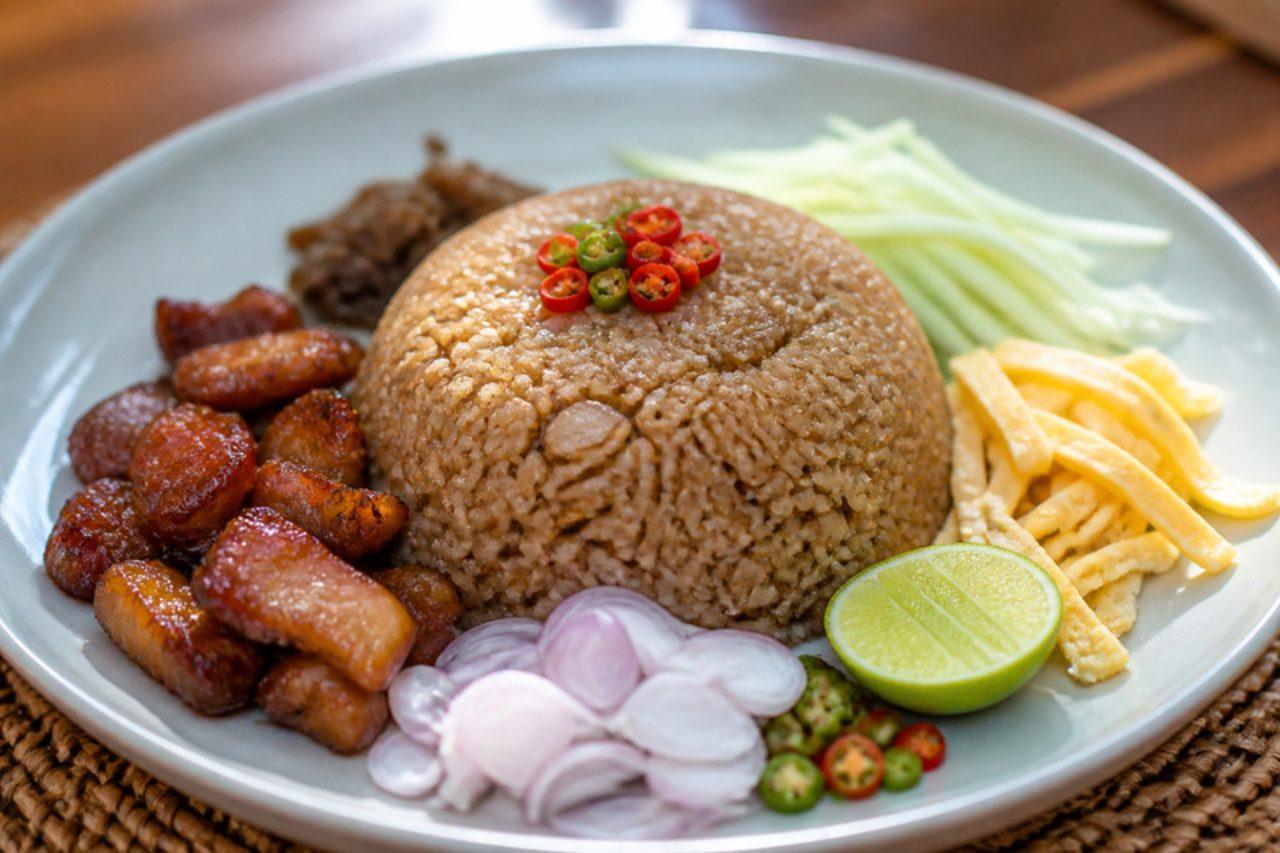
Khao kluk kapiShrimp paste rice
Everything on this central Thai plate is arranged in little heaps around a mound of rice tossed with garlic and fermented shrimp paste: sticky caramelised pork (moo wan), threads of sour green mango, shallots, chillies, sliced long beans, crisp dried shrimp and ribbons of thin omelette. You mix a bit of each into every spoonful, so salty, sweet, sour and hot arrive together. It's a favourite at Bangkok's curry-and-rice shops and a clever way to use up yesterday's rice at home; lime wedges and cucumber cool it down. Chef's tip: use day-old jasmine rice straight from the fridge, because freshly cooked rice clumps and smears the shrimp paste instead of coating each grain.