
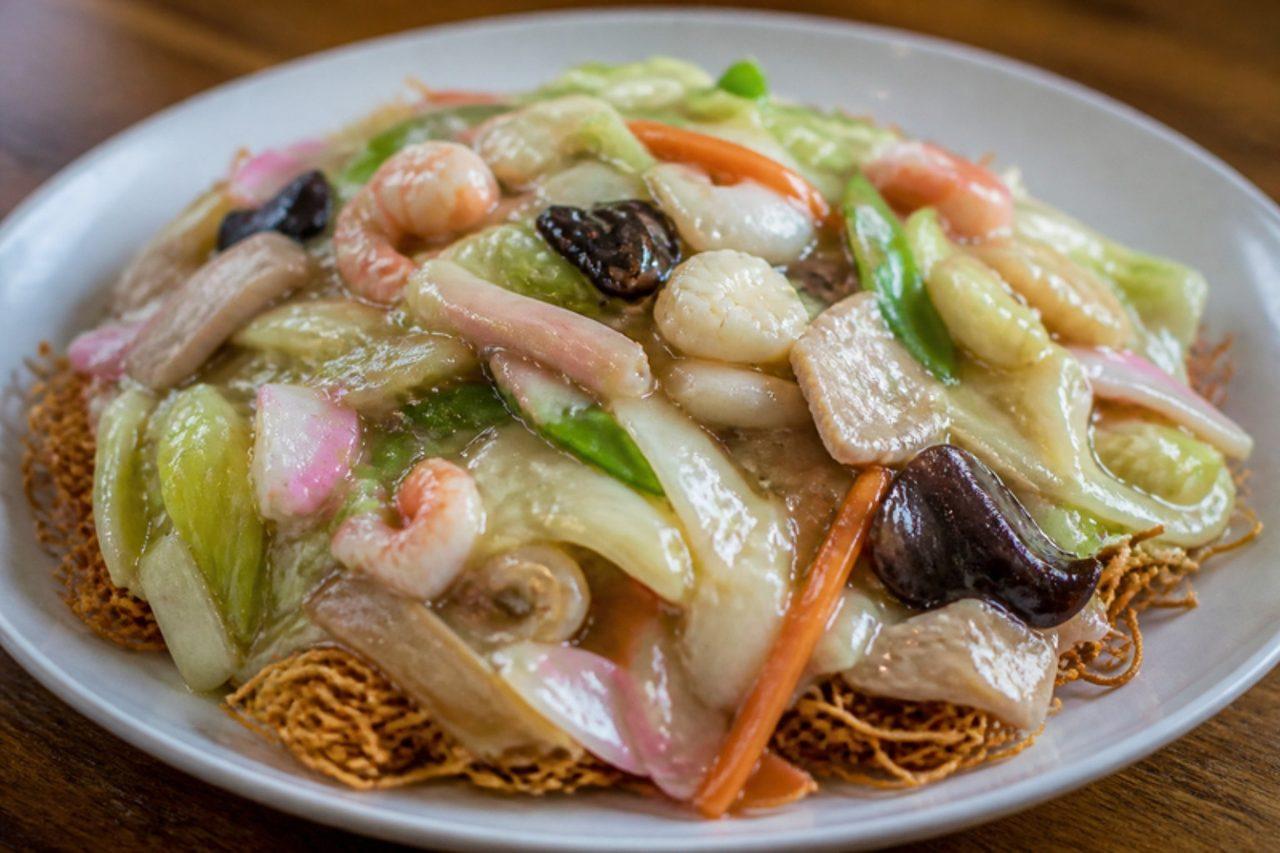
AI-generated image
Sara udon
Crispy noodles with seafood sauce
皿うどん: a nest of crisp fried noodles under a thick, glossy seafood and pork sauce

Nagasaki's second famous noodle dish uses the same toppings as champon but turns them into a thick sauce poured over a plate of crunchy fried noodles. The name means plate udon, though the classic noodles are very thin and fried crisp. In Nagasaki homes it is a quick weekend lunch and a standard dish at family gatherings, and supermarkets there sell the fried noodle nests ready to use. People splash it with Worcestershire sauce at the table, and a dab of hot mustard is common too. Chef's tip: pour the sauce over at the very last moment and let the noodles soften slowly as you eat, so you get crisp and soft in every mouthful.
- Total time
- 30 min
- Difficulty
- medium
- Serves
- 2
Ingredients
For the noodles
- 4 oz ready-fried thin noodles for sara udonor 150 g fresh thin egg noodles plus 100 ml oil for frying
For the sauce
- 1 tbsp vegetable oil
- 3 ½ oz thinly sliced pork bellycut into 4 cm pieces
- 6 raw prawnspeeled and deveined
- 2 ⅞ oz squid tubescleaned and cut into strips
- 1 ¾ oz Japanese fishcake (kamaboko)sliced
- ½ onionsliced
- ½ carrotcut into thin strips
- 5 ½ oz white cabbagecut into 4 cm pieces
- 2 ⅞ oz bean sprouts
- 1 ½ cups chicken stock
- 1 tbsp oyster sauce
- 1 tsp soy sauce
- 1 tsp sugar
- 1 pinch white pepper
- 2 tbsp potato starch or cornflour
- 3 tbsp cold water
- 1 tsp toasted sesame oil
To serve
- 2 tsp Worcestershire sauce (optional)
- 1 tsp Japanese hot mustard (karashi) (optional)
Shop this recipe on Amazon
What you'll need
Spices & pantry
Fresh ingredients (5)
Links open Amazon in a new tab. As an Amazon Associate, WhatToEat.Today earns from qualifying purchases.
Method
0/9 doneStep 1: If you are using fresh thin noodles instead of a ready-fried pack, loosen them, then shallow-fry in batches in hot oil over medium-high heat, pressing them into flat nests, until golden and crisp on both sides. Drain on kitchen paper.
6 minStep 2: Put a crisp nest of 4 oz ready-fried thin noodles for sara udon on each plate, ready for the sauce.
1 minStep 3: Stir 2 tbsp potato starch or cornflour and 3 tbsp cold water together in a cup until smooth and set aside.
1 minStep 4: Heat 1 tbsp vegetable oil in a wok over high heat. Stir-fry 3 ½ oz thinly sliced pork belly until browned with no pink left.
2 minStep 5: Add 6 raw prawns and 2 ⅞ oz squid tubes and stir-fry until the prawns are pink and opaque and the squid has turned white, about 1 minute.
1 minStep 6: Add ½ onion, ½ carrot and 5 ½ oz white cabbage and stir-fry until the cabbage is just wilted at the edges. Add 2 ⅞ oz bean sprouts, 6 mangetout and 1 ¾ oz Japanese fishcake (kamaboko) and toss for 30 seconds.
3 minStep 7: Pour in 1 ½ cups chicken stock with 1 tbsp oyster sauce, 1 tsp soy sauce, 1 tsp sugar and 1 pinch white pepper and bring to the boil.
2 minStep 8: Stir the starch mix again, then pour it in a thin stream while stirring the wok all the time. Keep stirring until the sauce is thick, glossy and clear again. Common mistake: tipping the starch in all at once without stirring; it sets in jelly-like lumps, so pour slowly and keep the sauce moving.
1 minStep 9: Drizzle in 1 tsp toasted sesame oil, then ladle the hot sauce over the noodle nests straight away. Serve with 2 tsp Worcestershire sauce and 1 tsp Japanese hot mustard (karashi) on the side.
1 min
Nutrition per serving
- Calories
- 640 kcal
- Protein
- 34 g
- Carbs
- 68 g
- Fat
- 25 g
- Fibre
- 6 g
Nutrition values are estimates.
KrazyBadal
Good to know
- How long does sara udon take?
- About 30 minutes in total: 15 minutes to prepare and 15 minutes to cook.
- How many people does it serve?
- 2 as written. Change the servings above the ingredients and every amount scales to match.
- What can I use instead of onion?
- 2 shallots per onion.
- What can I use instead of carrot?
- Parsnip or sweet potato, same weight.
Reviews
No reviews yet. Be the first to cook it.
Rate this recipe
Sign in to rate and review this recipe.
You might also like

Boiled pasta
The basic method for any dried pasta, from penne to spaghetti. A large pan of salted boiling water keeps the pasta from sticking, and you cook it only until just done, with a little bite left. Use it in salads, bakes or with any sauce.
 Italian

Mint pistachio pesto
A fresh, fragrant pesto made with mint leaves and toasted pistachios. It is lovely tossed through hot pasta or spooned over roasted vegetables, and a spoonful lifts a plain vegetable soup.


Yaki onigiriGrilled rice balls
Yaki onigiri (焼きおにぎり) are rice balls grilled until they form a crisp, toasty crust, then brushed with soy sauce glaze. They are eaten all over Japan, at izakaya, at barbecues and from the freezer section, as a snack or with miso soup. The inside stays soft and steamy while the outside crackles. Best eaten hot, straight from the pan. Chef's tip: let the shaped rice balls dry for 10 minutes before they go in the pan. A drier surface forms a better crust and won't stick, and the glaze goes on only at the end so it doesn't burn.