
AI-generated image
Sarawak laksa
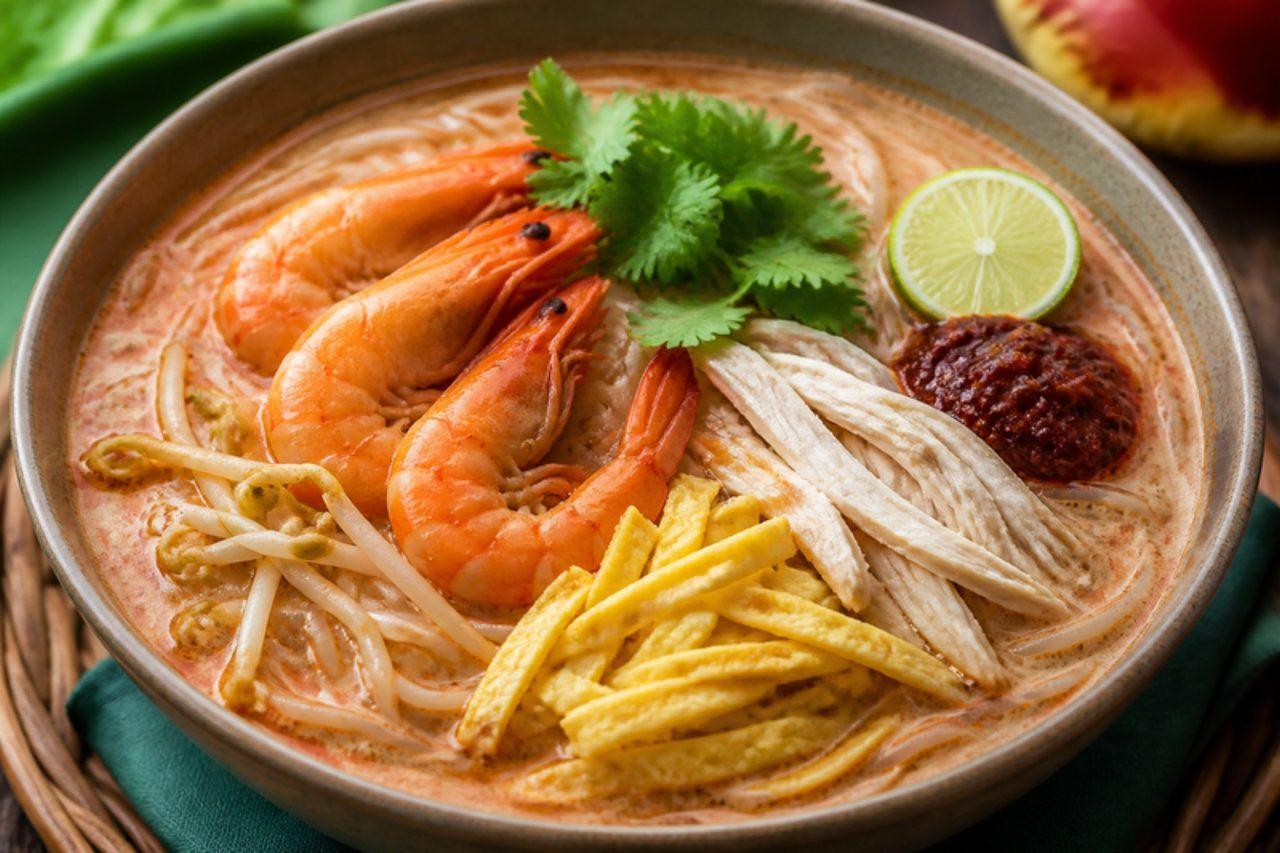
Laksa Sarawak — sambal-spiced coconut broth with rice vermicelli, chicken, prawns and omelette strips
Kuching wakes up to laksa Sarawak, ordered at coffee shops before work and reaching its peak on a lazy Sunday morning. It looks nothing like curry laksa: the broth is a russet, gently creamy soup built on a complex paste of chillies, shallots, galangal, toasted sesame, peanuts and warm whole spices, cooked into a chicken and prawn-shell stock with tamarind and a little coconut milk. Thin rice vermicelli is topped with shredded chicken, whole prawns, ribbons of omelette and bean sprouts, and every bowl comes with lime and a dab of sambal belacan. The work is in the paste, which keeps well and makes several batches. Chef's tip: toast the spices, sesame seeds and peanuts separately in a dry pan before grinding; it gives the broth its deep, roasted aroma.
- Total time
- 90 min
- Difficulty
- hard
- Serves
- 4
Ingredients
For the laksa paste
For the broth
For the bowls
Method
0/11 doneStep 1: Peel the 14 oz raw prawns, shell on, keeping heads and shells. Devein them and keep them in the fridge on a separate plate.
Step 2: Toast the 1 set whole spices (2 tsp coriander seeds, 1 tsp cumin, 1 tsp fennel, 2 star anise, 4 cloves, 3 cardamom pods) in a dry pan over a medium heat for 2 minutes until fragrant, then tip out. Toast 2 tbsp white sesame seeds for 1–2 minutes until golden, then 1 oz roasted peanuts for 2 minutes. Grind the spices fine, then add sesame and peanuts and grind to a rough powder.
6 minStep 3: Blend 15 dried red chillies, 10 shallots, 5 cloves garlic, 1 oz galangal, 3 stalks lemongrass and 4 candlenuts with a little water to a smooth paste. Stir in the ground spices and ¼ tsp ground nutmeg.
Step 4: Heat 5 tbsp vegetable oil in a large pot over a medium heat and fry the paste, stirring constantly, for 12–15 minutes until it is dark brick-red, thick, and the oil separates. Lower the heat if it starts to stick; burnt paste ruins the broth.
15 minStep 5: Add the prawn shells and heads and fry for 3 minutes until pink, pressing on the heads.
3 minStep 6: Pour in 2 litres water, add 14 oz chicken breasts or boneless thighs and bring to the boil, then simmer gently for 15–18 minutes until the chicken reaches 165°F (165 °F) in the thickest part and the juices run clear. Lift out the chicken and shred it when cool enough.
18 minStep 7: Simmer the broth 10 minutes more, then strain through a sieve, pressing hard on the solids. Return to the pot with the strained 1 tbsp tamarind pulp, ¾ cup coconut milk, 2 tsp salt and 1 tbsp sugar and keep at a gentle simmer.
12 minStep 8: Drop the peeled prawns into the broth and poach for 2–3 minutes until pink all over and opaque in the centre. Lift them out.
3 minStep 9: Lightly oil a frying pan over a medium-low heat. Pour in a third of the 3 eggs, swirl into a thin sheet and cook for 1 minute until fully set. Repeat, then roll the omelettes up and slice into thin strips.
4 minStep 10: Blanch 7 oz bean sprouts in boiling water for 30 seconds; drain. Cook the drained 10 ½ oz rice vermicelli in the same water for 1 minute until soft, drain and divide between bowls.
2 minStep 11: Top the noodles with shredded chicken, prawns, omelette strips and bean sprouts. Ladle over the very hot broth. A common mistake is serving it lukewarm: the broth must be at a boil when it goes in so it reheats the toppings. Add coriander and serve with 4 calamansi or limes and sambal belacan.
Nutrition per serving
- Calories
- 740 kcal
- Protein
- 50 g
- Carbs
- 70 g
- Fat
- 29 g
- Fibre
- 5 g
Nutrition values are estimates.
KrazyBadal
Good to know
- How long does sarawak laksa take?
- About 90 minutes in total: 35 minutes to prepare and 55 minutes to cook.
- How many people does it serve?
- 4 as written. Change the servings above the ingredients and every amount scales to match.
- What can I use instead of shallots?
- Half an onion per 2 shallots.
- What can I use instead of garlic?
- ½ tsp garlic paste or ⅛ tsp garlic powder per clove.
Reviews
No reviews yet. Be the first to cook it.
Rate this recipe
Sign in to rate and review this recipe.
You might also like

Soto Banjar
Along the rivers of Banjarmasin in South Kalimantan, breakfast often means soto Banjar eaten at a wooden riverside warung, sometimes after a dawn trip to the floating market. Unlike the turmeric sotos of Java, this broth is pale and clear, perfumed with the sweet spices that traders brought up the river centuries ago: cinnamon, cloves, star anise, cardamom and nutmeg. Shredded chicken, glass noodles, carrot and a boiled egg go into the bowl with rice cakes, and lime and a little chilli sharpen it at the table. Chef's tip: toast the whole spices in the pan for a minute before the paste goes in; it brings out their sweetness without the dusty edge of ground spice.


Miso soup
Miso soup (味噌汁) is drunk every day in homes all over Japan, at breakfast as well as dinner, beside a bowl of rice. The base is dashi; this vegan version uses kombu and dried shiitake instead of bonito, which gives it a deep, rounded flavour. Silken tofu and wakame seaweed are the classic fillings. It takes ten minutes; just remember not to boil the miso. Chef's tip: add the miso at the very end and never let it boil. Boiling kills the miso's fresh, fermented aroma; Japanese cooks say the soup should only 'smile', with the surface barely trembling.

Carrot & coriander soup
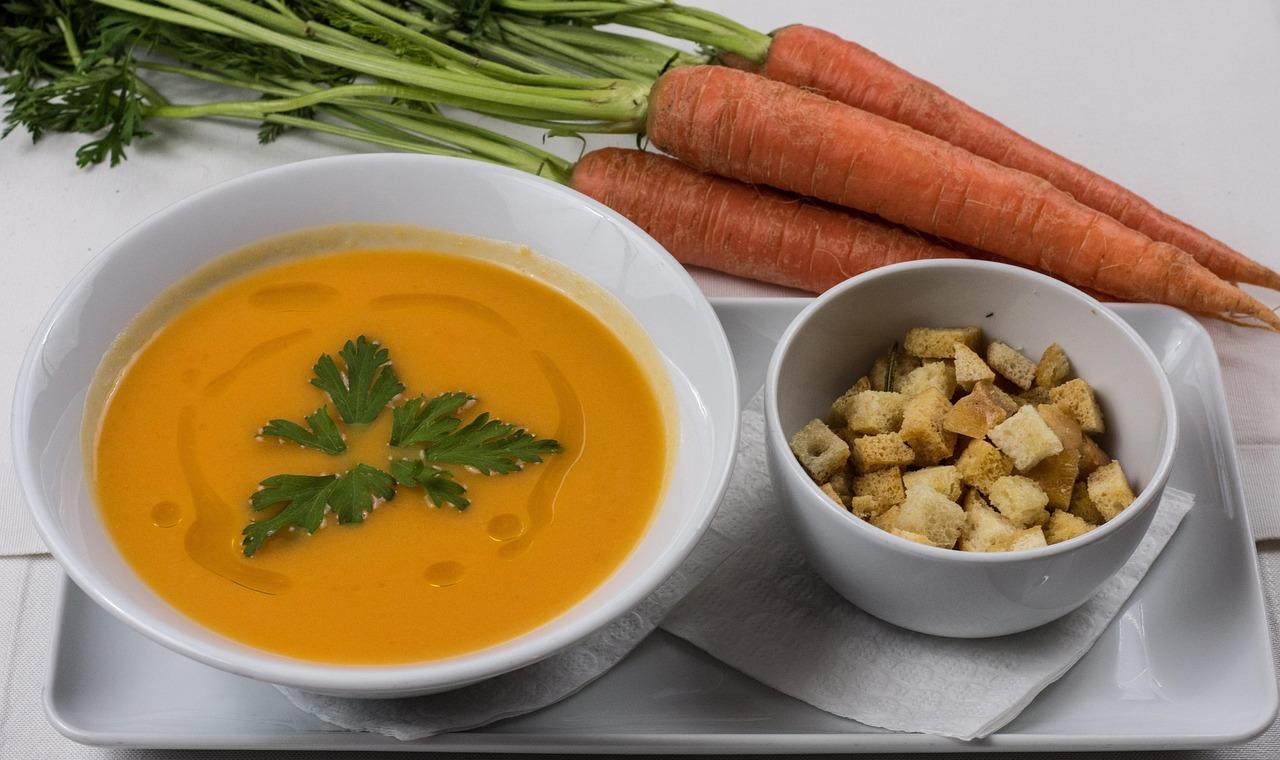
A smooth, velvety carrot soup blended with potato for body and finished with butter-fried coriander and a splash of milk. It's mild and warming, so it suits the whole family. Serve it with crusty bread or croutons.