
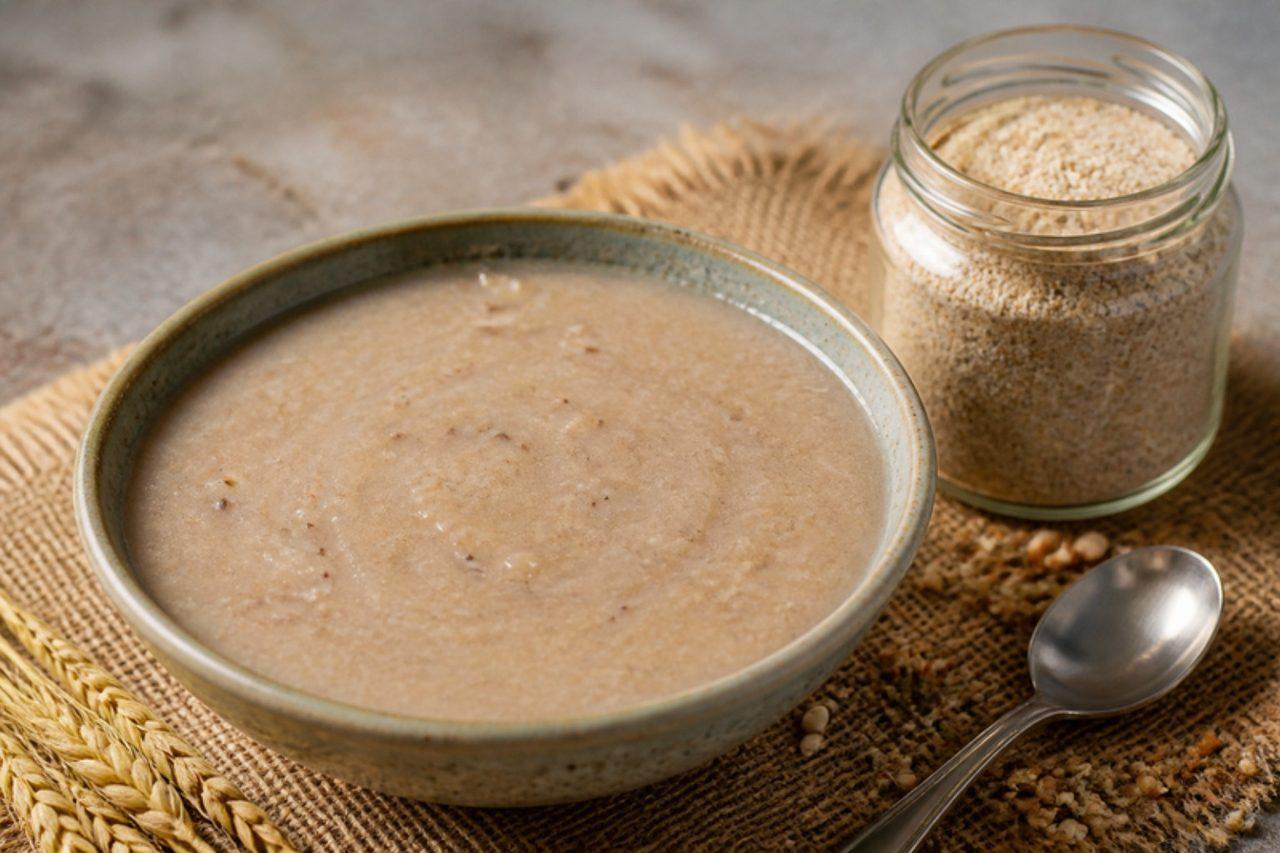
AI-generated image
Sathu maavu kanji
Sprouted grain and nut porridge
சத்து மாவு கஞ்சி: home-roasted millet, wheat, gram and nut powder cooked into a creamy toddler porridge (makes about 300 g powder)

Ask a Tamil grandmother about sathu maavu and she will tell you exactly which grains go into her tin: ragi, kambu (pearl millet), cholam (sorghum), wheat, a little rice, green gram and roasted gram, with almonds and cashews for richness. Each one is dry-roasted until fragrant, cooled and milled into a fine, beige 'health powder' that keeps for weeks. A couple of spoonfuls cooked with water and milk make a nutty, mildly sweet kanji that toddlers in Madurai and Coimbatore eat for breakfast or after their afternoon nap, and older children drink from a tumbler. The texture should be smooth and creamy, never gritty. Sweeten it with jaggery or karupatti (palm jaggery), or make it savoury with buttermilk and salt for grown-ups. This version contains wheat, so it is not gluten-free. Chef's tip: roast every grain separately; small seeds like ragi brown in minutes while wheat and green gram need longer, and roasting them together leaves half burnt and half raw.
- Total time
- 40 min
- Difficulty
- easy
- Serves
- 2
Ingredients
For the sathu maavu powder
- 1 ¾ oz whole ragi (finger millet)
- 1 ⅜ oz kambu (pearl millet)
- 1 ⅜ oz cholam (white sorghum)
- 1 ⅜ oz whole wheat grains
- 1 oz raw rice
- ⅔ oz almonds
- ⅔ oz cashews
For 2 bowls of kanji
- 1 ¼ cups waterdivided
- ¾ cup whole milk
- ⅞ oz jaggery or karupatti (palm jaggery)grated
Shop this recipe on Amazon
What you'll need
Spices & pantry
Fresh ingredients (1)
Links open Amazon in a new tab. As an Amazon Associate, WhatToEat.Today earns from qualifying purchases.
Method
0/10 doneStep 1: Pick over 1 ¾ oz whole ragi (finger millet), 1 ⅜ oz kambu (pearl millet), 1 ⅜ oz cholam (white sorghum), 1 ⅜ oz whole wheat grains, 1 oz raw rice and 1 oz whole green gram (moong) for stones. If you like, many families rinse the grains and dry them in the sun the day before; they must be bone dry before roasting.
Step 2: Heat a heavy pan over a medium-low heat. Dry-roast 1 ¾ oz whole ragi (finger millet) on its own, stirring all the time, for 4–5 minutes until it crackles and smells toasty. Tip it onto a plate.
5 minStep 3: Roast 1 ⅜ oz kambu (pearl millet), then 1 ⅜ oz cholam (white sorghum), then 1 ⅜ oz whole wheat grains in the same way, one after another, for 4–6 minutes each until each is a shade darker and nutty. Spread them out on the plate to cool.
15 minStep 4: Roast 1 oz raw rice for 3–4 minutes until it turns opaque white and just begins to colour, then 1 oz whole green gram (moong) for 4–5 minutes until it crackles. Warm 1 oz pottukadalai (roasted gram), ⅔ oz almonds and ⅔ oz cashews together for 2 minutes only; nuts scorch quickly.
8 minStep 5: Toast 4 green cardamom pods for 30 seconds, then let everything cool completely, about 20 minutes. Warm grains ground straight away turn the powder damp and lumpy.
Step 6: Grind everything to a fine powder in a dry mixer jar in small batches, then sift through a fine sieve and regrind the coarse bits. Store in a clean, dry airtight jar for up to 1 month.
Step 7: For the kanji, whisk 4 heaped tablespoons (about 40 g) of the powder with half the ¾ cup water in a saucepan until smooth.
Step 8: Add the rest of the ¾ cup water and cook over a medium-low heat, stirring constantly, for 5–6 minutes until it thickens and no longer tastes floury. Common mistake: walking away; sathu maavu catches on the bottom within a minute.
6 minStep 9: Stir in ¾ cup whole milk and simmer for 2–3 minutes until creamy and pourable.
3 minStep 10: Take off the heat, stir in ⅞ oz jaggery or karupatti (palm jaggery) until dissolved and serve warm. It thickens as it cools, so loosen with warm milk for small children.
Nutrition per serving
- Calories
- 230 kcal
- Protein
- 8 g
- Carbs
- 34 g
- Fat
- 7 g
- Fibre
- 4 g
Nutrition values are estimates.
KrazyBadal
Good to know
- How long does sathu maavu kanji take?
- About 40 minutes in total: 10 minutes to prepare and 30 minutes to cook.
- How many people does it serve?
- 2 as written. Change the servings above the ingredients and every amount scales to match.
- Is it vegetarian?
- Yes. It has no meat or fish.
- Can I make it ahead?
- Yes. It keeps well, so you can cook it earlier in the day or the day before and reheat it.
- What can I use instead of raw rice?
- Any long-grain rice, same amount.
- What can I use instead of whole green gram (moong)?
- Any whole pulse, such as moth beans or chickpeas (for sprouting; times vary).
Reviews
No reviews yet. Be the first to cook it.
Rate this recipe
Sign in to rate and review this recipe.
You might also like

SakarpadaSweet fried dough diamonds
Sakarpada (shakarpara) are little sweet diamonds of a rich dough made with ghee, milk and sugar, fried until golden and crunchy. They are a Diwali favourite with tea, and the cubes go into bhusu too. They keep for weeks in an air-tight tin.
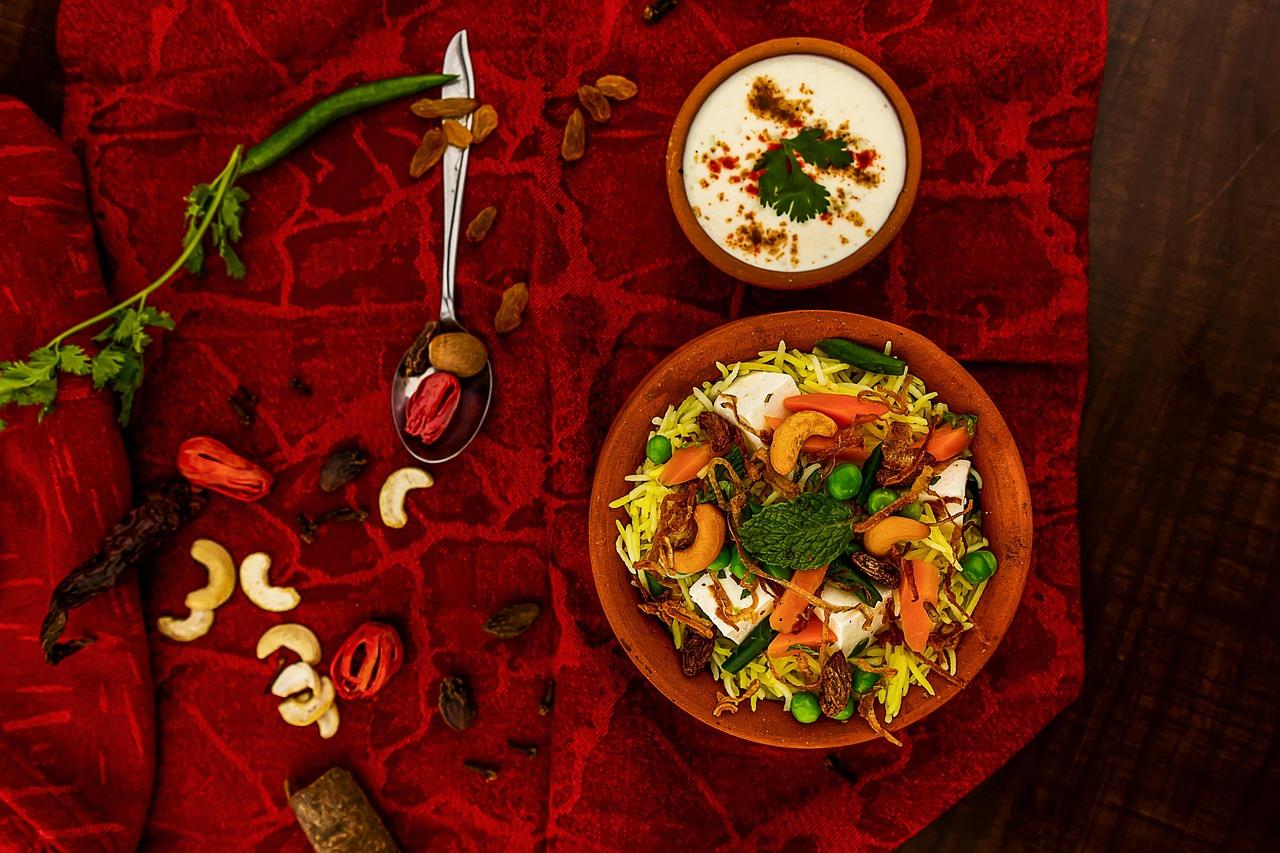
Paneer biryaniRice and moong dal in coconut milk
A mild, creamy biryani: rice and husked green gram roasted in ghee, then cooked in coconut milk with peas, carrots, potatoes, peanuts and cashews, and finished with soft fried paneer and a fresh coriander yogurt. Serve hot, garnished with more fried cashews and paneer.


Sabudana khichdiSago with peanuts and potato
Sabudana khichdi is the dish that sees Maharashtra through every vrat (fast), from Navratri to Ekadashi, but it's so good that people eat it any day of the week. Soaked sago pearls are tossed in a pan with crushed roasted peanuts, cubes of potato, cumin and green chilli until each pearl turns glassy and separate, then finished with lemon and coriander. It's soft, chewy, nutty and gently hot. Fasting rules vary from family to family, so check yours; this version uses rock salt and no asafoetida, onion or garlic. Traditionally it's cooked in ghee; use ghee instead of oil if you aren't keeping it vegan. Chef's tip: soak the sago in just enough water to cover by the height of the pearls themselves, no more; too much water is the reason khichdi turns into one sticky lump.
