
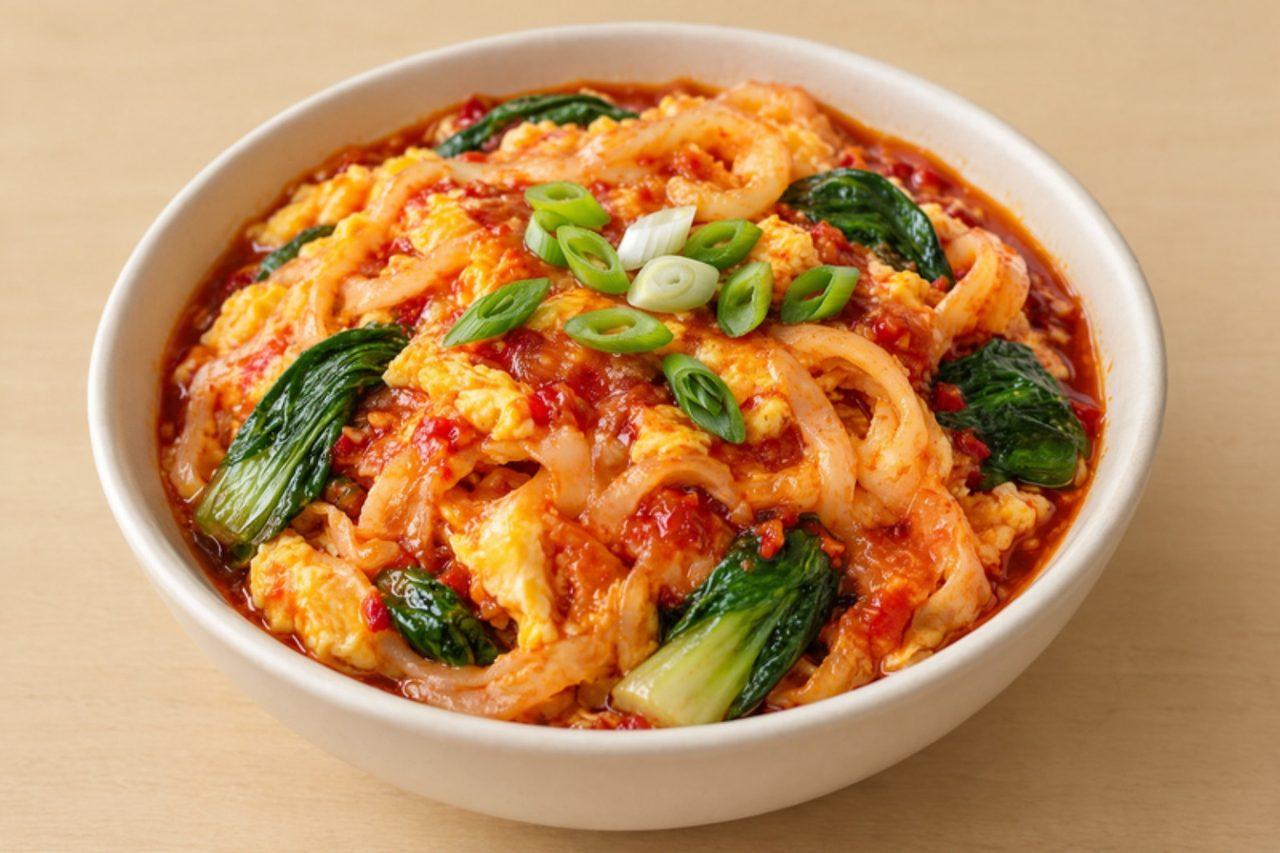
AI-generated image
Seblak
Soaked crackers in spicy broth
Seblak: soaked crackers stir-fried soft and chewy with garlic, kencur, chilli and scrambled egg


Seblak came from Bandung, but it now fills countless warung stalls in Jakarta, from the lanes behind Blok M to the campuses of Depok, where students order it in the evening by spice level. Raw, dried kerupuk crackers are soaked until bendy, then cooked in a fiery paste of garlic, shallot, chilli and kencur (aromatic ginger) with scrambled egg and greens, until they turn chewy, slurpy and saucy. This is the simple egg-and-vegetable version; stalls add meatballs or sausage on request. Choose plain garlic or tapioca kerupuk (kerupuk bawang or kerupuk aci) and check the packet, as many crackers contain shrimp or fish. Chef's tip: kencur gives seblak its sharp, camphor-like fragrance; use 2 cm of fresh root, or 1 tsp of kencur powder.
- Total time
- 30 min
- Difficulty
- easy
- Serves
- 2
Ingredients
For the paste
- 3 shallots
- 4 red bird's-eye chilliesuse 1–2 for medium heat
- ¾ in fresh kencur (aromatic ginger)or 1 tsp kencur powder
For the seblak
- 2 tbsp vegetable oil
- 2 eggs
- 3 ½ oz cabbageshredded
- 3 ½ oz choy sum or mustard greenscut into 4 cm lengths
- 1 cup water
- ½ tsp salt
- 1 spring onionsliced
- 2 lime wedges (optional)to serve
Shop this recipe on Amazon
Spices & pantry
Fresh ingredients (5)
Links open Amazon in a new tab. As an Amazon Associate, WhatToEat.Today earns from qualifying purchases.
Method
0/6 doneStep 1: Put 3 ½ oz raw dried kerupuk (plain garlic or tapioca crackers) in a bowl, cover with just-boiled water and soak for 10–15 minutes, until soft and bendy all the way through, then drain.
15 minStep 2: Meanwhile, pound or blend 3 garlic cloves, 3 shallots, 4 red bird's-eye chillies and ¾ in fresh kencur (aromatic ginger) to a coarse paste.
5 minStep 3: Heat 2 tbsp vegetable oil in a wok over a medium heat and fry the paste for 2–3 minutes, stirring, until it smells fragrant and no longer raw and the oil turns red.
3 minStep 4: Push the paste to one side, crack in 2 eggs and scramble them until fully set, then stir into the paste.
2 minStep 5: Add 3 ½ oz cabbage, 3 ½ oz choy sum or mustard greens, the drained crackers and 1 cup water. Season with 1 tbsp kecap manis (sweet soy sauce) and ½ tsp salt and simmer, stirring, for 4–5 minutes, until the crackers are chewy and glossy and the sauce has thickened. Common mistake: under-soaking the crackers; they stay hard in the middle and never turn chewy.
5 minStep 6: Scatter with 1 spring onion and serve hot in bowls, with 2 lime wedges for squeezing. Eat straight away, before the crackers go soft and pasty.
Nutrition per serving
- Calories
- 420 kcal
- Protein
- 11 g
- Carbs
- 52 g
- Fat
- 18 g
- Fibre
- 4 g
Nutrition values are estimates.
KrazyBadal
Good to know
- How long does seblak take?
- About 30 minutes in total: 15 minutes to prepare and 15 minutes to cook.
- How many people does it serve?
- 2 as written. Change the servings above the ingredients and every amount scales to match.
- Is it vegetarian?
- Yes. It has no meat or fish.
- Is it very spicy?
- It has some heat. Use less chilli for a milder version, or more if you like it hot.
- What can I use instead of garlic cloves?
- ½ tsp garlic paste or ⅛ tsp garlic powder per clove.
- What can I use instead of shallots?
- Half an onion per 2 shallots.
Reviews
No reviews yet. Be the first to cook it.
Rate this recipe
Sign in to rate and review this recipe.
You might also like

Sayur lodehVegetables in coconut milk
Sayur lodeh is everyday cooking in Central Java, made in big pots in Solo and Semarang kitchens and ladled over rice, with lontong rice cakes at Lebaran, or alongside opor and sambal goreng on festive tables. It's soupy rather than thick: a fragrant broth of coconut milk, galangal, lemongrass and lime leaf that carries chunks of aubergine, long beans, chayote and sweetcorn, plus tempeh and tofu to make it a meal. The flavour is mellow and slightly sweet, so the heat comes from sambal on the side. Chef's tip: keep the pot at a gentle simmer once the coconut milk goes in and stir now and then — a rolling boil splits the coconut milk into oily curds.



SakarpadaSweet fried dough diamonds
Sakarpada (shakarpara) are little sweet diamonds of a rich dough made with ghee, milk and sugar, fried until golden and crunchy. They are a Diwali favourite with tea, and the cubes go into bhusu too. They keep for weeks in an air-tight tin.
 Indian

Yaki onigiriGrilled rice balls
Yaki onigiri (焼きおにぎり) are rice balls grilled until they form a crisp, toasty crust, then brushed with soy sauce glaze. They are eaten all over Japan, at izakaya, at barbecues and from the freezer section, as a snack or with miso soup. The inside stays soft and steamy while the outside crackles. Best eaten hot, straight from the pan. Chef's tip: let the shaped rice balls dry for 10 minutes before they go in the pan. A drier surface forms a better crust and won't stick, and the glaze goes on only at the end so it doesn't burn.
 Japanese