

AI-generated image
Seeni sambol buns
Onion relish stuffed buns
Sri Lankan bakery buns stuffed with sweet-spicy onion relish


Listen for the tinkling tune of a bakery three-wheeler in any Sri Lankan town around four o'clock, and there will be seeni sambol buns on its glass shelves. These soft, slightly sweet buns are filled with seeni sambol, a dark, jammy relish of onions slowly caramelised with chilli, curry leaves, cinnamon and tamarind, so each bite is sweet, sour and fiery at once. They are one of the island's favourite 'short eats', eaten with a cup of sweet milk tea at work, on train journeys or after school. Seeni sambol is usually made with Maldive fish flakes; this vegetarian version leaves them out and leans on a little extra tamarind for depth. A wet, still-warm filling is the commonest cause of soggy, split buns, so cook the onions until almost dry and cool them completely. Chef's tip: make the sambol a day ahead; it keeps for a week in the fridge and its flavour deepens overnight.
- Total time
- 158 min
- Difficulty
- medium
- Serves
- 10
Ingredients
For the seeni sambol
- 3 tbsp coconut oil
- 1 ⅛ in cinnamon stick
- 3 green cardamom podslightly crushed
- 15 curry leaves
- 2 in pandan leaf (optional)
- 1 ⅓ lb red onionsthinly sliced
- 2 tsp dried chilli flakes
- ½ tsp chilli powder
- 1 ½ tbsp tamarind paste
- 2 tbsp sugar
- ½ tsp salt
For the dough
- 14 oz strong white bread flour
- 1 ⅜ oz caster sugar
- ¼ oz salt
- ¼ oz instant dried yeast1 sachet
- 1 cup whole milklukewarm
- 1 ⅜ oz buttersoft
To finish
- 2 tbsp milkmixed with 1 tsp sugar
Shop this recipe on Amazon
Spices & pantry
Fresh ingredients (5)
Links open Amazon in a new tab. As an Amazon Associate, WhatToEat.Today earns from qualifying purchases.
Method
0/10 doneStep 1: Heat 3 tbsp coconut oil in a wide pan over medium heat. Add 1 ⅛ in cinnamon stick, 3 green cardamom pods, 15 curry leaves and 2 in pandan leaf, if using, and fry for 30 seconds until the leaves crackle.
Step 2: Add 1 ⅓ lb red onions and cook over medium-low heat, stirring often, for 30–35 minutes, until soft, sweet and deep golden-brown.
33 minStep 3: Stir in 2 tsp dried chilli flakes, ½ tsp chilli powder, 1 ½ tbsp tamarind paste, 2 tbsp sugar and ½ tsp salt. Cook on low for 8–10 minutes more, until dark, sticky and almost dry. Taste: it should be sweet, tangy and hot. Remove the whole spices and leave to cool completely.
9 minStep 4: For the dough, mix 14 oz strong white bread flour, 1 ⅜ oz caster sugar, ¼ oz salt and ¼ oz instant dried yeast. Add 1 cup whole milk and bring together, then knead for 5 minutes, add 1 ⅜ oz butter and knead for 7–8 minutes more, until smooth and springy.
13 minStep 5: Cover and leave in a warm place for about 1 hour, until doubled.
60 minStep 6: Knock back and divide into 10 pieces of about 70 g. Flatten each into a 10 cm disc, put a heaped tablespoon of cold sambol in the middle and pinch the edges together over it to seal.
Step 7: Place seam side down on a lined tray, or roll each gently into a short oval in the style of Sri Lankan bakeries. Cover and prove for 35–40 minutes, until puffy.
38 minStep 8: Meanwhile heat the oven to 375°F (350°F fan). Brush the buns with 2 tbsp milk.
Step 9: Bake for 15–18 minutes, until deep golden-brown and shiny, the bases sound hollow when tapped and the bread reads about 194°F.
17 minStep 10: Cool on a rack for 15 minutes; the filling is very hot. Serve warm or at room temperature with tea.
Nutrition per serving
- Calories
- 260 kcal
- Protein
- 6 g
- Carbs
- 43 g
- Fat
- 7 g
- Fibre
- 3 g
Nutrition values are estimates.
KrazyBadal
Good to know
- How long does seeni sambol buns take?
- About 158 minutes in total: 140 minutes to prepare and 18 minutes to cook.
- How many people does it serve?
- 10 as written. Change the servings above the ingredients and every amount scales to match.
- Is it vegetarian?
- Yes. It has no meat or fish.
- Is it very spicy?
- It has some heat. Use less chilli for a milder version, or more if you like it hot.
- Can I make it ahead?
- Yes. It keeps well, so you can cook it earlier in the day or the day before and reheat it.
- What can I use instead of cinnamon stick?
- ½ tsp ground cinnamon per stick.
- What can I use instead of green cardamom pods?
- A pinch of ground cardamom per 2 pods.
Reviews
No reviews yet. Be the first to cook it.
Rate this recipe
Sign in to rate and review this recipe.
You might also like

Polos curryYoung green jackfruit curry
Polos is the tiny unripe jackfruit picked in the Western and Sabaragamuwa provinces long before it sweetens, and cooked low and slow it becomes one of the island's most loved festival curries, especially at Sinhala and Tamil New Year in April and at wedding lunches. The firm, pale flesh soaks up a very dark roasted curry powder, garlic, ginger, goraka (a smoky souring fruit) and coconut milk until it turns almost black-brown and tastes rich, sour and meaty. Fresh polos is hard to find abroad; tinned young green jackfruit in brine works well. A frequent mistake is not cooking it long enough, which leaves it squeaky; the pieces must be soft enough to break with a spoon. Chef's tip: oil your hands and knife before cutting fresh jackfruit; the sticky white sap washes off oiled skin but not dry skin.


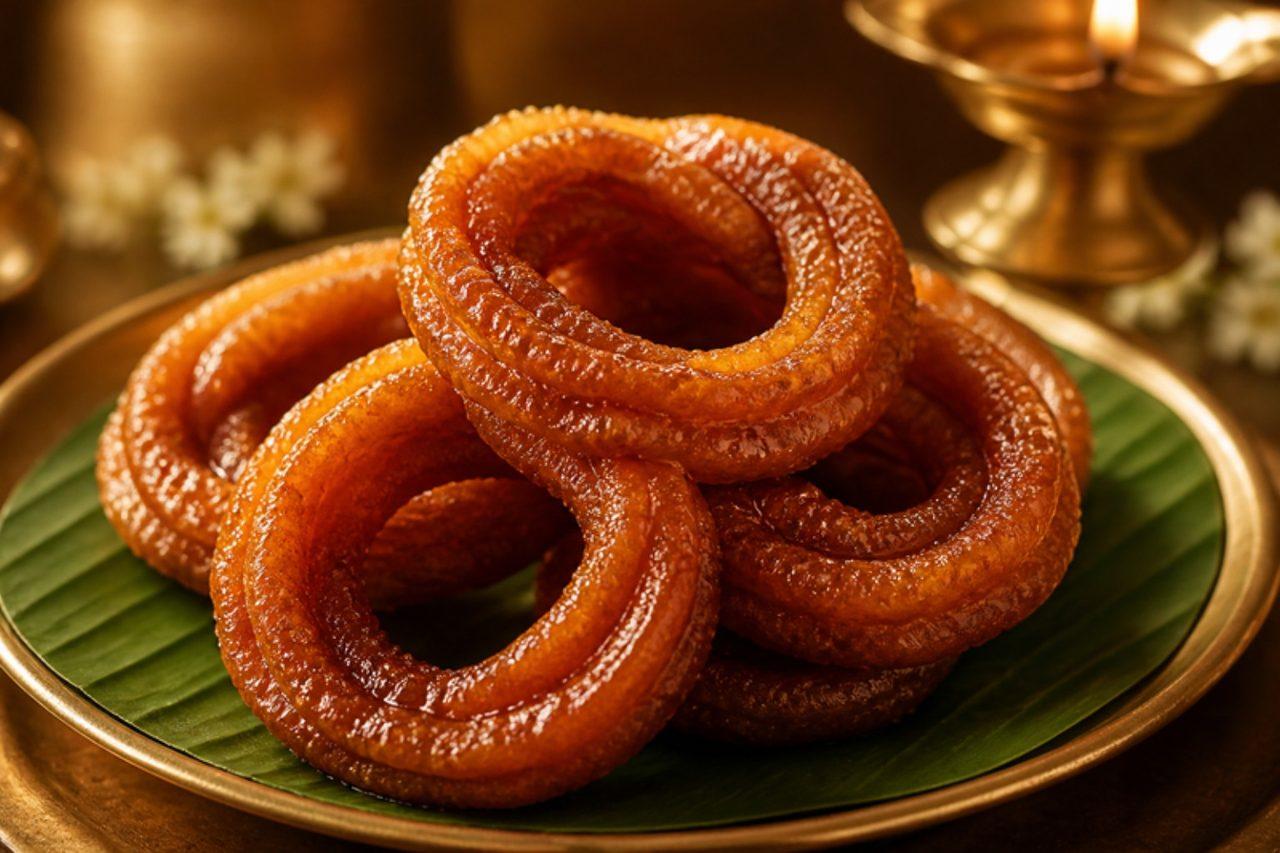
Undu walaluFried urad dal rings in treacle
Walalu means bangles, and these dark, sticky rings of fried urad dal soaked in kithul treacle are a sweet that Sinhala families bring out for Avurudu and for special almsgivings, often made in large batches by an aunt known for her steady hand. A thick, fluffy paste of ground black gram is piped into loops and fried until crisp, then plunged straight into warm treacle, so the rings stay crunchy on the outside while drinking up the syrup. They taste a little like a darker, smokier jalebi, with a toffee finish from the palm treacle. Watery batter is what ruins them; it spreads into flat blobs, so grind the soaked dal with as little water as possible and beat it until light. This recipe uses no asafoetida, so it is naturally gluten free. Chef's tip: pipe the rings onto small squares of baking paper and lower them into the oil paper and all; the paper peels away in seconds.

ChipaCheese bread rings
In Paraguay you hear 'chipa, chipa!' called by vendors with big baskets on buses and street corners, and every family bakes it for Holy Week, when chipa is the food of Good Friday. Cassava starch, a little cornmeal, butter, eggs and a lot of hard cheese are kneaded into a dough scented with aniseed, shaped into rings or small rolls and baked in a hot oven, traditionally a domed clay tatakua. It's chewy, crisp outside and best warm with cocido (toasted yerba tea). Chef's tip: the dough should feel soft and slightly greasy; add milk a spoon at a time, as too much makes the chipa spread flat.
 Paraguayan