
AI-generated image
Sekihan (red bean rice)
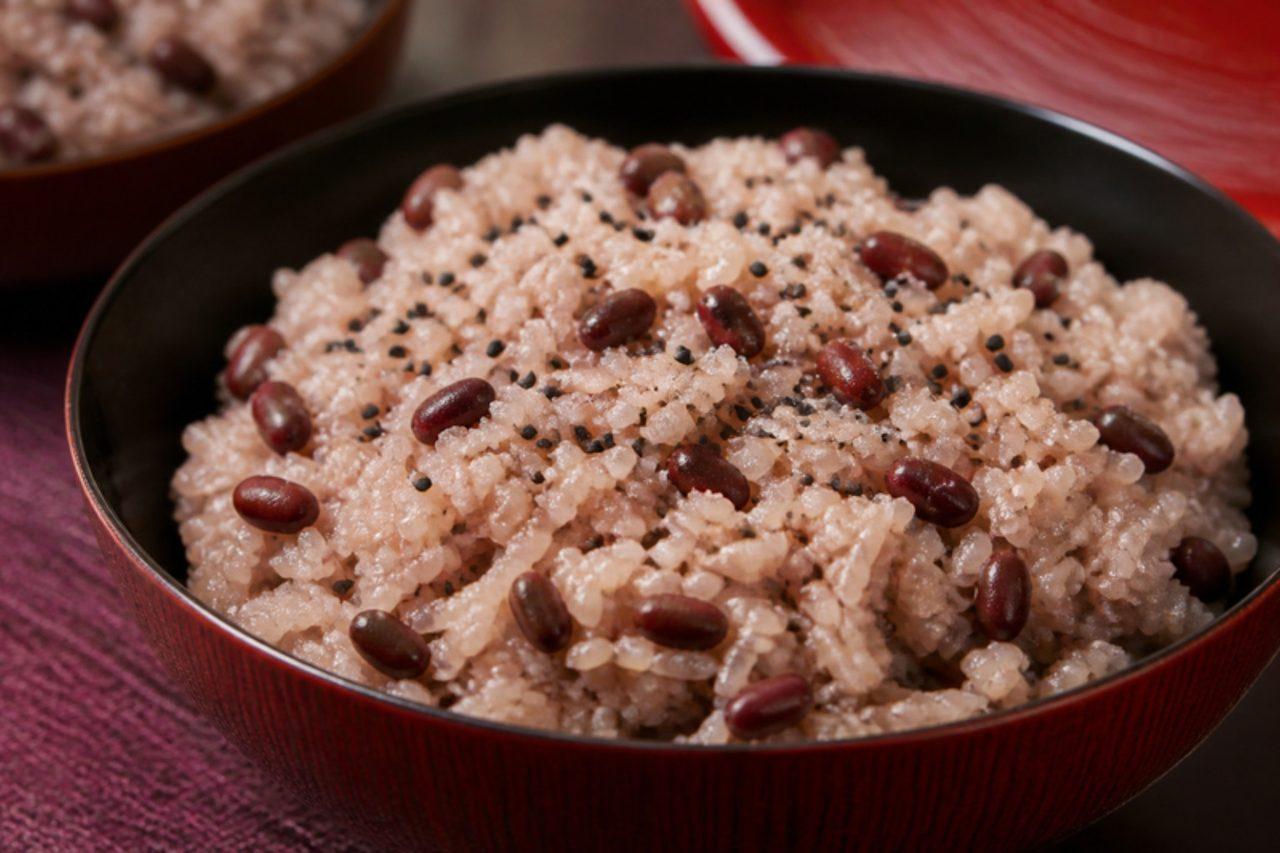
Steamed glutinous rice stained pink with adzuki beans, with sesame salt



Sekihan, "red rice", is Japan's celebration dish, cooked nationwide for birthdays, weddings and especially Shichi-Go-San in November, when girls aged three and seven and boys aged five visit the shrine in their best clothes. Red has long been thought to drive away bad luck, so rice tinted with adzuki beans is a wish for the children's health and growth. Steamed glutinous rice gives a chewy, slightly springy texture and a nutty bean flavour, finished with black sesame salt. Some cooks sprinkle the rice with a spoonful of sake while it steams; this is optional, and the bean liquid alone gives an alcohol-free version. Serve it warm or at room temperature with tai no shioyaki and clear soup. Chef's tip: ladle the bean cooking liquid high in the air and pour it back several times; the contact with air deepens its red, and the rice turns a stronger pink.
- Total time
- 120 min
- Difficulty
- medium
- Serves
- 6
Ingredients
For the beans
- 2 ½ oz dried adzuki beansor Japanese sasage (cowpeas)
- 3 ¾ cups waterdivided
For the rice
- 16 oz glutinous rice
- ½ tsp salt
- 1 tbsp sake (optional)or leave out for an alcohol-free version
For the sesame salt
- 1 tbsp black sesame seeds
- ½ tsp salt
Shop this recipe on Amazon
What you'll need
Spices & pantry
Links open Amazon in a new tab. As an Amazon Associate, WhatToEat.Today earns from qualifying purchases.
Method
0/8 doneStep 1: Rinse 2 ½ oz dried adzuki beans, cover with 300 ml of 1 ¼ cups water and bring to the boil. Boil for 2 minutes, then drain and discard the water, which takes away harsh, bitter flavours.
6 minStep 2: Return the beans to the pan with the remaining 2 ½ cups water and simmer over a low heat for 25–30 minutes, until you can just crush a bean between two fingers but it still holds its shape. Common mistake: simmering until the beans burst. Split beans make the rice mushy and are traditionally avoided at celebrations.
30 minStep 3: Drain the beans, keeping all the liquid. Ladle the liquid up high and pour it back into the bowl a dozen times until it turns a deeper wine red, then let it cool.
5 minStep 4: Rinse 16 oz glutinous rice until the water runs nearly clear, then soak it in the cooled bean liquid for at least 4 hours or overnight in the fridge, until it is stained pink.
5 minStep 5: Drain the rice, keeping the liquid. Mix the rice gently with the beans and spread it on a damp cloth in a steamer basket, making a dip in the middle so the steam passes through evenly.
4 minStep 7: The rice is done when the grains are translucent, chewy and soft right through with no chalky centre. Tip into a wide bowl, fold gently and cover with a cloth for 5 minutes.
6 minStep 8: Toast 1 tbsp black sesame seeds in a dry pan over a low heat for 2 minutes until fragrant, then mix with ½ tsp salt. Scatter over the rice to serve; covered, sekihan keeps at cool room temperature for the day, or chill and resteam to soften.
4 min
Nutrition per serving
- Calories
- 330 kcal
- Protein
- 7 g
- Carbs
- 71 g
- Fat
- 2 g
- Fibre
- 3 g
Nutrition values are estimates.
KrazyBadal
Good to know
- How long does sekihan (red bean rice) take?
- About 120 minutes in total: 40 minutes to prepare and 80 minutes to cook.
- How many people does it serve?
- 6 as written. Change the servings above the ingredients and every amount scales to match.
- Is it vegan?
- Yes. It has no meat, fish, dairy or eggs.
- Is it gluten free?
- Yes, as written. Check the labels on stock, sauces and spice mixes, which sometimes contain gluten.
- Can I make it ahead?
- Yes. It keeps well, so you can cook it earlier in the day or the day before and reheat it.
- What can I use instead of glutinous rice?
- Any long-grain rice, same amount.
- What can I use instead of black sesame seeds?
- Poppy seeds or finely chopped pumpkin seeds, same amount.
Reviews
No reviews yet. Be the first to cook it.
Rate this recipe
Sign in to rate and review this recipe.
You might also like

Yaki onigiriGrilled rice balls
Yaki onigiri (焼きおにぎり) are rice balls grilled until they form a crisp, toasty crust, then brushed with soy sauce glaze. They are eaten all over Japan, at izakaya, at barbecues and from the freezer section, as a snack or with miso soup. The inside stays soft and steamy while the outside crackles. Best eaten hot, straight from the pan. Chef's tip: let the shaped rice balls dry for 10 minutes before they go in the pan. A drier surface forms a better crust and won't stick, and the glaze goes on only at the end so it doesn't burn.


Miso soup
Miso soup (味噌汁) is drunk every day in homes all over Japan, at breakfast as well as dinner, beside a bowl of rice. The base is dashi; this vegan version uses kombu and dried shiitake instead of bonito, which gives it a deep, rounded flavour. Silken tofu and wakame seaweed are the classic fillings. It takes ten minutes; just remember not to boil the miso. Chef's tip: add the miso at the very end and never let it boil. Boiling kills the miso's fresh, fermented aroma; Japanese cooks say the soup should only 'smile', with the surface barely trembling.
Paneer biryaniRice and moong dal in coconut milk
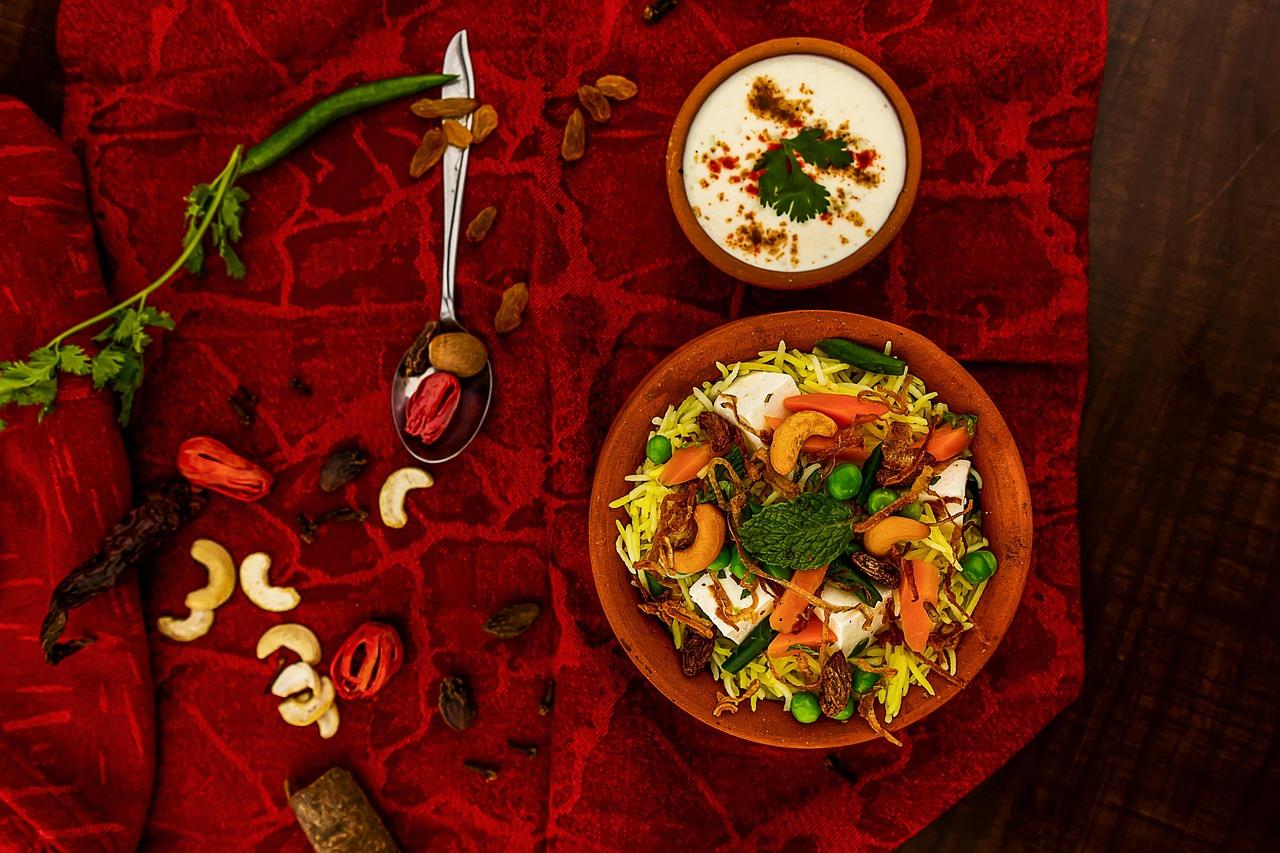
A mild, creamy biryani: rice and husked green gram roasted in ghee, then cooked in coconut milk with peas, carrots, potatoes, peanuts and cashews, and finished with soft fried paneer and a fresh coriander yogurt. Serve hot, garnished with more fried cashews and paneer.
 Indian
