
AI-generated image
Libba
Sand-baked Bedouin bread
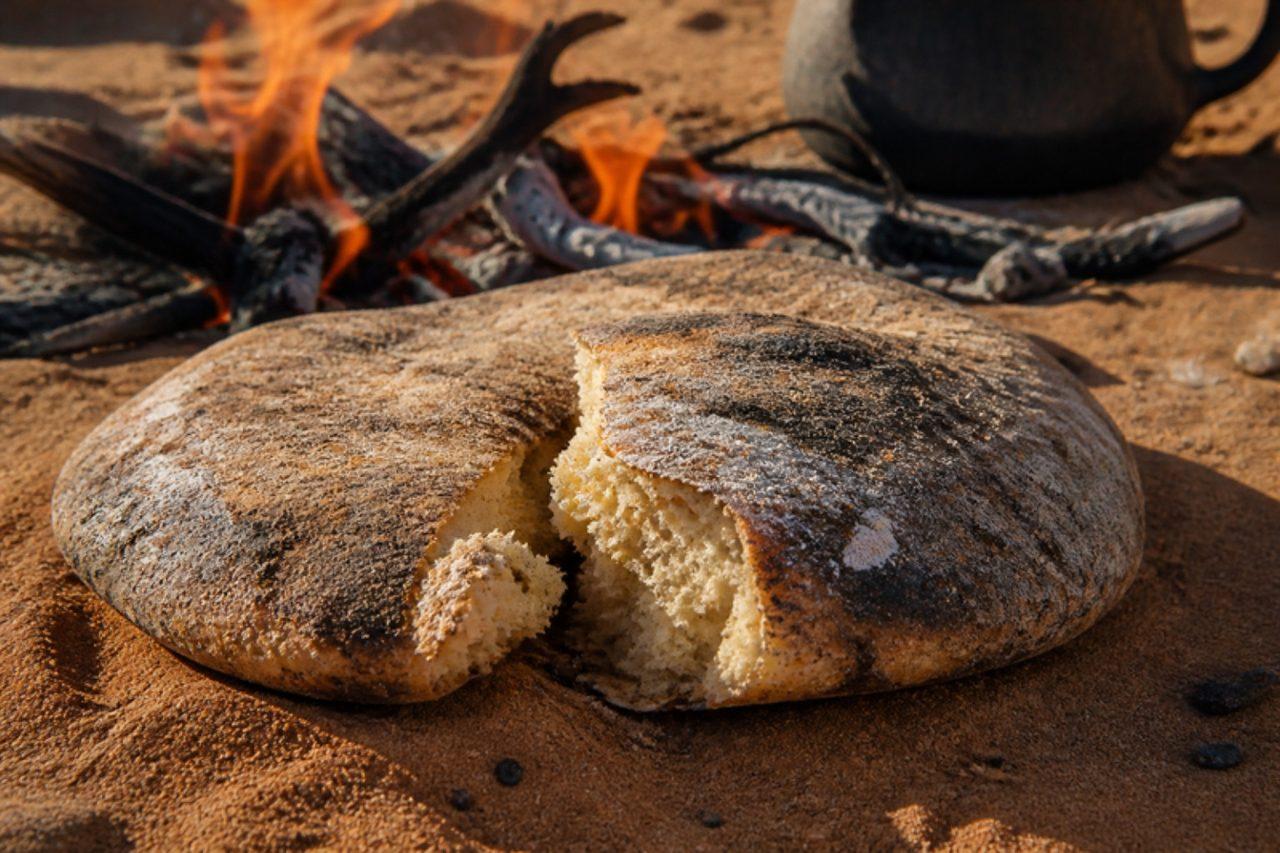
Libba: Sinai Bedouin bread baked under the hot sand and embers of a campfire


Around desert campfires in South Sinai, Bedouin cooks still bake libba the old way: a thick disc of plain flour and water is laid on sand heated by the fire, buried under embers and hot sand, then knocked and brushed clean. The crust comes out smoky and blistered, the inside dense and chewy, and it is torn and eaten hot with sweet tea, olive oil, honey or a pot of lentils. On a beach or in a desert camp, use only clean sand away from paths, and a home oven with a pizza stone is a good stand-in. The usual mistake is a disc that is too thick, which stays raw in the middle; keep it about 2 cm. Chef's tip: tap the finished loaf with a stick; a hollow knock means it is cooked through.
- Total time
- 45 min
- Difficulty
- easy
- Serves
- 4
Ingredients
- 9 oz wholemeal flour
- 9 oz plain flourplus a little for shaping
- 1 tsp salt
- 1 ¼ cups waterroughly; add as needed
To serve
- 3 tbsp olive oil (optional)
Shop this recipe on Amazon
What you'll need
Spices & pantry
Links open Amazon in a new tab. As an Amazon Associate, WhatToEat.Today earns from qualifying purchases.
Method
0/7 doneStep 1: Build a wood fire on clean sand and let it burn for about 45 minutes, until there is a deep bed of glowing embers and the sand underneath is very hot. At home, heat the oven to 475°F with a pizza stone or heavy baking tray inside for 30 minutes instead.
Step 2: Mix 9 oz wholemeal flour, 9 oz plain flour and 1 tsp salt in a bowl, then add 1 ¼ cups water gradually, mixing with your hand, until it forms a firm, slightly sticky dough.
Step 3: Knead on a lightly floured surface until smooth, then rest it under a cloth while the fire burns down.
8 minStep 4: Shape the dough into a round about 25 cm across and 2 cm thick, pressing it out with your palms.
Step 5: Rake the embers aside, lay the bread directly on the hot sand and cover it with a layer of hot sand, then the embers. At home, bake it on the hot stone.
1 minStep 6: Bake for 12 minutes, then uncover, turn it over with a stick or tongs, cover again and bake until firm all over.
25 minStep 7: Lift it out, knock it with a stick and brush off the sand with a cloth. It should sound hollow when tapped. Tear and eat warm, with 3 tbsp olive oil if you like.
Nutrition per serving
- Calories
- 450 kcal
- Protein
- 15 g
- Carbs
- 92 g
- Fat
- 2 g
- Fibre
- 6 g
Nutrition values are estimates.
KrazyBadal
Good to know
- How long does libba take?
- About 45 minutes in total: 15 minutes to prepare and 30 minutes to cook.
- How many people does it serve?
- 4 as written. Change the servings above the ingredients and every amount scales to match.
- Is it vegan?
- Yes. It has no meat, fish, dairy or eggs.
- What can I use instead of plain flour?
- Self-raising flour, same amount (then leave out the baking powder).
Reviews
No reviews yet. Be the first to cook it.
Rate this recipe
Sign in to rate and review this recipe.
You might also like
Ful nabitSprouted fava bean soup
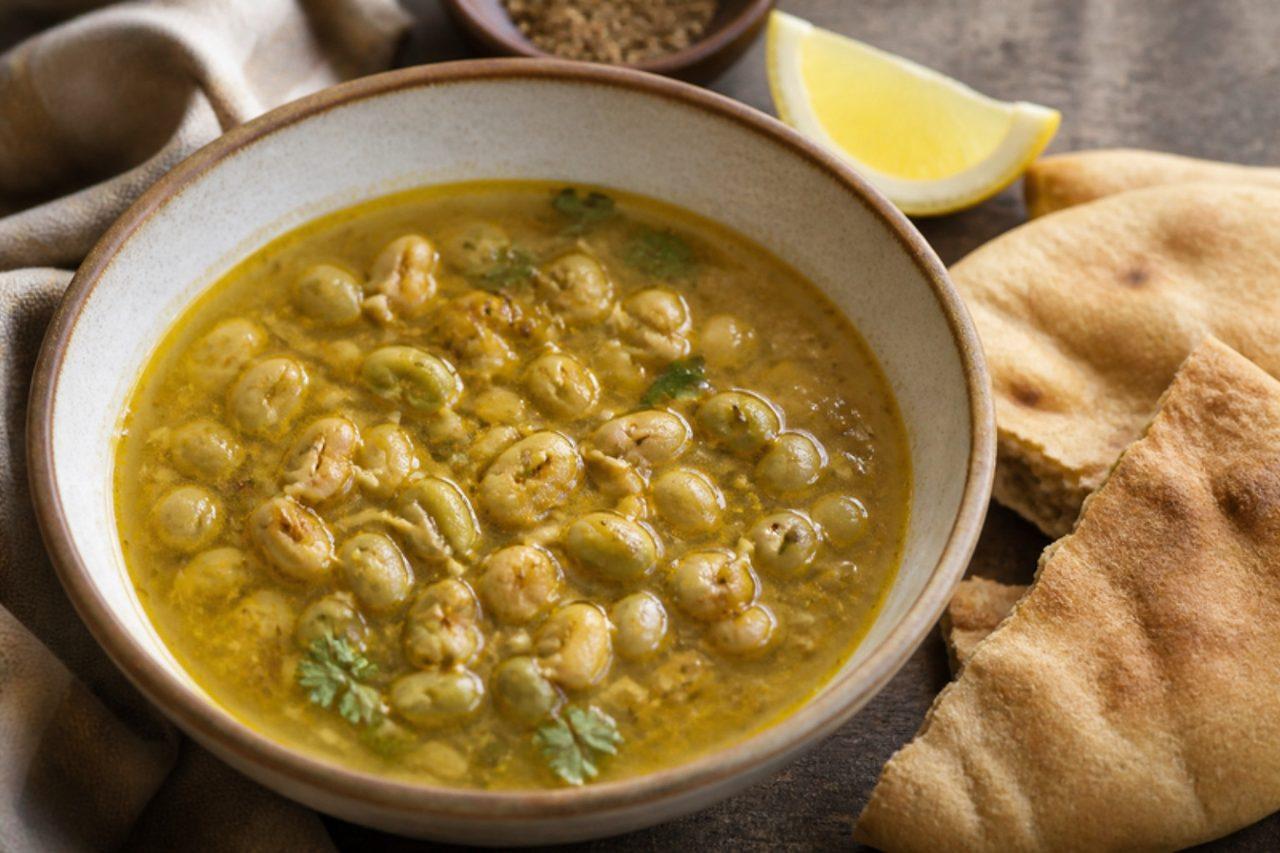
Sprouted beans are ladled out with their cooking liquor in Cairo homes when the weather turns cold or someone is feeling run down, and Egyptians swear by the broth as a pick-me-up. The beans are soaked and left to sprout for a few days, then simmered with onion, garlic and cumin into a light, earthy soup that is sharpened at the table with plenty of lemon. You can eat the beans with a spoon or pop them from their skins. Allow 3 to 4 days for sprouting, although the hands-on work is only about 20 minutes. People with G6PD deficiency (favism) must not eat fava beans. Chef's tip: stop the sprouting when the shoots are about 1 cm long; longer sprouts taste grassy and bitter.



ChipaCheese bread rings
In Paraguay you hear 'chipa, chipa!' called by vendors with big baskets on buses and street corners, and every family bakes it for Holy Week, when chipa is the food of Good Friday. Cassava starch, a little cornmeal, butter, eggs and a lot of hard cheese are kneaded into a dough scented with aniseed, shaped into rings or small rolls and baked in a hot oven, traditionally a domed clay tatakua. It's chewy, crisp outside and best warm with cocido (toasted yerba tea). Chef's tip: the dough should feel soft and slightly greasy; add milk a spoon at a time, as too much makes the chipa spread flat.
 Paraguayan
SalufPuffy flatbread
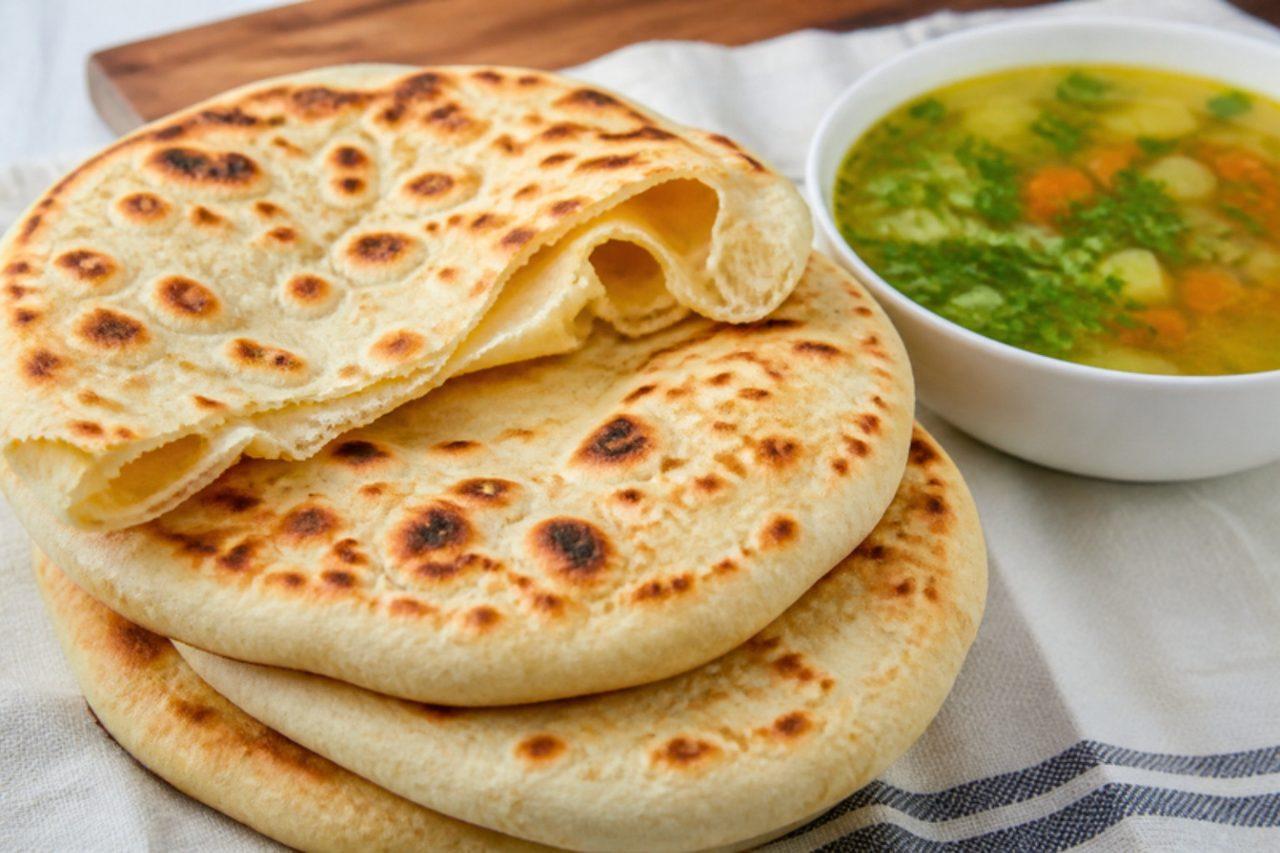
Saluf is the everyday bread of Yemenite Israelis, slapped onto a hot pan or taboon in Rosh HaAyin and Sha'arayim in Rehovot and eaten with marak temani, hilbe and zhug. It is soft and blistered, thicker than pita and with no pocket, made to tear and dunk. Home cooks often roll it too thin, which gives a cracker; it should be about 1 cm thick so it stays pillowy. Chef's tip: cook it under a lid on a very hot dry pan for the first minute, which traps steam and puffs it the way a taboon does.
 Israeli