
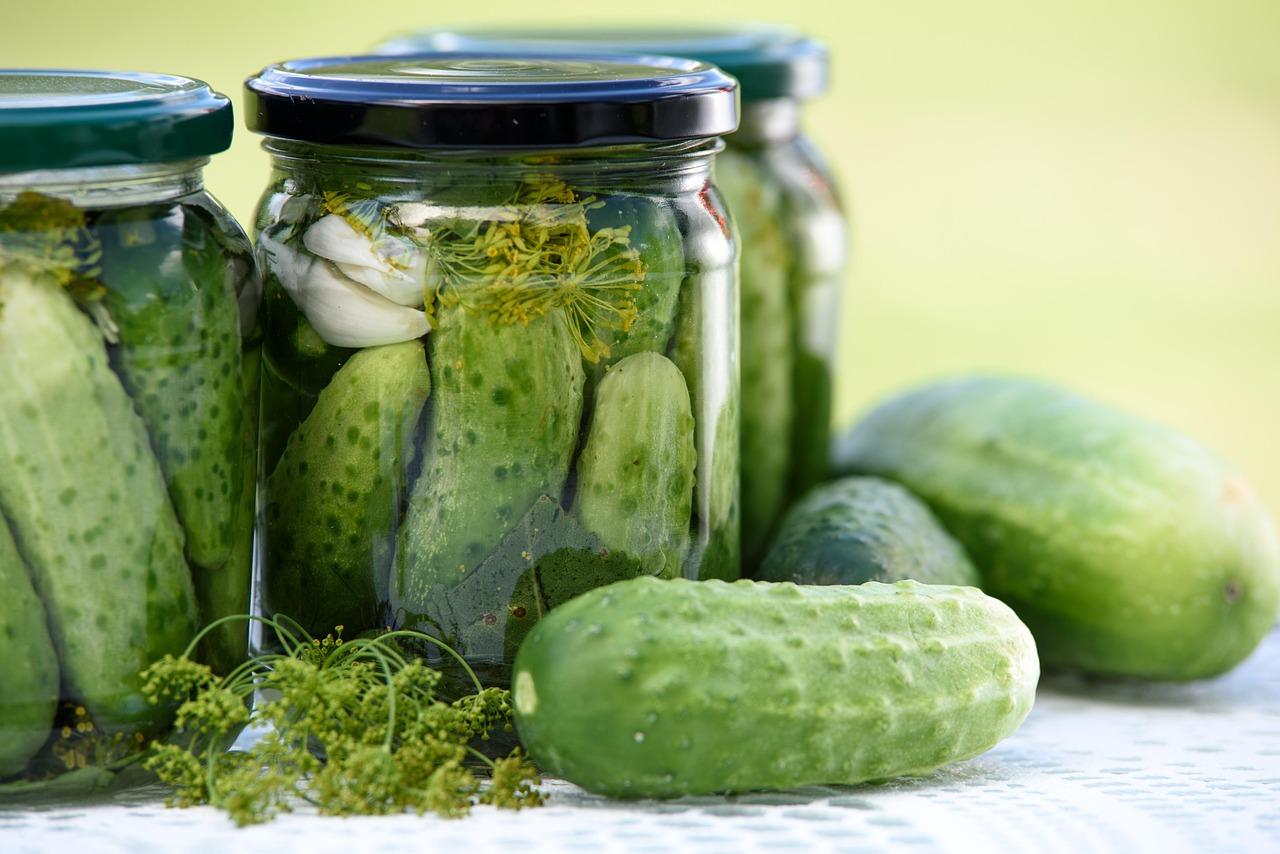
Spreewälder Gurken
Dill-fermented gherkins
Spreewälder Gurken: dill-fermented gherkins from the Spreewald



In the Spreewald, the forest and canal country south-east of Berlin, cucumbers have been fermented in barrels of dill brine for centuries, and in late summer the riverbanks are lined with stalls selling them by the jar. These salt-fermented gherkins are sour, garlicky and crunchy, eaten as a snack, alongside sandwiches or with jacket potatoes and quark. No vinegar is used: lactic fermentation does the souring. The most common mistake is letting cucumbers poke above the brine, where mould can start. Chef's tip: choose small, firm, freshly picked cucumbers and add a few vine or oak leaves; their tannins keep the gherkins crisp.
- Total time
- 30 min
- Difficulty
- easy
- Serves
- 8
Ingredients
- 2 ¼ lb small pickling cucumbers8–10 cm long, very fresh
- 4 ¼ cups water
- 1 ¾ oz fine sea salt (no iodine)
- 4 cloves garlicpeeled and halved
- 1 tsp yellow mustard seeds
- 1 tsp black peppercorns
- 4 vine, oak or blackcurrant leaves (optional)
- 1 slice of fresh horseradish (optional)
Shop this recipe on Amazon
Spices & pantry
Fresh ingredients (3)
Links open Amazon in a new tab. As an Amazon Associate, WhatToEat.Today earns from qualifying purchases.
Method
0/7 doneStep 1: Sterilise a 2-litre jar (or two 1-litre jars) and lids: wash in hot soapy water, rinse, then heat the jar in a 250°F oven for 15 minutes and boil the lids for 5 minutes. Let them cool before filling.
20 minStep 2: Soak the 2 ¼ lb small pickling cucumbers in cold water for 1 hour, scrub gently and trim a thin slice from the blossom end, where the enzymes that cause softening sit.
5 minStep 3: Bring the 4 ¼ cups water and 1 ¾ oz fine sea salt (no iodine) to the boil, stir until dissolved and let it cool completely.
5 minStep 4: Put half the 4 dill flower heads or a big bunch of dill, 4 cloves garlic, 1 tsp yellow mustard seeds, 1 tsp black peppercorns, 2 bay leaves, 4 vine, oak or blackcurrant leaves and 1 slice of fresh horseradish in the jar. Pack the cucumbers in tightly standing upright, then add the rest of the flavourings.
5 minStep 5: Pour over the cold brine so the cucumbers are covered by at least 2 cm; weigh them down with a small clean plate or a zip bag of brine. Close the lid loosely to let gas escape.
3 minStep 6: Leave at cool room temperature (18–72°F) for 5–8 days. The brine turns cloudy and bubbles, and the cucumbers change from bright to olive green; taste one from day 5. A white film on top can be skimmed off, but throw the whole batch away if you see fuzzy or coloured mould or it smells rotten.
5 minStep 7: When they are as sour as you like, close the lid tightly and move to the fridge. They keep for 2–3 months in the fridge, always under the brine; use a clean fork to take them out.
2 min
Nutrition per serving
- Calories
- 20 kcal
- Protein
- 1 g
- Carbs
- 4 g
- Fat
- 0 g
- Fibre
- 1 g
Nutrition values are estimates.
KrazyBadal
Good to know
- How long does spreewälder Gurken take?
- About 30 minutes in total.
- How many people does it serve?
- 8 as written. Change the servings above the ingredients and every amount scales to match.
- Is it vegan?
- Yes. It has no meat, fish, dairy or eggs.
- Is it gluten free?
- Yes, as written. Check the labels on stock, sauces and spice mixes, which sometimes contain gluten.
- Can I make it ahead?
- Yes. It keeps well, so you can cook it earlier in the day or the day before and reheat it.
- What can I use instead of small pickling cucumbers?
- Courgette, same weight (in salads, use young ones).
- What can I use instead of garlic?
- ½ tsp garlic paste or ⅛ tsp garlic powder per clove.
Reviews
No reviews yet. Be the first to cook it.
Rate this recipe
Sign in to rate and review this recipe.
You might also like
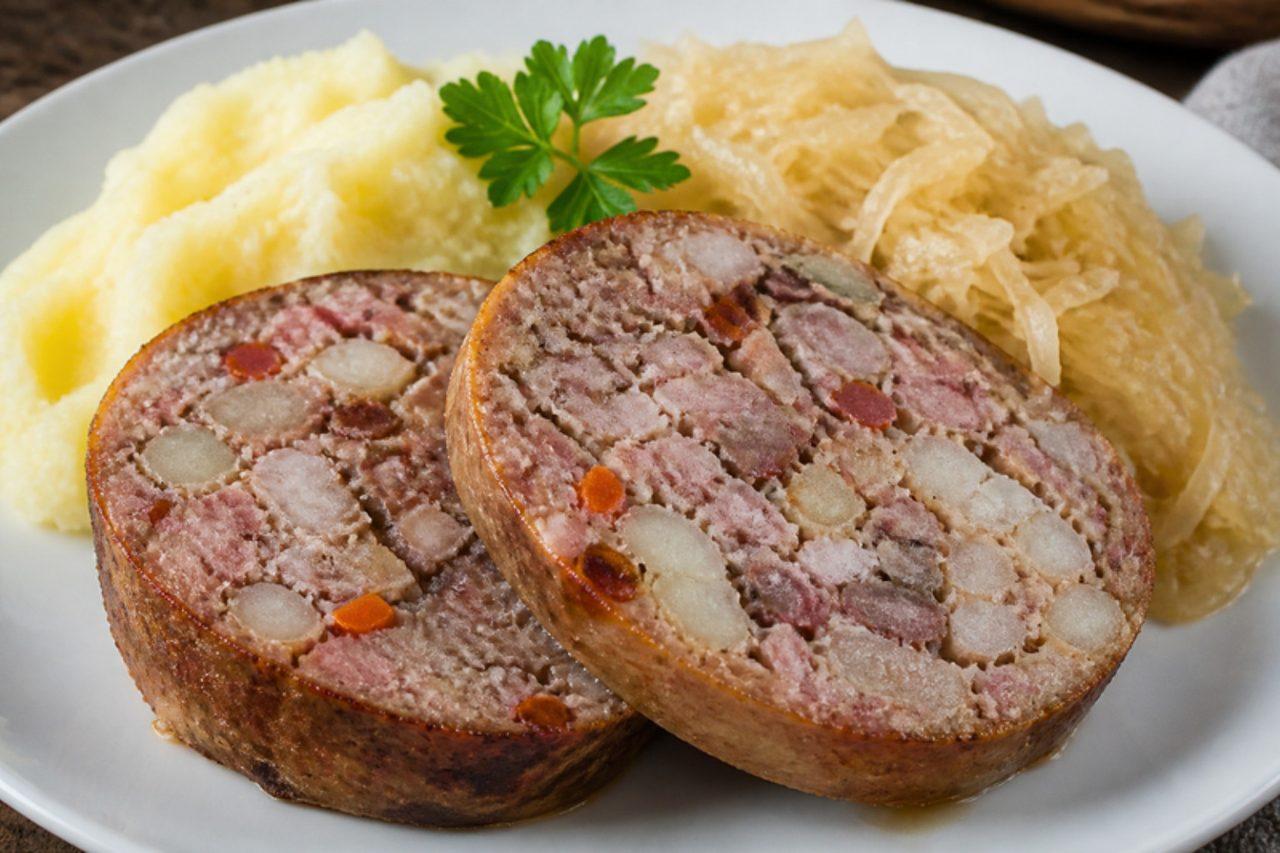
Pfälzer SaumagenStuffed pig's stomach
Saumagen is the pride of the Palatinate, served at wine-village festivals and family dinners from the Haardt hills to Ludwigshafen. A cleaned pig's stomach is stuffed with diced pork shoulder, pork sausage meat, potato and carrot seasoned with marjoram and nutmeg, poached slowly, then sliced thick and fried until crusty. The stomach works only as a casing and is ordered from a butcher; if you can't get one, bake the same filling in a covered terrine in a water bath. Serve with sauerkraut and mashed potato. Chef's tip: fill the stomach only three-quarters full, or it bursts as the potatoes swell.

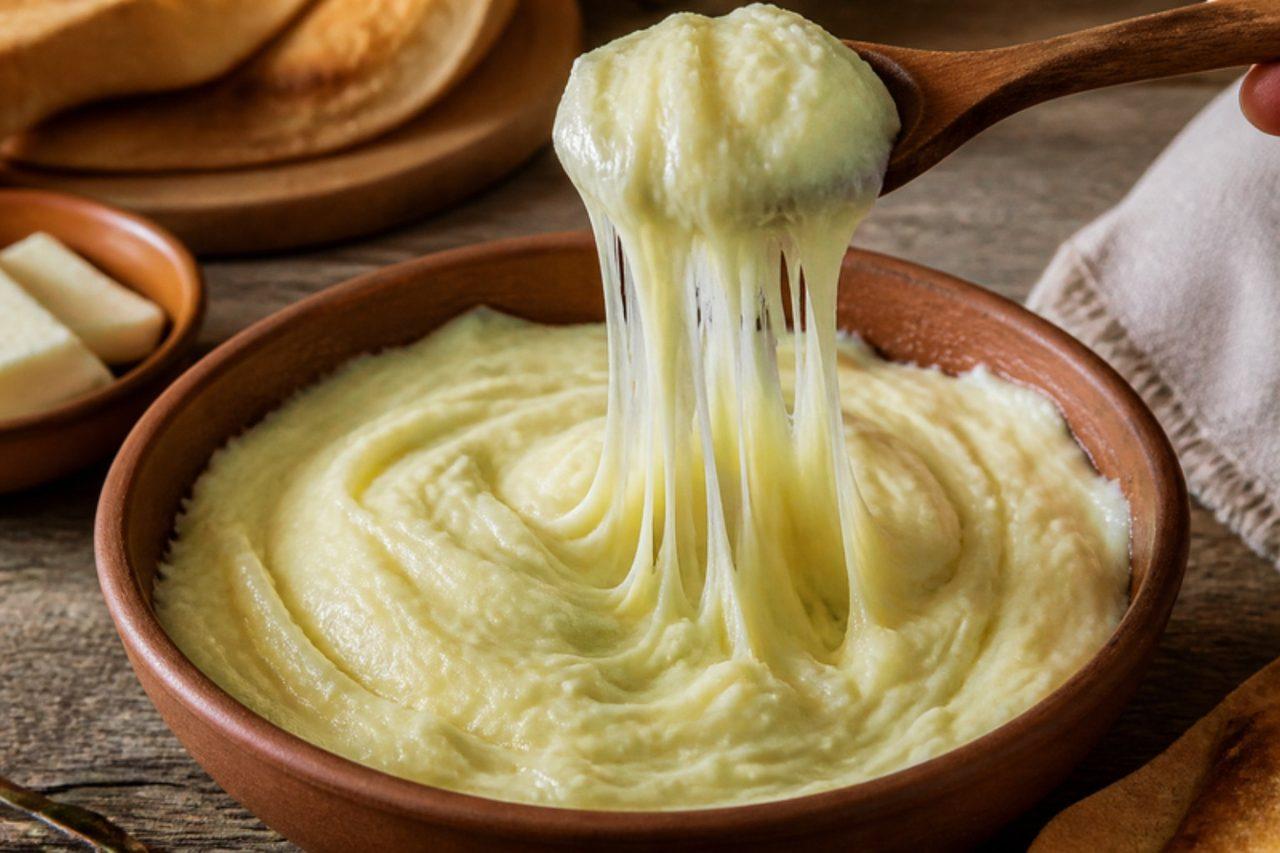
TashmijabiMashed potatoes with stretchy cheese
Potatoes grow well in the cold valleys of Svaneti, and tashmijabi is how families around Mestia turn them into a feast dish: they are mashed hot, then beaten with handfuls of young sulguni until the purée becomes glossy and stretches from the spoon in long strands. It is served with grilled meat, kubdari or simply with pickles and Svan salt. A common mistake is letting the potatoes cool before adding the cheese; they must be piping hot for the cheese to melt and stretch. Chef's tip: keep the pan on a low heat while you beat, and use a firm wooden spoon. Most sulguni uses animal rennet; choose a vegetarian one or use mozzarella.
 Georgian
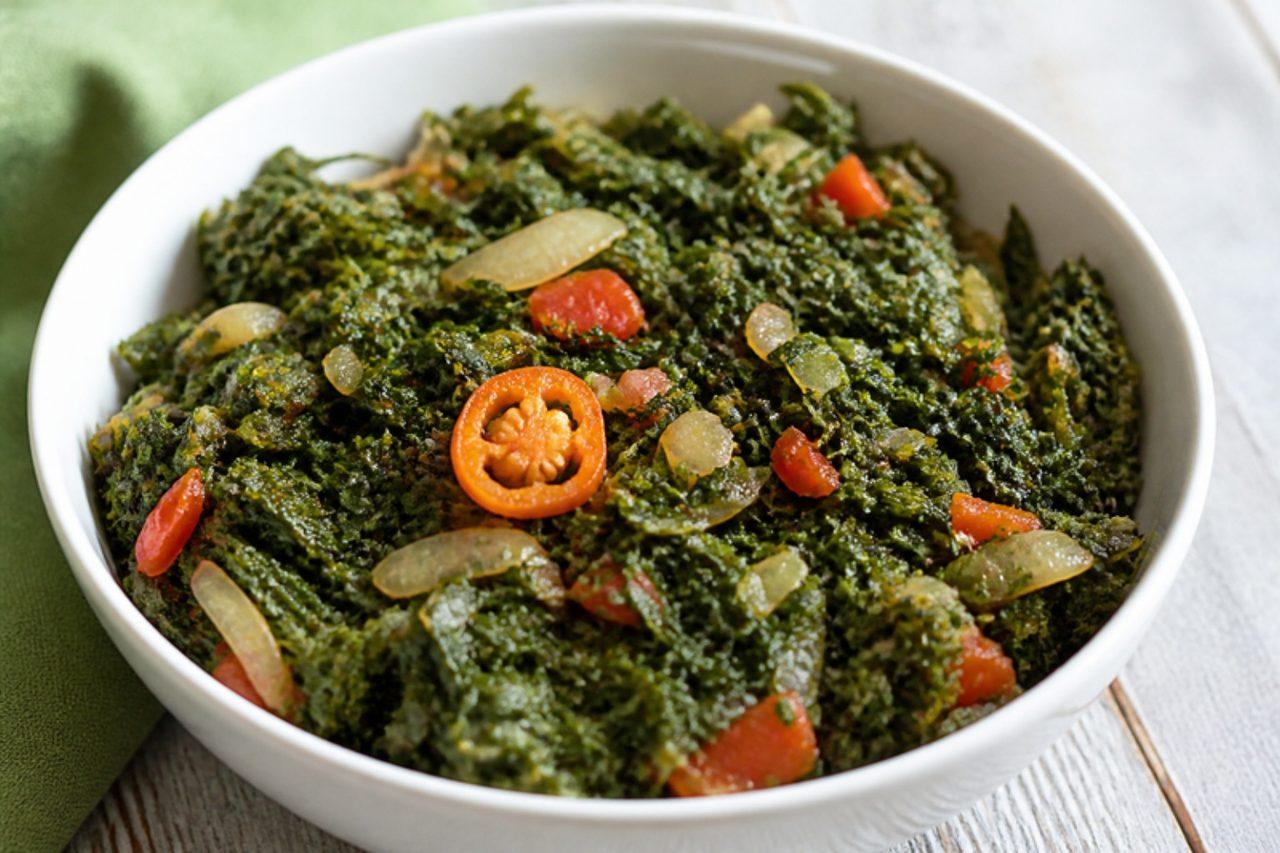
Jamaican callalooSteamed callaloo greens
In Jamaica, callaloo means the leaves and tender stems of a type of amaranth, sold in big bundles in every market from Coronation Market in Kingston to Santa Cruz in St Elizabeth. It's steamed down with onion, tomato, garlic and thyme into soft, savoury greens with a mild mineral sweetness, and eaten at breakfast with fried dumplings, boiled green bananas or hard dough bread, or as a side at dinner. Spinach or Swiss chard can stand in if you can't find callaloo. Chef's tip: peel the fibrous skin from the thicker stems with a small knife and slice the stems and leaves finely across, about 1 cm wide. That's how Jamaican cooks get callaloo that's tender all the way through rather than stringy.
 Jamaican
