
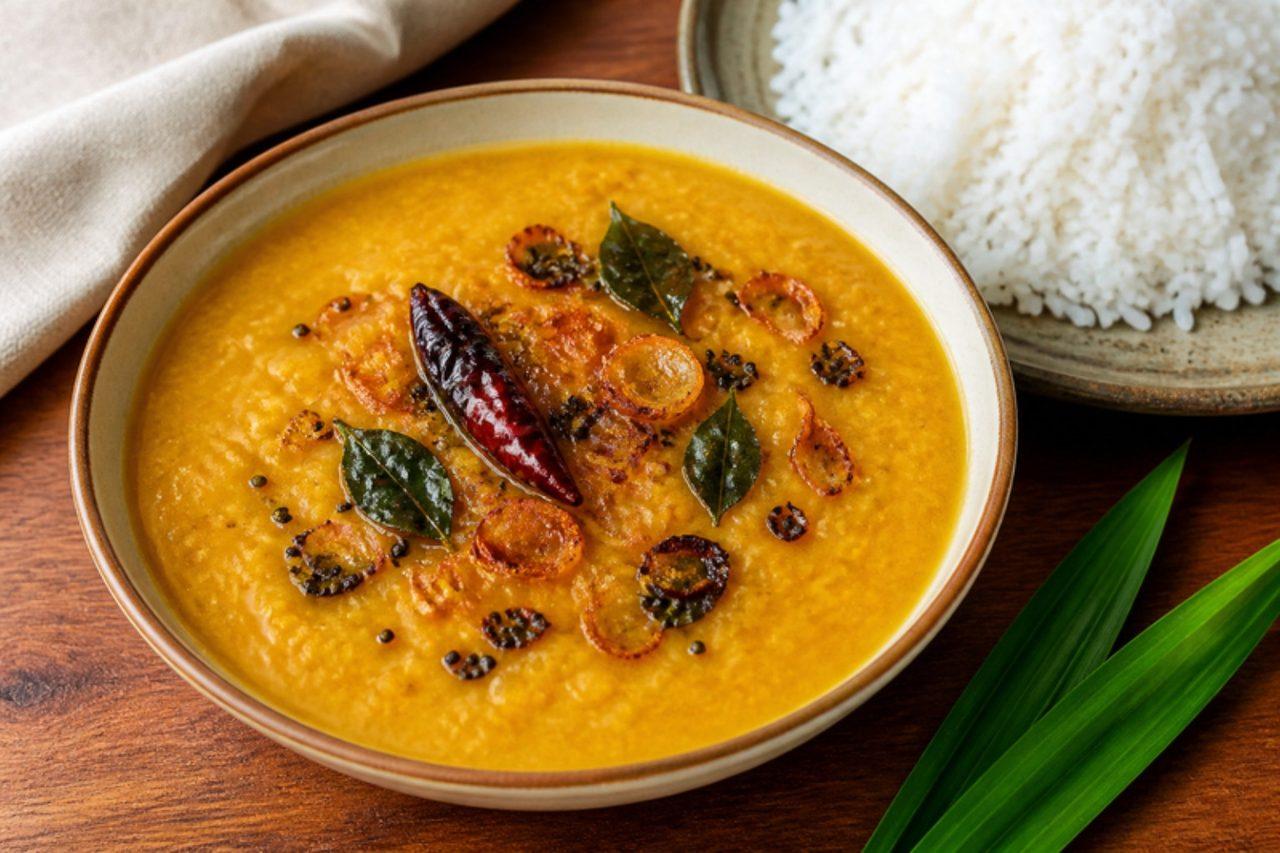
AI-generated image
Parippu
Red lentil curry
Parippu (dhal curry): Sri Lanka's everyday red lentils simmered in coconut milk with pandan and curry leaves



No Sri Lankan rice-and-curry plate is complete without a bowl of parippu, from a Colombo office canteen to a farmhouse kitchen in the dry zone; many families also mop it up with bread or pol roti for breakfast. Unlike a North Indian dal, the red lentils are cooked with turmeric, green chilli and a strip of rampe (pandan leaf), then softened with thin coconut milk and finished with a sizzling tempering of mustard seeds, shallots, dried chilli and curry leaves, so it tastes mellow, fragrant and only gently spicy. Keep it pourable: it thickens a lot as it stands. The usual mistake is adding the coconut milk too early and boiling it hard, which makes it split and grainy. Chef's tip: stir the thick coconut milk in off the heat at the very end; it gives a silky, almost creamy finish without curdling.
- Total time
- 30 min
- Difficulty
- easy
- Serves
- 4
Ingredients
- 7 oz red lentils (masoor dal)rinsed until the water runs clear
- 2 ½ cups water
- ½ tsp ground turmeric
- 2 green chilliesslit lengthways
- 1 pandan leaf (rampe)5 cm piece; or leave out
- 1 cup coconut milkmixed 1:1 with water for thin milk
- ½ cup thick coconut milk
- 1 tsp salt
For the tempering
- 2 tbsp coconut oil
- 1 tsp black mustard seeds
- 4 shallotsthinly sliced (or 1 small red onion)
- 2 garlic clovessliced
- 2 dried red chilliesbroken in half
- ½ tsp cumin seeds
Shop this recipe on Amazon
Spices & pantry
Fresh ingredients (3)
Links open Amazon in a new tab. As an Amazon Associate, WhatToEat.Today earns from qualifying purchases.
Method
0/6 doneStep 1: Put 7 oz red lentils (masoor dal), 2 ½ cups water, ½ tsp ground turmeric, 2 green chillies and 1 pandan leaf (rampe) in a medium pan. Bring to the boil over a medium-high heat and skim off the grey foam that rises.
5 minStep 2: Turn the heat to medium-low, half-cover and simmer for 12–15 minutes, stirring now and then, until the lentils have collapsed and look pale yellow and soft when pressed against the side of the pan.
15 minStep 3: Stir in 1 cup coconut milk and 1 tsp salt and simmer gently for 3 minutes; it should barely bubble. Don't let it boil hard or the coconut milk turns grainy.
3 minStep 4: For the tempering, heat 2 tbsp coconut oil in a small frying pan over a medium-high heat. Add 1 tsp black mustard seeds and wait until they crackle and pop, about 30 seconds.
Step 5: Add ½ tsp cumin seeds, 4 shallots, 2 garlic cloves, 2 dried red chillies and 12 fresh curry leaves (stand back, the leaves spit). Fry for 3–4 minutes, until the shallots are golden brown at the edges and the kitchen smells nutty.
4 minStep 6: Tip the tempering into the lentils, take the pan off the heat and stir in ½ cup thick coconut milk. Taste for salt. The dhal should pour slowly from a spoon; loosen with hot water if it has thickened. Serve with rice, pol sambol and a vegetable curry.
1 min
Nutrition per serving
- Calories
- 300 kcal
- Protein
- 14 g
- Carbs
- 30 g
- Fat
- 14 g
- Fibre
- 6 g
Nutrition values are estimates.
KrazyBadal
Good to know
- How long does parippu take?
- About 30 minutes in total: 5 minutes to prepare and 25 minutes to cook.
- How many people does it serve?
- 4 as written. Change the servings above the ingredients and every amount scales to match.
- Is it vegan?
- Yes. It has no meat, fish, dairy or eggs.
- Is it gluten free?
- Yes, as written. Check the labels on stock, sauces and spice mixes, which sometimes contain gluten.
- What can I use instead of red lentils (masoor dal)?
- Yellow split peas (soak 2 hours and cook longer).
- What can I use instead of ground turmeric?
- Leave it out (it mostly adds colour).
Reviews
No reviews yet. Be the first to cook it.
Rate this recipe
Sign in to rate and review this recipe.
You might also like

Sayur lodehVegetables in coconut milk
Sayur lodeh is everyday cooking in Central Java, made in big pots in Solo and Semarang kitchens and ladled over rice, with lontong rice cakes at Lebaran, or alongside opor and sambal goreng on festive tables. It's soupy rather than thick: a fragrant broth of coconut milk, galangal, lemongrass and lime leaf that carries chunks of aubergine, long beans, chayote and sweetcorn, plus tempeh and tofu to make it a meal. The flavour is mellow and slightly sweet, so the heat comes from sambal on the side. Chef's tip: keep the pot at a gentle simmer once the coconut milk goes in and stir now and then — a rolling boil splits the coconut milk into oily curds.
 Indonesian


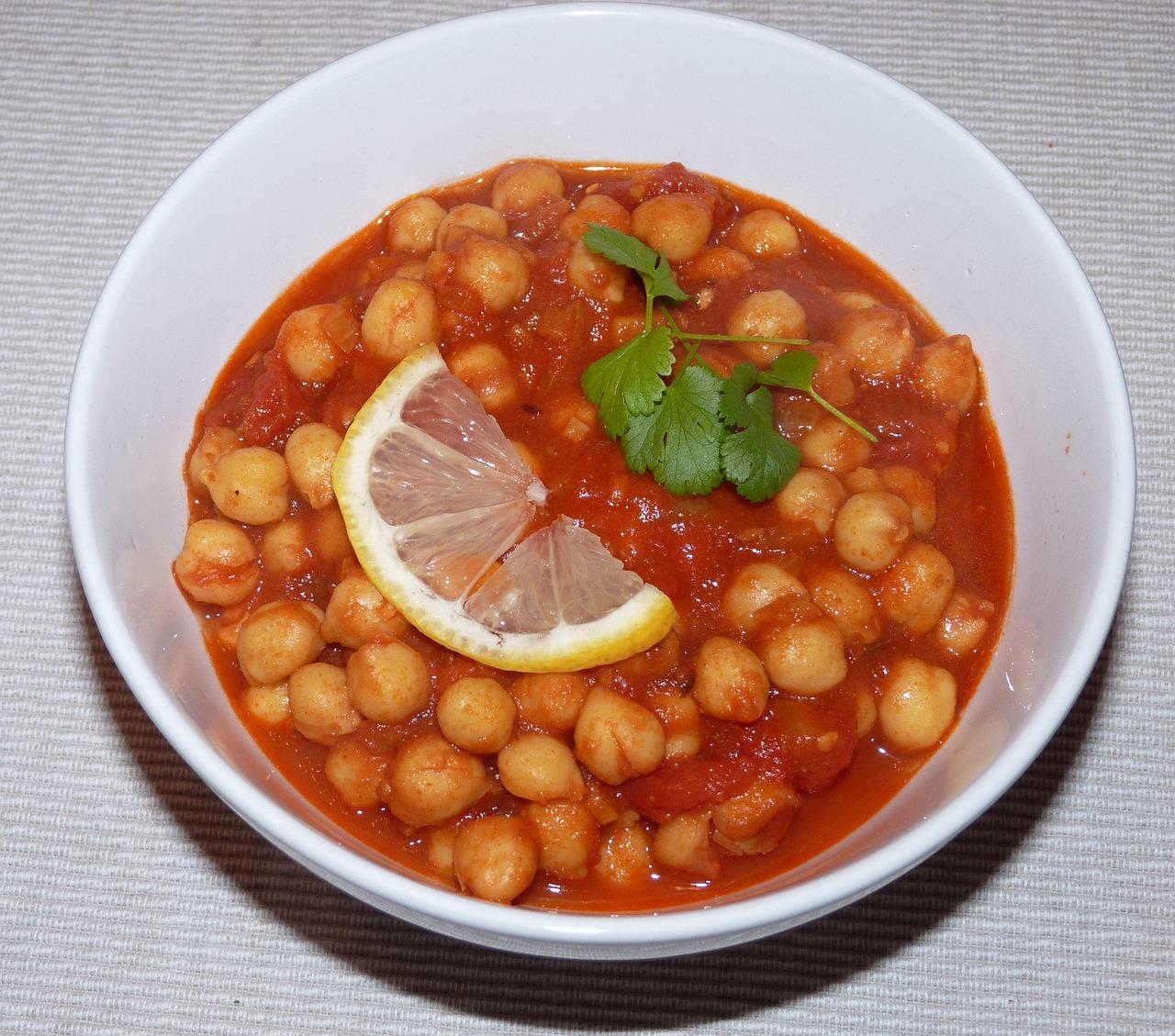
Chana masala
A North Indian staple that comes together from the store cupboard. Toasted cumin, slow-softened onion and a good spoonful of garam masala give tinned chickpeas real depth. Serve with rice, naan or a stack of warm rotis.
 Indian

Bagara bainganBaby aubergines in peanut sesame sauce
Bagara baingan is a Hyderabadi wedding dish of small aubergines cooked whole in a dark, tangy gravy of roasted peanuts, sesame, dried coconut and tamarind. Unlike a Gujarati stuffed brinjal, the aubergines here are only quartered at the base and fried until silky, then left to soak up a thin-but-rich sauce that is finished with a tempering, the 'baghar' that gives the dish its name. It's sour, nutty and gently spiced, and is served with biryani, bagara rice or plain rice. Chef's tip: choose small, glossy purple aubergines that feel heavy for their size; soft, light ones are full of seeds and turn mushy before the gravy has a chance to cling.