
AI-generated image
Taiwanese pepper buns
Peppery pork sesame buns
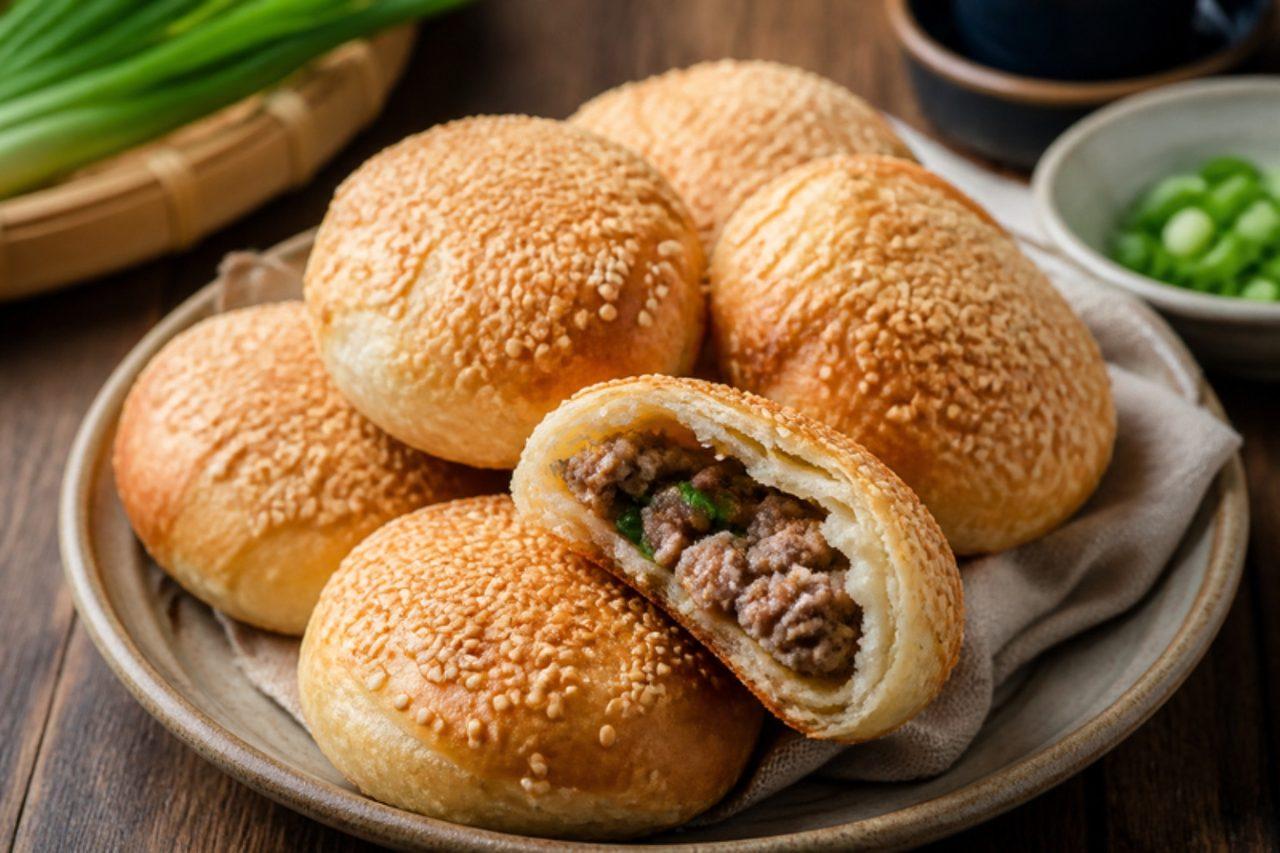
Hôo-tsio-piánn (胡椒餅): flaky sesame buns filled with peppery pork and spring onion, baked in a very hot oven
 Taiwanese
The queue at the entrance to Raohe night market in Taipei forms for these: buns slapped onto the inside wall of a blazing clay oven, then lifted out crackly, blistered and studded with sesame. Inside is a juicy filling of fatty pork mince heavy with white and black pepper and a mass of spring onion, its juices hot enough to burn, so locals nibble a small hole first and let the steam out. A home oven turned up as high as it goes, with a preheated tray or stone, gets close to the clay oven's crust. The usual mistake is mixing the spring onion into the pork in advance: it weeps water and makes the bun soggy, so add it only as you wrap. Chef's tip: chill the filling until firm before shaping; cold pork is far easier to seal inside the dough and makes a juicier bun.
- Total time
- 120 min
- Difficulty
- hard
- Serves
- 8
Ingredients
For the water dough
- 10 ½ oz plain flour
- ⅛ oz instant dried yeast
- ⅓ oz sugar
- ⅛ oz salt
- ¾ cup warm water
- ½ oz lard or neutral oil
For the oil paste
- 3 ½ oz plain flour
- 1 ¾ oz lard or neutral oil
For the filling
- 14 oz fatty pork minceabout 25% fat
- 1 ½ tbsp soy sauce
- 2 tsp sugar
- 1 ½ tbsp coarsely ground white pepper
- ¼ tsp five-spice powder
- 1 tbsp toasted sesame oil
- ½ tsp salt
- 5 ½ oz spring onionschopped, patted very dry
For the tops
- 4 tbsp white sesame seeds
- 2 tbsp waterfor brushing
Shop this recipe on Amazon
What you'll need
Spices & pantry
Fresh ingredients (2)
Links open Amazon in a new tab. As an Amazon Associate, WhatToEat.Today earns from qualifying purchases.
Method
0/12 doneStep 1: Mix 14 oz fatty pork mince, 1 ½ tbsp soy sauce, 2 tsp sugar, 1 ½ tbsp coarsely ground white pepper, 1 tsp coarsely ground black pepper, ¼ tsp five-spice powder, 1 tbsp toasted sesame oil and ½ tsp salt, stirring in one direction for 2 minutes until sticky. Cover and chill in the fridge for at least 1 hour.
2 minStep 2: For the water dough, mix 10 ½ oz plain flour, ⅛ oz instant dried yeast, ⅓ oz sugar and ⅛ oz salt, then add ¾ cup warm water and ½ oz lard or neutral oil. Knead for 8 minutes, until smooth and soft. Cover and rest for 30 minutes.
8 minStep 3: For the oil paste, rub 3 ½ oz plain flour and 1 ¾ oz lard or neutral oil together into a soft, smooth paste.
Step 4: Divide the water dough and the oil paste into eight pieces each. Flatten a piece of dough, put a ball of paste in the centre and pinch closed. Repeat, keeping the rest covered.
Step 5: Roll each ball into a long tongue, roll it up like a carpet, turn it 90 degrees, roll it long again and roll it up once more. Cover and rest for 15 minutes. This builds the flaky layers.
15 minStep 6: Heat the oven to its highest setting (at least 475°F) with a baking stone, steel or heavy tray on the middle shelf.
30 minStep 7: Roll each coil into a 12 cm round, thinner at the edges. Put a spoonful of cold filling in the middle and heap a large pinch of 5 ½ oz spring onions on top.
Step 8: Pleat the edges up over the filling and pinch tightly to seal. Turn the bun seam-side down and press it lightly into a 2.5 cm thick disc.
Step 9: Brush the tops with 2 tbsp water and press them firmly into 4 tbsp white sesame seeds so they are thickly coated.
Step 10: Put the buns seam-side down on baking paper, slide onto the hot stone or tray and bake until deep golden and blistered, turning the tray halfway.
20 minStep 11: Check one bun with a probe thermometer: the filling should read 160°F. Bake 3–5 minutes more if not.
3 minStep 12: Cool for 5 minutes before eating. Bite a small hole first: the juices inside are very hot.
Nutrition per serving
- Calories
- 430 kcal
- Protein
- 14 g
- Carbs
- 42 g
- Fat
- 23 g
- Fibre
- 2 g
Nutrition values are estimates.
KrazyBadal
Good to know
- How long does taiwanese pepper buns take?
- About 120 minutes in total: 95 minutes to prepare and 25 minutes to cook.
- How many people does it serve?
- 8 as written. Change the servings above the ingredients and every amount scales to match.
- What can I use instead of plain flour?
- Self-raising flour, same amount (then leave out the baking powder).
- What can I use instead of sugar?
- Caster sugar, same amount.
Reviews
No reviews yet. Be the first to cook it.
Rate this recipe
Sign in to rate and review this recipe.
You might also like

SakarpadaSweet fried dough diamonds
Sakarpada (shakarpara) are little sweet diamonds of a rich dough made with ghee, milk and sugar, fried until golden and crunchy. They are a Diwali favourite with tea, and the cubes go into bhusu too. They keep for weeks in an air-tight tin.
 Indian

Yaki onigiriGrilled rice balls
Yaki onigiri (焼きおにぎり) are rice balls grilled until they form a crisp, toasty crust, then brushed with soy sauce glaze. They are eaten all over Japan, at izakaya, at barbecues and from the freezer section, as a snack or with miso soup. The inside stays soft and steamy while the outside crackles. Best eaten hot, straight from the pan. Chef's tip: let the shaped rice balls dry for 10 minutes before they go in the pan. A drier surface forms a better crust and won't stick, and the glaze goes on only at the end so it doesn't burn.
 Japanese

Taiwanese grilled corn
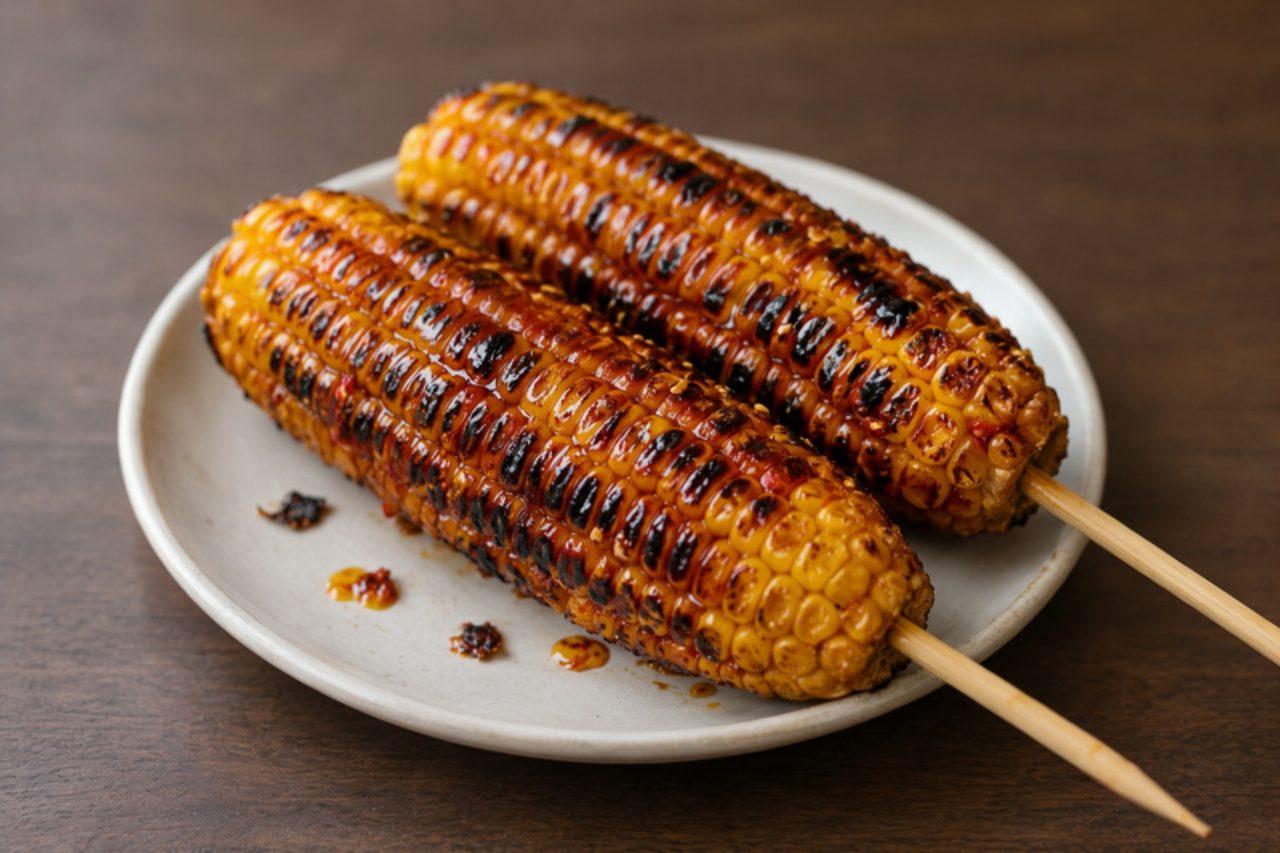
At Raohe and Shilin night markets the grilled-corn stalls are easy to find: look for the queue and the smoky, sweet smell. Cobs are par-cooked, then turned slowly over charcoal while the cook brushes them with a dark glaze of sacha sauce, thick soy paste, garlic and chilli, layer after layer, until the kernels are sticky, slightly charred and deeply savoury. It is eaten hot from a paper sleeve while walking the market. Sacha (shacha) sauce, a Taiwanese barbecue paste, usually contains dried fish and shrimp; vegetarian sacha is sold in Asian shops. Contains soy, wheat and fish. Chef's tip: brush thin coats and turn often; one thick coat burns before the corn chars.