
Tamees
Ghee and sesame flatbread
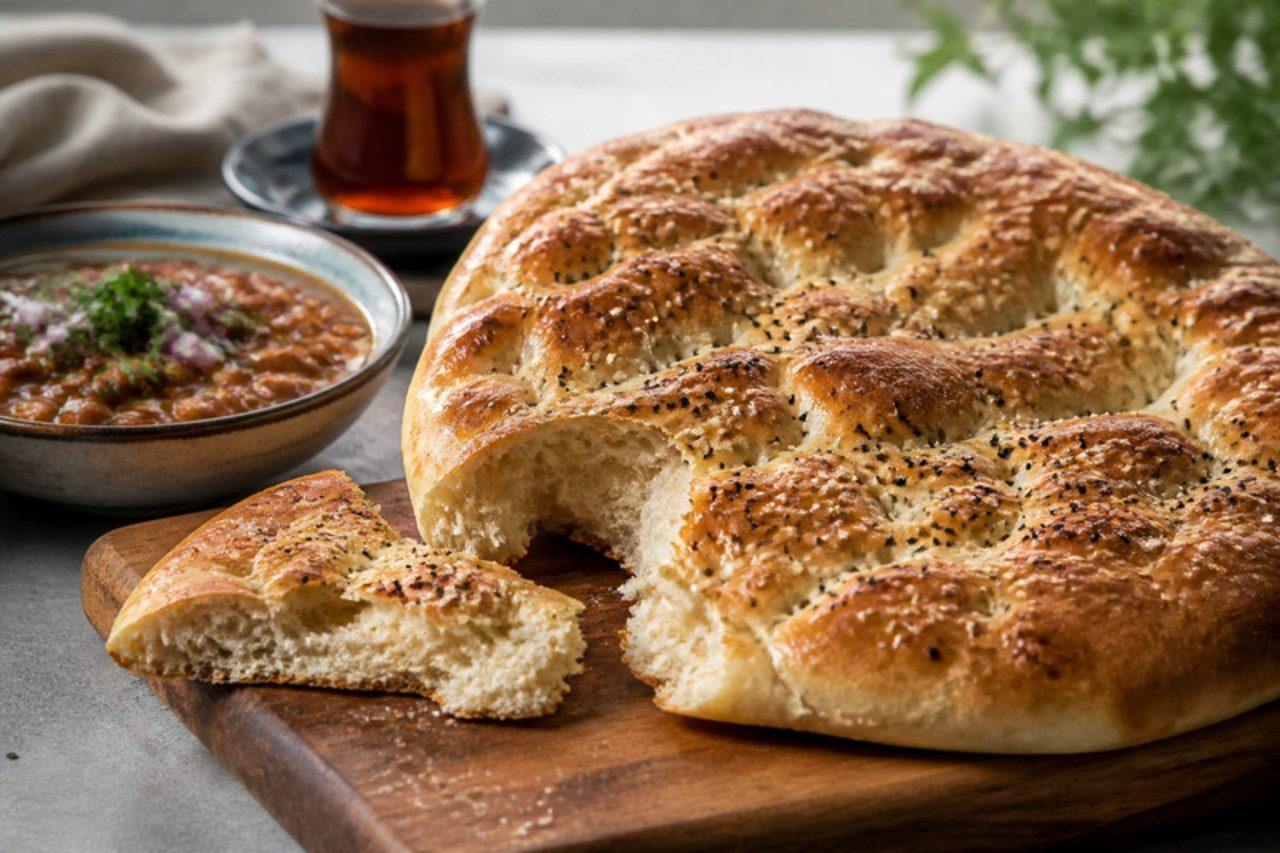
Tamees (تميس): Hejazi tandoor flatbread brushed with ghee and sesame
In the old lanes of Jeddah and around Mecca, bakeries run by families of Afghan descent pull tamees from clay tandoors before dawn, and people queue for them still blistering hot to eat with ful, cheese or honey. The bread is wide and puffy, crisp on its sesame-studded face and chewy underneath, with deep finger dimples that hold pools of melted ghee. At home a very hot oven and a preheated baking stone or heavy tray stand in for the tandoor. The usual mistake is baking at a moderate heat: the bread then dries out before it can puff and stays pale and tough. Tear it at the table and serve with a pot of ful medames, white cheese and sweet tea. Chef's tip: press the dimples right down to the tray with three fingers; shallow marks disappear as the dough springs up.
- Prep
- 100 min
- Cook
- 20 min
- Difficulty
- Medium
- Serves
- 4
- Per serving
- 560 kcal
Ingredients
For the dough
- 1 ⅛ lb plain flour
- ¼ oz instant dried yeast
- 1 tsp sugar
- 1 ½ tsp salt
- 1 ½ cups warm water
- 2 tbsp vegetable oil
For the top
- 3 tbsp gheemelted
- 2 tbsp sesame seeds
- 1 tsp nigella seeds (optional)
Tick what you have; the rest goes in the basket.
Method
0/9 doneStep 1: Mix 1 ⅛ lb plain flour, ¼ oz instant dried yeast, 1 tsp sugar and 1 ½ tsp salt in a large bowl. Pour in 1 ½ cups warm water and 2 tbsp vegetable oil and stir into a shaggy, rather soft dough.
Step 2: Knead on a lightly floured surface until smooth and springy, about 10 minutes; it should feel slightly tacky but not stick to your hands.
10 minStep 3: Cover and leave somewhere warm until doubled in size.
60 minStep 4: Put a baking stone or heavy upturned tray on the top shelf and heat the oven to its highest setting (at least 475°F) for 30 minutes.
Step 5: Knock back the dough and divide it into 4 balls. Cover and rest for 10 minutes so the gluten relaxes and the dough stretches without tearing.
10 minStep 6: On a floured sheet of baking paper, press and stretch one ball into a round about 25 cm across. Press deep dimples all over with three fingertips, right down to the paper.
Step 7: Brush with a little 1 ½ tbsp ghee and scatter over a quarter of 2 tbsp sesame seeds and 1 tsp nigella seeds.
Step 8: Slide the bread on its paper onto the hot stone and bake until puffed, spotted deep golden and crisp at the edges, 6–8 minutes. Bake the rest the same way.
28 minStep 9: Brush each hot bread with the rest of 1 ½ tbsp ghee and stack under a cloth so the crust softens slightly. Eat within the hour.
KrazyBadal
Reviews
No reviews yet. Be the first to cook it.
Rate this recipe
Sign in to rate and review this recipe.
You might also like
SalufPuffy flatbread
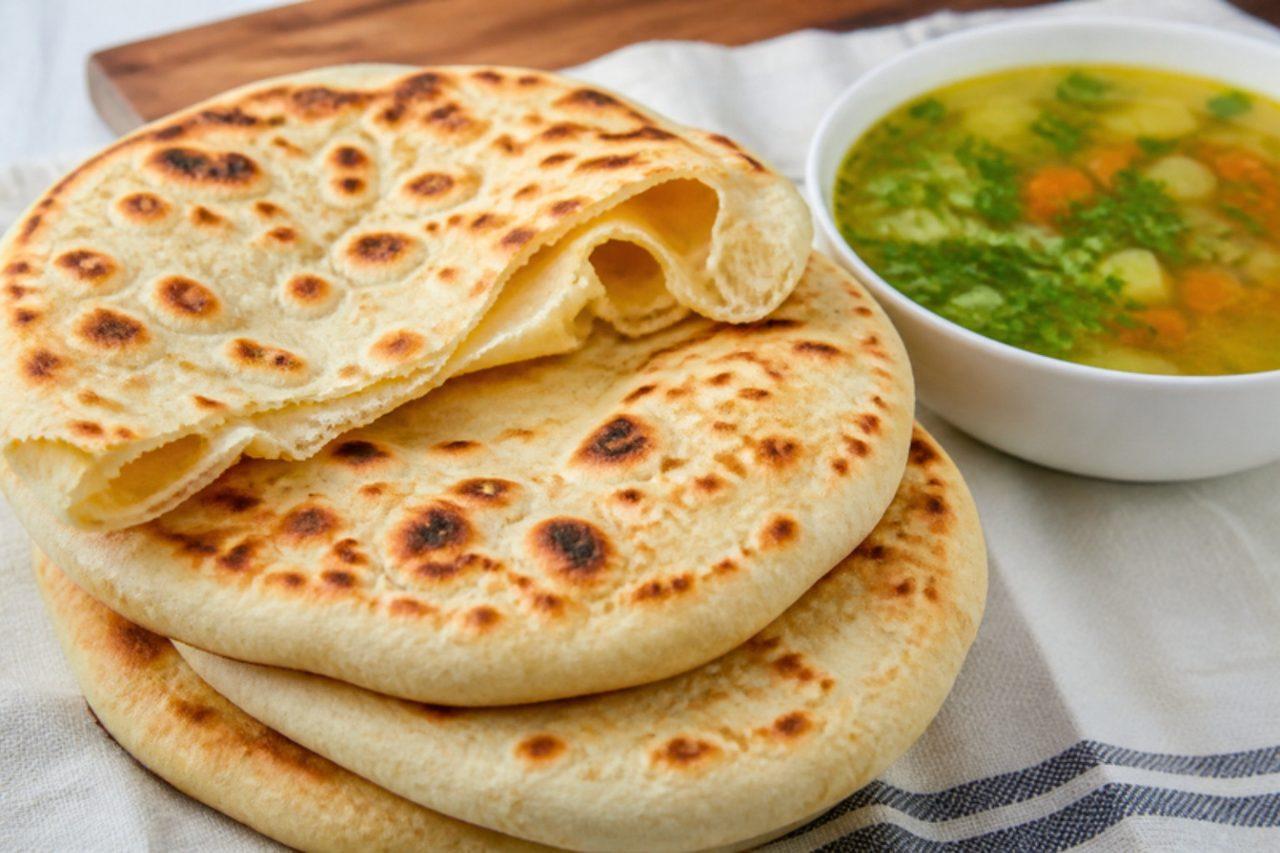
Saluf is the everyday bread of Yemenite Israelis, slapped onto a hot pan or taboon in Rosh HaAyin and Sha'arayim in Rehovot and eaten with marak temani, hilbe and zhug. It is soft and blistered, thicker than pita and with no pocket, made to tear and dunk. Home cooks often roll it too thin, which gives a cracker; it should be about 1 cm thick so it stays pillowy. Chef's tip: cook it under a lid on a very hot dry pan for the first minute, which traps steam and puffs it the way a taboon does.
 Israeli


ChipaCheese bread rings
In Paraguay you hear 'chipa, chipa!' called by vendors with big baskets on buses and street corners, and every family bakes it for Holy Week, when chipa is the food of Good Friday. Cassava starch, a little cornmeal, butter, eggs and a lot of hard cheese are kneaded into a dough scented with aniseed, shaped into rings or small rolls and baked in a hot oven, traditionally a domed clay tatakua. It's chewy, crisp outside and best warm with cocido (toasted yerba tea). Chef's tip: the dough should feel soft and slightly greasy; add milk a spoon at a time, as too much makes the chipa spread flat.
 Paraguayan

Lempeng kelapaThin coconut pancakes
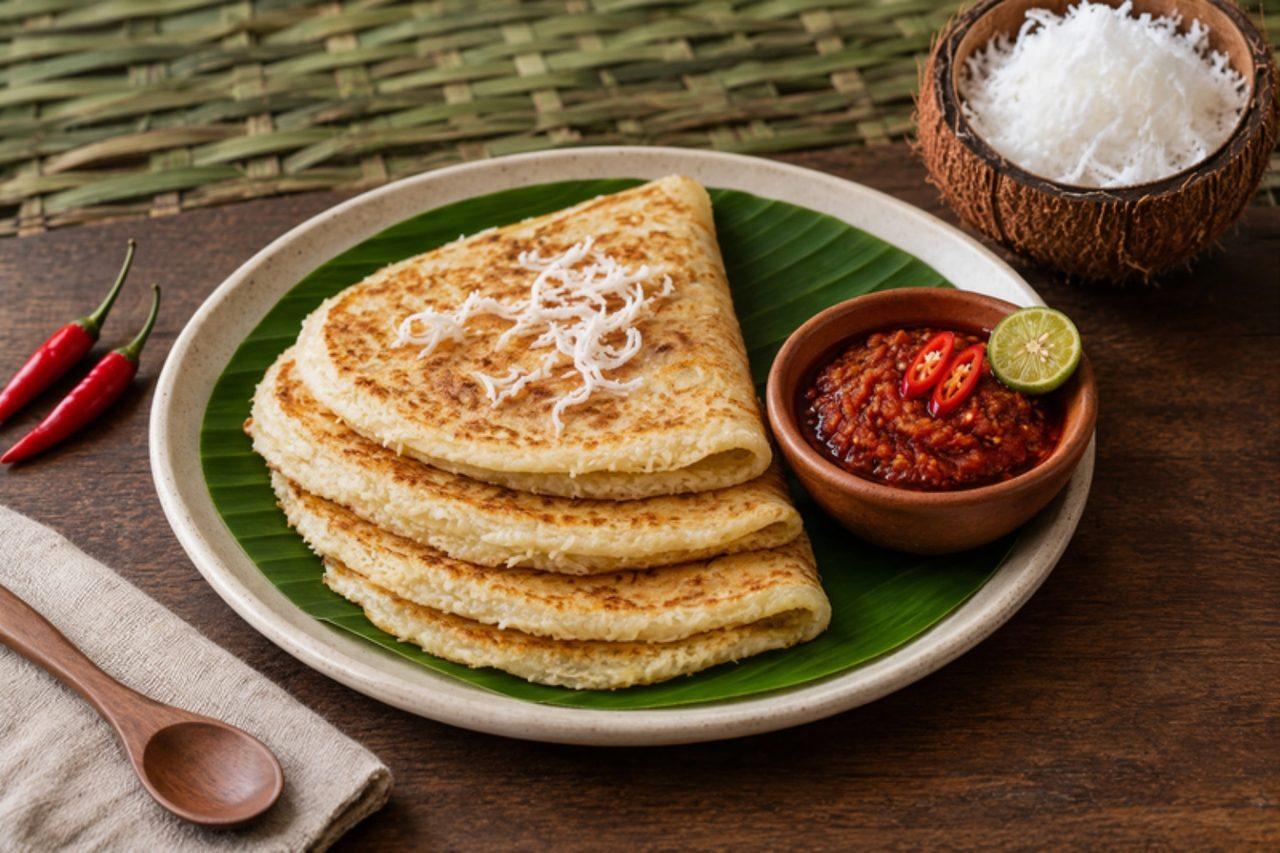
On Malaysia's east coast, in Terengganu and Kelantan, lempeng is the morning flatbread nobody buys because every home can make it in minutes: flour, freshly grated coconut, salt and water, spread thin on a griddle. It is eaten warm, torn and dipped into sambal tumis or last night's fish or vegetable curry. The mistake is a thick batter; it should spread on its own into a thin round, or the middle stays doughy. Chef's tip: let the batter rest for 10 minutes so the coconut softens and the flour hydrates, which gives lempeng that bend without tearing.
 Malaysian