
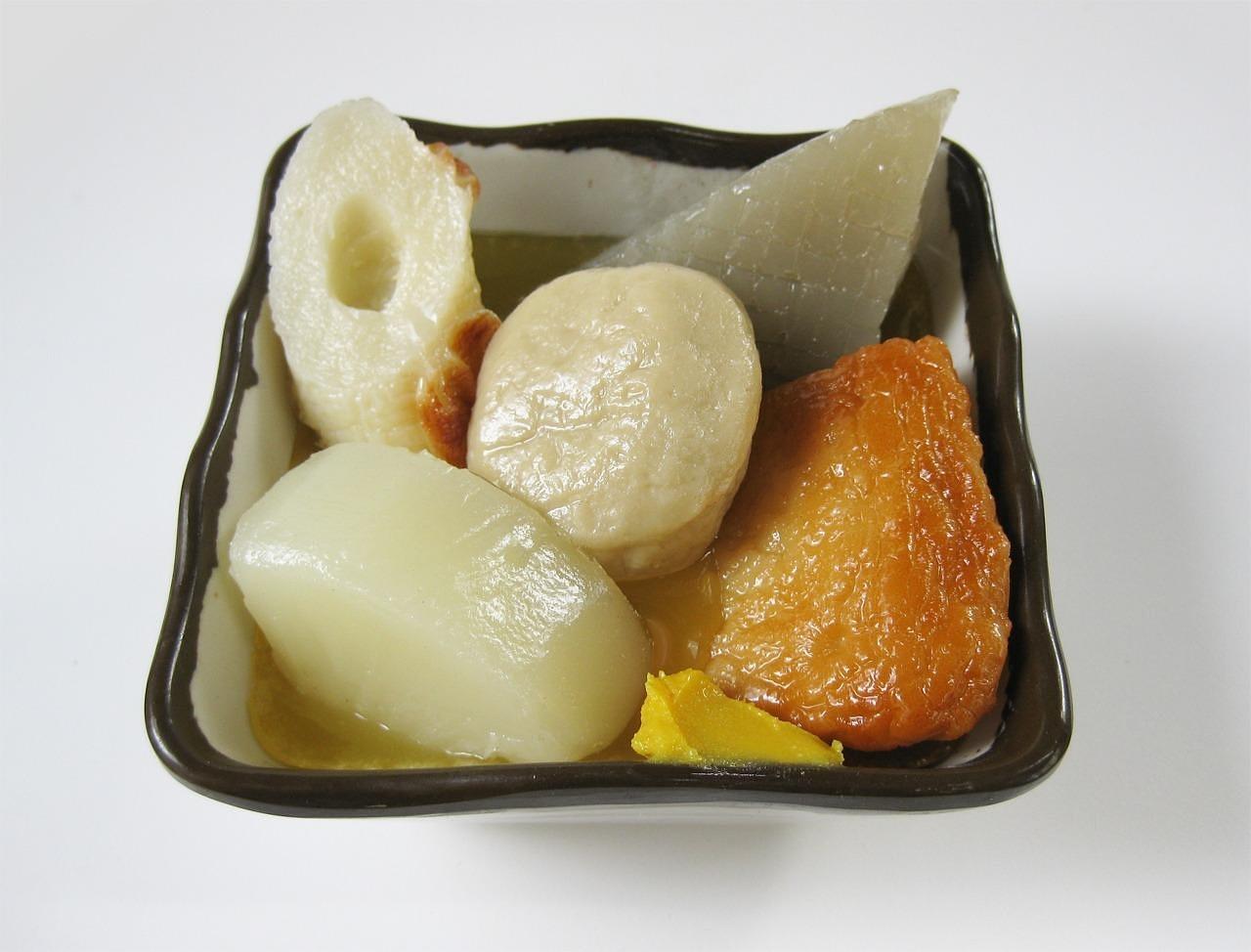
Oden (Tokyo style)
おでん: daikon, eggs, tofu, fish cakes and chewy chikuwabu simmered slowly in soy-seasoned dashi

When the evenings turn cold, Tokyo's convenience stores set out steaming trays of oden by the till, and small oden bars and street stalls fill up with office workers. Tokyo's style uses a darker, soy-seasoned dashi than the paler Kansai one, and it includes chikuwabu, a chewy tube of wheat dough that is rarely seen outside the Kanto region. Everything simmers gently for a long time, so the daikon turns translucent and soaks up the broth. Serve it straight from the pot with a dab of hot Japanese mustard. Chef's tip: make oden a day ahead and let it cool in the broth overnight; the daikon and eggs take on far more flavour as they cool than while they boil.
- Total time
- 90 min
- Difficulty
- medium
- Serves
- 4
Ingredients
For the dashi broth
- 6 ¾ cups water
- ⅓ oz kombu (dried kelp)about a 10 x 10 cm piece
- 2 tbsp soy sauce
- 1 tbsp light soy sauce (usukuchi)
- 2 tbsp mirin
- 1 tsp sugar
- 1 tsp salt
For the pot
- 1 ⅛ lb daikon (mooli)peeled, cut into 3 cm rounds
- 1 tbsp uncooked ricefor pre-boiling the daikon
- 4 eggs
- 9 oz konjac blockcut into 4 triangles
- 7 oz thick fried tofu (atsuage)cut into 4 pieces
- 1 chikuwabu (wheat dough tube)about 150 g, cut into 3 cm slices on the diagonal
- 1 hanpen (soft white fish cake) (optional)cut into 4 triangles
To serve
Shop this recipe on Amazon
What you'll need
Spices & pantry
Fresh ingredients (3)
Links open Amazon in a new tab. As an Amazon Associate, WhatToEat.Today earns from qualifying purchases.
Method
0/12 doneStep 1: Soak the ⅓ oz kombu (dried kelp) in the 6 ¾ cups water in a large pot for 15 minutes while you prepare everything else.
15 minStep 2: Trim the sharp edges of the 1 ⅛ lb daikon (mooli) rounds with a peeler and cut a shallow cross on one face of each. Put them in a pan, cover with cold water, add the 1 tbsp uncooked rice and simmer over a medium heat for 15 minutes, until a skewer goes in with a little resistance. Drain and rinse.
15 minStep 3: Meanwhile, lower the 4 eggs into a pan of boiling water and cook for 9 minutes. Cool in cold water and peel.
10 minStep 4: Score both sides of the 9 oz konjac block in a shallow criss-cross and boil for 2 minutes. Pour boiling water over the 7 oz thick fried tofu (atsuage), 10 ½ oz mixed Japanese fish cakes (chikuwa, satsuma-age) and 1 chikuwabu (wheat dough tube) in a colander to rinse off surface oil, then drain.
3 minStep 5: Heat the kombu pot over a medium-low heat. Lift out the kombu just before the water boils (keep it, cut into strips, and tie in knots for the pot if you like).
8 minStep 6: Bring the water to the boil, add the ⅔ oz dried bonito flakes (katsuobushi), turn off the heat and leave for 3 minutes until the flakes sink. Strain through a sieve lined with kitchen paper without squeezing.
4 minStep 7: Return the dashi to the pot and add the 2 tbsp soy sauce, 1 tbsp light soy sauce (usukuchi), 2 tbsp mirin, 1 tsp sugar and 1 tsp salt. Mirin contains a little alcohol, which mostly cooks off during the long simmer; for an alcohol-free broth use 1 extra teaspoon of sugar instead.
Step 8: Add the daikon, eggs, konjac and chikuwabu. Bring to a bare simmer over a medium heat, then turn the heat to low.
5 minStep 9: Simmer uncovered for 30 minutes with just a few lazy bubbles breaking the surface. Common mistake: letting oden boil. Boiling clouds the broth and makes the fish cakes puff up, split and lose their flavour into the pot.
30 minStep 10: Add the fried tofu and fish cakes and simmer gently for another 20 minutes, until everything is hot through and the daikon is translucent and soft to the centre.
20 minStep 11: Add the 1 hanpen (soft white fish cake), if using, for the last 3 to 5 minutes only; it swells up like a sponge.
4 minStep 12: Serve in bowls with a little broth and a dab of 2 tsp Japanese hot mustard (karashi) on the side. To make ahead, cool the pot quickly, refrigerate within 2 hours and keep for up to 2 days; reheat gently until everything is piping hot.
Nutrition per serving
- Calories
- 360 kcal
- Protein
- 24 g
- Carbs
- 34 g
- Fat
- 13 g
- Fibre
- 4 g
Nutrition values are estimates.
KrazyBadal
Good to know
- How long does oden (Tokyo style) take?
- About 90 minutes in total: 20 minutes to prepare and 70 minutes to cook.
- How many people does it serve?
- 4 as written. Change the servings above the ingredients and every amount scales to match.
- Can I make it ahead?
- Yes. It keeps well, so you can cook it earlier in the day or the day before and reheat it.
- What can I use instead of soy sauce?
- Tamari, same amount (gluten free).
- What can I use instead of light soy sauce (usukuchi)?
- Tamari, same amount (gluten free).
Reviews
No reviews yet. Be the first to cook it.
Rate this recipe
Sign in to rate and review this recipe.
You might also like
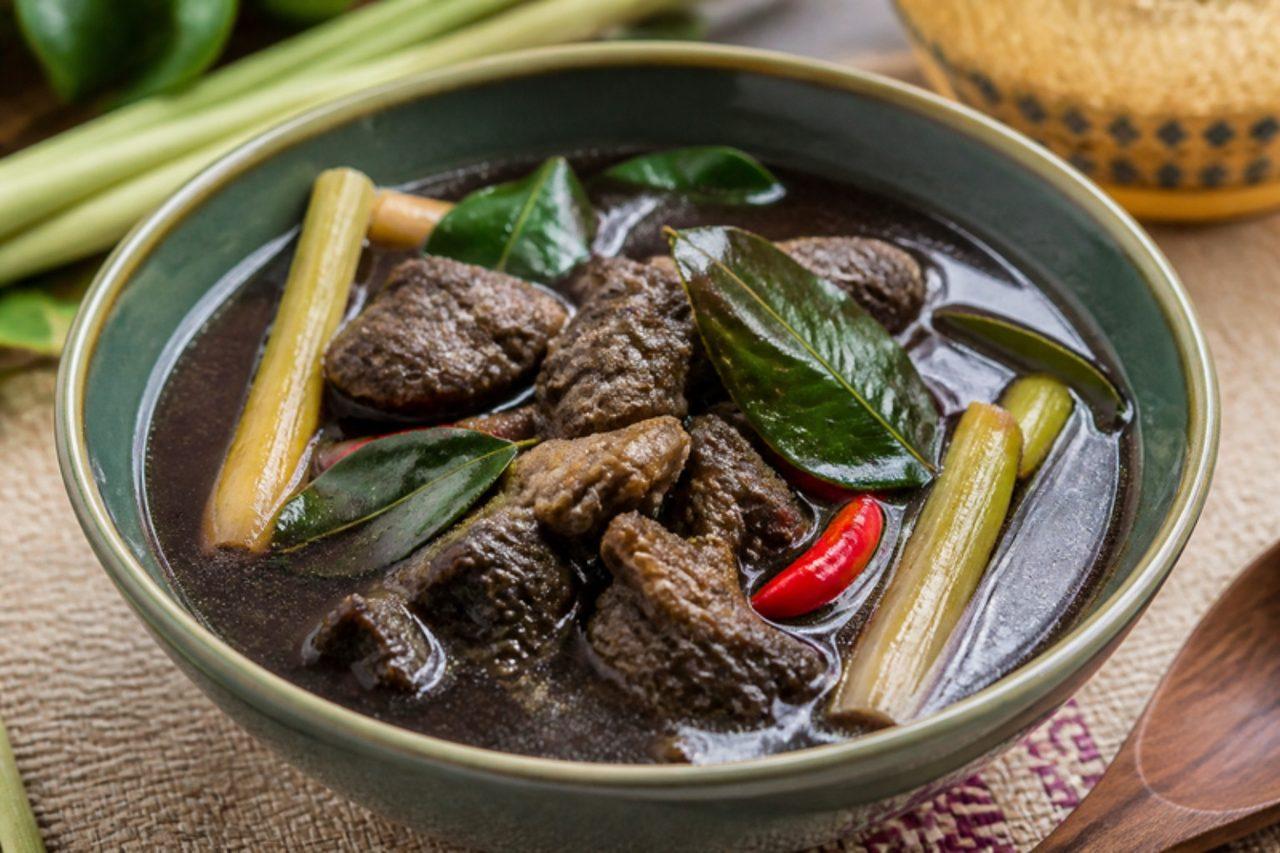
Tiyula itumBlack beef soup
Tiyula itum, 'black soup', is the pride of the Tausug people of Sulu in the far south of the Philippines, cooked for weddings, Eid celebrations and when guests come home. Beef (it is a halal, pork-free dish) is simmered with ginger, lemongrass and turmeric, then darkened with pamapa itum, a paste of grated coconut toasted until almost black and pounded with spices. The broth looks dramatic but tastes smoky, earthy and gently peppery, with heat from chillies. Serve it with plain rice. Chef's tip: toast the coconut slowly, stirring all the time, until it is very dark brown but not ashy; burnt-to-ash coconut tastes bitter and ruins the soup.
 Filipino

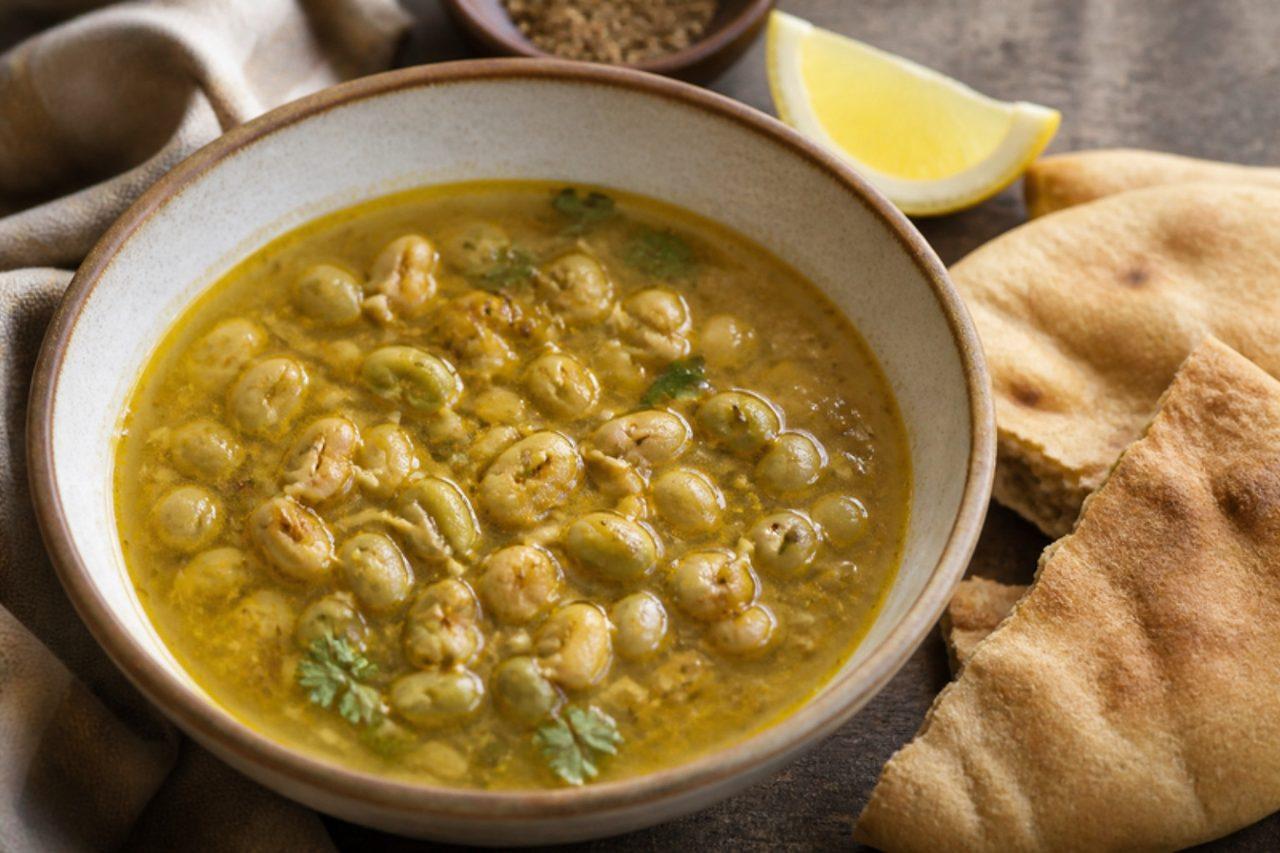
Ful nabitSprouted fava bean soup
Sprouted beans are ladled out with their cooking liquor in Cairo homes when the weather turns cold or someone is feeling run down, and Egyptians swear by the broth as a pick-me-up. The beans are soaked and left to sprout for a few days, then simmered with onion, garlic and cumin into a light, earthy soup that is sharpened at the table with plenty of lemon. You can eat the beans with a spoon or pop them from their skins. Allow 3 to 4 days for sprouting, although the hands-on work is only about 20 minutes. People with G6PD deficiency (favism) must not eat fava beans. Chef's tip: stop the sprouting when the shoots are about 1 cm long; longer sprouts taste grassy and bitter.
 Egyptian


Yaki onigiriGrilled rice balls
Yaki onigiri (焼きおにぎり) are rice balls grilled until they form a crisp, toasty crust, then brushed with soy sauce glaze. They are eaten all over Japan, at izakaya, at barbecues and from the freezer section, as a snack or with miso soup. The inside stays soft and steamy while the outside crackles. Best eaten hot, straight from the pan. Chef's tip: let the shaped rice balls dry for 10 minutes before they go in the pan. A drier surface forms a better crust and won't stick, and the glaze goes on only at the end so it doesn't burn.
Perfect for:Winter warmers