
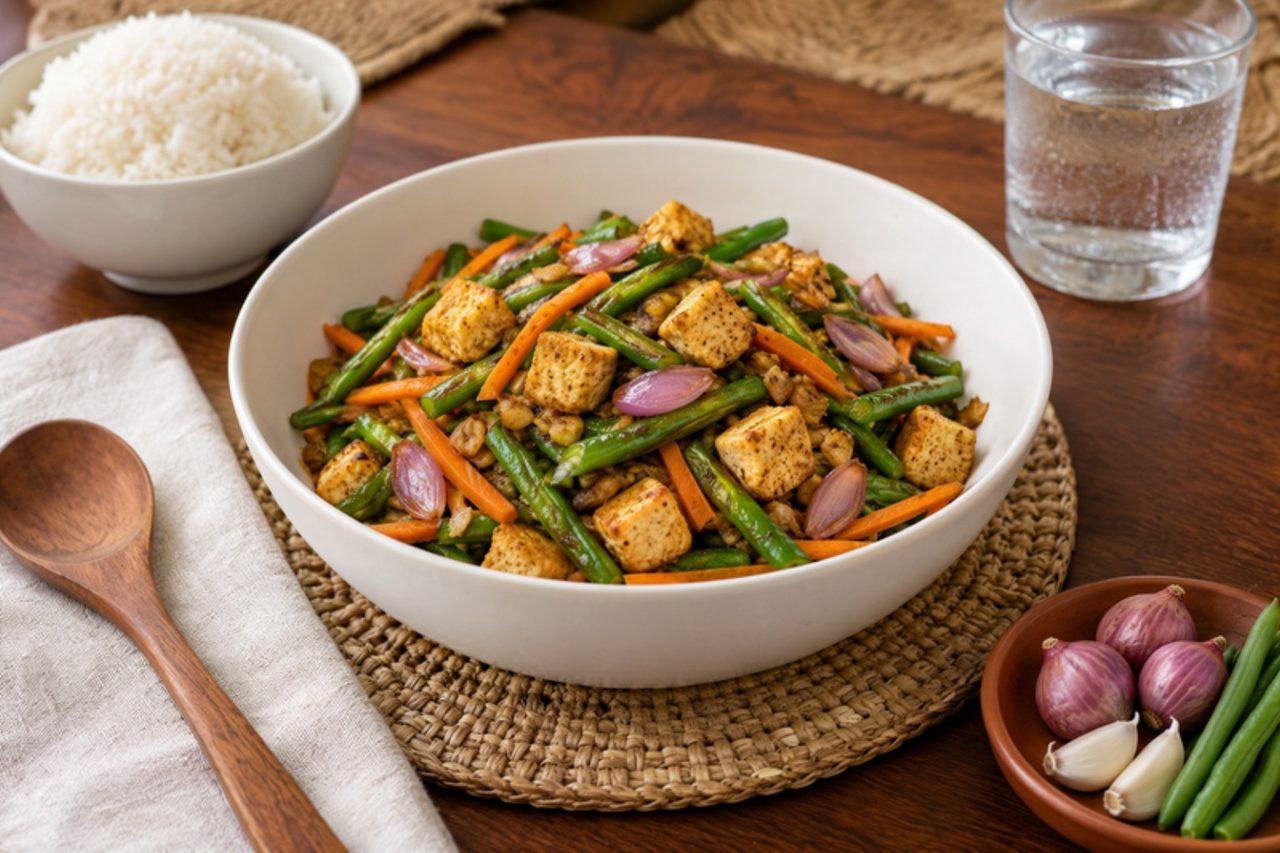
AI-generated image
Tumis buncis
Stir-fried green beans
Tumis buncis: Indonesian green beans stir-fried with garlic, shallot and carrot


Every Indonesian warung and school bekal box has a vegetable tumis, a quick stir-fry, and green beans with carrot are the everyday favourite: crunchy, garlicky and slightly sweet, ready in a quarter of an hour. Cubes of tofu are often added to make it more filling. The common mistake is covering the wok, which steams the beans an army green; cook them uncovered with a splash of water so they stay bright. Chef's tip: slice the beans on a sharp diagonal so they cook in the same time as the thin carrot and pick up more of the seasoning.
- Total time
- 15 min
- Difficulty
- easy
- Serves
- 3
Ingredients
- 9 oz green beanstrimmed
- 1 carrotcut into thin matchsticks
- 3 shallotssliced
- 3 garlic clovessliced
- 1 red chilli (optional)sliced diagonally
- 1 tbsp neutral oil
- 1 tbsp light soy sauce
- ½ tsp sugar
- ¼ tsp salt
- 3 tbsp water
- 3 ½ oz firm tofu (optional)cut into small cubes and fried
Shop this recipe on Amazon
What you'll need
Spices & pantry
Fresh ingredients (5)
Links open Amazon in a new tab. As an Amazon Associate, WhatToEat.Today earns from qualifying purchases.
Method
0/5 doneStep 1: Slice 9 oz green beans diagonally into 3 cm pieces.
Step 2: Heat 1 tbsp neutral oil in a wok over a medium-high heat. Fry 3 shallots, 3 garlic cloves and 1 red chilli for 1 minute, until fragrant and starting to colour.
1 minStep 3: Add the beans and 1 carrot and stir-fry for 2 minutes.
2 minStep 4: Add 3 tbsp water, 1 tbsp light soy sauce, ½ tsp sugar, ¼ tsp salt and 3 ½ oz firm tofu, if using, and stir-fry for 3–4 minutes, until the beans are bright green and tender-crisp and the liquid has gone.
4 minStep 5: Cool quickly on a plate before packing; keep chilled and eat within 2 days.
Nutrition per serving
- Calories
- 90 kcal
- Protein
- 3 g
- Carbs
- 12 g
- Fat
- 4 g
- Fibre
- 4 g
Nutrition values are estimates.
KrazyBadal
Good to know
- How long does tumis buncis take?
- About 15 minutes in total: 8 minutes to prepare and 7 minutes to cook.
- How many people does it serve?
- 3 as written. Change the servings above the ingredients and every amount scales to match.
- Is it vegan?
- Yes. It has no meat, fish, dairy or eggs.
- What can I use instead of carrot?
- Parsnip or sweet potato, same weight.
- What can I use instead of shallots?
- Half an onion per 2 shallots.
Reviews
No reviews yet. Be the first to cook it.
Rate this recipe
Sign in to rate and review this recipe.
You might also like

Sayur lodehVegetables in coconut milk
Sayur lodeh is everyday cooking in Central Java, made in big pots in Solo and Semarang kitchens and ladled over rice, with lontong rice cakes at Lebaran, or alongside opor and sambal goreng on festive tables. It's soupy rather than thick: a fragrant broth of coconut milk, galangal, lemongrass and lime leaf that carries chunks of aubergine, long beans, chayote and sweetcorn, plus tempeh and tofu to make it a meal. The flavour is mellow and slightly sweet, so the heat comes from sambal on the side. Chef's tip: keep the pot at a gentle simmer once the coconut milk goes in and stir now and then — a rolling boil splits the coconut milk into oily curds.


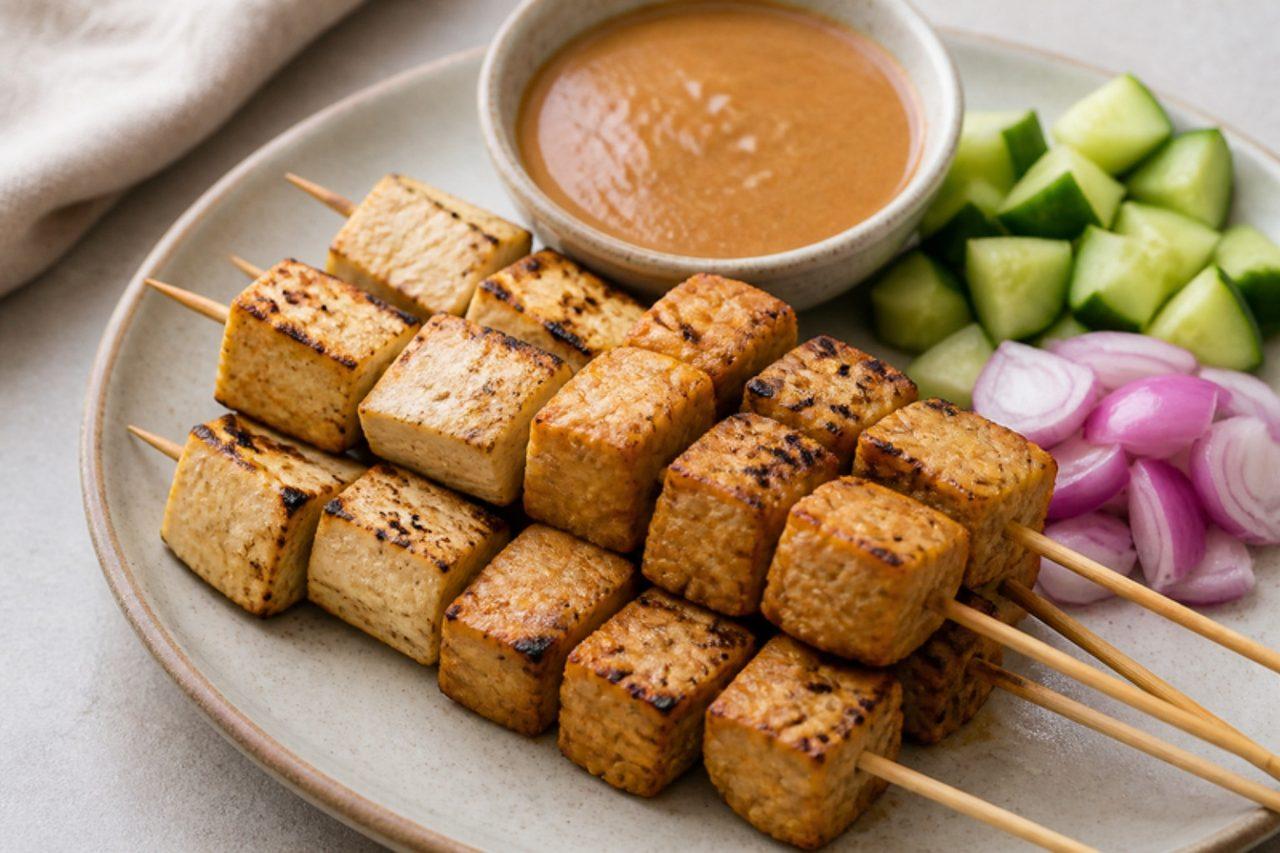
Tofu & tempeh satay with peanut sauce
Satay smoke drifts along Javanese streets every evening, where sellers fan charcoal grills set up on the pavement and serve skewers with peanut sauce, rice cakes and sliced shallot. Tofu and tempeh are naturals for it: they drink up a sweet-savoury marinade of palm sugar, tamari, coriander and garlic and pick up dark, sticky char at the edges. The sauce here is cooked until smooth and glossy, sweeter and milder than the grainy dressing on gado-gado, made for dipping. Chef's tip: soak the bamboo skewers for 30 minutes and brush the satay with marinade as it grills — the sugar caramelises into the dark, slightly burnt edges that make satay taste like satay.
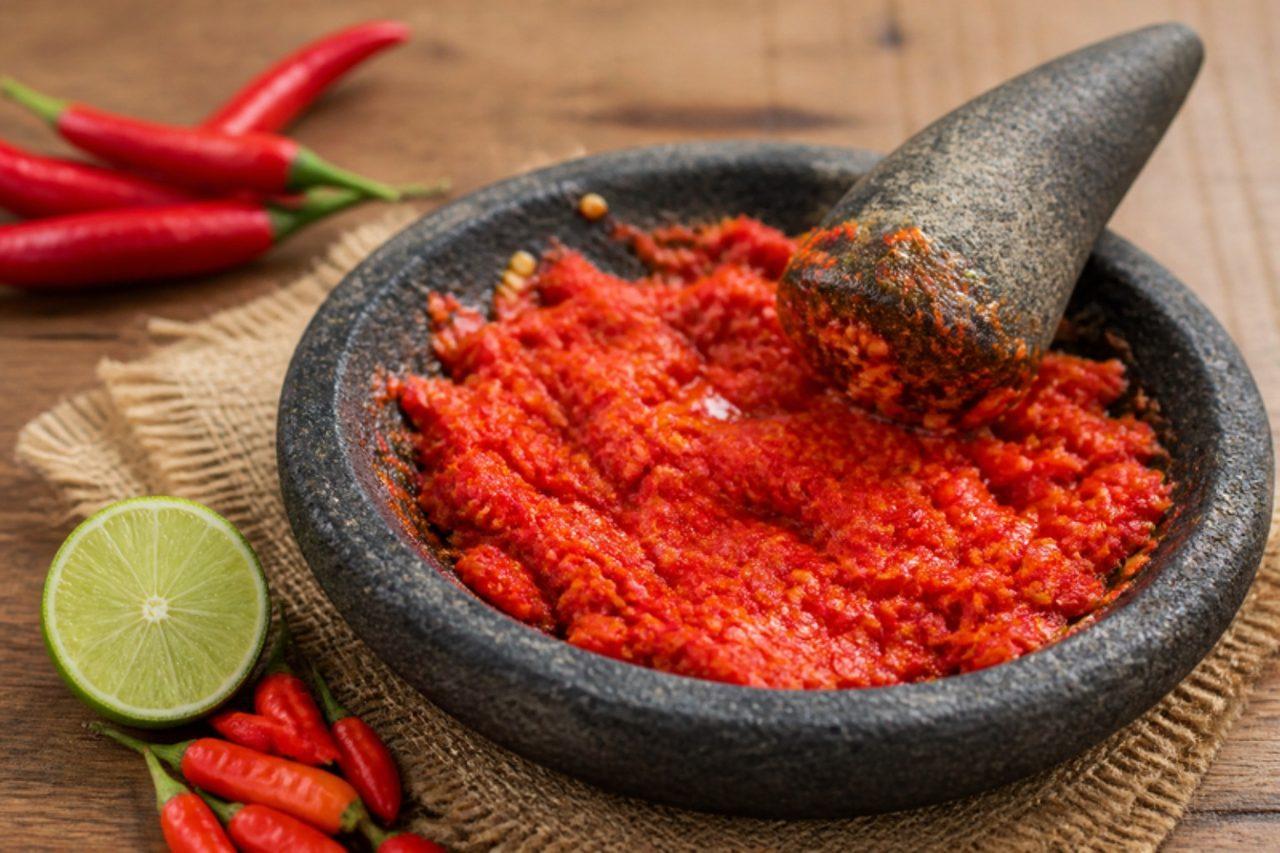
Sambal oelekFresh chilli paste
Every Indonesian kitchen has an ulekan, the flat stone mortar that gives sambal oelek its name, and this is the most basic thing ground in it: fresh red chillies and salt, pounded to a coarse, wet, fiery mash. It's the foundation many cooks start from, stirred into fried rice and soups, spooned beside every meal at warung tables nationwide, and the base for more complex cooked sambals. Making it fresh tastes brighter and fruitier than any jar. Chef's tip: wear gloves and pound rather than blitz if you can — crushing releases the oils and gives a juicier, more fragrant sambal than chopping blades.
